
As a researcher deeply immersed in the intersection of artificial intelligence and robotics, I have witnessed a profound paradigm shift. The field of navigation for embodied AI robots is undergoing a radical transformation, driven by the advent of large foundation models. Traditionally, the quest for autonomous navigation has been segmented into discrete, often rigidly engineered pipelines for perception, mapping, planning, and control. While effective in structured settings, these approaches frequently stumble in the face of dynamic, unstructured environments and fail to comprehend the nuanced semantics of human instructions. The integration of large language models (LLMs) and multimodal large language models (MLLMs) promises a more integrated, intelligent, and interactive future for embodied AI robots. This article synthesizes the current landscape, exploring how these powerful models are reshaping the way embodied agents perceive, reason, and act within their physical surroundings.
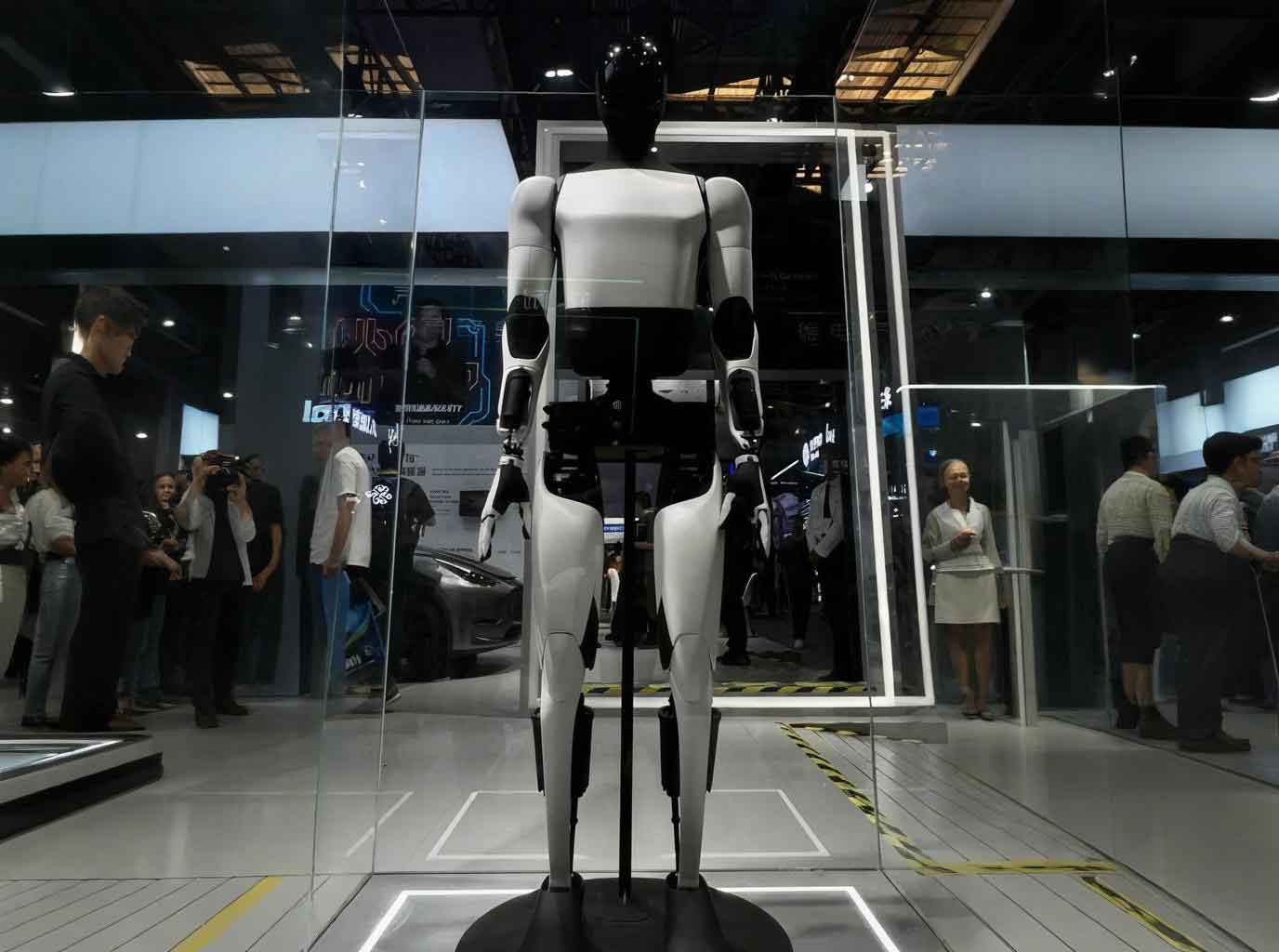
The core premise of embodied intelligence is that intelligent behavior emerges from the continuous sensorimotor interaction between an agent and its environment. An embodied AI robot is not merely a passive processor of data; it is an active participant that learns and adapts through physical experience. For an embodied AI robot, navigation is a fundamental competency that underpins almost any useful task, from industrial logistics and domestic assistance to search and rescue operations. The challenge has always been to equip these embodied AI robots with the cognitive flexibility to handle novelty, ambiguity, and change. My analysis suggests that large models serve as a cognitive engine, injecting capabilities like natural language understanding, cross-modal reasoning, and commonsense knowledge directly into the navigation loop of an embodied AI robot.
From Symbolic Rules to Embodied Learning: The Evolution of Navigation
The historical trajectory of navigation algorithms reflects the broader evolution of AI. Early methods for embodied AI robots were firmly rooted in the symbolic paradigm. They relied on precise geometric maps (e.g., SLAM-generated occupancy grids) and hand-crafted rules for path planning (e.g., A*, D*) and obstacle avoidance. The performance of an embodied AI robot using such methods was highly predictable but brittle. Any significant deviation from the assumed environmental model—a moved chair, a closed door, a dynamic human—could lead to failure. The navigation stack was a series of specialized modules, and errors could cascade through this pipeline.
The rise of deep reinforcement learning (DRL) marked a significant leap towards embodiment. Here, the embodied AI robot learned navigation policies end-to-end through trial-and-error interactions with simulated or real environments. The agent’s policy, typically a deep neural network, learned to map raw or processed sensor observations directly to actions. This paradigm embraced the “perception-action” cycle central to embodied intelligence. The embodied AI robot could learn to navigate complex, previously unseen layouts and even exhibit simple dynamic avoidance behaviors. However, from my perspective, these DRL approaches for embodied AI robots faced critical limitations: sample inefficiency, requiring millions of simulated trials; poor generalization outside the training distribution; and a lack of explainability. Training a robust policy for a real-world embodied AI robot remained a daunting, costly endeavor.
The need for natural, intuitive interaction spurred the sub-field of Vision-and-Language Navigation (VLN). An embodied AI robot was now tasked with following free-form natural language instructions (e.g., “Go to the kitchen and find the mug on the counter next to the sink”). This required aligning visual trajectories with linguistic sequences, a complex cross-modal reasoning problem. Models employed attention mechanisms, sequence-to-sequence learning, and auxiliary reasoning tasks to improve performance. Yet, they were still largely trained on limited, task-specific datasets like R2R or CVDN. Their “understanding” was often a statistical correlation, and they struggled with linguistic variation, long-horizon instructions, and grounding instructions in completely novel scenes. The embodied AI robot’s ability to truly comprehend and reason about its mission was still circumscribed.
The Large Model Inflection Point: New Capabilities for the Embodied AI Robot
The breakthrough in transformer-based architectures and the subsequent scaling of LLMs (like GPT-3, PaLM) and MLLMs (like CLIP, BLIP-2) created a new substrate for intelligence. These models, pre-trained on internet-scale corpora of text, images, and paired data, internalize a vast repository of world knowledge, semantic associations, and reasoning patterns. The pivotal insight was to leverage these models not as task-specific tools, but as general-purpose cognitive modules for the embodied AI robot. This integration unfolds along several key dimensions:
- Semantic Grounding and Scene Understanding: MLLMs like CLIP allow an embodied AI robot to move beyond geometric features. The robot can associate visual patches with semantic concepts (“sofa,” “refrigerator,” “painting”) and understand relationships described in language. This enables open-vocabulary object recognition and navigation towards semantically described targets, a capability previously requiring extensive labeled datasets for every possible object.
- Instruction Parsing and Hierarchical Planning: LLMs excel at decomposing complex, abstract instructions into concrete, executable steps. For an embodied AI robot given the command, “Fetch my reading glasses from the bedroom; they are probably on the nightstand,” an LLM can reason that this involves: 1) navigating to the bedroom, 2) identifying the nightstand, 3) searching its surface for glasses, and 4) picking them up. It breaks down the long-horizon task into a sequence of sub-goals.
- Commonsense and Spatial Reasoning: Large models encode commonsense knowledge. An embodied AI robot can use this to infer likely object locations (e.g., “a kettle is likely in the kitchen”), resolve ambiguous references (“the blue cup” when there are two), or understand spatial relations (“behind the couch”). This reasoning allows the robot to navigate and search more efficiently, similar to a human.
- Explanatory and Interactive Dialogue: An LLM-equipped embodied AI robot can generate natural language explanations for its actions (“I’m going down the hall because the bedroom is usually at the end”) or ask clarifying questions when instructions are ambiguous (“Which blue cup do you mean? The one on the table or the shelf?”). This transforms the interaction from a one-way command into a collaborative dialogue.
The integration architecture is crucial. Current research for embodied AI robots crystallizes into two dominant paradigms, each with distinct trade-offs.
Architectural Paradigms for the Large-Model-Driven Embodied AI Robot
How does one actually architect a system that connects a massive, pre-trained model to the sensors and actuators of an embodied AI robot? The community has converged on two primary design philosophies.
The End-to-End Paradigm
This approach aims for maximal integration. A single, massive multimodal model (like PaLM-E) is trained to consume raw sensor data (images, proprioception) and task instructions, and directly output low-level motor commands or action primitives for the embodied AI robot. The model’s internal representations and reasoning are entirely latent.
Advantages: It minimizes engineering overhead for intermediate representations and avoids cascading errors between modules. In theory, it allows the model to learn optimal, tightly coupled perception-action policies for the embodied AI robot.
Disadvantages: It requires immense, diverse, and expensive robotic trajectory data for training or fine-tuning. The models are often unstable or unpredictable (hallucinating actions), and their decision-making process is a black box, raising significant safety and verification concerns for real-world deployment of the embodied AI robot. Sample efficiency remains a challenge.
The Hierarchical (Modular) Paradigm
This approach decomposes the navigation problem into functional layers or modules. Large models are used as specialized “oracles” within specific modules of the embodied AI robot’s cognitive architecture. A typical breakdown includes:
- Perception & Grounding Module: Uses a VLM (e.g., CLIP, Grounding DINO) to generate semantic maps or descriptive captions from visual input. This translates pixels into a symbolic or semi-symbolic representation the planner can use.
- Task Planning & Reasoning Module: Uses an LLM to interpret the human instruction, consult a knowledge base, and generate a high-level plan (a sequence of symbolic sub-goals like “go to kitchen,” “find counter”).
- Action Policy Module: A lighter-weight, potentially learned policy (e.g., a classical planner, a trained neural network) that translates the current sub-goal and the perceptual state into executable robot actions (velocity commands, discrete navigation actions).
Advantages: This architecture is more interpretable, debuggable, and safe. Each module can be individually improved or replaced. It often enables zero-shot or few-shot generalization, as the LLM/VLM brings prior knowledge, reducing the need for extensive robotic training data for the embodied AI robot. It aligns well with classical robotics hierarchies.
Disadvantages: It introduces complexity in designing the interfaces between modules. Information loss can occur at these boundaries (e.g., a VLM caption may omit crucial spatial details). The latency of chaining multiple large models can be high, potentially affecting the real-time responsiveness of the embodied AI robot.
The choice between paradigms often hinges on the application’s requirements for safety, explainability, data availability, and real-time performance. A promising trend is the development of hybrid approaches that seek the best of both worlds for the embodied AI robot.
| Paradigm | Core Idea | Example Models | Pros for Embodied AI Robot | Cons for Embodied AI Robot |
|---|---|---|---|---|
| End-to-End | Single model maps sensor & instruction directly to actions. | PaLM-E, Gato | Avoids cascading errors; theoretically optimal coupling. | Data-hungry; black-box; unstable; hard to verify. |
| Hierarchical | LLMs/VLMs used as modules in a structured pipeline. | SayNav, LM-Nav, VLN-CE | Interpretable; enables zero-shot reasoning; safer; modular. | Integration complexity; potential information loss; higher latency. |
Key Technical Formulations and Evaluation
To ground the discussion, let’s formalize some core concepts and metrics. In goal-driven navigation for an embodied AI robot, the objective is often to reach a target location $g$ from a start $s$ based on an instruction $I$. The robot receives visual observations $o_t$ at time $t$. In an end-to-end learned policy, we model $\pi(a_t | o_t, I, \Theta)$, where $a_t$ is the action and $\Theta$ are the model parameters.
In hierarchical methods, an LLM planner might first decompose $I$ into a sequence of $K$ sub-goals: $LLM(I) \rightarrow \{g_1, g_2, …, g_K\}$. A separate grounding function $G(o_t)$ (often a VLM) creates a semantic map $M_t$. A low-level policy then executes: $\pi_{low}(a_t | M_t, g_k)$.
The success of an embodied AI robot is measured by several key metrics:
- Success Rate (SR): The fraction of episodes where the robot stops within a threshold distance (e.g., 3m) of the goal.
$$ SR = \frac{1}{N} \sum_{i=1}^{N} \mathbb{1}(d(p_T^i, g^i) < \delta) $$ - Path Length (PL): The total distance traveled by the embodied AI robot in an episode.
- Success weighted by Path Length (SPL): The most comprehensive metric, balancing success and efficiency. It penalizes long, meandering paths even if successful.
$$ SPL = \frac{1}{N} \sum_{i=1}^{N} S_i \frac{L_i}{\max(P_i, L_i)} $$
where $S_i$ is success (1 or 0), $L_i$ is the shortest path length, and $P_i$ is the actual path length for episode $i$. - Goal Progress (GP): Measures how much closer the embodied AI robot got to the goal, useful for evaluating partial progress in failed episodes.
Training and benchmarking these systems rely on sophisticated simulation environments and datasets, which are critical for the development of any embodied AI robot. Key resources include:
| Dataset/Environment | Focus | Key Contribution to Embodied AI Robot Research |
|---|---|---|
| Matterport3D (MP3D) | Indoor 3D Scans | Provides photorealistic, large-scale indoor environments for training and benchmarking visual navigation. |
| Habitat / iTHOR / ProcTHOR | Simulation Platforms | Enable fast, parallelized training of embodied AI agents in interactive, physics-enabled scenes. ProcTHOR can generate countless unique layouts. |
| Room-to-Room (R2R) | Vision-and-Language Navigation | The canonical VLN dataset, pairing paths in MP3D with human-written navigation instructions. |
| ALFRED / BEHAVIOR | Interactive Task Completion | Extend navigation to include object manipulation, requiring an embodied AI robot to plan and act over long horizons. |
| Open X-Embodiment | Robotic Learning Datasets | Aggregates diverse robotic trajectory data across many robots and tasks, aiming to foster general-purpose “robot foundation models.” |
Open Challenges and Future Directions for the Embodied AI Robot
Despite exhilarating progress, the path to robust, ubiquitous embodied AI robots is fraught with open challenges. Based on the current research frontier, I identify several critical avenues for future work.
1. The Simulation-to-Reality (Sim2Real) Gap for Large Models: While LLMs and VLMs are trained on real-world data, their integration into a control loop for an embodied AI robot is often first validated in simulators. The perceptual noise, actuation delays, and unpredictable dynamics of the real world can break the assumptions of these models. Techniques for robust sim2real transfer, domain randomization specific to model outputs, and online adaptation are crucial. How can we fine-tune or prompt a large model so that the plans it generates for an embodied AI robot are not only logically sound but also dynamically feasible and safe on real hardware?
2. Efficiency and Real-Time Performance: The computational footprint of large models is prohibitive for many embodied AI robot platforms. Running a state-of-the-art LLM or VLM in real-time on an onboard computer is often impossible, leading to reliance on cloud APIs which introduce latency and connectivity dependencies. Research into model distillation, specialized efficient architectures (e.g., for robotic state estimation and planning), and edge-optimized deployment is essential to make these technologies practical for widespread use in embodied AI robots.
3. Safety, Verification, and Alignment: This is perhaps the most significant challenge. An embodied AI robot powered by a large model is making decisions based on probabilistic reasoning over vast, often opaque, knowledge bases. How do we formally verify that its navigation plan will not lead to catastrophic failure? How do we ensure its actions are aligned with human values and safety constraints? Developing frameworks for “LLM verification,” instilling safety as a core objective during planning, and creating reliable monitoring and override systems are non-negotiable for real-world deployment.
4. Lifelong Learning and Adaptation: An embodied AI robot operating in a home or factory will encounter new objects, layout changes, and evolving user preferences. Current large-model-based systems are largely static after deployment. Enabling continuous, efficient learning—where the robot updates its internal world model and policies from its own stream of experience—without catastrophic forgetting of its prior knowledge is a key research direction. This could involve techniques for continual pre-training or parameter-efficient model updating.
5. Integration with Low-Level Control: Most current work stops at generating high-level waypoints or discrete actions. Truly seamless autonomy for an embodied AI robot requires tight integration with dynamic motion planning and whole-body control, especially for legged or manipulator-equipped robots navigating cluttered spaces. The high-level semantic plan must be translated into dynamically stable, efficient, and compliant motions.
Conclusion
The infusion of large language and multimodal models into the domain of robotic navigation marks the dawn of a new era for the embodied AI robot. We are moving from systems that navigate to systems that understand, reason, and communicate about navigation. The embodied AI robot is evolving from a pre-programmed automaton into a collaborative agent capable of interpreting vague intent, leveraging commonsense, and explaining its choices. While the end-to-end versus hierarchical debate continues, the trend is clear: large models act as a unifying cognitive layer, breaking down the traditional barriers between perception, reasoning, and action.
The journey ahead is challenging, demanding breakthroughs in efficiency, safety, and adaptive learning. However, the trajectory is firmly set. As these models become more capable, efficient, and aligned, we can anticipate a future where embodied AI robots navigate our world with a degree of fluency, adaptability, and contextual awareness that was previously the realm of science fiction. The synergy between embodied interaction and large-scale pre-trained knowledge is creating a new generation of intelligent agents, fundamentally reshaping what an embodied AI robot can be and do.