
As artificial intelligence technology increasingly extends into the physical world, embodied AI robots—such as humanoid robots, bipedal machines, and quadrupedal robots—are emerging as a pivotal engine for future industries. These systems, which can select appropriate physical forms based on task and environmental demands, represent a strategic frontier in global technological competition. In this article, we examine the industrial foundations for accelerating the layout of the embodied AI robot sector in Guangdong, a leading manufacturing and technological hub in China. We analyze global and domestic development trends, assess Guangdong’s current industrial base, identify challenges, and propose targeted strategies to foster high-quality growth in this emerging field.
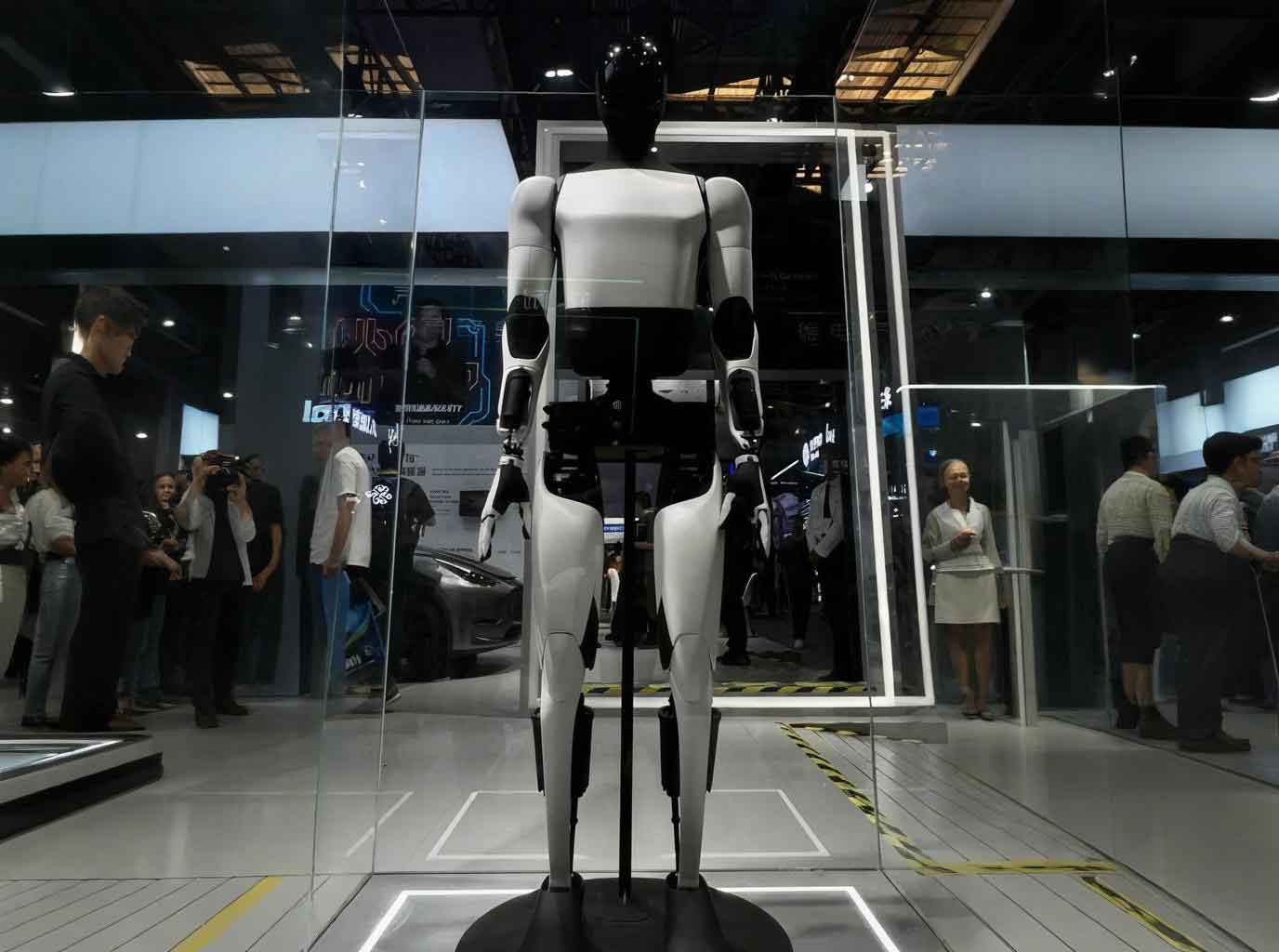
The rise of embodied AI robotics marks a paradigm shift from virtual intelligence to physical interaction. An embodied AI robot integrates perception, decision-making, and action in real-world environments, enabling applications across manufacturing, services, healthcare, and beyond. We believe that Guangdong, with its robust industrial ecosystem, is well-positioned to capitalize on this trend. However, to secure a leading role, it must address technological bottlenecks and systemic barriers while leveraging its unique advantages.
Global Development Landscape of Embodied AI Robotics
Globally, developed economies are aggressively pursuing leadership in embodied AI robotics through strategic policies and investments. The United States, European Union, and Japan have established comprehensive frameworks to drive innovation and industry ecosystem development.
In the United States, initiatives like the National Robotics Initiative (NRI), the American AI Initiative, and the CHIPS and Science Act provide foundational support. These policies emphasize research and development in robotics and AI, fostering collaboration between academia and industry. For instance, universities such as MIT and Stanford partner with tech giants like Boston Dynamics, Tesla Optimus, NVIDIA, and Google DeepMind to advance embodied AI technologies. This “industry-academia collaboration + capital-driven” model strengthens the R&D base for embodied AI robots.
Europe focuses on ethical governance and regulatory frameworks, with the AI Act setting standards for safety and transparency. European companies, including Siemens, ABB, and ANYbotics, excel in hardware design and motion control, pushing automation in industrial settings. Japan, leveraging its deep robotics heritage, emphasizes human-robot collaboration through policies like the Robot New Strategy and the Comprehensive Innovation Strategy 2024. Japanese firms such as Fanuc, Yaskawa, and SoftBank Robotics are key players in both industrial and embodied AI robot domains.
The global supply chain for embodied AI robots can be segmented into upstream hardware, midstream software, and downstream applications. A holistic view reveals intense international competition and cooperation across these layers.
| Policy Name | Region | Key Focus |
|---|---|---|
| National Robotics Initiative (NRI) | USA | Advancing next-generation robotics R&D |
| American AI Initiative | USA | Prioritizing AI for economic and national security |
| CHIPS and Science Act | USA | Strengthening semiconductor and AI hardware base |
| AI Act | EU | Establishing ethical and safety rules for AI |
| Robot New Strategy | Japan | Diversifying applications in manufacturing, care, and agriculture |
From a technological perspective, the performance of an embodied AI robot can be modeled based on its integration of hardware and software. For example, the overall capability \( C \) might be expressed as:
$$ C = f(S, H, E) = \alpha \cdot S + \beta \cdot H + \gamma \cdot E $$
where \( S \) represents software intelligence (e.g., algorithm efficiency), \( H \) denotes hardware robustness (e.g., actuator precision), \( E \) embodies environmental adaptability, and \( \alpha, \beta, \gamma \) are weighting coefficients. This formula underscores the multidisciplinary nature of embodied AI robot development.
Domestic Development of Embodied AI Robotics in China
China has identified embodied AI robotics as a strategic priority, issuing policies like the “Guidance on Innovative Development of Humanoid Robots” and the “Implementation Opinions on Promoting Future Industry Innovation.” Notably, embodied AI was included in the 2025 Government Work Report, signaling high-level support.
The domestic market for embodied AI robots is expanding rapidly. According to industry reports, China’s market size for embodied AI robots is projected to reach approximately ¥8.239 billion in 2025, accounting for about 50% of the global total. The industry system is relatively complete, spanning hardware, software, and application layers. Key products include humanoid robots, quadruped robots, dexterous hands, and rehabilitation robots, with leading enterprises such as Huawei, Xiaomi, Ubtech, Unitree, and CloudMinds.
Regionally, embodied AI robot industries are concentrated in eastern China, with Beijing, Shanghai, and Guangdong taking the lead. These regions benefit from robust industrial chains, technological innovation, and vibrant enterprise activity. Provinces like Zhejiang and Jiangsu offer strong support through clusters of component suppliers for reducers, servo motors, and sensors. Several provincial innovation centers have been established to drive R&D.
| Innovation Center | Location | Establishment Time |
|---|---|---|
| National-Local Joint Embodied AI Robot Innovation Center | Beijing | November 2023 |
| National-Local Joint Humanoid Robot Innovation Center | Shanghai | December 2023 |
| Zhejiang Humanoid Robot Innovation Center | Ningbo | March 2024 |
| Guangdong Embodied AI Robot Innovation Center | Shenzhen | April 2024 |
The spatial distribution of enterprises, particularly in humanoid robotics, highlights the dominance of the Beijing-Tianjin-Hebei, Yangtze River Delta, and Pearl River Delta regions. This clustering effect facilitates knowledge spillovers and supply chain synergies, essential for advancing embodied AI robot technologies.
Guangdong’s Industrial Base for Embodied AI Robotics
Guangdong has laid a solid foundation for embodied AI robot development, characterized by a comprehensive industrial ecosystem, strong agglomeration effects, and a growing innovation system. As China’s largest manufacturing province, it offers unique advantages in scale, integration capabilities, and market access.
First, the supply chain for core components is relatively complete. In sensors, companies like Orbbec and Xinjingcheng are active; in precision reducers, Sanchuan Harmonic Drive and Tongchuan Technology; in high-performance motors, Haozhi Machinery, Topband, and Xiaoxiang Hongye; and in linear actuators, Shenzhen Weiyuan Precision. For end-effectors like dexterous hands, Dahuan Robotics and Zhaowei Machinery provide solutions. This hardware foundation supports the development of sophisticated embodied AI robots.
Second, Guangdong excels in robot本体 R&D and manufacturing. Enterprises such as Ubtech, Leju (Shenzhen) Robotics, Zhuji Dynamics, CloudMinds, and Tiantai Robotics are at the domestic forefront. Their efforts span humanoid and quadruped embodied AI robots, with continuous improvements in mobility, manipulation, and intelligence.
Third, application scenarios are diversifying. Guangdong has established national demonstration sites in smart healthcare (Shenzhen), smart transportation (Guangzhou), and smart manufacturing (Foshan). These pilots explore uses in政务, education, elderly care, and more, demonstrating the versatility of embodied AI robots. The integration capability of system integrators in Guangdong accelerates commercialization.
The agglomeration effect is pronounced. Guangdong is China’s largest cluster for intelligent robotics, with industrial scale and enterprise numbers ranking first nationally. In 2024, its industrial robot output accounted for 44% of the national total, maintaining the top position for five consecutive years. The pattern centers on Shenzhen as the core, with Guangzhou, Foshan, and Dongguan as key players. Shenzhen, with over 60,000 robotics-related enterprises, leads in production and innovation. Guangzhou focuses on core technology R&D for automotive and shipbuilding, while Foshan promotes deep integration in traditional sectors like home appliances and ceramics.
Key enterprises drive accelerated development. Guangdong hosts over 160,000 robotics-related companies, more than Jiangsu (110,000) and Shandong (66,800). Among global listed companies in the humanoid robot supply chain, 11 are from Guangdong, including Midea, BYD, and Tencent. These firms provide capital, technology, and market channels for embodied AI robot ventures.
The innovation system is continuously improving. Guangdong has established multiple national and provincial platforms, including 18 national-level platforms (e.g., national laboratories, innovation centers) and numerous provincial entities (e.g., 2 provincial manufacturing innovation centers, 15 provincial key labs for robotics). This network supports basic research, applied technology development, and成果转化 for embodied AI robots.
To quantify the industrial growth, we can model the expansion of the embodied AI robot sector in Guangdong. Let \( G(t) \) represent the industrial output value at time \( t \), which might follow a logistic growth curve due to initial R&D investments and market adoption:
$$ G(t) = \frac{K}{1 + e^{-r(t – t_0)}} $$
where \( K \) is the carrying capacity (maximum potential output), \( r \) is the growth rate, and \( t_0 \) is the inflection point. This model reflects the typical S-shaped growth of emerging technologies like embodied AI robotics.
Challenges in Developing Embodied AI Robots in Guangdong
Despite its strengths, Guangdong faces several hurdles in advancing embodied AI robotics. These challenges span technological, economic, and human resource domains, potentially hindering the sector’s competitiveness.
1. Shortcomings in Key Core Hardware: Embodied AI robots demand high-performance components such as precision reducers, high-end sensors, and linear actuators. Currently, gaps exist in high-precision motion control, with critical parts relying on imports. The stability, lifespan, and accuracy of domestic products lag behind international standards. For instance, the positional error \( \epsilon \) of a joint might be higher:
$$ \epsilon = |\theta_{desired} – \theta_{actual}| > \epsilon_{threshold} $$
where \( \theta \) represents joint angle, and \( \epsilon_{threshold} \) is the tolerance for precision tasks. This affects the reliability of embodied AI robots in delicate operations.
2. Insufficient Drive from Large Models: The commercialization of embodied AI robots hinges on general-purpose intelligence powered by AI large models. However, challenges in multi-modal data fusion, instruction generation speed, and generalization能力 limit progress. The ideal “cloud brain” for embodied AI robots is not yet realized, impeding autonomous decision-making, multi-modal perception, and real-time motion control. The learning capability \( L \) might be constrained by data quality and model complexity:
$$ L = \sum_{i=1}^{n} w_i \cdot M_i(d_i, \theta_i) $$
where \( M_i \) are model components, \( d_i \) is data input, \( \theta_i \) are parameters, and \( w_i \) are weights. Current models suffer from bottlenecks in \( d_i \) diversity and \( \theta_i \) optimization.
3. High R&D and Manufacturing Costs: The embodied AI robot industry is in its infancy, with enterprises acting as pioneers incurring long development cycles and high expenses. Lightweight structures, advanced sensors, and high-compute chips drive costs up, often reaching hundreds of thousands of yuan per unit. This exceeds typical user affordability, obstructing commercialization. A cost model can illustrate:
$$ C_{total} = C_{R\&D} + C_{materials} + C_{integration} = \int_{0}^{T} R(t) dt + \sum_{j} p_j q_j + C_{overhead} $$
where \( R(t) \) is R&D expenditure over time \( T \), \( p_j \) and \( q_j \) are prices and quantities of materials, and \( C_{overhead} \) includes other costs. High \( C_{total} \) delays economies of scale for embodied AI robots.
4. Shortage of Professional Talent: Embodied AI robot development requires interdisciplinary expertise in AI, advanced manufacturing, motion control, and materials science. The talent pool is scarce due to high technical barriers and the industry’s nascent stage. The talent gap \( \Delta T \) can be expressed as:
$$ \Delta T = D_{talent} – S_{talent} = \int (g_D(t) – g_S(t)) dt $$
where \( D_{talent} \) is demand, \( S_{talent} \) is supply, and \( g_D(t) \) and \( g_S(t) \) are growth rates. Currently, \( \Delta T > 0 \), indicating a deficit.
Strategic Recommendations for Advancing Embodied AI Robotics in Guangdong
To overcome these challenges and harness opportunities, we propose a multi-faceted strategy tailored to Guangdong’s context. These recommendations aim to strengthen innovation, ecosystem development, and commercialization of embodied AI robots.
1. Enhance Innovation in Frontier and Core Technologies: We should intensify R&D efforts by mapping “technology discontinuity points” and focusing resources on breakthroughs. Support basic research and common technology development through joint laboratories involving universities, research institutes, and enterprises. For example, investing in novel actuator designs can improve the dynamics of embodied AI robots. The motion equation for a robotic joint could be optimized:
$$ \tau = I \ddot{\theta} + b \dot{\theta} + k \theta + \tau_{disturbance} $$
where \( \tau \) is torque, \( I \) is inertia, \( b \) is damping, \( k \) is stiffness, and \( \tau_{disturbance} \) represents external disturbances. Reducing \( \tau_{disturbance} \) through better hardware enhances control precision.
2. Promote Integration of AI Technologies for Industry Empowerment: We must accelerate the development and application of large models in embodied AI robots, creating autonomous, efficient algorithms to improve human-robot interaction and decision-making. Building a leading robot operating system and developing generalizable skill-learning models are crucial. A standardized hardware platform can be described as:
$$ P = \bigcup_{i} \{ module_i | module_i \in \{ sensing, actuation, computing \} \} $$
where \( P \) is the platform, and modules are interchangeable. This modularity fosters innovation and reduces costs for embodied AI robot variants.
3. Cultivate Leading Enterprises and Build a Full Industry Chain Ecosystem: We encourage top tech firms like Huawei and Tencent to integrate upstream and downstream chains, forming industrial alliances. Support local embodied AI robot companies such as Ubtech, Leju Robotics, and Zhuji Dynamics to cluster innovation resources. Foster SMEs to specialize in niche markets, cultivating “little giants” and “hidden champions.” The ecosystem health \( H_{eco} \) can be measured as:
$$ H_{eco} = \frac{N_{enterprises} \cdot I_{collaboration}}{C_{bottlenecks}} $$
where \( N_{enterprises} \) is the number of firms, \( I_{collaboration} \) is an interaction index, and \( C_{bottlenecks} \) represents supply chain constraints. Increasing \( H_{eco} \) boosts the resilience of the embodied AI robot sector.
4. Accelerate Construction of Training Facilities for Embodied AI Robots: We recommend establishing data training and testing centers that integrate bodies, scenarios, computing power, and data. These centers should create virtual-real fusion training loops: scenario → test → data → training → adaptation. Such platforms accelerate the development of robust embodied AI robots by providing comprehensive testing environments.
5. Drive Commercialization in Industrial Manufacturing and Other Scenarios: Embodied AI robots have vast potential in automotive, 3C manufacturing, and logistics. Guangdong, as a hub for these industries, should focus on enhancing tool operation and task execution capabilities. For instance, facilitating partnerships between robot companies like Ubtech or CloudMinds and automakers such as GAC, BYD, or Xpeng to build demonstration workstations and production lines. The deployment efficiency \( \eta \) can be modeled:
$$ \eta = \frac{T_{tasks\_completed}}{T_{total\_time}} \cdot A_{adaptability} $$
where \( A_{adaptability} \) is the robot’s ability to handle varied tasks. Higher \( \eta \) justifies investment in embodied AI robot applications.
6. Improve the Supply of Professional Talent: We advocate strengthening education in disciplines related to embodied AI robots, encouraging cooperation between enterprises and academia to cultivate interdisciplinary talent. Implement talent-specific policies to attract and retain high-level experts. The talent growth rate \( g_S(t) \) can be increased through targeted programs:
$$ g_S(t) = \beta_0 + \beta_1 \cdot I_{investment} + \beta_2 \cdot P_{policy} $$
where \( I_{investment} \) is funding in education, and \( P_{policy} \) represents policy incentives. This helps bridge the talent gap for embodied AI robot development.
7. Strengthen Safety Awareness and Establish Risk Control Barriers: We must develop standards for embodied AI robot performance, safety, perception, decision-making, and reliability. Participate in standard-setting for仿生 limbs, motion control modules, and energy management. Create safety compliance toolkits with dynamic risk monitoring platforms to detect anomalies (e.g., trajectory deviations, communication hijacking) and enable millisecond-level emergency stops. The risk score \( R_{risk} \) can be quantified:
$$ R_{risk} = \sum_{k} \omega_k \cdot V_k $$
where \( V_k \) are risk indicators (e.g., failure rate, ethical breach likelihood), and \( \omega_k \) are weights. Lowering \( R_{risk} \) ensures trustworthy deployment of embodied AI robots.
Conclusion
In summary, embodied AI robotics represents a transformative opportunity for Guangdong to reinforce its technological leadership and industrial升级. By addressing hardware dependencies, advancing AI integration, reducing costs, and nurturing talent, Guangdong can solidify its position in this new赛道. The embodied AI robot industry is not merely a technological pursuit but a strategic imperative for future economic resilience. We believe that with coordinated efforts across government, industry, and academia, Guangdong can emerge as a global hub for embodied AI robot innovation and application, driving high-quality development in the era of intelligent machines.
The journey toward widespread adoption of embodied AI robots will require persistent innovation and collaboration. As we continue to explore the boundaries of embodied intelligence, the lessons from Guangdong’s experience may offer valuable insights for other regions aiming to harness the potential of embodied AI robotics. Ultimately, the success of embodied AI robots will hinge on their ability to seamlessly interact with and augment human activities, paving the way for a more efficient and intelligent world.