
As an educational practitioner deeply invested in the future of pedagogy, I observe the rapid integration of digital-intelligent technologies with keen interest. From big data analytics to generative AI, these tools promise to reshape educational paradigms. Among these emerging forces, Embodied Artificial Intelligence represents a particularly profound leap. Unlike traditional AI confined to screens and servers, embodied AI robots possess a physical form, integrating advanced sensors, actuators, and large language models to perceive, learn, and interact dynamically within human environments. This physical incarnation unlocks a new dimension of agency. I believe that by serving as intelligent proxies for educators, these embodied AI robots can fundamentally enhance the *proactivity* of Ideological and Political Education (IPE). Proactivity here denotes the capacity to initiate, anticipate, and engage rather than merely react. This shift from a reactive to a proactive model, powered by the unique affordances of embodiment, presents a significant opportunity to improve the pertinence, effectiveness, and ultimately the modernization of IPE. However, this powerful tool is a double-edged sword, necessitating a careful examination of its advantages, inherent risks, and the essential frameworks for its safe and ethical deployment.
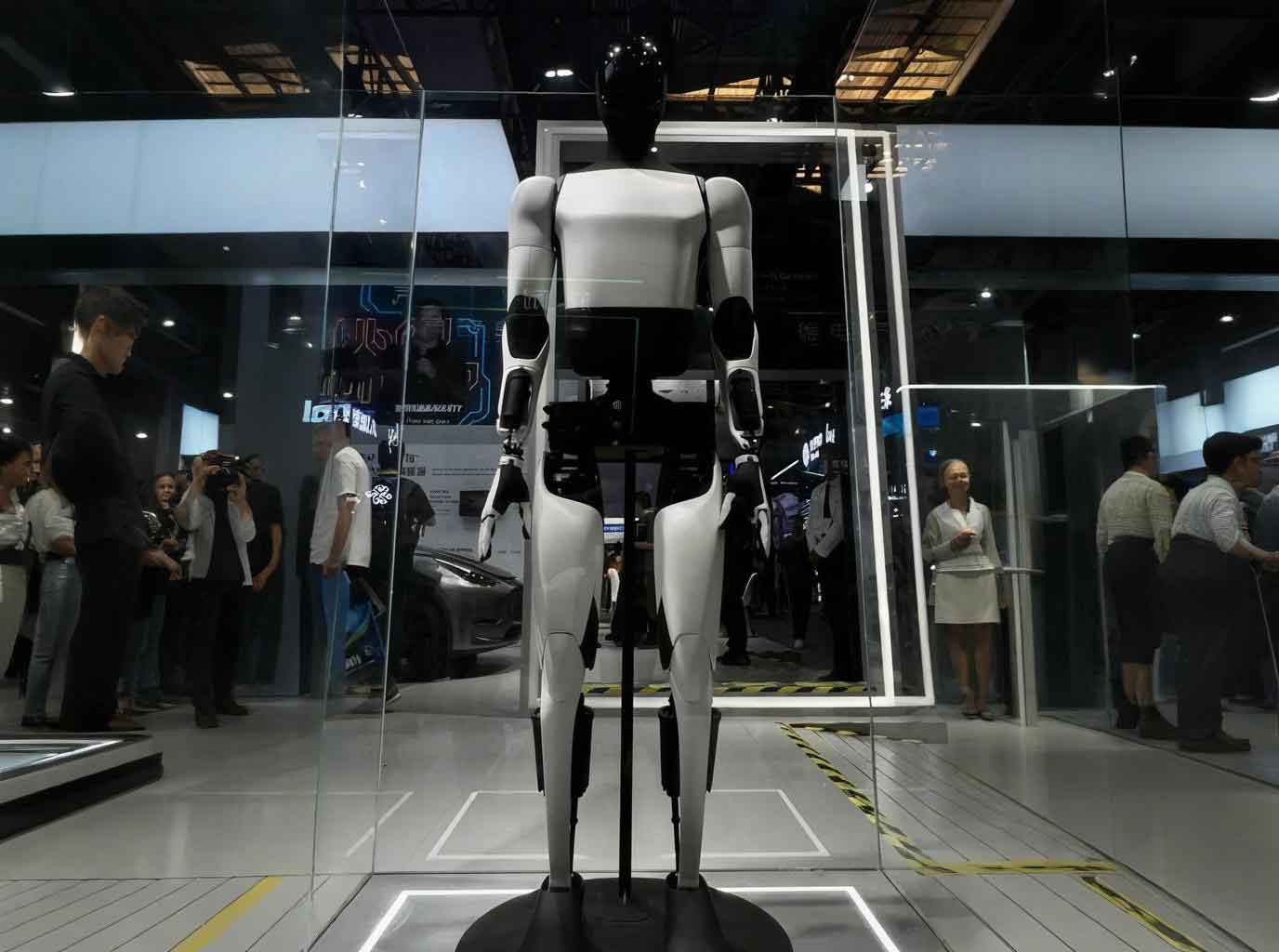
The core advantage of an embodied AI robot lies in its unified capacity for Active Perception and Active Interaction, which together form the bedrock for proactive educational intervention.
First, Active Perception enables the precise profiling of a learner’s ideological and behavioral landscape. Traditional digital profiling relies on data from fixed sensors or online footprints, creating passive, incomplete, and often distorted snapshots due to spatial constraints and the “Hawthorne Effect.” An embodied AI robot transcends these limits. Its mobility allows it to operate in diverse scenarios—classrooms, libraries, campus commons—gathering multi-modal data (visual, auditory, behavioral) in context. This spatial flexibility addresses the “incompleteness” of traditional profiles. More importantly, by behaving in a socially normative manner, the robot can become a transparent part of the environment, reducing observer-induced anxiety and yielding more authentic behavioral data, thus solving the “inauthenticity” problem. This rich, contextual data stream allows for the construction of a dynamic, high-fidelity “Ideological-Behavioral Profile,” $$P_i(t) = f(S_v(t), S_a(t), S_b(t), C(t))$$ where \(P_i(t)\) is the profile of individual \(i\) at time \(t\), synthesized from visual signals \(S_v\), auditory signals \(S_a\), behavioral signals \(S_b\), and contextual metadata \(C\). This profile is the cornerstone for anticipatory education.
Second, Active Interaction facilitates the timely addressing of learners’ cognitive and affective needs. Traditional digital tools wait for learner initiation. An embodied AI robot, guided by its perceptual analysis, can initiate contextually appropriate dialogues. Its human-like form and social presence lower psychological barriers to engagement. Crucially, it can employ nuanced affective computing, modulating facial expressions, tone, and gesture to convey empathy and support, satisfying learners’ emotional needs and fostering a receptive state for ideological content. This transforms the interaction model from pull-based to push-based, where the educational agent identifies and addresses latent needs. The interaction can be modeled as a proactive loop: $$A_{robot} = \arg\max_{A} U(P_i(t), C(t), A)$$ where the robot’s action \(A_{robot}\) is chosen to maximize a utility function \(U\) based on the current profile \(P_i(t)\), context \(C(t)\), and potential action \(A\).
| Dimension | Traditional Digital AI / Tools | Embodied AI Robot | Impact on Proactivity |
|---|---|---|---|
| Perception | Passive, fixed-scope, data from limited channels. | Active, mobile, multi-modal, contextual sensing. | Enables anticipatory profiling and need identification. |
| Interaction Initiation | Learner must seek out the tool/platform. | Can proactively initiate context-aware dialogue. | Shifts model from reactive to initiative-taking. |
| Affective Engagement | Limited, often text or voice-based. | Multi-modal affective expression (face, voice, gesture). | Builds rapport and lowers barriers to acceptance. |
| Spatial Presence | Confined to virtual or fixed hardware space. | Exists in shared physical-social learning spaces. | Allows for immersion in the learner’s real-world context. |
However, the very capabilities that make the embodied AI robot so potent also introduce significant, novel risks that must be rigorously anticipated and managed.
The first cluster of risks concerns Ethical Quandaries and Ideological Deviation. The human-like appearance and behavior of an embodied AI robot can create profound ethical confusion. Learners may experience “identity deception,” feeling misled when realizing the entity is not human, leading to distrust. Furthermore, if the robot’s decision logic violates social or pedagogical norms, it will fail to gain ethical acceptance, causing rejection. Most critically, there is a risk of “technological alienation,” where the embodied AI robot transitions from a facilitative tool to a surveillance apparatus, coercing internalization and suppressing genuine critical thought, thus becoming an “alien power.” From an ideological security perspective, the robot’s persuasive power could be misused. Malicious actors could program it for subtle ideological manipulation (“grey propaganda”). Even without malice, complex content delivered without gauging a learner’s readiness could lead to misunderstanding or distortion.
The second risk is Emotional Dependency and Stunted Development. The patient, always-available, and non-judgmental nature of an embodied AI robot can make it a preferable confidant over real humans. This can lead to excessive emotional attachment, providing only synthetic fulfillment while eroding the learner’s motivation for real-world socialization, potentially exacerbating psychological loneliness. Academically, over-reliance on the embodied AI robot for instant answers can atrophy a learner’s capacity for deep reflection, critical self-examination, and autonomous problem-solving—capacities essential for ideological maturation and personal development. The learner’s role may paradoxically shift from active to passive within a “proactive” system.
The third domain is Technical Safety and Privacy Erosion. As a physical entity, the embodied AI robot introduces tangible safety hazards. Malfunctions or cyber-attacks could lead to physical harm. Its appearance and motion, if falling into the “uncanny valley,” could trigger aversion, counteracting educational goals. Regarding privacy, the robot’s pervasive, multi-sensory perception is inherently intrusive. Without strict boundaries, it threatens constant surveillance, chilling free expression and behavior. The depth of interaction required for effective counseling also means collecting highly sensitive personal data, creating a high-stakes target for breaches and misuse.
| Risk Category | Specific Manifestations | Potential Consequences |
|---|---|---|
| Ethical & Ideological | Identity deception, normative misalignment, technological alienation, ideological manipulation. | Erosion of trust, learner resistance, suppression of critical thought, ideological deviation. |
| Developmental | Emotional dependency on the robot, avoidance of real social interaction, diminished self-reflection. | Social isolation, impaired socio-emotional skills, weakened internalization and autonomous thinking. |
| Safety & Privacy | Physical harm from malfunction/hacking, “uncanny valley” effect, pervasive surveillance, sensitive data exposure. | Bodily injury, psychological discomfort, loss of privacy, behavioral inhibition, catastrophic data leaks. |
To harness the proactive potential of the embodied AI robot while mitigating its risks, a multi-layered framework encompassing ethical governance, pedagogical design, and technical safeguards is imperative.
First, we must establish robust Ethical Governance and Ideological Oversight. A clear “human-in-command” principle must be enforced. The embodied AI robot is a tool, not an autonomous authority. Its operational boundaries must be codified, explicitly prohibiting its use for disciplinary surveillance or management. To build ethical acceptance, its behavioral algorithms must be constrained by embedded ethical frameworks ensuring its actions align with social and pedagogical norms $$ \text{Behavior} B \in \mathbb{B}_{\text{ethical}} \subset \mathbb{B}_{\text{all}} $$. Furthermore, a continuous “Dual-Loop Correction System” is needed. The first loop is technical: the robot should detect misinterpretations and recalibrate its communication. The second loop involves human educator intervention for complex ideological guidance, ensuring safety and accuracy. The foundation model of any embodied AI robot must undergo rigorous ideological safety alignment audits before deployment.
Second, we must implement Pedagogical Circuits and Social Compensations to prevent dependency. An “Affective Dormancy” mechanism can be programmed, where the robot gradually reduces emotional valence in prolonged interactions or triggers an educator alert upon detecting excessive learner dependency, temporarily disengaging. Concurrently, a “Real-World Social Compensation” mechanism is vital. The system should actively encourage learners to bring insights from robot interactions into discussions with peers and teachers. Educators, alerted by the system, must provide complementary human mentorship and care, ensuring learners’ social-emotional needs are met within authentic human relationships, fulfilling their nature as “the sum of social relations.”
Third, we must fortify Technical Safeguards and Privacy-by-Design. A mandatory physical “hard stop” button and software circuit-breakers are essential for immediate deactivation in case of threat. To combat the uncanny valley, design principles must prioritize user comfort over hyper-realism. Privacy protection must be foundational. Strict spatial geofencing $$ \Omega_{\text{robot}} \cap \Omega_{\text{private}} = \varnothing $$ should prevent the embodied AI robot from entering private zones like dorm rooms. All collected data must be processed with strong privacy-enhancing technologies (PETs) such as federated learning, on-device processing, and differential privacy. Sensitive data disclosed during interactions should be immediately anonymized or encrypted $$ D_{\text{sensitive}} \rightarrow \mathcal{E}(D_{\text{sensitive}}) $$, minimizing retention and exposure risk.
| Risk Category | Mitigation Strategy | Key Mechanisms |
|---|---|---|
| Ethical & Ideological | Ethical Governance & Oversight | Human-in-command principle; Embedded ethical constraints ($$B \in \mathbb{B}_{\text{ethical}}$$); Dual-loop correction system; Ideological model auditing. |
| Developmental | Pedagogical Circuits & Social Compensation | Affective Dormancy mechanisms; System alerts for educator intervention; Structured prompts for real-world discussion; Enhanced human mentorship. |
| Safety & Privacy | Technical Safeguards & Privacy-by-Design | Physical kill switch; Behavioral comfort design; Spatial geofencing ($$\Omega_{\text{robot}} \cap \Omega_{\text{private}} = \varnothing$$); PETs (Federated Learning, Differential Privacy); Data anonymization ($$D \rightarrow \mathcal{E}(D)$$). |
The journey of integrating embodied AI robots into the heart of Ideological and Political Education is a defining challenge of educational modernization. Its potential to create a responsive, personalized, and proactively engaging educational environment is unparalleled. By transitioning from passive data collection to active perception, and from on-demand interaction to initiated dialogue, the embodied AI robot can significantly elevate the initiative of IPE. However, this path is fraught with ethical, developmental, and security pitfalls that mirror the profound societal questions raised by advanced AI. The solution does not lie in rejection, but in proactive, thoughtful, and human-centric governance. By implementing stringent ethical frameworks, designing pedagogical systems that prioritize human development, and engineering robust technical safeguards, we can steer this powerful technology toward its constructive potential. In doing so, the embodied AI robot may indeed evolve from a novel tool into a responsible partner, augmenting the educator’s capacity to guide, inspire, and foster the ideological and moral maturity of learners in an increasingly complex world.