
The evolution of intelligence is intrinsically linked to a physical form that interacts with and learns from the surrounding world. This fundamental concept underpins the field of embodied artificial intelligence, where intelligent capabilities—perception, cognition, decision-making, and action—are not abstract processes but are grounded in and shaped by a physical entity’s interaction with its environment. An embodied AI robot is the ultimate realization of this principle: a machine that can perceive its surroundings, understand tasks through natural language, decompose complex objectives, physically interact with the world, and adapt its behavior through experience. Unlike traditional industrial robots confined to pre-programmed, repetitive tasks in structured settings, embodied AI robots aspire to operate in the dynamic, unstructured realms of human activity, learning and generalizing across a wide spectrum of scenarios. This shift from disembodied, symbolic AI to embodied, interactive intelligence represents a pivotal frontier in robotics and artificial intelligence, promising machines that can collaborate with humans as capable partners in an immense variety of tasks.
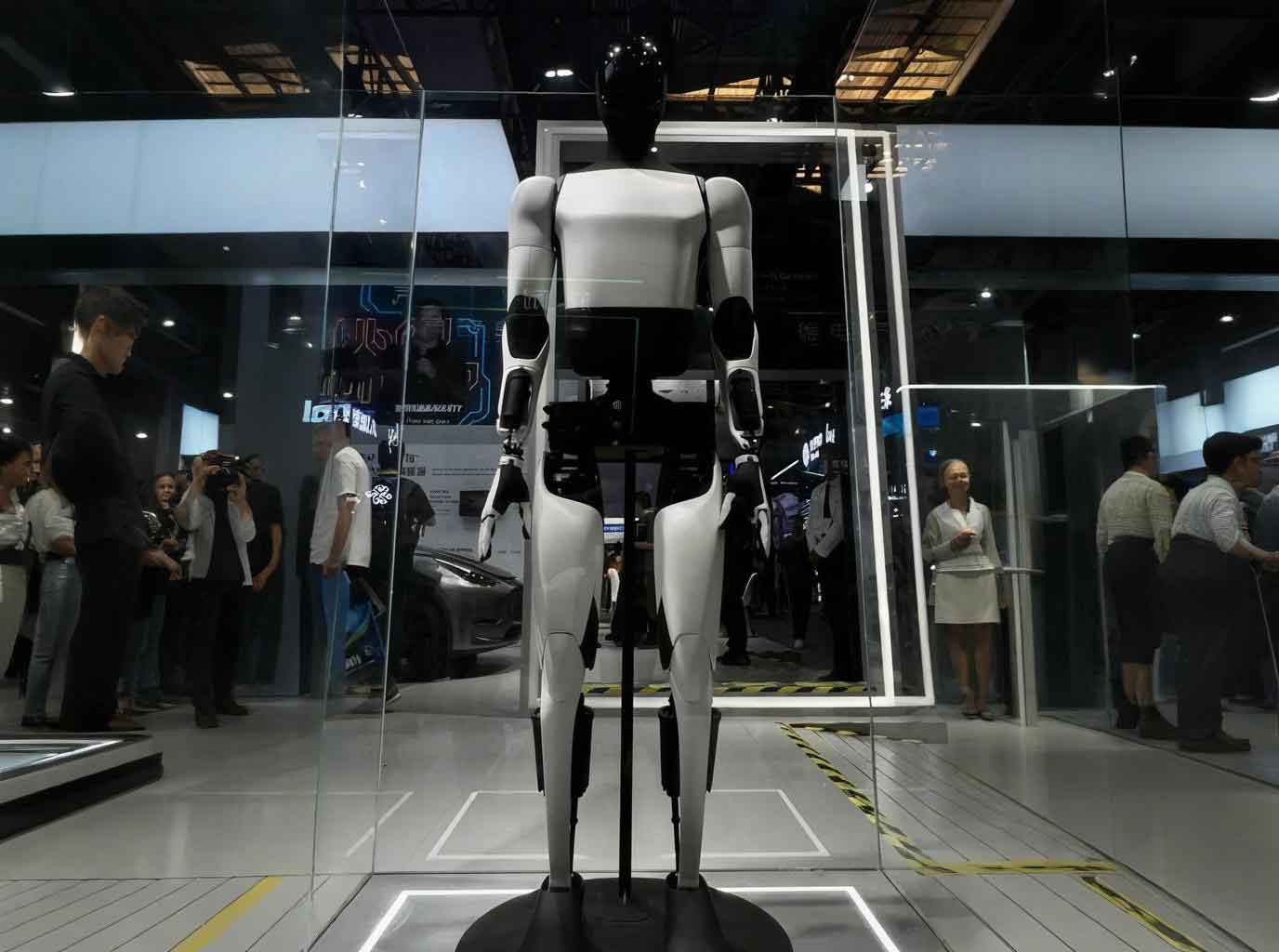
The journey toward embodied AI has been long and incremental. Early philosophical and computational foundations can be traced to debates contrasting intelligence rooted in physical experience with purely symbolic reasoning. For decades, progress in “Good Old-Fashioned AI” (GOFAI), encompassing both symbolic expert systems and connectionist neural networks, advanced the fields of computation and pattern recognition but often remained disconnected from physical reality. A significant theoretical turn occurred in the late 20th century with the articulation of principles emphasizing that intelligence emerges from the interaction between an agent’s body, its sensorimotor capabilities, and its environment. This embodied cognition perspective argued against the necessity of constructing complex, centralized world models for every action, proposing instead that clever morphological design and tight perception-action loops could produce robust, adaptive behavior. Parallel to this theoretical development, the practical field of robotics saw tremendous growth. Driven by advances in sensors, control systems, and mobility platforms, robots began performing automated tasks in manufacturing, logistics, and even hazardous environments like nuclear facilities or disaster zones. In sectors like rail transit, automation technologies have been integrated for decades in the form of automated train control systems, robotic welding in carriage manufacturing, and inspection drones for infrastructure monitoring. However, these systems largely operate within narrow, well-defined parameters. The recent convergence of breakthroughs in deep learning, particularly in computer vision and natural language processing, coupled with the explosive advent of large foundation models (like LLMs and vision-language models), has dramatically accelerated the capabilities of embodied AI robots. These models provide the cognitive substrate for understanding, reasoning, and planning, while advancements in actuator design and materials science improve physical interaction. This synthesis is propelling the development of versatile embodied AI robots, from humanoid platforms designed for general-purpose assistance to specialized mobile robots for complex inspection and maintenance, heralding a new era of autonomous systems capable of genuine understanding and adaptation.
Current Morphologies of Embodied AI Robots
The physical form of an embodied AI robot is a critical determinant of its capabilities and application domain. The design is a compromise between stability, mobility, dexterity, payload capacity, and energy efficiency, optimized for specific classes of tasks in anticipated environments. The landscape of embodied AI robots can be broadly categorized into four primary morphologies, each with distinct advantages and operational niches.
| Robot Morphology | Core Characteristics & Advantages | Primary Application Domains |
|---|---|---|
| Fixed-Base Manipulators | High precision, repeatability, and payload; physically stable; mature programming interfaces. | Laboratory automation, precision assembly, welding, and painting in controlled industrial settings. |
| Mobile Robots (Wheeled & Tracked) | Enhanced mobility across flat or moderately rough terrain; wheeled for efficiency, tracked for rough terrain; modular payload capacity. | Logistics and warehouse automation, security patrols, agricultural monitoring, search and rescue operations. |
| Humanoid Robots | Anthropomorphic form designed to operate in human-centric environments; potential for bipedal mobility and dexterous manipulation. | Service industries, healthcare assistance, collaborative manufacturing, research on human-robot interaction. |
| Biomimetic Robots (e.g., Legged, Aquatic) | Specialized locomotion inspired by nature (legged, swimming, flying); superior adaptability to specific complex terrains. | Industrial inspection in confined spaces, environmental monitoring, biological research, exploration in unstructured environments. |
Fixed-Base Manipulators represent the classical industrial robot arm. Their defining feature is a stationary base, providing exceptional stability that allows for extremely high precision and repeatability in tasks like assembly, welding, or surgical procedures. Their operational workspace is inherently limited to their kinematic reach, but within that volume, they are unmatched for structured tasks. Modern collaborative robots (cobots) within this category are designed with force-sensing and safety features to work alongside humans. The challenge for these systems as platforms for advanced embodied AI is their lack of mobility, which restricts them to tasks where the world is brought to them.
Mobile Robots overcome the workspace limitation by incorporating a mobile platform. Wheeled platforms are energy-efficient and fast on paved or smooth surfaces, making them ideal for warehouse logistics, hospitality, and indoor guidance. Tracked platforms sacrifice speed and efficiency for superior traction and obstacle-crossing ability, useful in construction, mining, and military applications. An embodied AI robot with a mobile base can navigate to where a task needs to be performed, greatly expanding its utility. The core research challenges here involve robust long-term autonomy: reliable navigation in dynamic environments, long-duration operation, and safe interaction with human crowds.
Humanoid Robots represent the most ambitious morphological pursuit, aiming to create an embodied AI robot that can seamlessly function in infrastructures built for humans. Their bipedal locomotion, torso, and dual-arm design with dexterous hands are intended to allow them to use human tools, climb stairs, and perform a vast array of manipulation tasks. The engineering complexity is enormous, involving maintaining dynamic balance, coordinating whole-body movements, and executing fine manipulation—all while being energy-intensive. The promise, however, is a general-purpose embodied AI robot capable of assisting in homes, hospitals, and factories without requiring environmental modification.
Biomimetic Robots take inspiration from the efficiency and adaptability of animals. Quadrupedal robots, like the well-known Boston Dynamics Spot or ANYbotics’ ANYmal, offer remarkable stability and agility on rough, uneven terrain where wheels fail. Their leg-based compliance allows them to traverse stairs, rubble, and natural landscapes. Other forms include snake-like robots for inspection in tightly confined pipes, or fish-like robots for aquatic monitoring. The value of a biomimetic embodied AI robot lies in its ability to access and operate in environments that are otherwise inaccessible or hazardous for humans or conventional machines, making them superb candidates for inspection and data collection missions.
Core Research Directions for Embodied AI Robots
The realization of a capable and generalizable embodied AI robot hinges on progress across several interdependent technological frontiers. These are not isolated components but form a cohesive pipeline from sensing to action, and from single-task execution to lifelong learning.
1. Embodied Perception
Perception is the gateway through which an embodied AI robot understands its state and the world. It involves fusing high-dimensional, multi-modal sensory data into a coherent, actionable representation. This goes far beyond simple object detection to include spatial understanding, material properties, affordances, and the relationships between entities.
- Visual Perception: The primary modality, typically involving RGB-D cameras, LiDAR, and event cameras. Key tasks include:
- Simultaneous Localization and Mapping (SLAM): Building a consistent map of an unknown environment while tracking the robot’s location within it. Modern approaches leverage deep learning for feature extraction and loop closure, moving from sparse to dense, semantically-rich maps. The pose graph optimization problem can be formulated as:
$$X^* = \arg\min_X \sum_{i,j} ||e_{ij}(X_i, X_j, z_{ij})||_{\Sigma_{ij}}^2$$
where \(X\) represents robot poses, \(z_{ij}\) is a measurement between poses \(i\) and \(j\), \(e_{ij}\) is the error function, and \(\Sigma_{ij}\) is the measurement covariance. - 3D Scene Understanding: Segmenting and recognizing objects in 3D space, estimating their poses, and understanding their semantic context (e.g., “a cup on a table that can be grasped”).
- Simultaneous Localization and Mapping (SLAM): Building a consistent map of an unknown environment while tracking the robot’s location within it. Modern approaches leverage deep learning for feature extraction and loop closure, moving from sparse to dense, semantically-rich maps. The pose graph optimization problem can be formulated as:
- Tactile Perception: Critical for manipulation and safe interaction. Modern tactile sensors (e.g., based on vision, piezoresistive, or magnetic principles) provide high-resolution pressure and shear force maps. This data is essential for grasping fragile objects, manipulating tools, or detecting slip. Research focuses on translating tactile “images” into material properties and contact dynamics.
- Multi-Modal Sensor Fusion: A core challenge and enabler. An embodied AI robot must combine visual, depth, tactile, inertial, and sometimes auditory data. Fusion occurs at different levels: early (raw data), late (decision), or through intermediate neural representations. The goal is a robust perceptual state \(S_t\) that is invariant to sensor noise or failure in one modality:
$$S_t = F_\theta(V_t, D_t, T_t, I_t, …)$$
where \(F_\theta\) is a learned fusion model (e.g., a transformer), and \(V, D, T, I\) represent visual, depth, tactile, and inertial data streams.
2. Embodied Planning and Control
This domain bridges the gap between high-level task understanding and low-level motor execution. It involves decomposing abstract instructions into actionable sequences and generating the precise movements to carry them out.
| Planning Level | Description | Key Techniques & Challenges |
|---|---|---|
| High-Level Task Planning | Translating a natural language command (e.g., “Make me a cup of coffee”) into a sequence of sub-tasks. | Leveraging Large Language Models (LLMs) for commonsense reasoning and task decomposition. Challenges include handling ambiguous instructions and recovering from plan failures. |
| Mid-Level Motion Planning | Finding a collision-free path for the robot or its manipulator to achieve a sub-task goal. | Algorithms like Rapidly-exploring Random Trees (RRT), Probabilistic Roadmaps (PRM), and optimization-based planners. Must account for dynamics in real-time. |
| Low-Level Control | Executing the planned motions by calculating the required torques/forces for the actuators. | PID control, model predictive control (MPC), impedance control for interaction. Reinforcement Learning (RL) is increasingly used to learn adaptive, robust control policies. |
The integration of foundation models is revolutionary here. A Vision-Language-Action (VLA) model can serve as a unified policy. Given an image of the scene \(I\) and a language instruction \(L\), it can directly output robot actions \(a_t\):
$$a_t = \pi_\phi(I_t, L)$$
where \(\pi_\phi\) is the learned policy network. Alternatively, LLMs act as a semantic planner, outputting a sequence of primitive skills or code that calls upon lower-level controllers. The control problem itself is often framed as a Markov Decision Process (MDP), where the goal is to learn a policy \(\pi(a|s)\) that maximizes the expected cumulative reward \(R = \mathbb{E}[\sum_{t} \gamma^t r_t]\).
3. Embodied Interaction
An embodied AI robot does not operate in a vacuum. Its intelligence is manifested through interaction with humans, other robots, and the physical environment.
- Human-Robot Interaction (HRI): Moving beyond joysticks and teach pendants. Natural language is the primary interface, but advanced HRI also involves understanding gestures, gaze, and social cues. The robot must communicate its intent, acknowledge understanding, and ask for clarification when needed. Safety and trust are paramount, requiring transparent decision-making and compliant physical behavior.
- Robot-Environment Interaction: This is the essence of embodiment—applying forces to change the state of the world. It requires models of contact physics, friction, and material deformation. An embodied AI robot must predict the outcome of its actions, such as how a pile of blocks will tumble when one is removed or how much force is needed to tighten a bolt without stripping it.
- Multi-Robot Collaboration: Teams of embodied AI robots can accomplish tasks more efficiently or tackle problems too large for a single agent. This requires communication protocols, distributed task allocation, and coordinated motion planning to avoid conflicts and achieve a shared goal.
4. Embodied Evolution and Lifelong Learning
A truly intelligent embodied AI robot cannot be statically programmed for all scenarios. It must improve and adapt through experience—a process of continuous embodied evolution.
- Learning from Interaction: This is primarily achieved through Reinforcement Learning (RL) and Imitation Learning (IL). RL agents learn by trial and error, optimizing a reward signal. However, RL in the real world is sample-inefficient and potentially dangerous. IL leverages human demonstrations to bootstrap learning. A powerful paradigm is offline RL, where a policy is learned from a large dataset of prior interactions \(\mathcal{D} = \{(s_t, a_t, s_{t+1}, r_t)\}\), without further environment interaction during training:
$$\pi^* = \arg\max_\pi \mathbb{E}_{(s,a) \sim \mathcal{D}}[Q(s,a)] – \alpha \cdot D_{KL}(\pi(\cdot|s) || \pi_{prior}(\cdot|s))$$
where \(Q\) is a learned value function and the second term regularizes the policy towards a prior. - Memory and Knowledge Retention: To avoid catastrophic forgetting and leverage past experience, embodied AI robots need memory systems. This includes short-term working memory for the current task context, and long-term episodic memory to recall specific past events. Semantic memory stores factual knowledge. The architecture of these memory systems and their integration with the robot’s perceptual and planning modules is a key research area.
- Sim-to-Real Transfer and World Models: A crucial accelerator for evolution is training in simulation. World models are learned neural networks that predict future states and rewards given current states and actions: \(p(s_{t+1}, r_t | s_t, a_t)\). They allow the embodied AI robot to “imagine” consequences of actions internally, enabling rapid planning and safe policy refinement. The Dreamer algorithm, for instance, learns a latent world model and a policy entirely in latent space, enabling efficient learning.
5. Embodied Simulation
High-fidelity simulation is indispensable for developing, training, and testing embodied AI robots. It provides a safe, scalable, and controllable environment for gathering the vast amounts of interaction data required for learning.
- Physics Simulation: Engines like NVIDIA Isaac Sim, MuJoCo, and PyBullet simulate rigid-body dynamics, contacts, and actuators with increasing accuracy. The challenge is modeling complex phenomena like soft-body deformation, fluid dynamics, or granular materials, which are often critical for manipulation tasks.
- Closing the Sim-to-Real Gap: Policies trained solely in simulation often fail in the real world due to unmodeled dynamics and perceptual differences (the “reality gap”). Techniques to bridge this gap include:
- Domain Randomization: Randomizing simulator parameters (e.g., lighting, textures, friction, masses) during training to force the policy to learn robust, invariant features.
- System Identification: Carefully calibrating the simulator to match the real robot’s dynamics.
- Domain Adaptation: Using techniques like adversarial training to align the feature spaces of simulated and real data.
The ultimate vision is a photorealistic, physically-accurate simulation that serves as a “digital twin” for the embodied AI robot, enabling lifelong learning and validation before any real-world deployment.
Persistent Challenges and Open Problems
Despite rapid progress, the path toward robust, general-purpose embodied AI robots is fraught with significant technical and ethical hurdles.
- Data Scarcity and Complexity: Learning sophisticated sensorimotor skills requires massive, diverse datasets of real-world robot interactions. Collecting such data is prohibitively expensive, time-consuming, and often dangerous. While simulation helps, the sim-to-real gap remains a fundamental issue. Creating large-scale, high-quality, and well-annotated datasets (e.g., for dexterous manipulation with tactile feedback) is a major bottleneck.
- Integration of Multi-Modal World Models: While individual perception modules are improving, seamlessly integrating vision, touch, sound, and proprioception into a single, coherent, and predictive world model that can guide long-horizon planning under uncertainty is an unsolved problem. The embodied AI robot must maintain a consistent belief state over time.
- Sample Efficiency and Safety of Learning: Current deep RL methods require millions of trials, which is impractical for real-world robots. Developing algorithms that can learn complex skills from a handful of demonstrations or through safe exploration is critical. Ensuring the robot’s actions are safe for itself, humans, and the environment during this learning process is a non-trivial constraint.
- Commonsense Reasoning and Task Generalization: An embodied AI robot may perform well on trained tasks but fail dramatically when faced with a novel variation. Injecting commonsense physical and social knowledge (e.g., that liquids spill, that people don’t like to be crowded) into these systems to enable true generalization is a core challenge of cognitive AI.
- Ethical and Safety Frameworks: As embodied AI robots become more capable and autonomous, urgent questions arise about accountability, bias in decision-making, privacy (through their sensors), and the societal impact of automation. Establishing robust safety standards, verification methods for learned behaviors, and ethical guidelines for design and deployment is as important as the technological advances themselves.
Application Prospects in Rail Transit
The rail transit industry, with its emphasis on safety, reliability, and efficiency across vast, complex, and often hazardous infrastructures, presents a compelling and high-value domain for the deployment of specialized embodied AI robots. The sector’s existing automation journey provides a solid foundation for integrating more advanced, intelligent agents.
Current State of Robotics in Rail
Robotics is already present in several niches:
| Application Domain | Current Robotic Solutions | Limitations Addressed by Embodied AI |
|---|---|---|
| Infrastructure Inspection | Track geometry cars, drones for visual inspection of catenaries, crawling robots for tunnel scanning. | Moving from data collection to autonomous anomaly diagnosis, decision-making, and minor repair initiation. |
| Rolling Stock Maintenance | Robotic arms for welding, painting, and windshield installation in manufacturing; automated guided vehicles (AGVs) in depots. | Adaptive disassembly/assembly of varied components, fault-specific repair procedures learned from expert mechanics. |
| Station Operations | Automated fare collection, cleaning robots, basic information kiosks. | Interactive passenger assistance, complex baggage handling, dynamic crowd management, and security patrols. |
| Train Operation | Grade-of-Automation (GoA) 2-4 systems for metros, automatic train operation (ATO) for mainline. | Enhanced perception for obstacle detection in open environments, handling of extreme weather scenarios, and predictive energy optimization. |
The Embodied AI Robot Advantage in Rail Transit
Next-generation embodied AI robots can transform rail operations by tackling tasks that are currently too dangerous, expensive, or inefficient for humans or simple machines.
- Intelligent, Adaptive Inspection and Repair: An embodied AI robot, such as a legged or multi-arm mobile platform, could autonomously patrol railyards, depots, or tunnels. Equipped with multi-modal sensors (LiDAR, high-res cameras, thermal imagers, ultrasonic flaw detectors), it would not just record data but understand it. Using a VLA model, it could follow a verbal command like, “Inspect the brake assemblies on the set of carriages in track 7 for excessive wear.” It would navigate to the location, position itself, use its manipulators to move covers if needed, analyze the components, and generate a detailed report flagging specific issues. It could even perform simple corrective actions like tightening loose bolts or applying a marker for human attention.
- Decommissioning and Disaster Response: In scenarios like derailments or infrastructure damage, sending humans is highly dangerous. A team of rugged embodied AI robots could be deployed first to assess structural integrity, detect hazards (chemical leaks, fire), locate casualties, and perform initial stabilization tasks—all while streaming critical information to a remote command center.
- Hyper-Efficient Depot Logistics: Embodied AI robots with advanced manipulation skills could revolutionize maintenance depots. They could autonomously unload spare parts from deliveries, transport them to storage, retrieve required components for a specific maintenance job, and even assist human technicians by handing them tools and parts on command, effectively acting as a highly mobile, intelligent assistant.
- Enhanced Train-Centric Autonomy: While current ATO systems follow fixed schedules and signals, an embodied AI perspective equips the train itself with a more comprehensive perception-action loop. Integrating advanced computer vision and radar with an onboard AI “brain” would allow for better detection of unexpected obstacles on the track (e.g., landslides, vehicles), more nuanced optimization of driving style for energy efficiency based on real-time weather and load, and improved decision-making in degraded operational scenarios.
Technical Considerations for Rail Applications
Deploying an embodied AI robot in rail environments presents unique challenges that will drive specific research:
- Robust Perception in Adverse Conditions: Rail environments feature poor lighting (tunnels), heavy metallic clutter causing LiDAR/radar interference, dust, grease, and dramatic weather changes. Embodied AI robot perception systems must fuse data from complementary sensors (e.g., event cameras for high-dynamic range, thermal cameras) and be trained on massive datasets of these challenging conditions to achieve reliability.
- Mobility in Constrained Spaces: The robot must navigate under trains in maintenance pits, on narrow catwalks, over ballast, and through tight equipment rooms. This may necessitate hybrid wheel-leg-track morphologies or novel climbing mechanisms, demanding advanced, adaptive locomotion controllers.
- Safety-Critical Operation: Any action by the robot in a rail environment has safety implications. Its decision-making processes must be interpretable and verifiable. Formal methods and runtime assurance techniques will need to be integrated with the learning-based components of the embodied AI robot to guarantee safe behavior under all foreseeable conditions.
- Long-Term Autonomy and Energy Management: Inspection or patrol missions may last hours. The embodied AI robot must manage its own energy, potentially docking at wireless charging stations, and be capable of recovering from minor errors without human intervention.
In conclusion, the development of the embodied AI robot represents a paradigm shift from tools that perform tasks to partners that understand and execute missions. The convergence of advanced mechanics, multi-modal perception, and large-scale cognitive models is creating machines with unprecedented potential. While significant challenges in robustness, generalization, safety, and ethics remain, the trajectory is clear. Industries with well-defined operational landscapes and high stakes for safety and efficiency, such as rail transit, stand to be among the first and greatest beneficiaries. The future rail ecosystem will likely feature a seamless collaboration between human experts and various specialized embodied AI robots, working in tandem to ensure safer, more reliable, and more efficient transportation networks. The journey of the embodied AI robot from laboratory curiosity to indispensable industrial partner is well underway, promising to redefine the boundaries of automation and intelligence in the physical world.