
The frequency and complexity of disasters, ranging from earthquakes and industrial accidents to public health crises, pose severe and evolving threats to public safety globally. The unpredictable spatial and temporal distribution of these events, coupled with their multifaceted nature, presents unprecedented challenges for emergency response. In such critical scenarios, the primary objective is the rapid location and extraction of survivors, as the probability of survival decreases drastically if aid is not received within the first 48 hours. However, post-disaster environments, characterized by collapsed structures creating confined spaces, toxic atmospheres, high temperatures, and the constant threat of secondary collapses, are often too hazardous for human first responders and even search dogs. This urgent need has propelled the development and integration of robotics into search and rescue (SAR) operations. While traditional tracked or wheeled robots offer some utility, their limitations in narrow spaces, obstacle negotiation, and overall agility are significant. Consequently, a paradigm shift is occurring, with research increasingly focusing on bionic robot design—drawing inspiration from the remarkable adaptability and locomotion strategies found in nature. This article, from the perspective of a researcher in the field, explores the current application landscape, analyzes the capabilities and limitations of various bionic robot archetypes, investigates emerging trends like swarm intelligence, and outlines future directions for these transformative machines in disaster response.
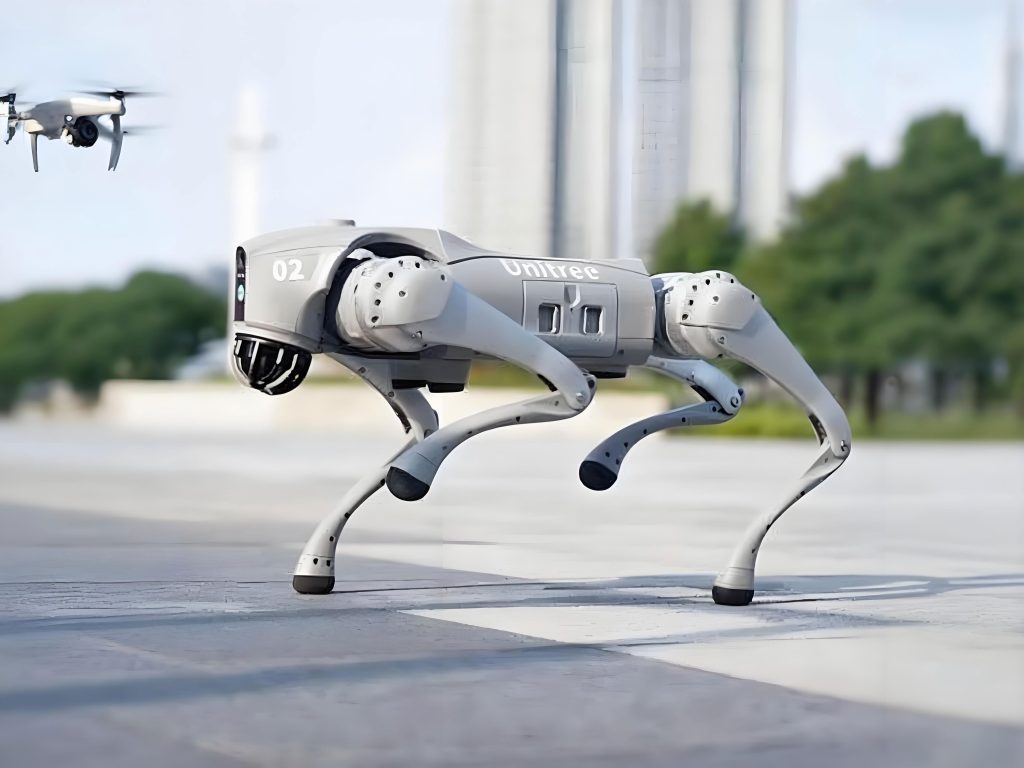
The operational timeline of disaster management can be segmented into three phases: pre-disaster (evacuation, preparedness), during-disaster (active mitigation like firefighting), and post-disaster (search, rescue, recovery). Bionic robots, with their enhanced environmental adaptation, are poised to play roles across all phases. Their primary functions in SAR missions can be distilled into three core tasks: 1) Obstacle Traversal: Leveraging bio-inspired mobility to navigate rubble, narrow passages, and unstructured terrain to reach affected areas. 2) Assisted Detection: Utilizing onboard sensors (acoustic, thermal, visual, gas) to locate survivors and assess structural and environmental hazards, providing critical real-time data. 3) Logistics Support: Transporting essential supplies such as medicine, water, and communication devices to trapped victims. The integration of bionic robot platforms into these tasks represents a significant advancement over conventional robotics, promising greater mission efficacy and safety for human teams.
The current research landscape for bionic robot in SAR is rich and varied, primarily categorized by their morphological inspiration. The following analysis delves into the major categories, their principles, advantages, and shortcomings.
| Category | Biological Inspiration | Primary Function | Key Advantages | Current Limitations |
|---|---|---|---|---|
| Legged Robots | Quadrupeds, Insects, Kangaroos | Walking, Running, Jumping | Superior adaptability to rough, unstructured terrain; dynamic stability. | High control complexity; foot-end impact forces limit payload; dynamic balance on complex rubble needs improvement. |
| Snake/Serpentine Robots | Snakes, Earthworms, Inchworms | Crawling, Burrowing, Climbing | Exceptional ability to traverse confined spaces and pipelines; high degree-of-freedom (DOF). | Limited 3D obstacle negotiation capabilities; relatively slow speed; complex control for 3D locomotion. |
| Aerial Robots (Flapping-Wing) | Birds, Insects, Hummingbirds | Flying, Hovering | Rapid deployment over impassable terrain; aerial perspective for reconnaissance. | Severely limited payload and endurance (due to size/weight constraints); sensitive to wind; control strategies are less mature. |
| Amphibious Robots | Amphibians (Frogs, Mudskippers) | Walking/Swimming, Water-to-Land Transition | Operability in both terrestrial and aquatic environments (floods, coastlines). | Complex leg mechanisms for dual-mode operation; often bulky; stability during mode transition is challenging. |
| Swarm Robotics | Social Insects (Ants, Bees) | Coordinated Sensing, Mapping, Search | High robustness (no single point of failure); parallel task execution; scalable coverage. | Extremely high complexity in inter-agent communication, coordination, and task allocation; human-swarm interaction is nascent. |
1. Legged Bionic Robots
Legged animals masterfully navigate complex terrains by adjusting their gait and posture. Bionic robot designs inspired by them offer discrete ground contact points, providing exceptional mobility over discontinuous surfaces like rubble piles. The fundamental challenge lies in stability control, often governed by equations like the Zero Moment Point (ZMP) criterion for quasi-static walking:
$$ \text{ZMP} = \frac{\sum_{i=1}^{n} m_i (\ddot{z}_i + g) x_i – \sum_{i=1}^{n} m_i \ddot{x}_i z_i}{\sum_{i=1}^{n} m_i (\ddot{z}_i + g)} $$
where \(m_i\) is the mass of link \(i\), \((x_i, z_i)\) are its coordinates, and \(g\) is gravity. For dynamic running or hopping, simpler spring-loaded inverted pendulum (SLIP) models are often used:
$$ m\ddot{z} = k(l_0 – l) \cos\theta – mg, \quad m\ddot{x} = -k(l_0 – l) \sin\theta $$
where \(m\) is body mass, \(k\) is leg spring constant, \(l_0\) is rest length, \(l\) is current leg length, and \(\theta\) is leg angle. Quadruped and hexapod bionic robot designs are prevalent, with some exploring hybrid wheel-leg mechanisms for efficiency on mixed terrain. Jumping bionic robot, inspired by creatures like kangaroos or frogs, incorporate specialized mechanisms for energy storage and release (e.g., using tendons or elastic elements) to overcome large vertical obstacles, a critical capability in collapsed buildings. However, the foot-ground impact during high-dynamic motions remains a major stressor for actuators and structures, inherently limiting their payload capacity—a crucial parameter for carrying substantial sensor suites or relief supplies.
2. Snake/Serpentine Bionic Robots
These bionic robot consist of multiple serial-linked modules, creating a hyper-redundant kinematic chain. This design grants them an unparalleled ability to squeeze through tight gaps and conform to irregular surfaces. Locomotion gaits are mathematically modeled, with common ones being serpentine (lateral undulation) and rectilinear (linear progression). The joint angles for a serpentine gait can be described by:
$$ \phi_i(t) = A \sin(\omega t + (i-1)\beta) + \gamma $$
where \(\phi_i\) is the angle of the \(i\)-th joint, \(A\) is the amplitude, \(\omega\) is the temporal frequency, \(\beta\) is the phase shift between modules, and \(\gamma\) is a constant offset for turning. The primary research focus is on developing robust 3D gaits for climbing over piles of debris, which requires sophisticated control algorithms and sometimes specialized mechanisms for anchoring. While their narrow profile is advantageous, their progression speed is generally low, and their ability to traverse large, disconnected voids is limited compared to legged systems.
3. Aerial Bionic Robots (Flapping-Wing MAVs)
Inspired by birds and insects, flapping-wing Micro Aerial Vehicles (MAVs) represent a promising class of bionic robot for rapid situational assessment. Their key advantage is bypassing ground obstacles entirely. The aerodynamics involve complex unsteady flows. A simplified model for average lift (\(L\)) generated can relate to wingbeat kinematics:
$$ L \propto \rho S \Phi^2 f^2 C_L(\alpha) $$
where \(\rho\) is air density, \(S\) is wing area, \(\Phi\) is stroke amplitude, \(f\) is flapping frequency, and \(C_L\) is the lift coefficient dependent on the angle of attack \(\alpha\). The core challenges are monumental: scaling down power sources, motors, and control electronics while maintaining sufficient lift for payload (cameras, gas sensors). Flight endurance is typically measured in minutes, severely constraining mission scope. Furthermore, control in turbulent, GPS-denied indoor environments common in post-disaster scenarios remains a significant research hurdle.
4. Amphibious Bionic Robots
For disasters involving floods, tsunamis, or searches in coastal areas, bionic robot capable of transitioning between land and water are essential. These designs often mimic amphibians, employing multi-functional limbs that can perform paddling strokes in water and walking motions on land. The dynamics involve two highly different regimes. The thrust in water (\(T_w\)) from a paddling limb might be modeled as:
$$ T_w \approx \frac{1}{2} \rho_w C_D A_p v_p^2 $$
where \(\rho_w\) is water density, \(C_D\) is drag coefficient, \(A_p\) is the paddle area, and \(v_p\) is the paddling velocity relative to water. On land, the mechanics revert to legged locomotion models. The major engineering challenges include waterproofing, managing buoyancy, dealing with corrosion, and designing lightweight yet robust limb structures that are efficient in both media. The transition phase itself is a critical moment where stability is easily lost.
5. Swarm Robotics: A Systems-Level Bionic Approach
Moving beyond individual platforms, swarm robotics draws inspiration from the collective intelligence of social insects. A swarm of simple, relatively inexpensive bionic robot can cooperate to achieve complex SAR tasks like parallel searching of large areas, creating communication relay networks, or collaboratively moving heavy debris. This approach embodies a systems-level bionic robot philosophy. Control is typically decentralized, relying on local interactions and simple rules. A foundational algorithm is Ant Colony Optimization (ACO), used for path planning. The probability \(P_{ij}^k(t)\) of ant (robot) \(k\) at node \(i\) choosing node \(j\) is:
$$ P_{ij}^k(t) = \frac{[\tau_{ij}(t)]^\alpha \cdot [\eta_{ij}]^\beta}{\sum_{l \in \mathcal{N}_i^k} [\tau_{il}(t)]^\alpha \cdot [\eta_{il}]^\beta} \quad \text{if } j \in \mathcal{N}_i^k $$
where \(\tau_{ij}\) is the pheromone intensity on edge \((i,j)\), \(\eta_{ij}\) is the heuristic desirability (e.g., \(1/d_{ij}\)), \(\alpha\) and \(\beta\) are parameters, and \(\mathcal{N}_i^k\) is the set of neighboring nodes for ant \(k\). The pheromone update rule reinforces good paths. For area coverage, algorithms inspired by bacterial foraging or flocking behavior are used, often aiming to maximize the covered area \(A_c(t)\) over time:
$$ \max \int_0^T A_c(t) \, dt \quad \text{subject to robot dynamics and communication constraints}. $$
The advantages are robustness (the failure of a few units does not doom the mission) and scalability. However, the coordination complexity is immense, involving challenges in distributed sensing, communication under harsh conditions, task allocation, and preventing interference between agents. Furthermore, establishing effective and intuitive human-swarm interfaces for supervisory control is an open area of research.
Analysis of Current Challenges and Deficiencies
Despite the promising advantages, the transition of bionic robot from laboratory prototypes to reliable field-deployable systems is hindered by several cross-cutting challenges:
- Endurance and Energy Autonomy: The high energy demands of bio-inspired actuation (especially for dynamic legged or flapping-wing locomotion) conflict with the limited energy density of current batteries. This results in operational durations far too short for most real-world SAR missions.
- Environmental Robustness: Real disaster sites are brutally harsh. Bionic robot must be designed to withstand dust, water, mud, extreme temperatures, and physical impacts. Sensor fouling and mechanical jamming are constant risks. Protective measures often add weight and reduce mobility, creating a difficult trade-off.
- Autonomous Navigation and Decision-Making: While teleoperation is common, it requires reliable communication links and burdens the operator. True autonomy in chaotic, GPS-denied, and dynamically changing environments is a grand challenge. Advanced simultaneous localization and mapping (SLAM), semantic understanding of scenes (distinguishing a limb from rubble), and autonomous path planning in 3D debris fields are active but unsolved problems for most bionic robot platforms.
- Manipulation and Physical Interaction: Many rescue scenarios require not just reaching a victim but also performing a physical task: turning a valve, moving a small obstacle, or delivering a package. Dexterous manipulation in unstructured settings remains a key weakness for most bionic robot, requiring advanced tactile sensing and compliant control.
Future Development Trends
The evolution of bionic robot for SAR is progressing along three interconnected vectors:
- Miniaturization and Specialization: Development of smaller, cheaper bionic robot that can be deployed in large numbers. These micro- or milli-robots could infiltrate the smallest voids. This trend is coupled with functional specialization—designing specific robots for detection, delivery, or communication relay within a heterogeneous team.
- Enhanced Intelligence and Autonomy: Integration of advanced AI, particularly machine learning and computer vision, to improve scene perception, victim recognition (e.g., from subtle thermal patterns or audio cues), and adaptive locomotion control. The goal is to move from pre-programmed gaits to robots that can learn to traverse novel terrain in real-time.
- Systematization and Human-Robot Teaming: The future lies not in isolated super-robots but in integrated systems. This includes effective bionic robot swarms and, crucially, seamless human-robot collaboration (HRC). Research will focus on intuitive interfaces, shared autonomy, and trust modeling, allowing human responders to effectively guide and manage teams of bionic robot as force multipliers.
In conclusion, bionic robot represent a transformative frontier in disaster response technology. By emulating nature’s proven solutions for mobility and adaptation, they offer the potential to access hazardous areas unreachable by conventional means, thereby saving lives and reducing risk to human responders. Current research has produced a diverse portfolio of legged, serpentine, aerial, amphibious, and swarm systems, each with unique capabilities and acknowledged limitations. The path forward necessitates focused efforts on core technological challenges—energy, robustness, and intelligence—while embracing the trends of miniaturization, smarter autonomy, and collaborative system design. The ultimate objective is to transition these remarkable bionic robot from compelling laboratory demonstrations to dependable partners in the urgent and critical theater of disaster search and rescue.