
As an observer and participant in the robotics industry, I have witnessed a remarkable shift: embodied AI robots are rapidly entering industrial settings, becoming integral “workers” on production lines. These robots, equipped with advanced感知, decision-making, and行动 capabilities, are no longer confined to repetitive, pre-programmed tasks. Instead, they adapt, learn, and interact with their environment, much like humans. This evolution is poised to redefine manufacturing, driving it toward greater efficiency, precision, and flexibility. In this article, I explore the applications, technological foundations, challenges, and future of embodied AI robots in industrial manufacturing, emphasizing the critical role of innovation and collaboration.
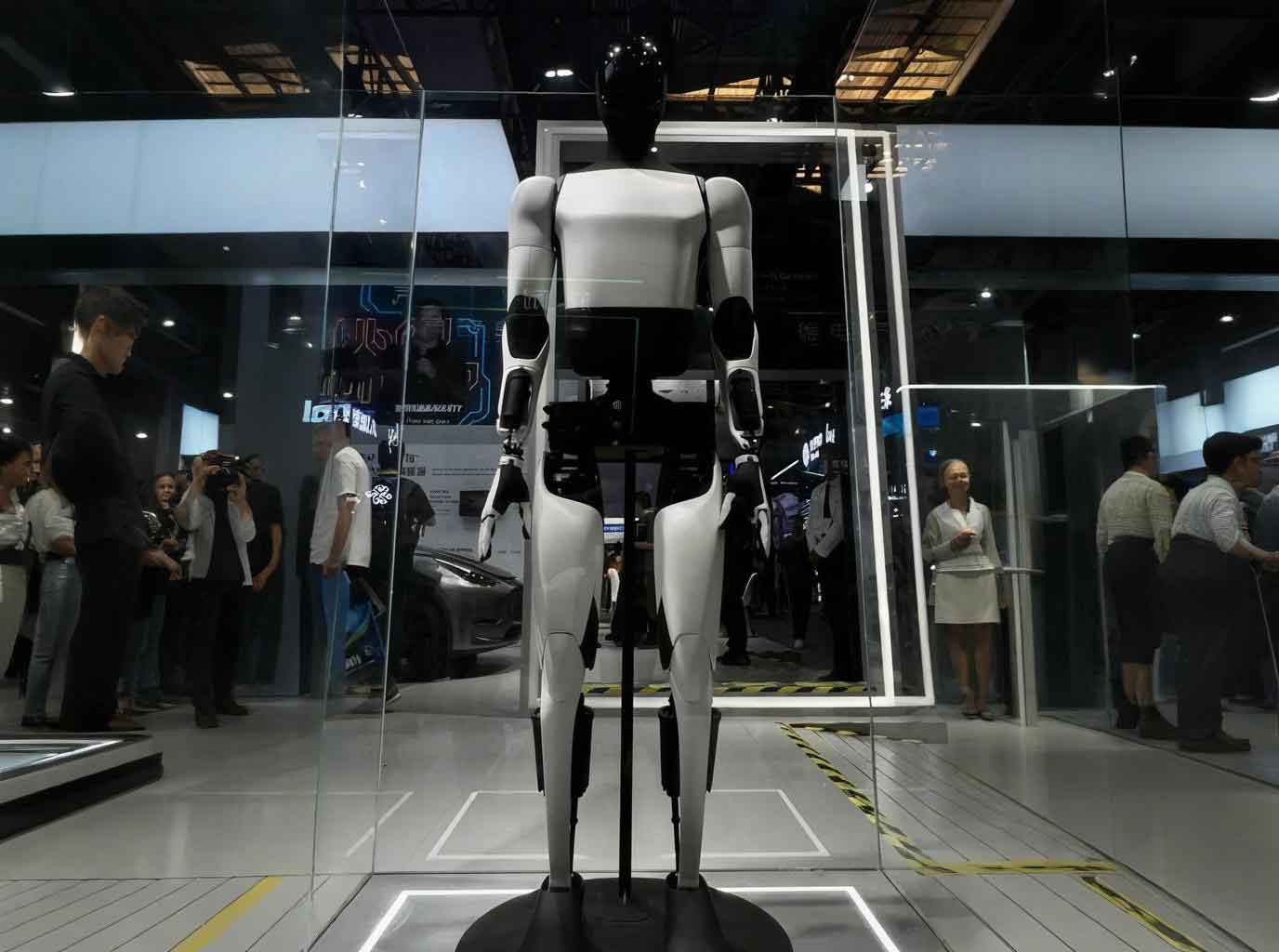
The integration of embodied AI robots into industrial manufacturing marks a paradigm shift. Unlike traditional robots that operate in isolated cages, these robots collaborate with human workers, handle complex instructions, and navigate dynamic environments. From assembly and welding to quality inspection and material handling, embodied AI robots are demonstrating their potential across diverse sectors. For instance, in automotive plants, they perform precise welding and打磨; in electronics factories, they assemble delicate components; and in semiconductor facilities, they manage intricate logistics. The versatility of an embodied AI robot stems from its ability to perceive surroundings through sensors, process information via AI algorithms, and execute tasks with dexterous manipulation. This convergence of intelligence and physicality is unlocking new levels of productivity.
To illustrate the widespread adoption, I have compiled a table summarizing key application scenarios for embodied AI robots in industrial manufacturing:
| Application Area | Specific Tasks | Benefits Observed | Industry Examples |
|---|---|---|---|
| Assembly and Disassembly | Part grasping, component fitting, screw tightening, device拆卸 | Increased precision, reduced errors, higher throughput | Automotive, 3C manufacturing,医疗器械 |
| Material Handling and Logistics | Part搬运,料箱搬运,弹夹搬运, SPS零部件抓取 | Enhanced efficiency, reduced manual labor, optimized workflow | Semiconductor,新能源, general manufacturing |
| Quality Inspection and Testing | 外观检测, adaptive抓取 for质检, electronic product testing | Improved product合格率, consistent quality control | Electronics, automotive零部件 |
| Processing and Finishing | 焊接,打磨,擦拭打蜡,螺栓拧紧 | Stable operation, superior finish, reduced waste | Metalworking, automotive, construction materials |
| Flexible Manufacturing | Adaptive抓取 in variable environments, learning new tasks on the fly | 应对生产线灵活性挑战, reduced reprogramming time | Small-batch production, customized goods |
The effectiveness of an embodied AI robot in these tasks hinges on its technological core. I delve into the three pillars that empower these robots: perception, decision, and action. Each pillar involves sophisticated components that work in concert to mimic human-like capabilities.
In perception, an embodied AI robot relies on a suite of sensors acting as its “senses.” Visual sensors capture environmental data, force sensors measure interaction forces, and触觉 sensors provide feedback on contact and texture. For example, advanced仿人五指灵巧手 integrate multiple触觉传感器模块 on fingertips and palms, enabling fine-grained object manipulation. The perception system can be modeled as a mapping from sensory inputs to a state representation: $$ S_t = f(P_t, F_t, T_t) $$ where \( S_t \) is the state at time \( t \), \( P_t \) represents visual data, \( F_t \) force data, and \( T_t \)触觉 data. This continuous stream of information allows the embodied AI robot to adapt to changing conditions.
Decision-making is where the “AI” in embodied AI robot shines. Large language models (LLMs) and deep learning algorithms form the “智慧大脑.” LLMs interpret natural language instructions, such as “assemble part A to part B,” and convert them into actionable plans. Deep learning models, trained on vast datasets, optimize task execution through reinforcement learning or supervised learning. The decision process can be expressed as: $$ A_t = \arg\max_{a} Q(S_t, a; \theta) $$ where \( A_t \) is the action selected at time \( t \), \( Q \) is a value function parameterized by \( \theta \) (learned weights), and \( S_t \) is the current state. This enables an embodied AI robot to learn from experience, improving accuracy over time. Moreover, multi-modal interaction技术融合 speech, gesture, and expression, facilitating natural human-robot collaboration.
Action involves the physical execution of tasks, dependent on mechanical design and驱动 systems. Lightweight仿人机械臂 with high load-to-weight ratios and dexterous灵巧手 with strong grip力量 exemplify advancements. The kinematics of an embodied AI robot’s arm can be described using inverse kinematics formulas: $$ \Theta = J^{-1}(X_d) $$ where \( \Theta \) is the joint angle vector, \( J \) is the Jacobian matrix, and \( X_d \) is the desired end-effector position. Additionally, dynamic control ensures stable movement: $$ \tau = M(\theta)\ddot{\theta} + C(\theta, \dot{\theta}) + G(\theta) $$ where \( \tau \) is the torque, \( M \) is the inertia matrix, \( C \) accounts for Coriolis forces, and \( G \) for gravity. These principles allow an embodied AI robot to perform precise, fluid motions, even in high-speed operations.
To quantify the technological components, I present a table detailing the key elements of an embodied AI robot:
| Component Category | Specific Technologies | Function in Embodied AI Robot | Performance Metrics |
|---|---|---|---|
| Perception Modules | Vision cameras, LiDAR, force/torque sensors, tactile sensor arrays | Environment recognition, object detection, force feedback | Resolution (e.g., 像素 for vision), force sensitivity (e.g., N), sampling rate (Hz) |
| Decision Intelligence | Large language models (LLMs), convolutional neural networks (CNNs), reinforcement learning algorithms | Instruction understanding, path planning, adaptive learning | Inference speed (FPS), accuracy (%), learning convergence rate |
| Actuation Systems | Micro伺服电缸, harmonic drives, electric motors, tendon mechanisms | 提供力量 for manipulation,驱动关节运动, enabling dexterity | Load capacity (kg), speed (m/s), precision (mm), lifespan (hours) |
| Integration框架 | ROS (Robot Operating System), MAIC systems, cloud服务 platforms | Coordinating感知,决策,行动, enabling scalability and remote management | Latency (ms), throughput (tasks/hour), compatibility with industrial protocols |
Despite the promise, deploying an embodied AI robot in industrial settings is fraught with challenges. From my analysis, these hurdles span technical, economic, and security domains. Technically, while感知 and决策 have advanced, robustness in complex, unpredictable environments remains a hurdle. For instance, an embodied AI robot must handle occlusions, varying lighting, and unexpected obstacles. The perception accuracy can be modeled as: $$ \text{Accuracy} = 1 – \frac{\text{False Positives} + \text{False Negatives}}{\text{Total Samples}} $$ Achieving near-perfect accuracy in real-time is computationally intensive. Similarly, decision-making under uncertainty requires algorithms that balance exploration and exploitation, often formulated in partially observable Markov decision processes (POMDPs): $$ \pi^* = \arg\max_{\pi} \mathbb{E} \left[ \sum_{t=0}^{\infty} \gamma^t R(s_t, a_t) \right] $$ where \( \pi^* \) is the optimal policy, \( \gamma \) is a discount factor, and \( R \) is the reward function. Implementing such models on an embodied AI robot demands substantial processing power.
Cost is another significant barrier. The development and production of high-performance embodied AI robots involve expensive components, such as precision sensors and custom actuators. For many small and medium-sized enterprises, the initial investment is prohibitive. I estimate the cost breakdown using a simplified formula: $$ C_{\text{robot}} = C_{\text{hardware}} + C_{\text{software}} + C_{\text{integration}} $$ where \( C_{\text{hardware}} \) includes mechanical parts and sensors, \( C_{\text{software}} \) covers AI algorithms and licenses, and \( C_{\text{integration}} \) involves deployment and maintenance. Reducing \( C_{\text{robot}} \) through economies of scale and innovative design is crucial for widespread adoption of the embodied AI robot.
Data security and privacy also pose risks. An embodied AI robot continuously collects sensitive production data, from design specs to quality metrics. Ensuring secure data transmission and storage is paramount to protect intellectual property. Encryption and access control mechanisms must be embedded, which can be represented as: $$ \text{Security Score} = f(\text{Encryption Strength}, \text{Access Control Rigor}, \text{Anomaly Detection Efficiency}) $$ A breach could compromise competitive advantages, making security a non-negotiable aspect for any embodied AI robot deployment.
To address these challenges, a协同创新 approach involving industry, academia, research, and users is essential. From my perspective, this collaboration can accelerate technological breakthroughs and cost reduction. Below is a table outlining strategies for overcoming the key challenges facing embodied AI robots:
| Challenge Category | Specific Issues | Proposed Solutions via协同创新 | Expected Outcomes |
|---|---|---|---|
| Technical Limitations | Low感知精度 in clutter, slow决策 in dynamic settings, limited adaptability of行动 systems | Joint R&D on sensor fusion algorithms, open-source AI模型 for industrial tasks, shared testing environments | Improved robustness, faster learning cycles, enhanced interoperability of embodied AI robot platforms |
| High Costs | Expensive hardware components, costly software development, high integration and maintenance expenses | Standardization of零部件 to achieve scale, government subsidies for adoption, modular designs to lower customization costs | Reduced per-unit cost of embodied AI robot, increased accessibility for SMEs, faster ROI for manufacturers |
| Data Security Concerns | Risk of data leaks during transmission, vulnerability to cyber-attacks, lack of industry-wide security protocols | Development of blockchain-based secure logs, industry consortia for security standards, encrypted on-device processing | Enhanced trust in embodied AI robot systems, compliance with regulations, protection of proprietary data |
| Skill Gaps and Integration | Shortage of trained personnel to operate and maintain robots, difficulty in integrating with legacy systems | University-enterprise training programs, plug-and-play interfaces for old machinery, simulation tools for pre-deployment | Smoother deployment of embodied AI robot, reduced downtime, broader workforce readiness |
Looking ahead, the future of industrial manufacturing will be increasingly shaped by embodied AI robots. As these robots become more affordable and capable, they will penetrate deeper into production lines, from mass production to customized, low-volume runs. The synergy between AI and robotics will enable unprecedented levels of autonomy. For example, an embodied AI robot might self-optimize its workflow based on real-time production data, using predictive maintenance models to avoid downtime. Such advancements can be captured by efficiency metrics: $$ \text{Overall Equipment Effectiveness (OEE)} = \text{Availability} \times \text{Performance} \times \text{Quality} $$ where an embodied AI robot contributes to higher availability through reliability, better performance via adaptive speed, and improved quality via precise control.
Moreover, the environmental impact of manufacturing can be reduced through embodied AI robots. By optimizing material usage and energy consumption, they support green initiatives. A simple formula for sustainability gain is: $$ \text{Green Score} = \frac{\text{Energy Saved} + \text{Waste Reduced}}{\text{Traditional Process Baseline}} $$ Deploying an embodied AI robot in energy-intensive tasks like welding or painting can significantly boost this score.
In conclusion, the rise of embodied AI robots in factories is not merely a trend but a transformative force. From enhancing productivity to enabling flexible manufacturing, the embodied AI robot stands as a cornerstone of Industry 4.0. However, realizing its full potential requires concerted efforts to innovate, collaborate, and address practical hurdles. As I see it, the journey ahead involves continuous improvement in AI algorithms, cost-effective hardware, and secure, scalable integration. Through产学研用 partnerships, we can ensure that the embodied AI robot evolves into a truly “得力助手,” propelling manufacturing toward a smarter, more efficient, and sustainable future. The embodied AI robot is here to stay, and its impact will only grow as technology advances and ecosystems mature.
To further illustrate the progression, consider the learning curve of an embodied AI robot over time. The improvement in task performance can be modeled using a learning curve equation: $$ P(t) = P_0 + \alpha \cdot (1 – e^{-\beta t}) $$ where \( P(t) \) is the performance at time \( t \), \( P_0 \) is the initial performance, \( \alpha \) is the maximum possible improvement, and \( \beta \) is the learning rate. This encapsulates how an embodied AI robot becomes more proficient with experience, ultimately achieving human-like or superior efficiency in industrial tasks.