
In my perspective, the evolution of artificial intelligence has reached a pivotal juncture, where the fusion of cognition and physical action is redefining the boundaries of technology. As we witness the global race for AI supremacy, I believe that embodied intelligence—particularly through embodied AI robots—represents not just an incremental advance, but a fundamental transformation in how machines perceive, learn, and act in the real world. This shift from disembodied algorithms to systems that integrate body and mind is poised to reshape industries, drive economic growth, and pave the way toward artificial general intelligence. In this article, I will explore the philosophical underpinnings, strategic implementations, and future trajectories of embodied AI, emphasizing its role in charting a new industrial landscape, with a focus on the embodied AI robot as the central agent of change.
The concept of embodied intelligence marks a radical departure from traditional AI paradigms. For decades, AI research has been dominated by a disembodied approach, where intelligence is treated as a computational process divorced from physical form. In such systems, learning occurs through static datasets, and decision-making is often isolated from environmental feedback. However, as I observe the limitations of these models—such as brittleness in open-world scenarios and poor generalization—it becomes clear that true intelligence emerges from continuous interaction between an agent and its surroundings. An embodied AI robot, by contrast, embodies this principle: it uses its physical body to sense, manipulate, and navigate the world, creating a closed-loop cycle of perception, cognition, and action. This aligns with theories in cognitive science, where intelligence is seen as grounded in sensory-motor experiences. To illustrate, consider the reinforcement learning framework often used in embodied AI robots, where the robot learns to optimize its behavior through trial and error. The reward function can be expressed as:
$$ R(\tau) = \sum_{t=0}^{T} \gamma^t r(s_t, a_t) $$
where \( \tau \) is a trajectory of states \( s_t \) and actions \( a_t \), \( \gamma \) is a discount factor, and \( r \) is the immediate reward. For an embodied AI robot, this reward might be tied to physical outcomes, such as successfully grasping an object or avoiding obstacles, highlighting how learning is intrinsically linked to bodily engagement.
To further elucidate the differences, I present a comparative analysis between disembodied AI and embodied AI, with a focus on the embodied AI robot as a case study. This table summarizes key distinctions that I have synthesized from current research and industrial trends.
| Dimension | Disembodied AI Systems | Embodied AI Robots |
|---|---|---|
| Philosophical Basis | Intelligence as abstract computation; mind-body dualism. | Intelligence as emergent from body-environment interaction; embodied cognition. |
| Learning Paradigm | Primarily supervised or unsupervised learning on static datasets; offline training. | Reinforcement learning, imitation learning, and self-supervised learning through real-time interaction; online adaptation. |
| Perception-Action Loop | Often decoupled; perception feeds into decision-making without direct physical feedback. | Tightly integrated; perception directly informs action, and action alters perception in a continuous cycle. |
| Generalization Capability | Limited to training distribution; struggles with novel environments. | Enhanced through sim-to-real transfer and lifelong learning; better adaptation to dynamic contexts. |
| Typical Applications | Image recognition, natural language processing, data analysis. | Autonomous navigation, robotic manipulation, human-robot collaboration, healthcare assistance. |
| Key Challenges | Data bias, interpretability, scalability in complex tasks. | Hardware robustness, safety in physical interactions, efficient simulation-to-reality transfer. |
From my standpoint, this paradigm shift is not merely technical but epistemological. It challenges the long-held notion that intelligence can be fully captured in silico, advocating instead for a holistic view where the body serves as a crucial component of cognitive processing. For an embodied AI robot, this means that its physical design—its sensors, actuators, and morphology—directly influences its intelligent behavior. I often reflect on how this aligns with the concept of morphological computation, where the body itself performs computational tasks, reducing the cognitive load on the central processor. Mathematically, this can be modeled using dynamical systems theory. For instance, the state evolution of an embodied AI robot interacting with an environment can be described by:
$$ \dot{x} = f(x, u, \theta) $$
where \( x \) is the state vector (e.g., joint angles, positions), \( u \) is the control input, and \( \theta \) represents environmental parameters. The function \( f \) encapsulates both the robot’s dynamics and its coupling with the world, emphasizing that intelligence arises from this interplay. As we develop more advanced embodied AI robots, I anticipate that such models will become increasingly sophisticated, incorporating neural networks for \( f \) to enable adaptive control.
Turning to strategic implementations, I note that the rise of embodied intelligence has spurred concerted efforts to translate theoretical insights into industrial reality. Across various regions, policies and initiatives are being crafted to foster innovation in embodied AI robots. A prime example is the systematic approach seen in major urban centers, which I will discuss without referencing specific names or locations. These strategies often emphasize a tripartite framework: technological breakthroughs, platform development, and ecosystem cultivation. For embodied AI robots, this involves creating synergistic architectures that integrate “brain” (cognitive algorithms), “cerebellum” (motor control), and “body” (physical hardware). I have analyzed several such frameworks and distilled their core components into the following table, which outlines the strategic pillars for advancing embodied AI robots at a national scale.
| Strategic Pillar | Key Components | Expected Outcomes for Embodied AI Robots |
|---|---|---|
| Technology Innovation | Breakthroughs in perception algorithms (e.g., 3D vision), actuator design, energy-efficient computing, and safe human-robot interaction. | Enhanced dexterity, autonomy, and reliability of embodied AI robots in diverse settings. |
| Platform Development | Construction of simulation environments, shared datasets, testing beds, and open-source software tools. | Accelerated R&D cycle, reduced costs, and improved sim-to-real transfer for embodied AI robots. |
| Ecosystem Cultivation | Public-private partnerships, talent development programs, venture capital funding, and regulatory sandboxes. | Vibrant innovation clusters, faster commercialization, and global competitiveness in embodied AI robot markets. |
| Application Scenarios | Pilots in manufacturing, logistics, healthcare, home services, and agriculture. | Tangible economic impact, job creation, and societal benefits through deployed embodied AI robots. |
In my view, these strategic endeavors are crucial for overcoming the “bottleneck” challenges that hinder embodied AI robots, such as the high cost of hardware or the complexity of multi-task learning. By fostering collaboration across academia, industry, and government, we can create a virtuous cycle where advancements in embodied AI robots drive further investment and innovation. I often emphasize the importance of “patient capital” in this context, as the development of robust embodied AI robots requires long-term commitment due to the interplay of software and hardware complexities. For instance, the control policy for an embodied AI robot might be optimized using deep reinforcement learning, with the objective function:
$$ J(\pi) = \mathbb{E}_{\tau \sim \pi} \left[ \sum_{t=0}^{T} r_t \right] $$
where \( \pi \) is the policy mapping states to actions. Training such policies in simulation and transferring them to physical embodied AI robots necessitates iterative refinement, underscoring the need for sustained resources.
As I examine the broader landscape, I observe a fascinating pattern of regional specialization in the development of embodied AI robots. Different areas leverage their unique strengths to contribute to a cohesive national ecosystem. For example, some regions focus on foundational research and algorithm development, acting as the “cognitive core” for embodied AI robots. Others excel in manufacturing and hardware production, providing the physical “bodies” that enable these robots to operate. This division of labor, based on comparative advantage, allows for efficient resource allocation and accelerates progress. To quantify this, I propose a simple model for regional contribution to embodied AI robot innovation. Let \( C_i \) represent the contribution of region \( i \), which can be expressed as a function of its resources:
$$ C_i = \alpha R_i^{\text{research}} + \beta R_i^{\text{manufacturing}} + \gamma R_i^{\text{talent}} $$
where \( R_i^{\text{research}} \), \( R_i^{\text{manufacturing}} \), and \( R_i^{\text{talent}} \) denote investments in R&D, industrial capacity, and human capital, respectively, with \( \alpha, \beta, \gamma \) as weighting coefficients. This model highlights how diverse regions can synergize to advance embodied AI robots collectively. However, I caution against fragmentation or duplication; instead, I advocate for a networked approach where knowledge and components flow seamlessly, enabling embodied AI robots to benefit from cross-regional innovations.
Looking ahead, I foresee several transformative trends that will define the future of embodied AI robots over the next three to five years. First, technological architectures will evolve from modular, segregated systems to end-to-end integrated designs. In an end-to-end embodied AI robot, raw sensor inputs are directly mapped to motor commands through deep neural networks, bypassing traditional pipelines. This can be formulated as learning a function \( F \) such that:
$$ a_t = F(s_t; \phi) $$
where \( s_t \) is the sensory input at time \( t \), \( a_t \) is the action output, and \( \phi \) are learned parameters. This approach, while data-intensive, promises greater adaptability for embodied AI robots. Second, application scenarios will expand beyond industrial automation to include personalized domains like healthcare and domestic assistance. Imagine an embodied AI robot that can assist elderly individuals with daily tasks, learning their preferences through interaction. Third, the industry will shift from single-robot solutions to swarm or collaborative systems, where multiple embodied AI robots work in concert. The coordination can be modeled using multi-agent reinforcement learning, with a global reward:
$$ R_{\text{global}} = \sum_{i=1}^{N} R_i $$
where \( N \) is the number of embodied AI robots in the swarm. This evolution will unlock new efficiencies, but also raise ethical and safety considerations that I believe must be addressed proactively.
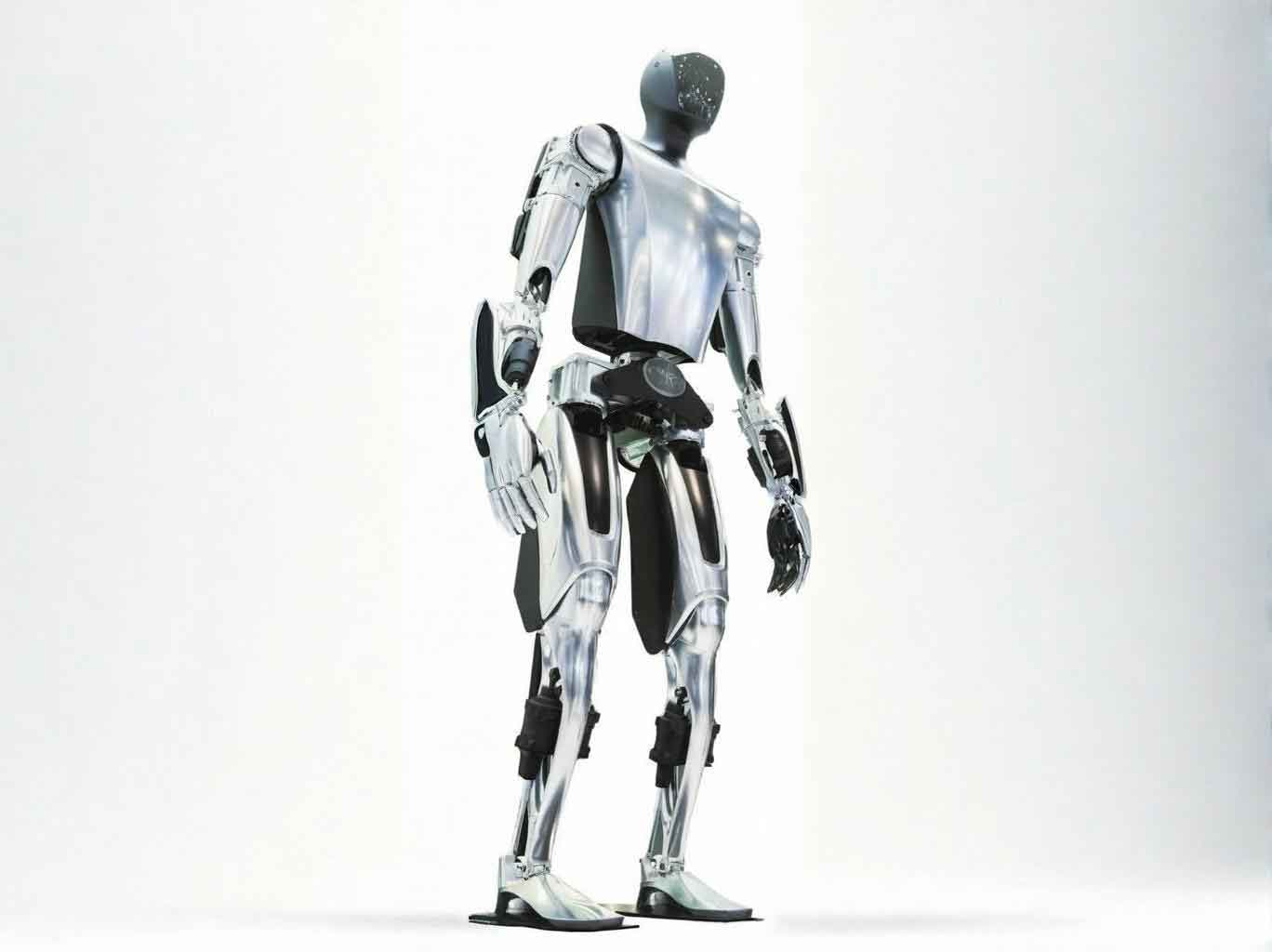
In reflecting on the manufacturing aspect, I inserted the above image to visually underscore the hardware foundations of embodied AI robots. The production of sophisticated robotic bodies—with advanced sensors, resilient actuators, and modular designs—is a critical enabler for the widespread deployment of embodied AI robots. As I analyze the supply chain, I note that advancements in materials science and precision engineering are lowering costs and improving durability, making embodied AI robots more accessible. This hardware progress complements software innovations, creating a positive feedback loop where better bodies allow for more complex behaviors, and vice versa. For instance, the dynamics of an embodied AI robot’s manipulator can be optimized using control theory, with the torque \( \tau \) given by:
$$ \tau = M(q)\ddot{q} + C(q, \dot{q})\dot{q} + g(q) $$
where \( q \) is the joint position vector, \( M \) is the inertia matrix, \( C \) accounts for Coriolis forces, and \( g \) is gravity. Enhancing these physical capabilities directly impacts the robot’s ability to perform delicate tasks, from assembly lines to surgical procedures.
To further elaborate on the economic impact, I have constructed a table projecting the potential market growth and application areas for embodied AI robots in the coming decade. This projection is based on my synthesis of current trends and expert analyses, focusing on how embodied AI robots will permeate various sectors.
| Sector | Key Applications of Embodied AI Robots | Estimated Market Share Growth (2025-2035) | Driving Factors |
|---|---|---|---|
| Manufacturing | Flexible assembly, quality inspection, collaborative robotics. | High (20-30% CAGR) | Demand for automation, customization, and resilience. |
| Healthcare | Surgical assistance, rehabilitation therapy, patient monitoring. | Moderate to High (15-25% CAGR) | Aging populations, precision medicine, labor shortages. |
| Logistics & Retail | Warehouse automation, last-mile delivery, inventory management. | High (25-35% CAGR) | E-commerce expansion, supply chain optimization. |
| Home & Service | Domestic chores, elder care, entertainment companions. | Emerging (10-20% CAGR) | Rising disposable income, smart home integration. |
| Agriculture | Autonomous harvesting, crop monitoring, livestock management. | Moderate (10-15% CAGR) | Need for sustainable practices, labor cost reduction. |
From my vantage point, the proliferation of embodied AI robots will not only boost productivity but also create new job categories centered on robot supervision, maintenance, and programming. I advocate for an inclusive approach that ensures the benefits of embodied AI robots are broadly shared, through education and reskilling initiatives. Moreover, as these robots become more autonomous, we must establish robust ethical frameworks—addressing issues like privacy, accountability, and bias—to foster trust in human-robot coexistence.
In conclusion, I am convinced that embodied intelligence, epitomized by the embodied AI robot, is a cornerstone of the next industrial revolution. By embracing the paradigm shift from disembodied to embodied systems, we can unlock unprecedented capabilities in machines, enabling them to operate fluidly in our complex world. The strategic efforts underway, from technological攻坚 to ecosystem building, are laying the groundwork for a future where embodied AI robots are ubiquitous partners in progress. As I look forward, I emphasize the importance of continued investment in fundamental research, cross-disciplinary collaboration, and real-world testing. The journey toward truly intelligent embodied AI robots is arduous, but the rewards—a more efficient, innovative, and human-centric society—are immeasurable. Let us move forward with vision and determination, shaping a world where intelligence is not just computed, but lived and experienced through every embodied AI robot.
To encapsulate the technical progression, I present a final formula that symbolizes the holistic learning of an embodied AI robot. Combining perception, cognition, and action, the overall objective can be framed as maximizing the expected cumulative reward while minimizing physical entropy or risk:
$$ \max_{\pi} \mathbb{E} \left[ \sum_{t=0}^{\infty} \gamma^t \left( r_t – \lambda \cdot H(\pi(\cdot|s_t)) \right) \right] $$
where \( H \) denotes entropy regularization to encourage exploration, and \( \lambda \) balances reward and safety. This encapsulates the essence of embodied AI robots: intelligent agents that learn through embodied interaction, continually adapting to serve humanity’s needs. As we refine such models, I am optimistic that embodied AI robots will become increasingly sophisticated, driving forward the frontiers of both artificial intelligence and robotics.