
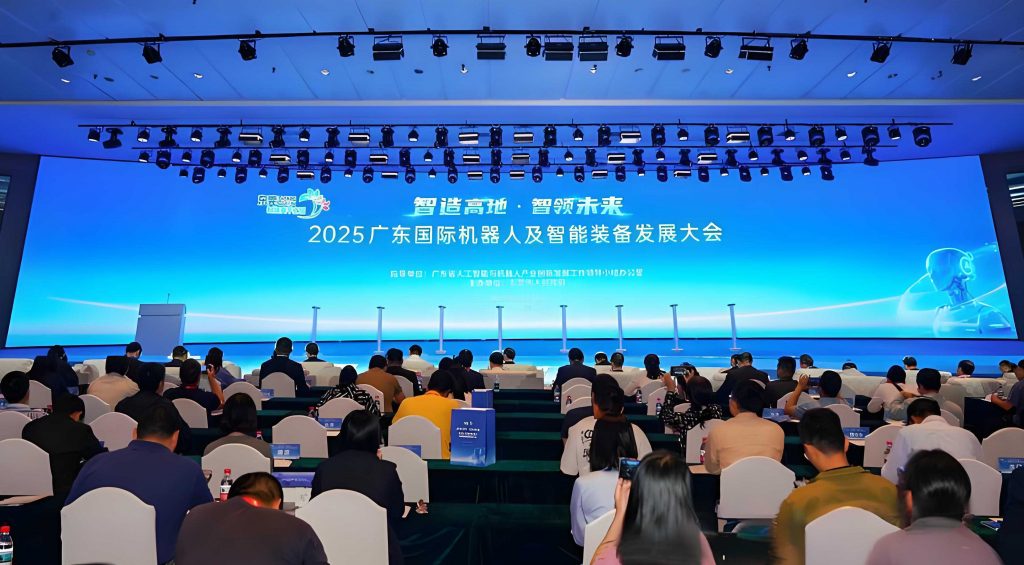
The landscape of global manufacturing is undergoing a profound transformation, driven by automation and intelligent systems. At the heart of this shift lies the industrial robot, a cornerstone of advanced manufacturing technology. In recent years, propelled by rising labor costs and the pressing need for industrial upgrading, the China robot market has entered an unprecedented period of opportunity. National strategic plans, such as the “12th Five-Year Plan” for Intelligent Manufacturing Equipment, have explicitly prioritized and supported the development of industrial robots, further fueling attention and investment in this sector. This surging interest was institutionalized in April 2013 with the formal establishment of the China Robot Industry Alliance (CRIA), a body signaling a new phase of concentrated development for the nation’s intelligent equipment industry. In an exclusive interview, Mr. Song Xiaogang, Executive Vice President of the China Machinery Industry Federation and the Executive Chairman and Secretary-General of CRIA, shared his insights on the past, present, and imperative future of the China robot industry.
1. Historical Context and Market Awakening
Mr. Song pointed out that the development of the China robot industry did not start late. Domestic research and development began as early as the 1970s. By 1985, industrial robots were listed as a key research focus in the national “Seventh Five-Year” science and technology plan. Landmarks like China’s first spray-painting robot, PJ-1, were completed in 1990, followed by demonstrations of automated painting lines and welding workstations in major automotive plants. Under the national “863” program in the 1990s, seven types of industrial robots with proprietary intellectual property rights were developed, and over 100 application projects were implemented.
“From a purely R&D perspective, we were not behind at the time,” Mr. Song noted, citing pioneers like Jiang Xinsong from the Shenyang Institute of Automation and the subsequent achievements of companies like Siasun in Shenyang. “However, the growth of the China robot sector fundamentally relies on market demand. In the 1980s and 1990s, the domestic market was immature. With a plentiful labor force, there was no vast market to drive large-scale industrialization. Without this pull, progress slowed, creating a gap with international leaders.”
The turning point arrived in the 21st century, particularly with the “12th Five-Year Plan” period. Nationwide industrial transformation and upgrading created a powerful demand for high-end equipment. Manufacturers recognized that improving product quality, reliability, and cost-efficiency necessitated advanced manufacturing technologies, with industrial robots being indispensable. Concurrently, rising manufacturing labor costs in China eroded traditional advantages. In this context, the China robot industry found its powerful market driver: the need to enhance international competitiveness and facilitate a smooth transition through industrial upgrading. “Previously, companies focused on buying single machines. Now, the trend is toward complete production lines and total solutions, which significantly boosts demand for robots,” Mr. Song explained, drawing parallels to Japan’s rapid robotization in the 1980s, which was fueled by similar cost pressures and market readiness.
2. Industrialization Bottlenecks and Core Technology Challenges
While the market potential is vast, Mr. Song candidly addressed the significant hurdles facing the industrialization of the China robot industry. “Currently, the industrialization level is not high. There are few enterprises capable of mass-producing robots, and the overall industrial capacity needs improvement. Issues concerning the quality, reliability, and stability of domestically produced robots remain to be fully addressed,” he stated.
The core challenge lies in technological innovation and key components. Despite having one of the world’s largest pools of robotics researchers, breakthroughs in several critical technologies are still lacking. Key components such as RV reducers, servo motors, and controllers lag behind world-leading standards. High-end versions of these components still rely on imports, creating a severe bottleneck for the entire China robot supply chain and allowing foreign suppliers to maintain high export prices.
“The development of the China robot industry’s chain is a long-term endeavor,” Mr. Song emphasized. The ecosystem encompasses R&D, the industrialization of robot bodies and parts, system integration, and service. While the state has provided consistent support, historically limited market scale and industrialization levels were insufficient to catalyze the development of core components, creating a cyclical constraint where technological limitations hinder scale, and small scale, in turn, restricts technological investment.
This issue has gained high-level governmental attention. The “12th Five-Year” development plans for high-end equipment and intelligent manufacturing explicitly target the breakthroughs and industrialization of industrial robots and their core components, including precision reducers, servo systems, and controllers.
3. The Role and Mission of the China Robot Industry Alliance
Facing this critical development period, the establishment of the China Robot Industry Alliance is a strategic response. “Although initiated by the China Machinery Industry Federation, the alliance was eagerly anticipated by enterprises across the robot industry chain,” Mr. Song said. “With such an organization, stakeholders can combine forces from all aspects to collaboratively promote industry development.”
The CRIA is a non-profit organization comprising enterprises, universities, research institutes, and other entities engaged in robots and intelligent equipment. Its宗旨 is resource integration, technological innovation, international cooperation, cluster development, and mutual benefit. It has established five working groups to tackle foundational challenges:
- Industrial Promotion Working Group: Focuses on researching the industry’s status and development trends.
- Statistics and Information Group: Tasked with establishing a statistical system for the China robot industry, a crucial step as historical data has largely relied on international organizations like IFR, which primarily track imports.
- Standards Working Group: Works on developing standards across the industry chain.
- International Cooperation Working Group: Strengthens international exchanges in industrialization and technology.
- Exhibition Working Group: Organizes robot exhibitions to build platforms for communication and cooperation.
“Our alliance must now start from scratch to improve these fundamental tasks,” Mr. Song remarked. “Furthermore, it serves as a communication platform. Events like the on-site exchange in Dongguan and the international exhibition in Shanghai have been highly successful, allowing companies to connect, communicate, and explore collaborations that were previously difficult without this unified platform.”
Regarding government relations, Mr. Song stated that the alliance will conduct in-depth analysis on industry status, demand, difficulties, and key issues to provide reference for governmental decision-making while guiding the synergistic development of the industrial chain. “We must remember, our purpose is to serve the industry,” he stressed.
4. A Call for Orderly Development Amidst Surging Enthusiasm
China is poised to become the world’s largest robot market. IFR data indicates that in 2012, sales of industrial robots in China reached 26,902 units, a year-on-year increase of approximately 20%. This momentum is expected to continue across diverse sectors beyond automotive and electronics, including metallurgy, light industry, shipbuilding, and food packaging.
However, Mr. Song issued a cautionary note against irrational exuberance. “Although development is rapid, I hope everyone views this upsurge in the China robot market seriously and rationally,” he urged. He expressed concern over a potential rush of entrants, including many enterprises and regional governments planning robotics industrial parks. “The robot industry itself is not as large in scale compared to some other sectors. We must not blindly follow the trend.”
He warned of the risk of repeating the mistakes of other sectors plagued by overcapacity due to redundant, low-end construction and a lack of coordination. “If everyone floods in without core technology, concentrating on the mid-to-low end market, it will lead to vicious competition and insufficient investment. This would create a vicious cycle. The China robot industry must not follow the old path of overcapacity industries!”
The solution, according to Mr. Song, lies in a dual approach. On one hand, state support for core technology R&D and the industrialization of key components is essential. On the other hand, enterprises themselves must commit to substantive technological advancement and quality improvement rather than competing on price alone. “We will suggest the state provides long-term, focused support to leading enterprises, hoping they will play a demonstrative role, such as adopting domestic components, to drive the entire China robot industry forward.”
The CRIA itself will play a vital role in guiding industrial restructuring. “We aim to coordinate relationships in this area, encouraging the formation of synergies. If the market is not yet mature and everyone rushes in to wage price wars, the result will be mutually detrimental,” Mr. Song concluded. “Our alliance’s role is to help the industry avoid disorderly competition from the outset and advocate for healthy, orderly development.”
As the China robot industry stands at this pivotal moment, balancing immense market potential with the discipline needed for sustainable, high-quality growth will be its defining challenge. The path forward requires not just market pull and policy push, but a collective commitment from the entire ecosystem to build a technologically robust and competitively healthy industry for the long term.