
As a researcher deeply immersed in the frontier of artificial intelligence, I view the emergence of embodied intelligence as a pivotal shift from abstract, disembodied computation towards a form of intelligence that is fundamentally grounded in physical interaction. The core thesis is that an embodied AI robot does not merely process information; it acquires intelligence through a continuous sensorimotor loop with its environment. This paradigm posits that cognition is for action, and action shapes cognition. An embodied AI robot is, therefore, an agent—be it physical like a humanoid or mobile manipulator, or virtual within a simulated universe—that learns, reasons, and solves problems by actively perceiving and manipulating the world around it. This foundational principle unlocks unprecedented capabilities for autonomous task execution in complex, unstructured environments, from domestic care and industrial logistics to exploration and beyond.
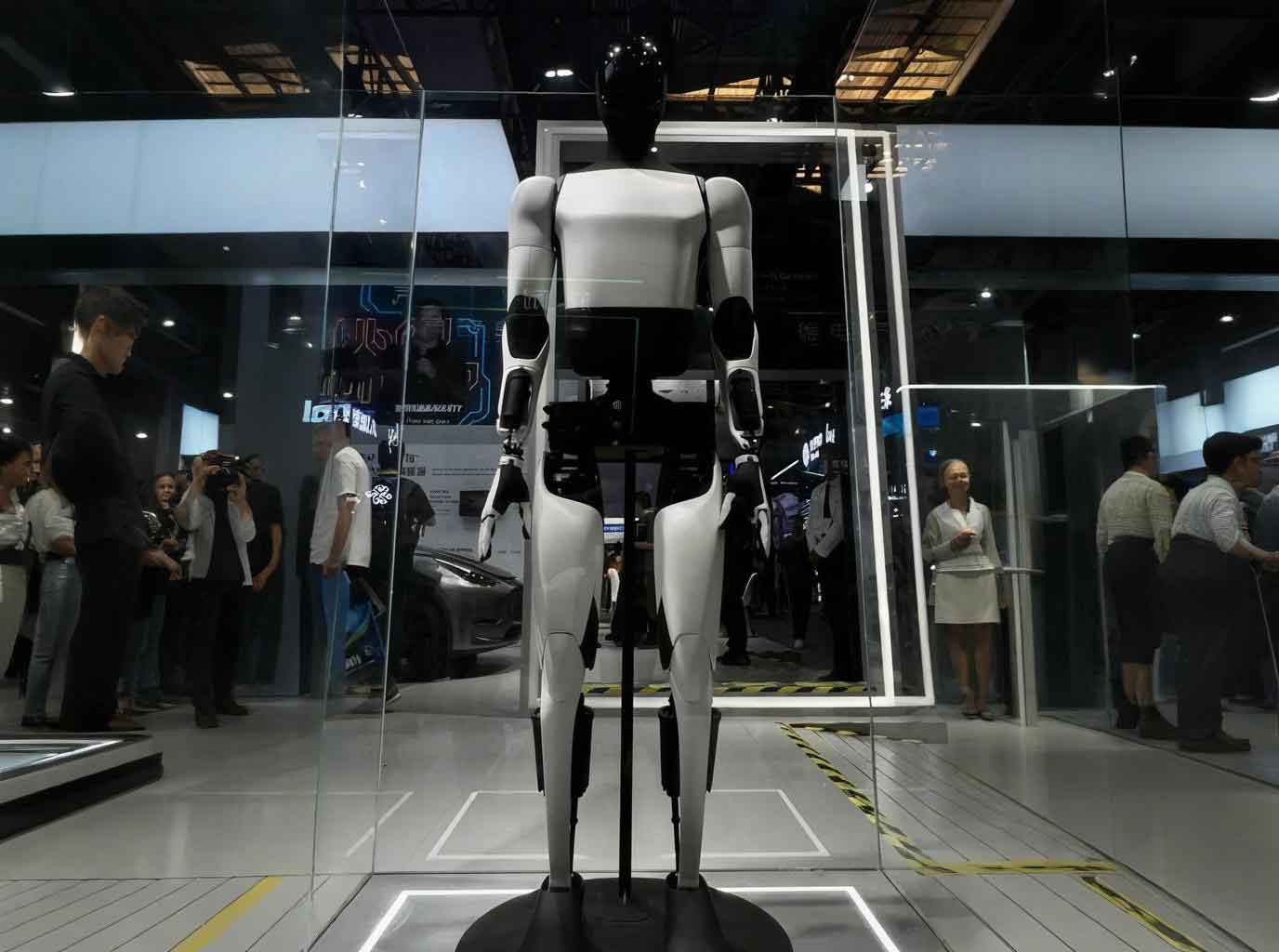
The philosophical and technical roots of this idea are deep. Early debates on General Artificial Intelligence (GAI) grappled with the requirements for human-like learning and generalization. The modern concept was crystallized in the early 1990s with the argument that intelligence could emerge from simple interactions with the world, bypassing the need for complex, pre-engineered internal representations. This led to foundational principles: an intelligent system cannot rely solely on predefined logic for complex scenarios; it must incorporate mechanisms for evolutionary or developmental learning to integrate with the physical world; and the environment acts not just as a passive backdrop but actively shapes the agent’s cognitive architecture. Today, embodied AI robot research is a vibrant nexus of robotics, computer vision, machine learning, and cognitive science.
Embodied Perception: Building a 3D World Model
For an embodied AI robot, perception is not about merely recognizing patterns in static images. It is an active, 3D-centric process essential for spatial reasoning and physical interaction. The goal is holistic 3D scene understanding—segmenting semantic entities, estimating their poses, and inferring their geometric and relational properties to form a actionable world model.
Traditional computer vision models, while effective for 2D tasks like object detection, provided only structured, often incomplete, perceptual outputs. The advent of deep learning brought more robust pre-trained models for vision tasks. However, the paradigm is shifting again with the integration of large foundational models. While often used for high-level reasoning, these models can be trained end-to-end to encompass perception, exhibiting remarkable generalization. An embodied AI robot leveraging such models can understand instructions phrased in diverse linguistic styles, adapt to novel spatial configurations, and adjust its perceptual expectations based on changing environmental conditions like lighting.
The technical approaches for 3D perception can be summarized as follows:
| Method | Core Principle | Advantages | Challenges for Embodiment |
|---|---|---|---|
| Projection-based | Projects 3D data (e.g., point cloud) onto 2D planes for analysis with 2D CNN. | Leverages mature 2D vision architectures; computationally efficient. | Loss of 3D geometric fidelity; may struggle with occlusions from an embodied viewpoint. |
| Voxel-based | Discretizes 3D space into volumetric grids (voxels) processed by 3D CNNs. | Explicit 3D representation; structured data format. | Computational and memory cost scales cubically with resolution; quantization errors. |
| Point Cloud-based | Directly processes unordered sets of 3D points (x,y,z) using networks like PointNet++. | Preserves precise geometric information; memory efficient for sparse scenes. | Irregular data structure; requires specialized network architectures. |
| Implicit / Neural Field-based | Represents scenes via neural networks that map coordinates to properties (density, color). | Compact, continuous representation; high-quality reconstruction. | Computationally intensive for real-time inference; integration into planning pipelines. |
For an embodied AI robot, the perception module must output more than labels. It must provide a geometrically and semantically rich representation that supports downstream tasks. This can be formulated as learning a function $F_{perc}$ that maps multi-sensory observations $O_t$ (images, depth, lidar, proprioception) at time $t$ to a persistent scene graph $G_t$:
$$
G_t = F_{perc}(O_t, G_{t-1}, \Theta_{perc})
$$
where $G_t$ contains nodes for objects with attributes {semantic class, 3D bounding box, pose, affordances} and edges for spatial relationships {on, inside, left-of}. The parameters $\Theta_{perc}$ are learned to enable this persistent, updatable world model.
Embodied Interaction: Bridging Language, Vision, and Action
Perception is a means to an end: interaction. An embodied AI robot must engage with the world to fulfill goals. Two quintessential interactive tasks are Embodied Question Answering (EQA) and Embodied Manipulation.
In EQA, the agent, from a first-person perspective, must actively explore an environment to gather visual information necessary to answer a natural language question (e.g., “What color is the mug on the desk in the bedroom?”). This requires a policy $\pi(a_t | s_t, q)$ that sequences navigation actions $a_t$ based on the agent’s state $s_t$ and the question $q$, deciding when to terminate exploration and answer. Early methods used deep reinforcement or imitation learning. Today, Large Language Models (LLMs) and Vision-Language Models (VLMs) offer a powerful alternative. Their inherent reasoning capabilities allow them to serve as zero-shot planners, generating action sequences like “go to the kitchen, find the counter, look for a red bowl” without task-specific fine-tuning.
Manipulation, particularly language-guided grasping and placing, is the hallmark of physical interaction. It demands a tight integration of semantic understanding, precise scene perception, and robust control. The modern approach synergizes classical motion planning with the reasoning power of foundation models. Consider an instruction: “Hand me the book to the left of the laptop.” An embodied AI robot must: 1) parse the instruction, 2) identify the ‘laptop’ and ‘book’ in the scene, 3) understand the spatial relation “left of,” 4) plan a collision-free trajectory to grasp the specific book, and 5) execute the grasp and handover. This pipeline can be modeled as:
$$
\text{Trajectory} \tau^* = \underset{\tau}{\arg\max} \, P(\tau | \text{Scene}, I) \cdot R(\tau)
$$
where $I$ is the language instruction, $P(\tau | \text{Scene}, I)$ is a feasibility prior provided by a VLM/LLM evaluating trajectory $\tau$ against the instruction and scene, and $R(\tau)$ is a reward from a classical planner ensuring physical stability and efficiency.
The Embodied AI Agent: Architecture and Planning
An embodied AI robot is the integrative platform where perception and interaction converge under a coherent cognitive architecture. Its operation is hierarchical, spanning high-level task planning and low-level motion control, fueled by multi-modal perception.
1. High-Level Task Planning: This involves decomposing an abstract, complex instruction into a sequence of executable sub-tasks. For the command “Make me a cup of coffee,” the planner must generate: [Navigate to kitchen -> Find coffee machine -> Locate mug -> Grasp mug -> Place under brewer -> Find coffee pod -> …]. LLMs excel here due to their commonsense and procedural knowledge. The planning function can be seen as:
$$
[T_1, T_2, …, T_n] = \text{LLM}_{\text{planner}}(\text{“Make coffee”}, \text{Env Context})
$$
2. Low-Level Action Planning: Each sub-task $T_i$ (e.g., “Grasp mug”) is translated into fine-grained, dynamically feasible actions. This involves motion planning, trajectory optimization, and real-time control, often using techniques like Model Predictive Control (MPC):
$$
u_{t:t+H}^* = \underset{u_{t:t+H}}{\arg\min} \sum_{k=t}^{t+H} ( \| x_k – x_{k}^{\text{ref}} \|^2_Q + \| u_k \|^2_R )
$$
subject to: $x_{k+1} = f(x_k, u_k)$, $g(x_k, u_k) \leq 0$
where $u$ are control inputs, $x$ are states, $f$ is the dynamics model, and $g$ represents constraints (joint limits, obstacles).
3. Multi-Modal Perception & Interactive Learning: A sophisticated embodied AI robot employs a fusion of senses. Vision provides object identity and location; touch (tactile sensing) confirms grip stability and material properties; force-torque sensing enables compliant manipulation; audio can signal task completion or human interrupts. This fusion creates a robust state estimation $s_t$:
$$
s_t = \Phi( \text{Vision}_t, \text{Tactile}_t, \text{Proprioception}_t, \text{Audio}_t )
$$
Furthermore, the agent learns from interaction via reinforcement or imitation learning, continuously refining its models $f$, $g$, and policy $\pi$.
Embodied Collaboration: Multi-Agent Systems and Human-Robot Teaming
The true potential of embodied intelligence scales with collaboration. Multi-embodied AI robot systems involve coordinated teams to achieve common objectives, such as collaborative assembly or warehouse logistics. The core challenge is efficient communication and role allocation to avoid redundancy, missed information, and interference.
Research explores structured organizational patterns (e.g., hierarchical with a leader, decentralized with market-based mechanisms) and communication protocols. LLMs can act as a coordinating “brain,” generating and interpreting messages between agents. A promising approach is iterative “critique-reflection” where agents review team performance and adjust their communication strategy. The collaboration efficiency $E$ for a team of $N$ agents can be modeled as a function of their individual capabilities $C_i$, communication bandwidth $B$, and organizational structure $S$:
$$
E = S(\sum_{i=1}^{N} C_i) – \alpha \cdot \text{Comm\_Overhead}(B, N) – \beta \cdot \text{Coordination\_Cost}(S)
$$
In human-robot collaboration, the embodied AI robot must understand human intent, predict actions, and provide appropriate assistance, functioning as a proactive teammate rather than a passive tool.
Simulation to Reality (Sim2Real): Training and Transfer
Training a sophisticated embodied AI robot entirely in the real world is prohibitively expensive, risky, and slow. The Sim2Real paradigm is thus indispensable: train in vast, parallelizable simulations, then transfer the learned policies to physical hardware.
Key Tools for Sim2Real:
| Component | Role in Sim2Real | Example Techniques/Models |
|---|---|---|
| World Model | Learns a compact, generative model of the environment dynamics. Predicts future states from actions, enabling planning inside the model. | Recurrent State-Space Models (RSSM), Dreamer. $s_{t+1}, o_{t+1} \sim p_\theta(s_{t+1}, o_{t+1} | s_t, a_t)$ |
| Domain Randomization | Randomizes simulation parameters (textures, lighting, dynamics) during training to force policy robustness. | Randomizing mass, friction, visual properties, actuator delays. |
| Domain Adaptation | Actively aligns features or dynamics between simulation (source) and reality (target) domains. | Adversarial training, cycle-consistency losses on latent features. |
Learning Algorithms: The primary pathways for training an embodied AI robot in simulation are:
1. Deep Reinforcement Learning (DRL): The agent learns a policy $\pi_\phi(a_t|s_t)$ by maximizing cumulative reward $R = \sum_t \gamma^t r_t$ through trial and error. Proximal Policy Optimization (PPO) is a common choice:
$$
\phi^{\text{new}} = \underset{\phi}{\arg\max} \, \hat{\mathbb{E}}_t \left[ \frac{\pi_\phi(a_t|s_t)}{\pi_{\phi_{\text{old}}}(a_t|s_t)} \hat{A}_t – \beta \, \text{KL}[\pi_{\phi_{\text{old}}}(\cdot|s_t), \pi_\phi(\cdot|s_t)] \right]
$$
2. Imitation Learning (IL) & Offline-to-Online RL: To overcome DRL’s high sample complexity, IL uses expert demonstrations $\mathcal{D} = \{(s_i, a_i^*)\}$ to bootstrap policy learning, e.g., via Behavior Cloning: $\phi^* = \arg\min_\phi \mathbb{E}_{(s,a^*) \sim \mathcal{D}} [ \| \pi_\phi(s) – a^* \|^2 ]$. A robust pipeline is Offline RL (learning from a fixed dataset $\mathcal{D}$) followed by Online Fine-tuning (minor adjustments via real-world interaction), balancing safety and adaptation.
The quest for high-quality, diverse training data is central. Unlike internet-scale text data for LLMs, data for embodied AI robot is generated through interaction. Therefore, developing efficient methods for data collection, whether via automated simulation scripting, human demonstration, or robot self-play, is a critical research driver.
Conclusion: The Path Forward for Embodied Intelligence
The paradigm of embodied intelligence represents a fundamental reorientation in the pursuit of artificial general intelligence. By grounding cognition in physical experience, the embodied AI robot moves beyond pattern recognition towards genuine understanding through action. This research framework, emphasizing multimodal perception, hierarchical planning, seamless interaction, collaborative abilities, and robust Sim2Real transfer, is building a bridge to machines that can operate autonomously and usefully in our human-centric world. The future will see embodied AI robot systems becoming increasingly adept, not by merely processing more data, but by engaging in richer, more complex dialogues with the physical universe. The scientific journey from intelligence *without* a body to intelligence *because of* a body is well underway, promising to redefine the relationship between machines and their environment.