
The embodied intelligence industry is accelerating on multiple fronts, with rapid progress in hardware and software, expanding application scenarios, and intensifying competition among listed companies, international leaders, and start-ups. Minsheng Securities said in its latest research report that humanoid robots, supported by strong cross-scenario adaptation and their ability to carry artificial intelligence deployment, are expected to reshape the industrial ecosystem over the next 5 to 10 years. The report said embodied intelligence and humanoid robotics could achieve scaled penetration in fields such as industrial manufacturing and medical rehabilitation, becoming a strategic high ground in a new round of technological revolution.
Recent developments show that domestic listed companies are increasing their embodied intelligence product layouts, moving from robot brain solutions to factory logistics applications and actively filling gaps in segmented industry scenarios. At the same time, international leading companies and start-ups are making frequent moves in technological breakthroughs and mass production planning. The convergence of these forces is pushing embodied intelligence from laboratory demonstration toward real-world deployment, while also exposing challenges related to cost, reliability, data, supply chain integration, and commercial validation.
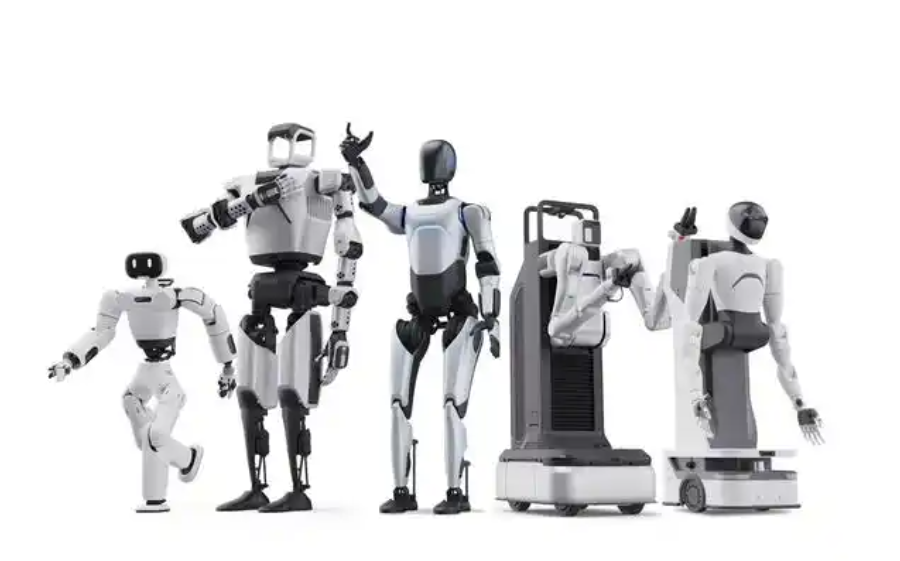
1. Listed Companies Intensify Product Launches for Embodied Intelligence
On September 18, Joyson Electronics held a new product launch event and introduced a robot AI head assembly, a robot domain controller based on NVIDIA Jetson Thor, and a new generation of robot energy management products. The company said the AI head assembly, designed specifically for embodied intelligence robots, highly integrates functions such as a flexible display, microphone array, and depth camera. Its multimodal AI interaction system can enable proactive voice interaction and face recognition tracking. According to the company, the product is intended to allow robots not only to understand what users say but also to perceive what users feel.
Yu Zhaohui, board secretary of Joyson Electronics, said that in the past robots were often assembled by manufacturers themselves, which created compatibility and stability problems. He said the company uses automotive-grade manufacturing processes to build system assemblies, solving the core pain point of software-hardware coordination. This approach reflects a broader trend in embodied intelligence: as robots become more complex, subsystem integration, thermal management, power distribution, sensing, and control must be designed together rather than assembled from disconnected parts.
The domain controller released on the same day is a core element of the robot brain. According to the company, the controller is built on NVIDIA Jetson Thor, with AI computing power reaching 2070 TOPS, 7.5 times that of the previous generation. Its CPU performance is 3.1 times higher, and it can support real-time inference of large models with tens of billions of parameters on the device side. Such capabilities are important for embodied intelligence because robots must process multimodal data, make decisions, and act in dynamic environments where latency and reliability matter.
Joyson Electronics disclosed that since 2025 it has cooperated with AgiBot, Galbot, and RIVR, a Swiss embodied intelligence robotics company, based on automotive-grade advanced manufacturing technologies and processes. These partnerships suggest that automotive supply chain players are increasingly viewing embodied intelligence as an adjacent market where their experience in safety, quality control, and large-scale production can be transferred.
On September 21, Hikrobot held its 2025 mobile robot ecosystem product launch event, focusing on core challenges in the deepening process of industrial logistics automation. The company launched three new products: a controller integration kit, a general-purpose 3D integrated logistics simulation platform called PlantMirror, and a mobile robot system called EasyAMR. A representative of Hikrobot said at the event that the new products will help manufacturing customers solve difficult non-standard scenario adaptation and high simulation costs, promoting deeper integration between mobile robots and industrial scenarios.
These launches show that embodied intelligence is not only about humanoid form factors. Mobile robots, autonomous material handling systems, simulation platforms, and integrated controllers all contribute to the same broader goal: enabling intelligent agents to perceive, reason, and act in physical environments. In industrial settings, embodied intelligence can improve flexibility, reduce manual labor, and support rapid reconfiguration of production lines.
| Company or Organization | Date or Period | Development | Relevance to Embodied Intelligence |
|---|---|---|---|
| Joyson Electronics | September 18 | Launched a robot AI head assembly, a Jetson Thor-based robot domain controller, and new robot energy management products. | Advances integrated sensing, interaction, computing, and power systems for embodied intelligence robots. |
| Joyson Electronics | Since 2025 | Cooperated with AgiBot, Galbot, and RIVR. | Expands automotive-grade manufacturing into embodied intelligence supply chains. |
| Hikrobot | September 21 | Launched a controller integration kit, PlantMirror simulation platform, and EasyAMR mobile robot system. | Targets industrial logistics automation and non-standard scenario adaptation for embodied intelligence. |
2. Global Technology Race Accelerates Around Embodied Intelligence
Global embodied intelligence companies are pursuing two complementary paths: leading enterprises are focusing on mass production, while start-ups are attempting technological breakthroughs. Together, these efforts are accelerating the development of the humanoid robot industry. Tesla, one of the most closely watched players in overseas markets, said after announcing in 2024 that Optimus had acquired capabilities such as upper-limb heavy object handling, dynamic grasping, and autonomous lower-limb movement on complex terrain, that it will further optimize rough-terrain gait, speed response, and fall recovery functions.
Tesla CEO Elon Musk has repeatedly said in public that the company will expand Optimus production at the fastest possible speed, with an expected target of producing 1 million units annually within 5 years. This aligns with Tesla’s latest compensation incentive plan for Musk. Under the plan, one requirement for Musk to receive subsequent equity incentives is that the company cumulatively delivers 1 million humanoid robots. Tesla said Optimus 3 will be introduced at the end of 2025, begin mass production in 2026, and have an estimated price range of USD 20,000 to USD 30,000.
Among overseas start-ups, Figure AI recently became a market focus. On September 16 local time, Figure AI announced the completion of its Series C financing, led by Parkway Venture Capital, with participation from NVIDIA, Intel Capital, LG Technology Ventures, and other institutions. The committed investment amount exceeded USD 1 billion, and the post-money valuation reached USD 39 billion. Figure AI said the financing will be used to promote robots entering home and commercial scenarios, build GPU training infrastructure, and launch advanced data collection work.
1X Technologies, known for its home robot products, also released a humanoid robot product called Neo Gamma this year. The robot can perform a series of household tasks such as making coffee, doing laundry, and vacuuming. The company founder said Neo Gamma has recently left the laboratory, and the company plans to deploy hundreds to thousands of this model to household users before the end of 2025 for early testing, collecting real-world environmental data to optimize models. However, the founder also said there is still a long way to go before commercialization.
Minsheng Securities said in its research report that star start-ups such as Figure AI, Agility, and 1X Technologies continue to evolve, and overseas humanoid robots are accelerating their deployment in core scenarios such as industrial manufacturing, logistics sorting, and home services. The report said 2025 is expected to become the first year of mass production for overseas humanoid robots, with leapfrog development in technology research and development, mass production deployment, and commercial application.
Industry sources said the rapid progress of overseas embodied intelligence companies proves that the development of the entire industry has entered a critical stage, and leading enterprises have relatively low-cost mass production capabilities. Competition in the industry will continue to heat up, and companies will launch new products as quickly as possible to attract consumer attention. At the same time, the broad prospects of the industry also provide opportunities for Chinese companies with cost advantages and industrial integration capabilities, allowing them to achieve rapid development by joining the supply chains of leading humanoid robot companies.
Zhang Yongwei, chairman of China EV100, said that smart cars, smart robots, and low-altitude aircraft, as the three major components of aggregated intelligence, essentially share technological origins, connected supply chains, and integrated applications. He said they are expected to become a new engine for Chinese companies going global after the new three export items. This view places embodied intelligence within a broader convergence of mobility, robotics, and intelligent systems, where shared technologies in perception, planning, control, power electronics, and connectivity can be reused across markets.
A securities analyst further told reporters that auto parts companies have natural advantages in the embodied intelligence field. They have strong customer expansion capabilities and mass production experience, and their main business products are technologically connected with robot components. They can rely on automotive customer resources to quickly enter the robot supply chain. However, the analyst also noted that valuations of some companies in this sector have already reflected growth expectations for the next 3 to 5 years in advance, and it is necessary to guard against valuation correction pressure if technology deployment falls short of expectations.
| Organization | Recent Development | Embodied Intelligence Significance |
|---|---|---|
| Tesla | Optimizing Optimus rough-terrain gait, speed response, and fall recovery; Optimus 3 planned for end of 2025 and mass production in 2026; estimated price of USD 20,000 to USD 30,000. | Targets large-scale humanoid robot production and cost reduction for embodied intelligence. |
| Figure AI | Completed Series C financing of more than USD 1 billion; post-money valuation of USD 39 billion; investors include Parkway Venture Capital, NVIDIA, Intel Capital, and LG Technology Ventures. | Funds home and commercial deployment, GPU training infrastructure, and advanced data collection for embodied intelligence. |
| 1X Technologies | Released Neo Gamma; plans to deploy hundreds to thousands of units to households before the end of 2025 for early testing. | Explores home service scenarios and real-world data collection for embodied intelligence models. |
3. Application Scenarios Break New Ground for Embodied Intelligence
In terms of deployment, companies are actively seeking more suitable scenarios. At present, humanoid robots entering industrial scenarios has become a relatively certain application trend both domestically and internationally. Industrial environments offer structured tasks, repeatable processes, and clear economic incentives, making them an early proving ground for embodied intelligence systems that are not yet ready for unstructured homes or public spaces.
AgiBot and Fulin Precision reached a project cooperation worth several tens of millions of yuan. Nearly 100 A2-W robots are about to enter the Fulin Precision factory, making the project a typical case of large-scale commercial orders for embodied robots in China’s industrial sector. Deng Yang, engineering director of Fulin Precision, said the company started with medicine box handling as an entry point to explore robot applications in factories. At present, the handling efficiency of embodied intelligence robots is about 60 percent to 70 percent of that of humans. Fulin Precision later plans to use AgiBot robots and AMR carts for collaborative operations, building a complete material box delivery and empty box recovery system to further reduce labor intensity. This model can not only alleviate labor shortages but also bring new optimization space to factory production processes.
UBTECH has signed robot procurement contracts with multiple customers during the year. The company said it is accelerating the production process of humanoid robots and expects to deliver 500 industrial humanoid robots in 2025. Tan Min, chief brand officer of UBTECH, said that currently the application scenarios of UBTECH robots in factories are mainly concentrated in three categories: sorting, handling, and quality inspection. He estimated that through 5 to 10 years of real-scenario accumulation and an investment of hundreds of billions of yuan, artificial intelligence will support humanoid robots entering more core positions.
Industries are exploring more applicable scenarios for humanoid robots. The 2025 humanoid robot half marathon and robot games were originally regarded more as product display and testing activities, but sports equipment companies seized the opportunity to start new attempts at using humanoid robots for product testing and sports science research. This demonstrates how embodied intelligence can move beyond traditional manufacturing and logistics into testing, measurement, and research workflows where repeatability and data quality are important.
At the Li-Ning Sports Science Research Center, the Tiangong Ultra robot from the Beijing Humanoid Robot Innovation Center wore running shoes and continuously collected data through joint sensors on a 200-meter track and a treadmill, providing data references for running shoe performance optimization. Yang Fan, senior director of the Li-Ning Sports Science Application Research Center, said that in the past, testing required 4 to 8 professional athletes for 2 to 3 days, and data processing took 1 month. Now the robot can produce results on the same day. Yang said robot testing not only shortens the testing cycle but also eliminates the influence of human differences. He said the center is building a running shoe database through robots and plans to explore robot applications in badminton and basketball equipment testing in the future.
These examples show that embodied intelligence can create value in scenarios where the environment is controlled, the task is repetitive, and the data generated is valuable. Industrial handling, sorting, inspection, and sports equipment testing all share these characteristics. As models improve and hardware costs decline, embodied intelligence may gradually move into more complex roles that require greater autonomy, adaptability, and human-robot collaboration.
| Application Area | Organization or Project | Current Status | Embodied Intelligence Impact |
|---|---|---|---|
| Industrial handling | AgiBot and Fulin Precision | Nearly 100 A2-W robots to enter a factory; handling efficiency about 60 percent to 70 percent of human efficiency. | Validates scaled commercial deployment and human-robot collaboration in manufacturing logistics. |
| Factory operations | UBTECH | Expects to deliver 500 industrial humanoid robots in 2025; applications include sorting, handling, and quality inspection. | Demonstrates early industrial demand for embodied intelligence platforms. |
| Sports science testing | Li-Ning Sports Science Research Center and Beijing Humanoid Robot Innovation Center | Tiangong Ultra robot collects running shoe data on a 200-meter track and treadmill. | Extends embodied intelligence into product testing, data collection, and sports research. |
4. Policy Support and Industrial Foundations Strengthen Embodied Intelligence
According to the notice issued by the Ministry of Industry and Information Technology and 17 departments on the implementation plan of the Robot Plus application action, by 2025 China should focus on 10 major application areas, break through more than 100 robot innovation application technologies and solutions, and promote more than 200 typical robot application scenarios with relatively high technical levels, innovative application models, and significant application results. This policy framework provides direction for embodied intelligence companies seeking to validate products in real scenarios and scale deployment across industries.
A relevant official from the Ministry of Industry and Information Technology said at a recent press conference in the series on high-quality completion of the 14th Five-Year Plan that China’s humanoid robots currently have full industrial chain manufacturing capabilities from key chips and components to complete machines. In the future, the ministry will further strengthen industrial supply, accelerate technological breakthroughs in high-end computing chips, industrial multimodal algorithms, and software-hardware adaptation, accelerate the creation of high-quality datasets, and consolidate the industrial foundation. It will also promote the development and deployment of agents and develop artificial intelligence terminal products such as humanoid robots.
These policy priorities reflect the underlying requirements of embodied intelligence. High-end computing chips support onboard inference and control. Industrial multimodal algorithms allow robots to combine vision, language, touch, and motion data. Software-hardware adaptation ensures that models run efficiently on power-constrained platforms. High-quality datasets provide the training and evaluation foundation for robust embodied intelligence. Agent development connects perception, reasoning, planning, and action into deployable systems.
Minsheng Securities said that based on strong capabilities in cross-scenario adaptation and AI deployment, humanoid robots are expected to reshape the industrial ecosystem in the next 5 to 10 years, achieve scaled penetration in industrial manufacturing, medical rehabilitation, and other fields, and become a strategic high ground in a new round of technological revolution. This outlook reinforces the idea that embodied intelligence is not a single product category but a broad technological platform that can support multiple robot form factors and applications.
The industrial foundation for embodied intelligence is also broadening. Automotive-grade manufacturing, sensor suites, power management, domain controllers, simulation platforms, and mobile robot systems are all part of the same ecosystem. Companies that can integrate these elements into reliable, cost-effective systems may gain advantages as the market moves from prototypes to commercial deployment. At the same time, the complexity of embodied intelligence means that no single company can cover every layer. Partnerships among robot developers, component suppliers, chipmakers, software platforms, and end users will be essential.
5. Investment Opportunities and Risks in the Embodied Intelligence Supply Chain
The rapid development of embodied intelligence has attracted attention from investors and analysts. A securities analyst noted that auto parts companies have natural advantages in the embodied intelligence field. They possess strong customer expansion capabilities and mass production experience, and their main business products are technologically connected with robot components. They can rely on automotive customer resources to quickly enter the robot supply chain. This supply chain overlap includes actuators, sensors, power electronics, thermal management, controllers, and manufacturing processes that must meet high reliability standards.
However, the analyst also cautioned that valuations of some companies in this sector have already reflected future growth expectations for the next 3 to 5 years. If technology deployment falls short of expectations, there may be valuation correction pressure. This risk is particularly relevant in embodied intelligence because mass production timelines, cost reduction curves, and application readiness can vary widely across companies and scenarios. Investors may need to distinguish between companies with proven industrial integration capabilities and those whose embodied intelligence exposure remains primarily thematic.
Industry sources said the rapid progress of overseas embodied intelligence companies proves that the entire industry has entered a critical stage, and leading enterprises have relatively low-cost mass production capabilities. Competition will continue to intensify, and companies will launch new products quickly to attract consumer attention. At the same time, the broad prospects of the industry provide opportunities for Chinese companies with cost advantages and industrial integration capabilities, allowing them to achieve rapid development by joining the supply chains of leading humanoid robot companies. This dynamic suggests that embodied intelligence could become a global supply chain race, with advantages accruing to players that can combine innovation, manufacturing scale, and customer responsiveness.
Several factors will determine which embodied intelligence players succeed. First, hardware reliability and safety must meet industrial standards. Second, software must be robust enough to handle variation in real environments. Third, data collection and model training must be continuous and cost-effective. Fourth, system integration must reduce complexity for end users. Fifth, pricing must deliver a clear return on investment. These factors apply across industrial robots, mobile robots, humanoid robots, and specialized embodied intelligence systems.
| Factor | Opportunity for Embodied Intelligence | Risk or Challenge |
|---|---|---|
| Automotive-grade manufacturing | Leverages mass production experience, quality systems, and supply chain relationships. | Automotive and robotics requirements are related but not identical; adaptation is needed. |
| Valuation | Strong market interest can support financing and talent attraction. | Some valuations may already reflect future growth, increasing correction risk if deployment lags. |
| Supply chain integration | Chinese companies with cost advantages and industrial integration capabilities can join global robot supply chains. | Competition is intensifying, and leading overseas players are also scaling production. |
| Data and models | Real-world deployment generates valuable data for embodied intelligence models. | Data collection, labeling, privacy, and simulation-to-reality transfer remain difficult. |
6. Industrial and Commercial Outlook for Embodied Intelligence
The current phase of embodied intelligence development is characterized by simultaneous progress in hardware, software, scenarios, and policy. Companies such as Joyson Electronics and Hikrobot are releasing integrated products that address practical bottlenecks. Tesla, Figure AI, and 1X Technologies are pushing mass production, financing, and home deployment. AgiBot, Fulin Precision, and UBTECH are testing industrial applications and commercial contracts. Research institutions and sports equipment companies are exploring new use cases. Government policy is supporting application expansion and industrial chain development.
Yet the path to widespread embodied intelligence remains challenging. Industrial handling efficiency at 60 percent to 70 percent of human efficiency shows that humanoid robots are useful but not yet superior in every task. Home robot commercialization still requires significant work, according to 1X Technologies. Mass production targets for Optimus and other humanoid robots are ambitious and depend on manufacturing execution, cost reduction, and reliable software. Valuation risks in the supply chain indicate that markets are pricing in rapid progress, leaving little room for delays.
For embodied intelligence to scale, the industry must solve several interconnected problems. Robots need better perception and manipulation in unstructured environments. They need stronger onboard computing and more efficient models. They need safer human-robot interaction. They need lower-cost actuators, sensors, and batteries. They need data engines that turn field experience into improved models. They need standards for testing, interoperability, and safety. They need business models that justify investment in both hardware and software.
The convergence of smart cars, smart robots, and low-altitude aircraft, as described by Zhang Yongwei, suggests that embodied intelligence will not develop in isolation. Shared technologies in chips, sensors, power systems, communication, and AI can accelerate progress across multiple industries. Automotive supply chains may become an important bridge between electric vehicles and robots because both require reliable electronics, advanced manufacturing, and large-scale quality control. This cross-industry fertilization could lower costs and shorten development cycles for embodied intelligence.
At the same time, international competition is becoming more intense. Overseas companies are moving toward mass production and home testing, while Chinese companies are leveraging cost advantages and industrial integration capabilities. The global embodied intelligence market may therefore develop through a combination of competition and cooperation. Companies that can join leading humanoid robot supply chains may gain scale and credibility, while those that develop differentiated scenarios and integrated solutions may capture specialized markets.
7. Conclusion: Embodied Intelligence Moves From Promise to Deployment
Embodied intelligence is moving from promise to deployment. The latest wave of launches, partnerships, financing, policy measures, and application trials shows that the industry is entering a more practical phase. Humanoid robots remain the most visible expression of embodied intelligence, but the field also includes mobile robots, domain controllers, AI head assemblies, simulation platforms, and energy management systems. These components and systems must work together for robots to perceive, reason, and act reliably in the physical world.
The next several years will be decisive. If mass production timelines are met, costs continue to decline, and real-world applications demonstrate clear value, embodied intelligence could become a major platform technology. If technical challenges, safety concerns, or commercial uncertainty slow progress, the market may experience volatility. Either way, the direction is clear: software and hardware are converging, application scenarios are expanding, and supply chains are forming around embodied intelligence.
For companies, the priority is to build integrated capabilities across sensing, computing, control, power, data, and deployment. For investors, the priority is to distinguish durable industrial advantages from short-term enthusiasm. For policymakers, the priority is to support standards, datasets, chip development, and application pilots that strengthen the foundation of embodied intelligence. For end users, the priority is to evaluate embodied intelligence systems based on productivity, safety, and return on investment rather than novelty alone.
As the industry advances, embodied intelligence will increasingly be judged by its ability to deliver measurable results in factories, warehouses, homes, laboratories, and public spaces. The recent announcements from Joyson Electronics, Hikrobot, Tesla, Figure AI, 1X Technologies, AgiBot, Fulin Precision, UBTECH, Li-Ning, and the Beijing Humanoid Robot Innovation Center illustrate the breadth of activity. They also show that embodied intelligence is no longer a distant concept. It is becoming a practical industrial and commercial race, with hardware, software, data, policy, and capital all playing essential roles.
The long-term opportunity for embodied intelligence is significant. Humanoid robots are expected by Minsheng Securities to reshape the industrial ecosystem over the next 5 to 10 years and achieve scaled penetration in industrial manufacturing, medical rehabilitation, and other fields. If that expectation is realized, embodied intelligence will not only create new products but also transform how work is organized, how services are delivered, and how intelligent systems interact with the physical world. The coming period will reveal which companies, technologies, and business models are best prepared to turn that promise into sustainable value.