
Contemporary artificial intelligence research is undergoing a profound conceptual shift. The older paradigm treated intelligence as abstract computation over symbols and internal representations. A newer paradigm, increasingly associated with embodied intelligence and phenomenological analysis, treats intelligence as arising from a body’s continuous coupling with its environment. In a recent philosophical analysis, He Jing, a professor of philosophy at East China Normal University, argues that this shift raises foundational questions for artificial intelligence and that the humanoid robot has become a critical test case. The analysis distinguishes three dimensions of embodiment: sensorimotor embodiment, situated embodiment, and interactive embodiment. It then uses the humanoid robot to show how far artificial systems have moved toward embodied intelligence and why functional simulation alone does not settle the deeper philosophical problem. The central claim is that the humanoid robot is not simply a technical upgrade of the traditional machine. It is a boundary object that exposes the structural tension among body, intelligence, and world.
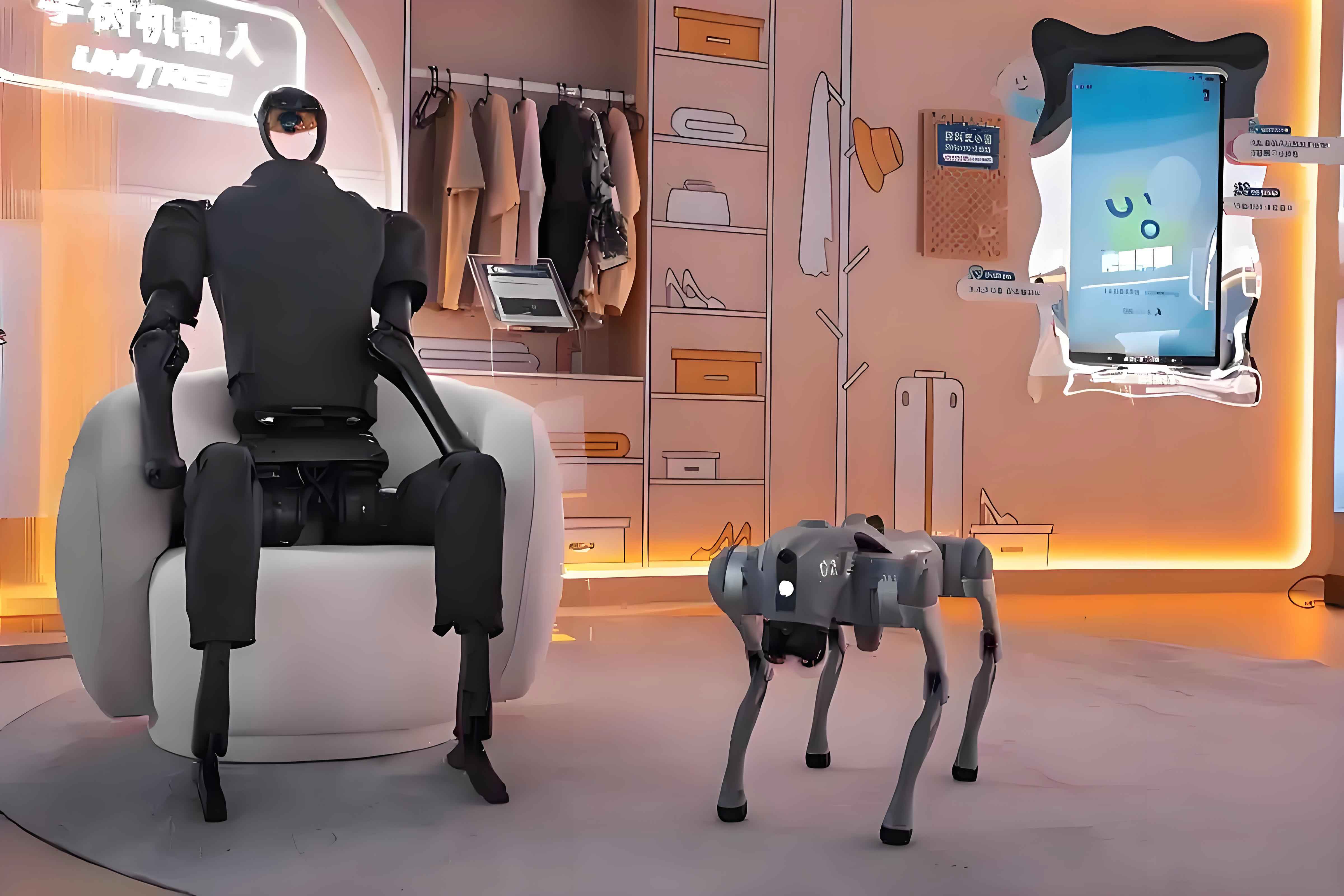
The analysis begins from a familiar but increasingly contested assumption in cognitive science. For decades, the dominant models of mind and intelligence were computationalism, symbolism, representationalism, and cognitivism. Although these approaches differed in technical detail, they shared a common philosophical premise: cognition is representation. Intelligence was understood as information processing inside the brain or inside a machine, while the body was treated as a sensorimotor input and output device rather than as a constitutive condition of cognition. The humanoid robot enters this debate because it places the body at the center of artificial intelligence research. A humanoid robot cannot be understood only as a software system running on a hardware platform. Its shape, movement, sensing, balance, and social presence all become part of the question of what intelligence is and how it is generated.
1. From Disembodied Computation to Embodied Cognition
The classical paradigm of artificial intelligence was built on the idea that thinking can be formalized as symbol manipulation. The physical symbol system hypothesis, associated with Allen Newell and Herbert Simon, held that intelligent action could be produced by the manipulation of semantically interpretable symbols. This view was encouraged by the success of digital computers in solving reasoning tasks. If a computer could manipulate symbols according to rules, then intelligence could be abstracted away from the material body. The humanoid robot was not part of this early picture. The early machine was a reasoning engine, not an embodied agent. Its relationship to the world was indirect, mediated by representations and formal rules.
Connectionism challenged the symbolic model by emphasizing parallel distributed processing, neural networks, activation states, and weight changes. Instead of rule-governed symbol manipulation, connectionism described cognition as the emergence of higher-level capacities from lower-level neural interactions. This was an important advance, and it helped inspire artificial neural networks and contemporary machine learning. Yet the analysis stresses that connectionism did not fully escape the disembodied framework. It still located cognition primarily inside the brain or inside the computational system, and it still treated the body as a channel for input and output. The humanoid robot therefore remained a secondary concern. The decisive question was what happened inside the system, not how the system’s body shaped its access to the world.
The phenomenological critique of classical artificial intelligence became influential through the work of Hubert Dreyfus. Drawing on Martin Heidegger and Maurice Merleau-Ponty, Dreyfus argued that human intelligence is not grounded in detached rules and representations. It is grounded in embodied practice, situated coping, and pre-reflective engagement with the world. Human beings do not first construct a complete internal model of the world and then act. They act within a world that is already meaningful because of their bodily capacities, habits, and practical involvement. The humanoid robot becomes relevant here because it raises the possibility of an artificial system that does not merely calculate about the world but acts within it. The question is whether such a system can possess the kind of embodied understanding that Dreyfus described.
The analysis uses pattern recognition to illustrate the limits of the classical model. In traditional artificial intelligence, pattern recognition is often treated as a logical operation: input data are processed according to explicit rules, and output is generated. But human perception is not a static conversion of neutral input into internal representation. Perception occurs within an open, ambiguous, and inexhaustible background. An object appears as a figure against a background because of the perceiver’s bodily orientation, practical interests, and situated involvement. The humanoid robot must confront this problem directly. A humanoid robot operating in a real environment cannot rely only on pre-coded rules. It must respond to shifting contexts, incomplete information, and ambiguous signals.
The analysis also recalls the collaboration between computer scientist Oliver Selfridge and psychologist Ulric Neisser. Their attempt to improve machine pattern recognition through heuristic rules revealed a deeper difficulty. Human perception depends on what they described as vague anticipation. A person can make effective judgments in uncertain situations because past experience, background knowledge, and expectation are intertwined with sensory input. This capacity is not a simple rule-following procedure. It is a dynamic and situated form of understanding. For the humanoid robot, this means that embodiment cannot be reduced to better sensors or more powerful processors. The humanoid robot must be able to generate meaning through action, expectation, and situated engagement. The humanoid robot must become part of a world rather than remain a symbol-processing system that stands outside it.
This is why the turn toward embodied cognition is more than a change in research fashion. It is an ontological and epistemological reorientation. Intelligence is not treated as a property of an isolated computational system. It is treated as an emergent property of a body-environment system. The humanoid robot is a powerful symbol of this reorientation because it makes the body visible. The humanoid robot’s body is not a neutral container for algorithms. It constrains what the system can perceive, how it can move, what it can afford, and how others respond to it. The humanoid robot therefore becomes a test of whether artificial intelligence can move from representation to situated action.
2. Three Dimensions of Embodied Intelligence
The analysis organizes embodied intelligence around three dimensions. These dimensions are not separate modules. They are interwoven aspects of a single dynamic structure. The humanoid robot is used throughout the analysis as a concrete reference point because it combines sensing, movement, situation, and social interaction in one physical system. The three dimensions help explain why the humanoid robot is more than a machine with a human-like shape. The humanoid robot is an experimental site for asking how body, environment, and other agents participate in the emergence of intelligence.
- Sensorimotor Embodiment as the Basis of Cognition
Sensorimotor embodiment is the most basic dimension. It holds that cognition originates in the sensorimotor loop through which a body engages the world. Merleau-Ponty described the body as primordially present in the world, not as a passive receiver of sensory data. The body has an original perceptual structure that enables intentional action. The humanoid robot illustrates this claim when it maintains balance, adjusts its gait, avoids obstacles, or coordinates its limbs. These actions are not merely the execution of central commands. They involve ongoing feedback between body, sensors, and environment. The humanoid robot’s physical form participates in the generation of behavior.
The analysis cites Rodney Brooks’s work on intelligence without representation and the subsumption architecture. Brooks proposed building robots through layered behaviors rather than through a single central model of the world. Lower-level behaviors such as obstacle avoidance and navigation could be combined to produce more complex action. This approach did not solve all problems of higher cognition, but it established an important experimental path. Intelligence could be built from the bottom up through embodied interaction. The humanoid robot extends this insight because its human-like form introduces new possibilities and new constraints. A humanoid robot with legs, arms, hands, and a head must coordinate many degrees of freedom while maintaining stability and responding to unpredictable terrain.
The analysis also discusses Rolf Pfeifer and Josh Bongard’s morphological computation model. The body itself can perform computational work through its physical structure and material properties. Compliance, elasticity, inertia, and feedback can reduce the burden on central computation. The humanoid robot demonstrates this principle when its mechanical design contributes to balance and movement control. The humanoid robot does not need to calculate every variable explicitly if its body is designed to exploit physical dynamics. This does not mean that computation disappears. It means that computation is distributed across body, control system, and environment. The humanoid robot therefore challenges the idea that intelligence is located exclusively in a central processor.
Helmut Hauser and colleagues further explored how body structure and feedback mechanisms can participate in computation and behavior regulation. Their work supports the broader claim that the body is not merely an executor of commands. The body is part of the control process. For the humanoid robot, this has direct engineering implications. The humanoid robot’s morphology, actuators, sensors, and materials shape its behavioral possibilities. The humanoid robot’s intelligence is not simply uploaded into its hardware. It emerges from the interaction between hardware, control, and environment. Sensorimotor embodiment thus provides the pre-reflective foundation for cognition. The humanoid robot becomes intelligent in part because it moves, feels, and adjusts within a world.
- Situated Embodiment as a Mechanism of Meaning Generation
The second dimension is situated embodiment. Sensorimotor coupling alone is not enough to explain meaningful action. Cognition is embedded in specific physical and social situations. The humanoid robot must operate in environments that are structured by human practices, objects, expectations, and norms. The analysis draws on James Gibson’s ecological psychology and the concept of affordance. Objects in the environment have direct significance for a perceiver. A step is climbable, a handle is graspable, and a surface is walkable. These meanings are not imposed by abstract representation. They arise from the coupling between the body’s capacities and the environment’s structure. The humanoid robot must detect and respond to affordances if it is to act effectively in human-designed spaces.
The humanoid robot faces a double challenge in situated embodiment. It must perceive and adapt to the environment, and it must couple its actions to structural changes in that environment. The humanoid robot must generate meaning about itself and the world through this coupling. This is why the humanoid robot cannot be designed only as a closed system that executes pre-programmed routines. The humanoid robot must be able to adjust its behavior when a door is opened, a person moves, a floor surface changes, or an object is displaced. The humanoid robot’s intelligence is situated because its actions are meaningful only in relation to a specific context.
The analysis discusses Jeffrey Krichmar’s work on neurorobotics as an example of this dimension. Neurorobotics seeks to integrate neural structures with situated interaction. It uses biologically inspired learning and adaptation mechanisms so that robots can develop adaptive and self-organizing action patterns. The humanoid robot benefits from this approach because it must cope with complex and changing real-world environments. The humanoid robot cannot rely entirely on predefined programs. It needs mechanisms that allow it to adjust, learn, and reorganize its behavior. The analysis notes that neurorobotics still faces important challenges. Much research focuses on lower-level neural mechanisms such as visual cortex encoding or prefrontal action selection. There is still a lack of integrated mechanisms that cross levels. The humanoid robot thus reveals both the promise and the difficulty of situated embodiment. The humanoid robot must integrate low-level sensing and action with higher-level context and meaning.
Situated embodiment also changes how the humanoid robot should be evaluated. A humanoid robot that performs well in a laboratory may fail in a busy hospital, a crowded shopping center, or a home. The humanoid robot’s performance depends on the fit between its body, its control system, and the structured possibilities of the environment. The humanoid robot is not intelligent in the abstract. The humanoid robot is intelligent in relation to a situation. This insight supports the broader argument that embodiment is not a decorative feature of artificial intelligence. Embodiment is a condition for the generation of meaningful behavior. The humanoid robot makes this condition visible because its human-like form invites it into human spaces, where meaning is dense and context is unstable.
- Interactive Embodiment as a Paradigm of Socially Generated Cognition
The third dimension is interactive embodiment. It concerns how agents, including artificial agents and human agents, construct meaning, norms, and consensus through interaction. The analysis traces this dimension to Edmund Husserl’s discussion of pair-appearances and Merleau-Ponty’s concept of intercorporeality. In the phenomenological tradition, intersubjectivity is not merely an exchange of information between two closed minds. The other person is a subject with inner experience, and together with the self, the other participates in a shared field of meaning. Merleau-Ponty argued that the other is not constructed through inference. The other is encountered through bodily perception. The humanoid robot enters this field as a new kind of participant. The humanoid robot’s body, gaze, gesture, posture, and timing can invite or disrupt the formation of shared meaning.
The analysis extends this phenomenological view through Hanne De Jaegher and Ezequiel Di Paolo’s theory of participatory sense-making. Intersubjective interaction is not a simple exchange of messages. It generates a higher-level dynamic autonomous system with its own evolution, self-organization, and regulation. This interactive system can shape the perceptual content and cognitive states of both participants. For the humanoid robot, this means that social intelligence is not only a matter of recognizing faces or understanding words. The humanoid robot must participate in a coordinated structure of mutual adjustment. The humanoid robot must be able to negotiate meaning with human partners. The humanoid robot must display legibility and negotiability in interaction. The humanoid robot must be understandable and open to adjustment.
The analysis cites research in human-robot interaction as evidence of this dimension. Cynthia Breazeal has argued that emotion can regulate a robot’s response thresholds and motivational systems. An emotion-driven behavioral architecture can allow a robot to show emotional consistency and purposeful action in social situations. The humanoid robot can use such mechanisms to make interaction more coherent and trustworthy. Tony Belpaeme and colleagues have emphasized that the effectiveness of social robots depends not only on information transfer but also on emotional connection and embodied co-presence. The humanoid robot therefore becomes a social partner rather than a mere tool. The humanoid robot’s success depends on its ability to participate in shared meaning-making.
Interactive embodiment represents the highest level of embodied intelligence in the analysis. The humanoid robot must not only move and perceive. The humanoid robot must also engage with other agents in a shared world. The humanoid robot must coordinate its actions with human expectations, rhythms, and norms. The humanoid robot must be able to repair misunderstandings and adjust its behavior. The humanoid robot must be capable of social participation. This dimension shows why the humanoid robot cannot be reduced to a collection of sensors and actuators. The humanoid robot is a participant in a social field. The humanoid robot’s intelligence is co-constructed through interaction. The humanoid robot thus becomes a powerful example of how embodiment, situation, and interaction are inseparable.
The analysis stresses that the three dimensions are not independent. Sensorimotor coupling provides the pre-reflective basis for action. Situated embodiment connects action to environmental structure and affordance. Interactive embodiment extends cognition beyond the single agent into shared meaning-making. The humanoid robot is an ideal case for studying these dimensions together because it combines movement, context sensitivity, and social presence. The humanoid robot is not intelligent because it has a human shape. The humanoid robot becomes a candidate for embodied intelligence only when its body, situation, and interactions are integrated into a dynamic process. The humanoid robot therefore challenges the traditional boundary between machine and agent.
3. The Humanoid Robot as a Redefinition of the Machine
The analysis presents the humanoid robot as a redefinition of the traditional robot. Traditional artificial intelligence emphasized discrete input and central processing. It often ignored how body shape constrains and regulates information processing. The humanoid robot, by contrast, is composed of a brain, a cerebellum-like control system, and a body. Its intelligence is distributed across these parts and across the environment. The humanoid robot’s body is the carrier and foundation of its human-like functions. The humanoid robot’s body integrates actuators, chips, sensors, and new materials. Rotary actuators support joints such as wrists and knees. Linear actuators support reaching, pushing, and pulling. End effectors support hands and feet, enabling grippers and multi-fingered hands. The humanoid robot therefore makes morphological computation concrete.
The analysis cites the Atlas robot as an example of dynamic balance and whole-body coordination. The humanoid robot can walk, rise, and rotate its head and waist in fluid ways. These actions are not simply the result of a central processor calculating every variable. They depend on the mechanical structure’s use of inertia, balance, and feedback. The humanoid robot’s limbs and body participate in information processing. The humanoid robot demonstrates that body structure itself can handle part of the control problem. The humanoid robot thus supports the claim that intelligence is not located only in the brain. The humanoid robot’s body is part of the cognitive system.
The analysis also describes Cloud Ginger as an example of cloud-enabled humanoid robot capabilities. The humanoid robot can communicate in natural language, execute tasks across scenarios through a cloud brain, and use joint control and real-time monitoring to plan paths and avoid dynamic obstacles. The humanoid robot can adjust its behavior according to user needs. This example shows how the humanoid robot combines large-model intelligence with physical embodiment. The humanoid robot is not merely a machine with a human form. The humanoid robot is a system in which brain and body are coupled. The humanoid robot acts in the world and thereby generates meaning through action. The humanoid robot becomes a concrete realization of sensorimotor, situated, and interactive embodiment.
The analysis further discusses the humanoid robot Pepper in a shopping environment. The humanoid robot interacts with customers, interprets their needs, and helps them find products. When a customer uses vague language, the humanoid robot can combine visual input, voice analysis, object recognition, and situational context to identify the intended object. This goes beyond static semantic networks. The humanoid robot moves from abstract representation to context-driven multimodal meaning construction. The humanoid robot also adjusts its route according to sensor data and machine learning. The humanoid robot demonstrates situated adaptation. The humanoid robot shows that meaning is not merely stored in a database. Meaning is constructed through interaction with a situation.
The analysis also cites the social robot Furhat as an example of interactive embodiment. The humanoid robot can use high-resolution animation and real-time facial expressions to establish interaction rhythms with humans. The humanoid robot can manage turn-taking and attention guidance in multi-user settings. These capacities show that interactive embodiment goes beyond individual cognition. The humanoid robot participates in a shared field of meaning. The humanoid robot helps create a new technological environment in which humans and artificial agents learn, understand, and transform one another. The humanoid robot therefore redefines the traditional tool. The humanoid robot is not simply an instrument controlled by a human subject. The humanoid robot is an interactive partner that shapes human experience.
| Dimension | Core claim | Humanoid robot illustration | Philosophical stake |
|---|---|---|---|
| Sensorimotor embodiment | Cognition arises from the sensorimotor loop between body and world. | The humanoid robot maintains balance, coordinates limbs, and uses body dynamics for movement and control. | The body is a constitutive part of intelligence, not a mere executor of central commands. |
| Situated embodiment | Meaning emerges through coupling between bodily capacities and environmental affordances. | The humanoid robot adapts to changing contexts, interprets vague requests, and adjusts action in open environments. | Intelligence is embedded in situations and cannot be reduced to abstract representation. |
| Interactive embodiment | Cognition is co-constructed through social interaction and mutual adjustment. | The humanoid robot uses gesture, gaze, timing, and emotional expression to participate in shared meaning-making. | The humanoid robot becomes a social participant and challenges the boundary between tool and agent. |
The analysis argues that the humanoid robot is not merely a technical iteration of the traditional robot. It is a challenge to the philosophical foundation of classical artificial intelligence. The humanoid robot suggests that the body is not only an executor of thought. The body is a condition for the generation of cognition. The humanoid robot suggests that the environment is not only a background for intelligence. The environment is a field of co-constitution. The humanoid robot suggests that the other is not only an object of interaction. The other is a participant in the generation of meaning. The humanoid robot therefore pushes artificial intelligence from an implicit cognitivist framework into an embodied ontology.
This redefinition has implications for how the humanoid robot is designed and evaluated. A humanoid robot cannot be judged only by benchmark performance in controlled tasks. The humanoid robot must be judged by its ability to participate in open situations, to coordinate with humans, and to generate meaningful action. The humanoid robot must be understood as an embodied system that learns and adapts through interaction. The humanoid robot must be designed with attention to morphology, feedback, context, and social presence. The humanoid robot is therefore both an engineering project and a philosophical experiment. The humanoid robot tests the limits of computation, representation, and embodiment in one physical system.
4. Engineering Progress and Persistent Limits
The analysis does not present the humanoid robot as a completed achievement. It identifies significant practical difficulties. From an engineering perspective, the humanoid robot still faces high computational costs and technical bottlenecks in movement coordination, context understanding, and multimodal perception. The humanoid robot must integrate many sensors and actuators in real time. The humanoid robot must maintain balance while performing complex tasks. The humanoid robot must interpret noisy and ambiguous data. The humanoid robot must operate safely in environments designed for humans. These challenges are not minor. They reveal the gap between the humanoid robot’s external form and the deep structure of human embodiment.
From a social interaction perspective, the humanoid robot is still difficult to embed in complex human emotional and ethical structures. The humanoid robot must establish sustained trust and empathy with human users. The humanoid robot must understand not only words but also tones, gestures, pauses, and social expectations. The humanoid robot must respond in ways that are appropriate to the situation. The humanoid robot must avoid causing confusion, discomfort, or harm. The humanoid robot must participate in normative practices without reducing them to simple rules. The humanoid robot therefore confronts the limits of current social robotics. The humanoid robot can simulate some social behaviors, but simulation is not the same as embodied social understanding.
From a theoretical perspective, the analysis notes the difficulty of unifying phenomenological description with formal modeling. Phenomenology describes lived bodily experience, pre-reflective engagement, and meaning constitution. Formal modeling describes systems in terms of variables, algorithms, and control structures. The humanoid robot sits between these two languages. The humanoid robot requires engineering models, but it also raises phenomenological questions. The humanoid robot can be modeled as a control system, but it can also be described as a participant in a shared world. The humanoid robot therefore exposes a methodological tension. The humanoid robot cannot be fully understood through computation alone, and it cannot be fully designed through phenomenological description alone.
The analysis argues that these difficulties are not accidental. They arise because the humanoid robot is part of a deeper paradigm shift. The humanoid robot is not simply a new product category. The humanoid robot is a site where philosophy, cognitive science, and engineering meet. The humanoid robot forces researchers to reconsider what counts as intelligence, what counts as a body, and what counts as a relationship between humans and machines. The humanoid robot therefore has significance beyond technical performance. The humanoid robot reveals the limits of the classical paradigm and the promise of an embodied paradigm. The humanoid robot also reveals the risk of overstating what current systems can do.
The humanoid robot should therefore be approached with both enthusiasm and caution. The humanoid robot demonstrates real advances in sensing, actuation, control, and interaction. The humanoid robot also demonstrates that human-like appearance is not enough. The humanoid robot can mimic human movement and communication, but it does not thereby acquire the full structure of human embodied experience. The humanoid robot remains a functional simulation in important respects. The humanoid robot can perform tasks that look human-like, but the humanoid robot does not necessarily possess the pre-reflective, situated, and intersubjective structures that characterize human cognition. The humanoid robot thus becomes a mirror for understanding human embodiment more clearly.
5. Philosophical Significance and Ethical Vigilance
The philosophical significance of the humanoid robot lies in its ability to make hidden assumptions visible. Classical artificial intelligence assumed that intelligence could be separated from the body. The humanoid robot challenges this assumption by showing that body shape, movement, and feedback shape the possibilities of intelligence. The humanoid robot also challenges the assumption that the environment is merely a source of input. The humanoid robot shows that the environment is a structure of affordances that co-constitutes action. The humanoid robot further challenges the assumption that other agents are merely objects to be modeled. The humanoid robot shows that interaction is a process of mutual adjustment and shared meaning-making. The humanoid robot therefore exposes the structural tension among body, intelligence, and world.
The analysis argues that the humanoid robot is not the completion of embodied intelligence. The humanoid robot is a frontier form with practical value and revolutionary significance. But its philosophical meaning does not depend on how closely it copies human embodied intelligence. Its philosophical meaning lies in the way it reveals the limitations of non-embodied cognitive paradigms. The humanoid robot forces researchers to reflect on the ontological presuppositions of artificial intelligence. The humanoid robot asks what kind of body is required for intelligence. The humanoid robot asks what kind of situation is required for meaning. The humanoid robot asks what kind of interaction is required for social cognition. These are not only technical questions. They are philosophical questions about the nature of mind, world, and others.
The analysis also raises ethical vigilance. The humanoid robot can evoke emotional responses, trust, and attachment. The humanoid robot can appear to understand when it only predicts. The humanoid robot can appear to care when it only simulates. The humanoid robot can appear to be a social partner when it remains a engineered system. These appearances can create ethical risks. Users may overestimate the humanoid robot’s capacities. Users may delegate responsibility to the humanoid robot in ways that are inappropriate. Users may form attachments that are not reciprocated. The humanoid robot therefore requires careful design, transparent communication, and ethical governance. The humanoid robot should not be presented as a replacement for human relationships. The humanoid robot should be presented as a complex technological and philosophical object that requires public reflection.
The humanoid robot also raises questions about privacy, autonomy, and social norms. A humanoid robot that operates in homes, hospitals, schools, and public spaces collects data and shapes behavior. The humanoid robot can influence how people move, speak, and relate to one another. The humanoid robot can reinforce or challenge social expectations. The humanoid robot can become a site of surveillance or care. The humanoid robot can become a site of experimentation or exploitation. The analysis therefore calls for sustained ethical attention. The humanoid robot is not only a machine to be optimized. The humanoid robot is a social presence that requires normative reflection. The humanoid robot must be designed with attention to human dignity, autonomy, and well-being.
6. Conclusion: The Humanoid Robot as a Boundary Object
The analysis concludes that embodiment has become a core issue in contemporary artificial intelligence. Intelligence is not best understood as abstract computation detached from the body. Intelligence is rooted in the dynamic coupling between an agent and its environment. This coupling depends on the mutual constitution of action capacity, perceptual structure, and meaning construction. The humanoid robot is a powerful illustration of this claim. The humanoid robot combines sensorimotor embodiment, situated embodiment, and interactive embodiment in a single physical system. The humanoid robot therefore shows that body, situation, and interaction are not secondary features of intelligence. They are constitutive conditions.
At the same time, the humanoid robot reveals the gap between external resemblance and embodied understanding. The humanoid robot can approximate human movement, perception, and interaction. The humanoid robot can perform tasks in human environments. The humanoid robot can participate in social routines. But the humanoid robot does not thereby acquire the full pre-reflective and intersubjective structure of human embodied cognition. The humanoid robot’s functional simulation does not reach the transcendental structure of bodily experience. The humanoid robot’s body is not yet a field of meaning in the phenomenological sense. The humanoid robot therefore remains an open question rather than a finished answer.
The humanoid robot is best understood as a boundary object. It sits between engineering and philosophy, between computation and phenomenology, between tool and agent. The humanoid robot exposes the limits of the classical paradigm and the promise of an embodied paradigm. The humanoid robot shows that artificial intelligence cannot be reduced to algorithms alone. The humanoid robot shows that the body matters. The humanoid robot shows that situations matter. The humanoid robot shows that interactions matter. The humanoid robot therefore invites a more integrated research agenda. This agenda must combine cognitive science, robotics, phenomenology, ethics, and design. It must study the humanoid robot not only as a product but also as a philosophical and social experiment.
The analysis ultimately argues that the humanoid robot should be approached with critical openness. The humanoid robot is a frontier form of embodied intelligence. The humanoid robot has significant practical value and revolutionary potential. The humanoid robot also exposes unresolved difficulties and ethical risks. The humanoid robot therefore demands more than technical enthusiasm. The humanoid robot demands conceptual clarity, empirical rigor, and ethical vigilance. The humanoid robot is not simply a machine that looks like a human. The humanoid robot is a mirror in which researchers can see the hidden assumptions of artificial intelligence and the deeper structure of human embodiment. The humanoid robot thus becomes a central figure in the ongoing transformation of artificial intelligence from a computational paradigm to an embodied paradigm.