
BEIJING, September 11, 2026 — Embodied intelligence, a field that combines artificial intelligence with physical hardware, is becoming a leading edge of the new round of technological revolution and industrial transformation, Ma Jiantang, former Party Secretary of the Development Research Center of the State Council, said at the 2026 China Listed Companies High-Quality Development Forum on September 10.
In an address to the forum, Ma described embodied intelligence as the culmination of multidisciplinary scientific and technological innovation and cross-sector industrial innovation in artificial intelligence, robotics, cognitive science and other fields. He said the essence of embodied intelligence is the organic combination of artificial intelligence software that simulates the “brain” and physical hardware that simulates the “body,” enabling an integrated cycle of perception, cognition and execution.
Ma told the forum that scientific and technological innovation is the core element in developing new quality productive forces, and that it can give rise to new industries, new models and new momentum. Among these, embodied intelligence stands out as artificial intelligence with an independent physical carrier, and it is already exerting a profound influence on the way people produce and live, he said.
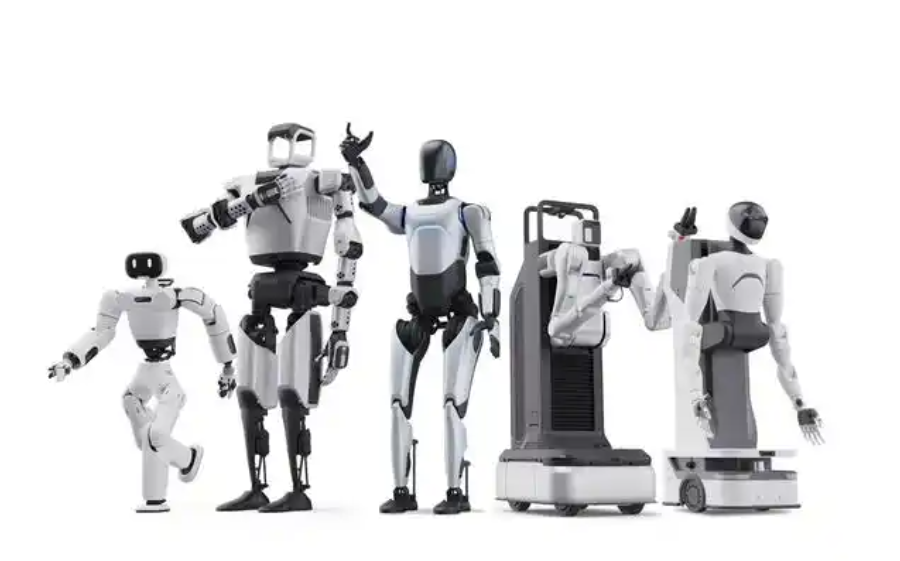
- Embodied Intelligence as the Fusion of Brain and Body
Ma’s remarks placed embodied intelligence at the center of the next phase of artificial intelligence development. Unlike software-only artificial intelligence, embodied intelligence requires a physical body that can sense the surrounding environment, make decisions and carry out actions in the real world. That combination, he said, is what allows embodied intelligence to move from digital computation into physical tasks.
The former State Council Development Research Center official said embodied intelligence is not a single technology but an integration of many. It draws on advances in artificial intelligence, robotics, cognitive science and other disciplines. Its industrial impact therefore extends across hardware, software, sensors, actuators, materials, control systems, data and algorithms. For listed companies, this means embodied intelligence is not only a technology theme but also a potential source of new business models, new supply chains and new sources of long-term competitiveness.
Ma emphasized that embodied intelligence is artificial intelligence with an independent physical carrier. That definition matters because it distinguishes embodied intelligence from conventional AI applications that operate mainly in digital spaces. An embodied intelligence system must perceive, understand, decide and act. It must also receive feedback from its actions and adjust accordingly. This closed loop is central to the concept and to its industrial promise.
In Ma’s view, the integration of the artificial “brain” and the physical “body” is the essence of embodied intelligence. The brain component includes artificial intelligence models, algorithms and software. The body component includes robots, machines, sensors, reducers, actuators and other hardware. The challenge and the opportunity lie in making these two parts work together reliably, efficiently and safely.
He also suggested that embodied intelligence represents a convergence of multiple scientific and industrial pathways. Artificial intelligence provides perception, reasoning, planning and learning. Robotics provides movement, manipulation and physical interaction. Cognitive science offers insights into how intelligent systems can understand and respond to the world. Together, these fields can produce systems that are more capable than any single technology alone.
For the forum’s audience of listed company representatives, the message was that embodied intelligence may become a platform technology. It can support many applications, from manufacturing and logistics to healthcare and household services. The companies that understand both the software and hardware dimensions of embodied intelligence may be better placed to capture value as the field matures.
- Production Applications and the Factory of the Future
On the production side, Ma said intelligent robots equipped with precise perception, autonomous decision-making, continuous execution and closed-loop feedback can address complex scenarios and dangerous environments that humans and traditional robots cannot handle. Such embodied intelligence systems can support continuous high-intensity operations seven days a week and twenty-four hours a day, as well as flexible production, greatly improving production efficiency and product quality.
This vision has direct implications for manufacturing. Traditional automation is often designed for fixed tasks in structured environments. Embodied intelligence, by contrast, is intended to operate in more dynamic settings. It can combine perception with action, allowing a machine to adapt to changes in its environment rather than simply repeating a predetermined motion. For factories, this could mean greater flexibility, faster changeovers and the ability to handle tasks that are too complex or too dangerous for conventional equipment.
Ma’s address suggested that embodied intelligence could become a general-purpose technology for production. If robots can perceive, decide and execute in real time, they can potentially work alongside humans, take on hazardous tasks and maintain operations in environments where human presence is difficult or unsafe. The closed-loop feedback function is particularly important because it allows an embodied intelligence system to correct errors and improve performance during operation.
The forum audience heard that embodied intelligence is not limited to humanoid robots. It can include industrial robots, mobile robots, service robots, specialized machines and other forms of physical artificial intelligence. The unifying feature is the combination of an artificial brain with a physical body that can act in the real world. This broad scope means embodied intelligence may touch many sectors, from manufacturing and logistics to healthcare, agriculture, construction and household services.
For listed companies, Ma’s comments imply that embodied intelligence could become a strategic area for investment, research and industrial collaboration. Companies with capabilities in artificial intelligence, robotics, sensors, precision manufacturing, control systems, software platforms and data may find new opportunities to integrate their strengths into embodied intelligence solutions. The forum’s focus on high-quality development also suggests that capital markets will pay close attention to how companies translate embodied intelligence concepts into commercial products and services.
In factories, embodied intelligence may support autonomous inspection, flexible assembly, material handling, quality control and maintenance. In dangerous environments, it may replace or assist human workers in mining, chemical production, disaster response and other high-risk settings. In logistics, embodied intelligence may enable mobile robots to navigate warehouses, sort packages and cooperate with human workers. Each application will require different levels of speed, precision, safety and cost.
The production case is also important because it provides clear performance metrics. Factories can measure productivity, quality, downtime, energy use and return on investment. If embodied intelligence can demonstrate improvements in these areas, it may attract more buyers and investors. The challenge is to move from demonstrations to reliable, scalable and affordable systems.
- Addressing Aging and the Silver Economy
Ma also linked embodied intelligence to demographic change. He said that in 2025, China’s population aged 65 and above reached 224 million, and among them, disabled and semi-disabled elderly people numbered about 50 million. Home care robots, powered by embodied intelligence, can provide basic services and personalized companionship, he said. This makes embodied intelligence both an important pathway for responding to aging and a major opportunity in the silver economy.
The aging challenge gives embodied intelligence a clear social and economic use case. Many older adults wish to remain at home, while families and care facilities face growing demand for assistance. Embodied intelligence systems could help with monitoring, mobility support, daily routines, emergency response and companionship. Ma’s remarks indicated that home care robots are not merely a technological curiosity but a potential solution to a large and growing social need.
At the same time, the silver economy is not only about care. It includes services, devices, platforms, housing, health management and social participation. Embodied intelligence could become a connective layer across these areas. A home care robot, for example, may combine sensors, artificial intelligence models, voice interaction, mobility and remote communication. It may also connect to healthcare providers, family members and emergency services. Such applications would require high reliability, privacy protection, safety assurance and user-friendly design.
Ma’s address therefore placed embodied intelligence at the intersection of technology and social policy. The same physical artificial intelligence that can improve factory productivity may also help address care shortages and improve the quality of life for older adults. For companies, this creates opportunities in hardware, software, services and data. For policymakers, it raises questions about standards, certification, insurance, liability and ethical design.
Home care robots powered by embodied intelligence may also face unique challenges. They must operate in unpredictable domestic environments, interact safely with people and respect privacy. They must be affordable enough for families and care institutions. They must be easy to use for older adults who may not be familiar with advanced technology. These requirements make the home a demanding testing ground for embodied intelligence, but also a potentially large market.
In hospitals and nursing homes, embodied intelligence could support patient monitoring, delivery of supplies, rehabilitation assistance and social interaction. In communities, it could help with remote health checks and emergency response. The address did not provide specific deployment figures for these applications, but it identified elderly care as a major direction for embodied intelligence.
- Market Size and Industrial Base
Ma cited forecasts from relevant institutions that China’s embodied intelligence market is expected to reach 400 billion yuan by 2030 and exceed 1 trillion yuan by 2035. He also said China has clear advantages in its industrial base. According to the International Federation of Robotics, China’s industrial robot installations in 2025 reached 334,000 units, accounting for 58% of the global total. The number of key component suppliers in China is among the highest in the world, he said.
These figures, as cited in the address, suggest that embodied intelligence is not starting from a blank slate. China already has a large industrial robotics market and a broad supplier base. That foundation can support the development of embodied intelligence by providing manufacturing scale, engineering talent, component supply and application experience. The transition from industrial robots to embodied intelligence systems, however, requires more than scale. It requires advances in artificial intelligence models, perception, control, energy, materials and system integration.
The market forecasts indicate that embodied intelligence is expected to grow from a specialized field into a significant industrial sector. If the 2030 and 2035 projections are realized, embodied intelligence could become a major component of the broader artificial intelligence and robotics economy. The address did not present detailed segment forecasts, but the overall direction was clear: embodied intelligence is moving from research and demonstration toward commercialization and scale.
| Category | Figure | Context |
|---|---|---|
| China’s industrial robot installations in 2025 | 334,000 units | 58% of global installations, according to the International Federation of Robotics |
| China’s population aged 65 and above in 2025 | 224 million | Presented as demographic context for embodied intelligence in elderly care |
| Disabled and semi-disabled elderly people in China | About 50 million | Cited as potential demand for home care robots |
| Projected China embodied intelligence market by 2030 | 400 billion yuan | Forecast by relevant institutions, as cited in the address |
| Projected China embodied intelligence market by 2035 | More than 1 trillion yuan | Forecast by relevant institutions, as cited in the address |
The industrial base advantage described by Ma is important because embodied intelligence depends on a complex supply chain. It requires artificial intelligence chips and software, high-performance sensors, precision reducers, servomotors, actuators, batteries, materials and control systems. A large domestic robotics market can help suppliers achieve scale and learn from real-world applications. That, in turn, can support the development of embodied intelligence platforms and products.
At the same time, the market forecasts imply that competition will be intense. Companies in China and around the world are investing in embodied intelligence, humanoid robots and related technologies. The address did not provide a detailed global competitive breakdown, but it did emphasize China’s existing strength in industrial robot installations and key component suppliers. Those strengths provide a foundation, but they do not guarantee leadership in embodied intelligence. Success will depend on innovation, standards, talent, capital and application scenarios.
The supplier base is especially important for embodied intelligence because no single company can easily master every component. Artificial intelligence model developers, chip designers, sensor makers, reducer manufacturers, motor suppliers, battery producers, software platform companies and system integrators all have roles to play. A healthy ecosystem can allow specialization and collaboration, reducing costs and accelerating innovation.
China’s large industrial robot market may also provide a training ground for embodied intelligence. Industrial robots already operate in factories, warehouses and other environments. The experience gained in deploying, maintaining and improving industrial robots can inform the development of more advanced embodied intelligence systems. This does not mean the transition is automatic, but it provides a base of practical knowledge.
- Complexity, Cost and Technical Challenges
Ma also acknowledged that China’s embodied intelligence industry faces multiple challenges. He said that compared with traditional automation equipment, which usually has no more than 10 degrees of freedom, embodied intelligence systems often have more than 50 degrees of freedom. Intelligent humanoid robots may even need to coordinate more than 1,000 degrees of freedom. This makes challenges in motion control precision, stability and battery life even greater.
The degrees-of-freedom issue illustrates why embodied intelligence is technically demanding. Each additional degree of freedom increases the complexity of control, coordination and planning. A humanoid robot that must balance, walk, manipulate objects and interact with people requires simultaneous control of many joints and sensors. The artificial brain must process vast amounts of information in real time while the physical body must respond accurately and safely. This is a much harder problem than controlling a fixed industrial arm.
| System | Degrees of Freedom | Implication |
|---|---|---|
| Traditional automation equipment | No more than 10 | Relatively simpler control compared with embodied intelligence systems |
| Embodied intelligence systems | Often more than 50 | Greater challenges in motion control precision, stability and battery life |
| Intelligent humanoid robots | May need to coordinate more than 1,000 | Highly complex control, coordination and real-time decision-making demands |
Ma said the initial cost of embodied intelligence is relatively high. Product function stability and operational accuracy still fall short of human needs. Model research and development and data training require large investments. The industrial chain is not yet complete, component standards are not unified, and safety and ethical risks also need attention.
These challenges are interconnected. High costs can limit adoption, which in turn slows the accumulation of real-world data needed to improve embodied intelligence models. Incomplete supply chains and inconsistent component standards can raise integration costs and reduce reliability. Safety and ethical concerns can affect public acceptance and regulatory approval. Addressing these issues will require coordinated efforts by companies, research institutions, industry associations and government agencies.
The cost challenge is particularly important for listed companies. Investors may expect rapid commercialization, but embodied intelligence requires long-term research and development. Hardware must be manufactured at scale, software must be trained and validated, and systems must be tested in real environments. The path from prototype to mass production can be capital-intensive and time-consuming. Companies that can manage this transition may build durable advantages, while those that overpromise may face setbacks.
Data is another critical factor. Embodied intelligence systems need data from physical interactions, not just text or images. Robots must learn from grasping, walking, moving, manipulating and responding to unexpected events. Collecting and labeling such data is difficult and expensive. Simulation can help, but sim-to-real transfer remains a challenge. Ma’s reference to large investments in model research and data training reflects this reality.
Standards and safety are also essential. If components are not standardized, integration becomes more difficult and costs rise. If safety rules are unclear, companies may hesitate to deploy embodied intelligence in public spaces or homes. Ethical issues, including privacy, autonomy, liability and human-robot interaction, must be addressed as embodied intelligence moves closer to everyday life. The address did not propose specific regulations, but it identified these areas as challenges that require attention.
Battery life is a further constraint. Mobile embodied intelligence systems must carry their own power, and higher degrees of freedom can increase energy consumption. Improving battery energy density, reducing power use and designing efficient motion control systems are all necessary. For humanoid robots, balance and walking can be especially energy-intensive. These technical issues affect both usability and commercial viability.
Stability and accuracy are also critical for adoption. In industrial settings, a robot that occasionally fails or makes errors may not be acceptable. In healthcare and elderly care, safety and reliability are even more important. Embodied intelligence must meet high standards before it can be trusted in sensitive environments. This means extensive testing, certification and real-world validation.
- Policy Recommendations and Technology Priorities
To address these challenges, Ma proposed concentrating efforts on key common technologies. He called for establishing a special science and technology project for embodied intelligence. Such a project would support research on embodied large models, safe and controllable operating systems, high-performance sensors, reducers and other key components. He also encouraged open-source development of embodied intelligence large models and operating systems, and the active building of an embodied intelligence open-source community.
The recommendation for a special project reflects the view that embodied intelligence has strategic importance and requires coordinated public support. Key common technologies are those that many companies and applications need but that individual firms may struggle to develop alone. Embodied large models, safe operating systems, sensors and reducers are examples. By supporting these areas, policymakers could reduce duplication, accelerate innovation and strengthen the domestic supply chain.
Open source is also significant. If embodied intelligence large models and operating systems are developed through open-source communities, smaller companies and research groups can participate more easily. Open source can lower barriers to entry, encourage collaboration and speed up standardization. At the same time, open-source embodied intelligence raises questions about security, reliability, licensing and commercial sustainability. Ma’s call for safe and controllable operating systems suggests that openness must be balanced with safety and control.
High-performance sensors and reducers are critical hardware components. Sensors allow an embodied intelligence system to perceive its environment, while reducers help control movement with precision. Without advances in these components, embodied intelligence systems may remain expensive, unreliable or limited in capability. Supporting key component suppliers can therefore have broad benefits across the embodied intelligence industry.
Ma’s recommendations also point to the importance of system integration. Embodied intelligence is not just a collection of parts. It requires artificial intelligence models, operating systems, hardware, sensors, actuators and applications to work together. A special project can support common technologies, but companies must still build integrated products and services. Open-source platforms can provide a foundation, while competition and application development drive improvement.
Embodied large models are a particularly important technology priority. Such models must connect language, vision, touch, motion and planning. They must understand physical space, predict outcomes and generate actions. This is a major research challenge. Safe and controllable operating systems are equally important because they manage hardware resources, enforce safety rules and provide a platform for applications. If either the model or the operating system is weak, the entire embodied intelligence system may be limited.
- Application Scenarios, Procurement and Scale
On the application side, Ma said more scenarios should be created to accelerate technological iteration. New embodied intelligence products should be promptly included in government procurement catalogs. Central state-owned enterprises should be supported in taking the lead in exploring deployment scenarios. Unified standards should be used to create scale effects and push costs down.
This is a practical approach. New technologies often improve through deployment. If embodied intelligence products are used in real scenarios, companies can collect data, identify weaknesses and refine their designs. Government procurement can provide early demand and help reduce market uncertainty. Central state-owned enterprises can act as early adopters in complex industrial and service environments, providing feedback and reference cases.
Including embodied intelligence products in government procurement catalogs can also signal official support and encourage other buyers. It can help promising products move from pilot projects to broader adoption. However, procurement must be managed carefully to ensure safety, value for money and fair competition. Standards are essential because they allow buyers to compare products and ensure basic levels of quality and interoperability.
Unified standards can create scale effects. When components, interfaces, communication protocols and safety requirements are standardized, companies can produce in larger volumes, reduce customization and lower costs. Scale effects can then make embodied intelligence products more affordable for factories, hospitals, nursing homes, hotels, logistics centers and households. Ma’s remarks thus linked standardization to cost reduction and market expansion.
The application strategy also implies a sequence. Early deployment may occur in controlled industrial environments, where tasks are more structured and safety risks can be managed. As technology improves, embodied intelligence may expand into logistics, healthcare, elderly care, retail and household services. Each sector will have different requirements for reliability, cost, privacy and human interaction. The forum address did not provide a detailed timeline, but it identified application scenarios as a key driver of embodied intelligence development.
Government procurement can be especially useful for embodied intelligence because early products may be expensive and unproven. Public buyers can provide stable demand, allowing companies to invest in production and improvement. State-owned enterprises can also provide large-scale test environments in manufacturing, energy, transportation and other sectors. Their experience can help identify best practices and technical gaps.
Standards will be essential for scale. If every embodied intelligence system uses different interfaces, data formats and safety rules, integration will remain costly. Unified standards can make it easier for components from different suppliers to work together. They can also simplify certification and regulatory approval. International standards may also matter if embodied intelligence products are to be exported or used in global supply chains.
- Implications for Listed Companies and High-Quality Development
The 2026 China Listed Companies High-Quality Development Forum provided a platform for discussing how listed companies can contribute to and benefit from emerging industries. Ma’s address on embodied intelligence highlighted several implications for corporate strategy. Companies may need to assess their position in the embodied intelligence value chain, including artificial intelligence models, software platforms, sensors, reducers, actuators, batteries, materials, manufacturing and services.
For listed companies, embodied intelligence could offer opportunities for growth, but it also requires disciplined investment. The technology is complex, the development cycle may be long, and the market is still emerging. Companies that can combine technical depth with commercial focus may be better positioned. Those with strengths in adjacent fields, such as industrial robots, automation, artificial intelligence, automotive components, consumer electronics or medical devices, may find pathways into embodied intelligence.
High-quality development, as emphasized by the forum, suggests that listed companies should not pursue embodied intelligence only as a concept. They should focus on real products, real applications and real value creation. That means investing in research and development, building reliable supply chains, meeting safety standards and listening to customers. It also means maintaining transparency with investors about the risks and timelines associated with embodied intelligence.
Capital markets can play a role by providing long-term funding for innovation. At the same time, market participants need to understand that embodied intelligence is not a short-term trend. It requires sustained effort across multiple technology domains. The address by Ma provided a sober assessment: the opportunity is large, but the challenges are significant. That balance is important for companies and investors alike.
Embodied intelligence could also influence corporate competitiveness. In manufacturing, it may improve productivity, flexibility and quality. In services, it may create new offerings and reduce labor constraints. In healthcare and elderly care, it may help address unmet needs. For listed companies in these sectors, embodied intelligence may become both a competitive tool and a strategic market. The companies that integrate embodied intelligence effectively may gain advantages in cost, speed, quality and customer experience.
Companies may also need to consider partnerships and ecosystem strategies. No single firm may be able to master all aspects of embodied intelligence. Collaboration with universities, research institutes, suppliers, customers and even competitors may be necessary in areas such as standards and open-source platforms. Listed companies with strong balance sheets and long-term research capabilities may be able to invest more patiently, while smaller companies may focus on specialized components or applications.
- Global Context and Long-Term Outlook
Ma’s address did not focus on geopolitical competition, but the global context is relevant. Embodied intelligence is attracting attention worldwide because it combines two powerful trends: advances in artificial intelligence and advances in robotics. Countries and companies are investing in humanoid robots, autonomous machines, smart manufacturing and service robotics. China’s large industrial robot market and supplier base, as cited by Ma, give it a strong starting position in embodied intelligence.
However, leadership in embodied intelligence will depend on more than installation numbers. It will require breakthroughs in artificial intelligence models, control systems, sensors, materials, energy storage and human-robot interaction. It will also require standards, safety frameworks and business models. The open-source community, government procurement, state-owned enterprise deployment and unified standards proposed by Ma are all ways to accelerate progress. They reflect a recognition that embodied intelligence is a systems challenge, not just a component challenge.
In the long term, embodied intelligence could become a general-purpose technology that affects many industries. If robots can perceive, think, act and learn in the physical world, they may transform manufacturing, logistics, agriculture, construction, healthcare, education, retail and households. The scale of the opportunity is reflected in the market forecasts cited by Ma: 400 billion yuan by 2030 and more than 1 trillion yuan by 2035. These are projections, not guarantees, but they indicate the level of expectation surrounding embodied intelligence.
The challenges described by Ma also suggest that progress will be uneven. Some applications may advance quickly, while others may take longer. Industrial applications with clear tasks and controlled environments may be easier to commercialize. Humanoid robots that operate in homes and public spaces may face higher hurdles in safety, cost and social acceptance. The development of embodied intelligence will therefore likely be a long-term process with multiple stages.
For policymakers, the address offered a set of priorities: support key common technologies, encourage open source, promote application scenarios, use procurement to create early demand, engage state-owned enterprises, and unify standards. For companies, it offered a strategic map: identify capabilities, build partnerships, invest in research and development, and focus on real-world value. For investors, it offered a reminder that embodied intelligence is both promising and challenging.
At the global level, embodied intelligence may also become an area of cooperation and competition. Research is increasingly international, and open-source communities can cross borders. At the same time, countries may seek to build domestic capabilities in critical technologies. The balance between openness and security will be important. Ma’s call for safe and controllable operating systems reflects this tension. Embodied intelligence can benefit from global collaboration, but it also raises questions about supply chain resilience, data security and technology governance.
- Conclusion
Ma Jiantang’s address at the 2026 China Listed Companies High-Quality Development Forum placed embodied intelligence at the forefront of technological and industrial change. He described embodied intelligence as the integration of an artificial brain and a physical body, enabling perception, cognition and execution. He highlighted its potential in production, where embodied intelligence can support complex tasks, dangerous environments and continuous flexible operations. He also linked embodied intelligence to aging, noting the potential for home care robots in the silver economy.
The address provided key figures: a projected embodied intelligence market of 400 billion yuan by 2030 and more than 1 trillion yuan by 2035; 334,000 industrial robot installations in China in 2025, or 58% of the global total; 224 million people aged 65 and above in 2025; and about 50 million disabled and semi-disabled elderly people. It also identified serious challenges, including high degrees of freedom, motion control precision, stability, battery life, high initial costs, stability and accuracy gaps, large research and data training investments, incomplete supply chains, inconsistent component standards, and safety and ethical risks.
Ma’s recommendations focused on key common technologies, embodied large models, safe and controllable operating systems, high-performance sensors, reducers, open-source development, open-source communities, application scenarios, government procurement, state-owned enterprise deployment and unified standards. Together, these recommendations form a framework for accelerating embodied intelligence while managing its risks.
For listed companies and the broader market, the message is clear. Embodied intelligence is a major frontier with substantial long-term potential, but it is also a complex, capital-intensive and standards-dependent field. Progress will require collaboration among companies, research institutions, government agencies and capital markets. If those efforts are coordinated effectively, embodied intelligence may become a defining force in the next stage of artificial intelligence and robotics development.
As the forum discussions continue, the development of embodied intelligence will remain a key issue for China’s industrial policy, corporate strategy and capital markets. The address by Ma Jiantang provided both a vision and a realistic assessment of the road ahead. The coming years will show how quickly embodied intelligence can move from laboratories and pilot projects into factories, homes and everyday life.