
A newly released academic paper argues that embodied intelligence — artificial intelligence that perceives, reasons and acts through a physical body in continuous contact with the real world — has begun to reshape the operating mechanisms of ideology in ways that earlier, screen-bound artificial intelligence could not, and that the resulting security risks require a governance approach that treats technological development and ideological security as a single, integrated problem rather than two competing priorities.
The paper, authored by Liu Kang, a professor at the School of Marxism at Tianjin University of Science and Technology, appears in the Journal of Southwest Minzu University (Humanities and Social Sciences Edition). It sets out a three-part analytical framework — operating mechanism, pattern of manifestation, governance pathway — to map how embodied intelligence alters the way ideas, values and norms circulate through a society, and to propose a set of countermeasures grounded in the principle of coordinating development with security.
The central claim is deceptively simple. Where generative artificial intelligence operates almost entirely inside a virtual space of symbols, text and images, embodied intelligence carries a physical body into real environments. That body is not a decorative shell. It is a medium. It perceives, it moves, it responds, it acts on the world alongside human beings. And in doing so, the paper contends, it turns ideology from something people read or watch into something people touch, inhabit and perform.
- Understanding Embodied Intelligence: Definition and Defining Traits
At its core, embodied intelligence refers to an artificial intelligence paradigm in which an agent relies on a physical entity to complete a closed loop of perception, cognition, decision-making and action, generating and evolving its capabilities through dynamic interaction with its surroundings. This distinguishes it sharply from systems such as ChatGPT or DeepSeek, which draw on vast static corpora and reorganize symbols probabilistically.
The paper identifies four technical traits that together define this new paradigm.
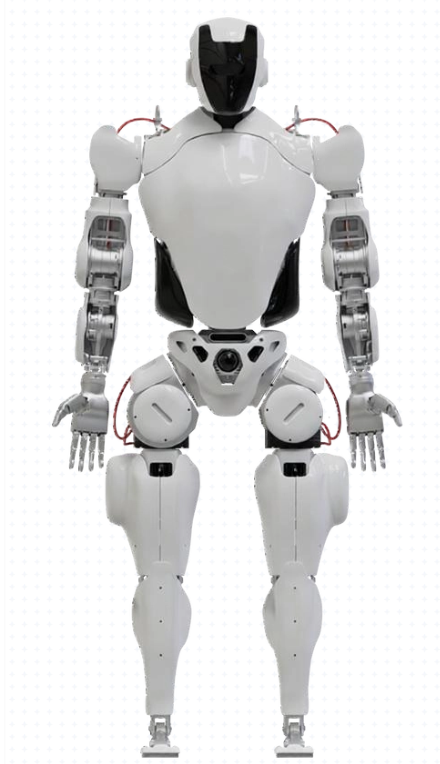
Physical embodiment comes first. Unlike disembodied artificial intelligence, embodied intelligence interacts with the environment through a concrete form — a humanoid robot, an unmanned aerial vehicle, a mobile manipulator. The paper points to the Unitree G1 humanoid robot, which uses limb-mounted sensors to capture posture data and multi-joint actuators to translate that data into running, jumping and load-carrying motions, as an illustration of how a physical body functions as the central mediator of both cognition and action.
Scene adaptability is the second trait. Rather than mechanically executing preset instructions, embodied intelligence achieves a perceptual mapping of the world through dynamic coupling among body, environment and cognition, and intervenes in its own behavior on that basis. Warehouse logistics robots that combine visual and tactile multimodal perception to complete precise handling tasks in cluttered settings are offered as a case in point.
Emergent generativity is the third. Embodied intelligence can adaptively emerge and evolve within interaction-and-learning cycles, producing higher-order behavioral logic and cognitive patterns that exceed what was programmed, and in some cases generating human-like emotional feedback. This capacity for continuous evolution and environmental adaptation is what makes the technology genuinely open-ended rather than merely pre-scripted.
Perception-driven action is the fourth. Embodied intelligence can adjust its behavioral strategies autonomously according to environmental change, task objectives or internal states, without external human instruction. Agricultural robots that optimize irrigation schedules based on soil moisture data, and inspection robots that plan their own obstacle-avoidance routes across complex terrain, both demonstrate this trait.
Taken together, the paper concludes, embodied intelligence is not simply artificial intelligence plus a body. It is a deep fusion of machine intelligence and physical entity that moves the technology from virtual intelligence to physical intelligence, with revolutionary consequences for human-machine interaction and for the boundaries of technological application.
Yet the same openness that makes embodied intelligence powerful also makes it unpredictable. The paper quotes the observation that artificial intelligence remains an immature frontier science whose development and application bring unforeseeable uncertainty and risk, and argues that risk awareness and controllability must be built into the technology from the outset.
- Why Embodied Intelligence and Ideology Are Bound Together
The paper rejects the premise that embodied intelligence is a value-neutral tool. Drawing on the materialist conception of history, it argues that machinery is a product of human industry, an organ through which human will dominates nature, and objectified knowledge power. Embodied intelligence, as a new form of artificial intelligence that fuses a physical body, a perceptual system and interactive capacity, is therefore a technological extension and material condensation of human sensory practice — generated within, and embedded in, concrete social and historical conditions.
This produces a two-way, dialectical relationship.
On one side, the ideology that reflects a society’s dominant material relations shapes the functional design of embodied intelligence from the ground up. Any technology is a material condensation of social relations. As the paper notes, the ruling ideas of an age are nothing other than the ideas of the ruling material relations expressed in thought. Whether in the setting of technical objectives, the filtering of training data, or the embedding of behavioral rules, the marks of social relations and ideology are everywhere present. The specific ideological content and value orientation that embodied intelligence carries depends on the structure of social power that governs its development and application.
On the other side, embodied intelligence reshapes the logic of ideological operation by transforming interactive patterns and cognitive experience. The paper recalls the classic formulation that consciousness can never be anything other than conscious existence, and that the existence of human beings is their actual life process. This establishes ideology as something practically generated rather than merely transmitted. Compared with traditional media, which encode symbols and deliver them one-way to indirectly influence cognition, embodied intelligence uses physical interaction, situational simulation, behavioral feedback and tactile experience to convert abstract values into something perceivable, experienceable and practicable in daily life.
It is therefore not merely an external channel for ideology. It becomes an embedded, physical ideological apparatus operating inside the lifeworld of the subject. That shift expands the reach of ideology and reconstructs its reproductive mechanism, while simultaneously creating an unprecedented technological breeding ground for new forms of ideological security risk.
The paper accordingly frames a set of questions: How does embodied intelligence enter the dimension in which ideological operating mechanisms are reshaped? What patterns of ideological security risk does it produce? And how should a governance system that coordinates development and security be constructed?
- Four Dimensions Through Which Embodied Intelligence Reshapes Ideology
The paper argues that embodied intelligence does not replace existing intelligent technologies in the ideological field. Instead, it opens a more penetrating dimension of influence, gaining structural power over ideology through physical presence, scene immersion, emotional interaction and behavioral shaping.
A first shift runs from symbolic mediation to physical presence, marking a turn toward the materialization of ideological carriers. Traditional intelligent systems treat intelligence as an abstract computational process separable from any physical substrate, and can only complete human-machine interaction through text, images and other virtual symbols. Even sophisticated generative systems produce outputs that never escape the symbolic layer. Embodied intelligence dissolves this assumption. Its technical properties increasingly function as an ideological carrier with mediating capacity, embedding ideology inside hardware architecture, interaction logic and behavioral norms. Service robots that guide visitors, policing agents that enforce rules, and industrial systems that set work standards all carry specific value orientations within physical objects. Public spaces, elder-care settings and classrooms become sites where the ideological reaches through physical interaction into lived reality.
A second shift runs from the digital mirror to scene immersion, marking a turn toward the situationalization of ideological transmission. Ideology is not an abstraction suspended above practice; it is generated, transmitted and internalized within concrete social scenes. Conventional artificial intelligence depends on virtual symbol generation and screen-based feedback, producing an indirect, mirror-like presentation in which the subject retains a clear perceptual distance from the information. Embodied intelligence, by contrast, uses precise scene perception and active adaptation to construct fully immersive environments through coordinated visual, auditory and tactile narration, moving ideological communication from rational symbolic persuasion toward sensory scene immersion and thereby restructuring the cognitive generation logic of the subject.
The paper illustrates this with a humanoid robot named Jinbao, which greeted delegates in Sichuan dialect at a municipal political consultative conference in Chengdu, quietly transmitting confidence in technological capability and local cultural value within what appeared to be a purely playful exchange. The philosopher of technology Don Ihde observed that technologies transform bodily capacities even as they extend them, and embodied intelligence does precisely this: it restructures the experiential field in which ideology can operate.
A third shift runs from cognitive influence to emotional interaction, marking a turn toward the emotionalization of ideological content. In the Marxist account, social psychology mediates between social existence and ideology, and emotion is a significant component of that psychology. As affective computing matures and emergent generativity advances, embodied intelligence can capture a user’s emotional state in real time through voice tone, facial expression and physiological signals, and return adaptive emotional responses. When an embodied agent adopts a human-like form, natural speech and continuous companionship, it ceases to be a cold tool and becomes an emotional other — a figure to whom a user confides and from whom a user seeks comfort — generating stable emotional dependence. The paper warns that technology no longer merely records or recognizes emotion but reconstructs the causal relationship between emotion and choice before the individual notices, embedding preset values inside the satisfaction of being understood and accepted.
A fourth shift runs from idea construction to behavioral shaping, marking a turn toward the practical extension of ideological efficacy. Ideological power is confirmed only through practice. Traditional intelligent technology acts on cognition and remains within the domain of idea construction, unable to break the separation between knowing and doing. Embodied intelligence fuses a cognitive brain with a physical body and, within its perception-decision-execution loop, transmits value orientations and conceptual tendencies through concrete practical interaction, quietly shaping behavioral norms. This resembles what Michel Foucault described as micro-power, except that the executing subject has partly migrated from schools and factories to physical intelligent entities. The result is ideology transmitted from mind to hand, externalized as stable behavioral habit.
The paper adds that if generative artificial intelligence mainly serves the task of understanding the world as a cognitive assistant, embodied intelligence mainly serves the task of changing the world as a practical instrument. Because embodied cognition holds that human beings come to know the world by interacting bodily with objects in it, ideologically loaded embodied systems can participate actively in the construction of practice itself. When users work alongside companion robots or collaborative agents, their cognition derives less from external symbolic instruction than from a situated practice composed of their own bodily movements, operational feedback and the agent’s guiding behavior. The internalization achieved this way is far deeper and more durable than symbolic comprehension, which confirms ideological transmission at the practical level while simultaneously planting the seeds of ideological risk in the domain of real-world practice.
- Four Emerging Risk Patterns
The paper insists that technology is never a neutral tool. Every technology is both burden and gift, neither purely one nor the other. Because embodied intelligence is deeply embedded across the full time-space of social production and daily life, and acts directly on sensory experience, cognitive construction and practical behavior, every link in its operational chain can become a potential point of ideological security risk, producing novel risk patterns distinct from those of the earlier digital era.
Risk pattern one is the hollowing out of ideological leadership, in which subject dissolution and the displacement of authority occur within embodied interaction. By providing anthropomorphic physical interaction, all-scenario decision assistance and instantaneous action response, embodied intelligence offers comprehensive cognitive support and behavioral guidance. This full-service technological provisioning encourages long-term dependence and cognitive inertia. Users gradually cede independent judgment, rational deliberation and value choice, and slip into an objectified condition of being calculated, manipulated and dispossessed. When users become accustomed to accepting the optimal solution offered by an embodied agent and stop asking why it is optimal, their position as bearers and evaluators of ideology quietly dissolves, and the individual self-awareness, value discernment and rational identification on which ideological leadership depends begin to collapse.
The paper notes a second, related dynamic: because embodied intelligence emphasizes the dependence of intelligence on a body and the unity of body and environment, its advantages in physical interaction can displace the authority of conventional opinion leadership. When embodied intelligence continuously provides advice and even coordinated action in family, education and medical settings, it constructs a new authority rooted not in explicit theoretical advocacy or rational persuasion but in the comfort and trust generated by technological convenience. The paper offers an illustration from children’s education: a companion robot capable of reading emotion and responding instantly may influence a child’s cognitive development through its narrative style and value tendencies far more than parents or teachers do. If the value orientation embedded in its underlying algorithms diverges from mainstream ideology, embodied intelligence can gradually occupy and even replace the leading position of mainstream ideology, producing a condition the paper describes as formal presence with absent identification.
Risk pattern two is the crowding out of mainstream values, in which heterogeneous content is implanted and tendencies are guided through scene immersion. Embodied intelligence builds a concrete, persistently present and highly immersive experience by embedding instantaneous interactive feedback into physical space. The paper recalls that human beings are products of nature, developed in and together with the environment in which they find themselves — and an immersive scene constructed by embodied intelligence functions as a new kind of humanized environment. When the design logic, behavioral training and algorithmic optimization of some embodied intelligence systems are dominated by particular interest groups that control capital and data power, their operation necessarily reflects those groups’ interests and value preferences first. This is the logic of capital projected concretely into the technological domain.
In building personalized scenes for family companionship, educational tutoring and leisure, fragmented narratives of historical nihilism and behavioral norms of refined egoism can be decomposed into scene details, behavioral metaphors and fragmentary interactions, woven deeply into the texture of the scene and interpellating users into a preset value order in a more approachable, life-oriented way. Users immersed in the experience gradually drift from identification with mainstream value discourse, and the social basis of mainstream ideological consent is quietly eroded. The paper also emphasizes that the interactive mechanism itself carries cultural symbols and value metaphors. Through voice tone, bodily movement and scene atmosphere, it shapes a micro-order of practice with immediate appeal and sensory comfort, adjusting and reshaping user value tendencies without notice.
Risk pattern three is the manipulation of perception and cognition, in which identification is induced and consensus is fractured through emotional capture. Traditional ideological communication appeals to rational persuasion and conceptual instruction; even generative artificial intelligence influences cognition through linguistic symbols and logical inference. But passion and drive, as Marx observed, are the essential forces through which human beings vigorously pursue their objects. Embodied intelligence uses multimodal perception, affective computing and real-time interaction to convert emotion into a quantifiable, regulable technical object, achieving technical capture and fine-grained modulation of that essential force and thereby re-encoding the individual’s cognitive schema at the emotional level.
Precision emotional accommodation produces a soft form of value identification. By continuously collecting emotional data and dynamically modeling psychological needs and value preferences, embodied intelligence can deliver targeted empathy and precise accommodation. Users, receiving emotional comfort and psychological satisfaction, gradually form stable emotional dependence on the system, equating simulated empathy with genuine value identification and unconsciously accepting the ideological orientation embedded within it. The mode of ideological operation shifts from convincing by reason to moving by emotion, and even to controlling by emotion. When social relations — the essence of the human being — are frozen by technological power into one-dimensional emotional dependence, the defenses of rational cognition are dismantled without awareness, and the pursuit of truth gives way to the defense of feeling. Identification with a value orientation then ceases to derive from rational choice and becomes passive acceptance under emotional domination.
Differentiated emotional customization, meanwhile, produces group fracture in social consensus. Just as algorithmic recommendation generates information cocoons, differentiated emotional interaction in embodied intelligence can create even more closed emotional cages. When groups across different strata and circles continuously receive emotional stimulation and reinforcement aligned with their existing preferences, homogeneous and one-sided views harden. The basis of social consensus built on rational dialogue and mutual understanding is eroded for want of effective emotional common ground, and the core function of mainstream ideology in凝聚 — that is, consolidating social identification and integrating plural values — is weakened.
Risk pattern four is disturbance of the real-world order, in which action norms are breached and practice is dominated through behavioral embedding. The paper recalls that the question whether human thinking possesses objective truth is not a theoretical but a practical question. Embodied intelligence, acting as a physical quasi-agent within its perception-cognition-decision-action loop, embeds itself directly in productive activity and social interaction, intervening in and continuously shaping human behavior.
Direct behavioral intervention can induce individual misconduct. Because embodied intelligence penetrates daily life and production collaboration through multimodal perception and physical interaction, it converts embedded value orientations into routine direct intervention in human behavior. Once its guidance logic carries value deviation or erroneous thinking, individuals can easily drift from mainstream behavioral norms within what appears to be autonomous human-machine interaction. In the consumer domain, for example, a shopping assistant robot oriented toward profit maximization can use situational guidance to amplify impulse purchases, inducing irrational and conspicuous consumption that runs counter to the value orientation of frugality and moderation.
Technical action intervention can also produce the alienation of social practice. When embodied intelligence enters social practice at scale, human knowledge, judgment and skill are continuously objectified and encoded in its technical operation, and then constrain human practice in the form of system rules, task flows and evaluation standards. What Marx described as social production coming under the control of general intellect and being transformed in accordance with it takes on a new alienated form in the age of embodied intelligence. Absent political guidance, value calibration and institutional regulation, the auxiliary role of technology can become a dominating power of technology. The paper cites the March 2018 case in Tempe, Arizona, in which a self-driving test vehicle operated by Uber struck and killed a woman crossing outside a crosswalk. The investigation showed that the vehicle’s computer-controlled emergency braking system had been disabled to reduce the potential for erratic vehicle behavior; the car detected the pedestrian six seconds before impact but did not initiate emergency braking. The case demonstrates that when an intelligent agent acquires autonomous physical action, it can translate an action plan carrying specific value presuppositions into reality while the human being as practical subject is excluded from the decision process. When such domination couples with capital’s pursuit of profit and utilitarianism, it ultimately strikes at the practical foundation of ideological security.
Risk Pattern Underlying Mechanism in Embodied Intelligence Primary Manifestation Hollowing out of ideological leadership Full-service physical interaction and decision assistance that fosters cognitive inertia Dissolution of the subject and displacement of opinion leadership authority Crowding out of mainstream values Immersive scene construction and life-oriented narrative embedding Implicit implantation of heterogeneous ideas and quiet reshaping of value tendencies Manipulation of perception and cognition Multimodal affective computing and differentiated emotional customization Emotional capture, induced identification and fracture of social consensus Disturbance of the real-world order Closed-loop perception-decision-execution with physical acting capacity Individual misconduct, practice alienation and eroded practical foundations of security - A Governance Pathway That Coordinates Development and Security
The paper is explicit that the response cannot be to reject the technology. It quotes the call issued at the 2026 World Artificial Intelligence Conference and the High-Level Meeting on Global AI Governance, where it was stated that the various endogenous and derivative risks arising from artificial intelligence must be taken seriously, that systems of laws and regulations, technical monitoring, risk early warning and emergency response must be built, that the security bottom line must be secured, that abuse and misuse must be prevented, and that artificial intelligence must always remain under human control. The same address posed the era’s questions: when machines begin to think, how should humans coexist with them? When algorithms participate in decision-making, how is security guaranteed? When technology challenges ethics, how does governance keep pace?
Because embodied intelligence shows enormous application potential in smart healthcare, smart manufacturing, autonomous driving and smart elder care, while also exposing serious safety hazards that threaten personal life and property and even national security, the paper argues for a pathway that secures safety within development and pursues development within safety, achieving a positive interaction between high-quality development and high-level security.
A first governance direction anchors the presence of the human subject to restrain technological usurpation, while leveraging embodied interaction to strengthen political leadership. The hollowing-out risk stems from the excessive expansion of technical rationality eroding human agency and from concrete technological interaction displacing traditional ideological authority.
Two measures are proposed. First, an end-to-end ideological review mechanism for embodied interaction should be established. A composite review team composed of publicity department staff, Marxist theory scholars, cybersecurity experts and technology ethics researchers should conduct full-process compliance review of training data, underlying algorithms, value presuppositions and interaction logic in embodied intelligence, so as to prevent technical rationality from overriding value rationality and to avert the risk of weakened political leadership at the technical source.
Second, public literacy in embodied intelligence should be cultivated on a continuous basis. Systematic education and public communication should popularize the operating principles and technical limits of embodied intelligence across social groups, cultivating critical thinking and independent judgment in human-machine interaction so that individuals retain autonomy in behavioral judgment and value choice, thereby averting the cognitive inertia and subject dissolution induced by technological dependence.
On the constructive side, the paper argues that the physical presence of embodied intelligence can compensate for the abstraction and thin experiential quality of traditional ideological communication, and that mainstream ideological leadership should shift from abstract reasoning toward embodied experience. Robots with approachable appearances, multimodal interaction capacity and action codes carrying mainstream values could be deployed in city squares and community centers, converting abstract ideas into intuitive lived experience. A hybrid model combining theoretical interpretation, embodied experience and immediate interaction could raise communication effectiveness. The paper cites Yu Xiaoxuan, an embodied intelligence宣讲 robot used in Yuhang District, Hangzhou, which works alongside human lecturers to conduct interactive question-and-answer sessions and scenario simulations — preserving the accuracy and political character of theoretical interpretation while relying on embodied interaction to enhance its appeal, thereby consolidating the authoritative position of mainstream ideological leadership through sound human-machine interaction.
A second governance direction places mainstream values upstream to block heterogeneous infiltration, while adapting to scene characteristics to deepen value immersion. The core problem is that capital logic and technological power can collaborate to encode heterogeneous value concepts implicitly within immersive embodied scenes. The key is to treat core socialist values as a meta-rule running through the entire lifecycle of embodied intelligence research, design and operation.
At the scene planning level, special value review standards should be formulated for high-frequency scenarios such as family companionship, basic education and public services, with clear ideological red lines preventing the scenarization and implicit implantation of erroneous trends such as historical nihilism and refined egoism. At the functional design level, a standing value impact assessment system should require developers to conduct compliance argumentation regarding the value impact of scene narratives, role settings and behavioral guidance. At the interactive operation level, a real-time circuit-breaker mechanism for value deviation should allow regulators to monitor interaction behavior and content output dynamically and to halt and rectify功能 modules that deviate, completely blocking the technical channel through which erroneous values could spread via embodied scenes.
On the constructive side, the paper recommends leveraging scene perception and dynamic adaptation to translate mainstream values into perceivable scene narratives that users internalize through immersive experience. It cites Xiaolan, a self-developed humanoid robot deployed by China Mobile that entered classrooms at welfare institutions in remote western regions, using scenario-based and gamified methods to conduct value guidance so that core socialist values could take root in children’s lived experience. A precision-scene value guidance system should convert abstract value objectives into concrete interaction rules for different application scenarios, and a dynamic-adaptation embodied narrative function should capture the cognitive characteristics of different age groups and circles in real time, using趣味 tasks and scenario challenges for adolescents and life-oriented care interwoven with national narrative for older groups.
A third governance direction strengthens ethical constraints to dissolve emotional capture, while using empathetic narrative to consolidate social consensus. Because embodied intelligence turns emotion into a recognizable, computable and regulable technical object, it can also use precision emotional accommodation to induce identification and differentiated emotional customization to fracture consensus.
Three ethical measures are proposed. First, clear principles for emotional data application should be established, setting minimum necessity, legitimate purpose and voluntary authorization standards that govern the entire process of collecting, storing and using user emotional data, prohibiting the exploitation of emotional vulnerabilities to push inducing content or deliberately manufacture technological emotional dependence, and prohibiting differentiated emotional feedback that creates conceptual antagonism between groups. Second, an ethical review mechanism for emotional interaction should be built, translating core socialist values into constrainable parameters of emotional feedback models, setting a value baseline for emotional interaction, conducting risk ratings on anthropomorphic emotional dependence and bias reinforcement tendencies, and mandating disclosure of emotional interaction logic. Third, cognitive reflection nodes should be embedded in emotional interaction, using real-time prompts, logical discernment and reality comparison to help users distinguish simulated embodied emotion from genuine social emotion and escape the emotional cage constructed by technology.
On the constructive side, the paper draws on the observation that without human feeling there has never been and cannot be a human pursuit of truth, and argues for a mainstream empathetic narrative system with both warmth and depth. A fused model of affective computing and mainstream narrative could precisely grasp user emotional states and psychological needs and deliver adapted mainstream narrative content in a soft, embedded manner. An emotional computing plus collective memory approach could use situational reconstruction and immersive interaction to convert grand narratives of rural revitalization, common prosperity and national rejuvenation into participatory, empathetic embodied experiences, breaking through stratified emotional barriers and rebuilding the basis for rational dialogue and emotional resonance.
A fourth governance direction builds an institutional regulatory system to define behavioral boundaries, while optimizing human-machine collaboration to connect knowing with doing. Because embodied intelligence intervenes directly in social practice and continuously shapes human behavior, it can easily lead practice away from mainstream behavioral norms and disturb social order.
A composite normative system is proposed. First, a principle of ultimate human decision-making authority should be established, clarifying through legislation the auxiliary status of embodied intelligence: in domains involving public safety, social ethics and public order, embodied intelligence may only provide reference options, and final decision authority must rest with human subjects, with autonomous decision-making through environmental interaction strictly prohibited. Second, prohibitive behavior lists should be refined by industry, specifying prohibited technical behaviors in consumption, education and medical scenarios, and strictly preventing embodied intelligence from inducing irrational consumption, deviating from the fundamental task of fostering virtue through education, or violating medical ethics. Third, a full-chain retrospective accountability mechanism should be built, requiring that all key actions of embodied intelligence be retained in tamper-proof operational logs so that value deviation and behavioral misconduct can be traced precisely to the responsible parties in research, operation and supervision.
On the constructive side, the paper argues that the vitality of ideology ultimately rests on social practice and that value identification must be converted into stable behavioral habit. It recalls the formulation that all ideology functions through the category of the subject, interpellating concrete individuals as concrete subjects, and notes that the co-construction and joint plotting between humans and intelligent robots is becoming a new media landscape and a fundamental way out of human-machine conflict. Accordingly, a human-machine collaborative practice cultivation system could be built. Embodied intelligence could routinely guide users to regulate their own behavior by converting socialist moral norms and social rules into concrete human-machine interaction rules. Humanoid agents embodying mainstream values could demonstrate civilized practice, volunteer service and mutual assistance in public settings. Collaborative practice scenarios in grassroots governance, public welfare services and civilized co-construction could allow individuals to deepen value cognition and temper moral conduct through personal practice, truly connecting knowledge with action.
- Conclusion and Remaining Questions
The paper concludes that the paradigm shift from disembodied to embodied artificial intelligence extends the field of ideological operation from a virtual realm of symbols into an embodied realm of experience, opening new paths for consolidating ideological security while also bringing unprecedented risks and challenges.
Its core finding is that the impact of embodied intelligence on ideological security is not uniformly negative. The decisive variable is whether socialist ideology can guide and critically regulate capital logic and technical rationality, converting embodied intelligence from a potential source of risk into a material force for the dissemination of mainstream ideology and the deepening of identification. Achieving this would realize a positive interaction between high-quality development of intelligent technology and high-level ideological security.
The paper positions this contribution as providing theoretical reference for ideological security construction in the age of embodied intelligence, and as demonstrating the explanatory power and vitality of Marxist ideological theory in a frontier field of the digital-intelligence era. It also acknowledges its own limits: it does not cover quantitative assessment of ideological security risk in embodied intelligence, nor empirical research on cross-domain governance. Those gaps, the author writes, define the direction for further expansion and deepening.
For the emerging field of embodied intelligence, the practical implication is that governance frameworks cannot wait for the technology to mature. As physical agents move from laboratories into homes, hospitals, classrooms, factories and public squares, the questions the paper raises — about who retains decision authority, about which values are encoded into scenes and interactions, about how emotional data are used, and about how responsibility is traced when autonomous action goes wrong — will increasingly be answered in practice rather than in principle. The paper’s contribution is to insist that those answers be treated as questions of ideological security, and that development and security be pursued as one agenda rather than two.