
The rapid ascension of embodied AI as a strategic national priority marks a pivotal shift in the evolution of productive forces. Unlike its virtual predecessors, embodied AI signifies the deep integration of artificial intelligence into the physical world, primarily through advanced robotics. This “embodied AI robot” is not merely a tool; it is an intelligent entity capable of perception, autonomous decision-making, and physical execution within shared human spaces. As these systems move from controlled industrial settings into diverse sectors like logistics, healthcare, and services, they herald an era of profound “humachine integration.” This integration promises unprecedented efficiency and safety, yet simultaneously precipitates a severe and multifaceted crisis for core labor rights. The transition challenges the very foundations of employment security, human dignity, and workplace safety, demanding a fundamental rethinking of legal and social governance frameworks to ensure that technological progress does not come at the expense of the worker.
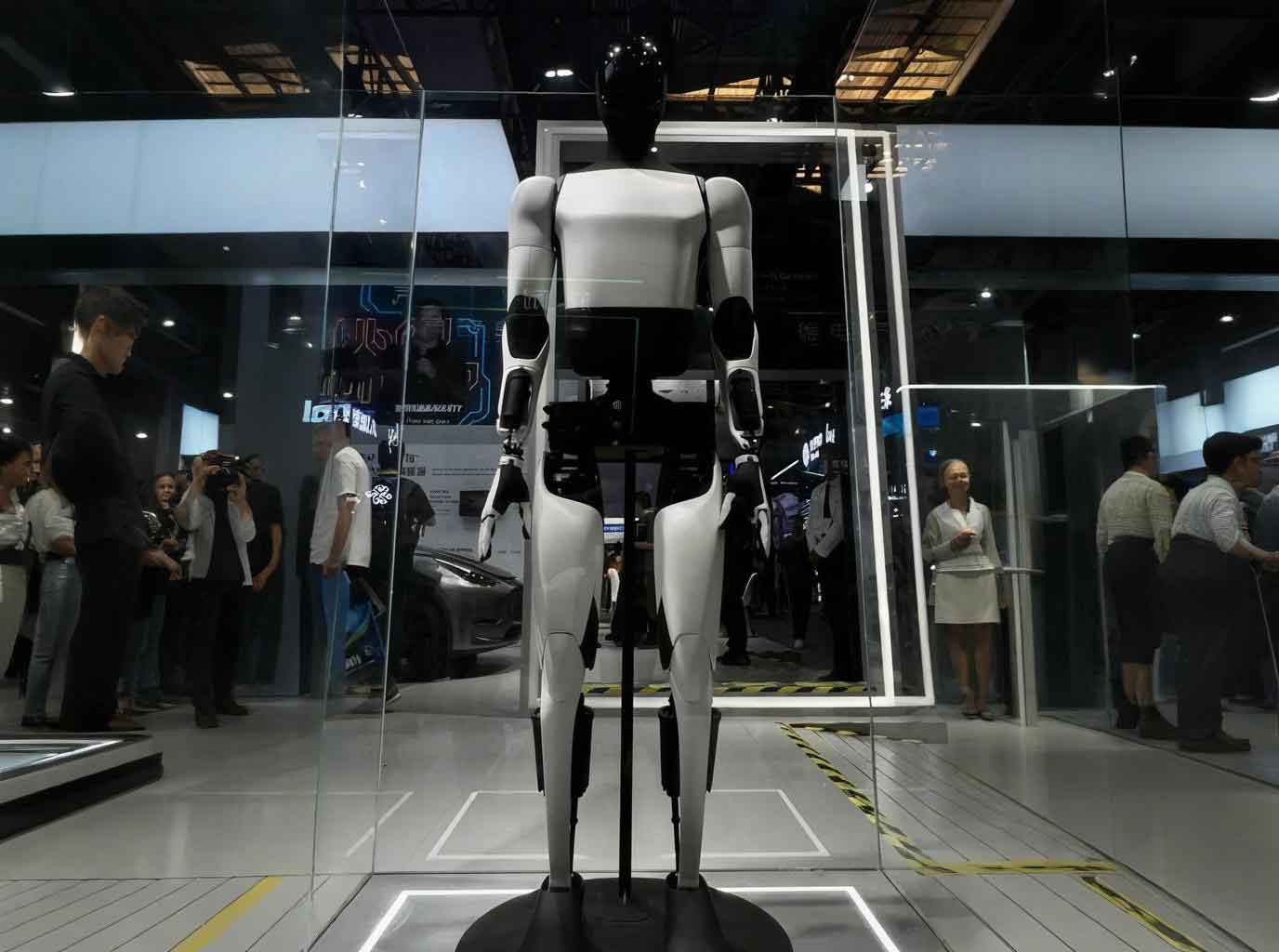
The operational logic of the embodied AI robot is defined by four interconnected features that underpin its transformative—and disruptive—potential in labor. First, Embodied Embeddedness refers to the physical instantiation of intelligence. The embodied AI robot shares the worker’s physical environment, enabling direct, real-time interaction, from collaborative assembly to co-moving objects. This physical co-presence is the bedrock of humachine integration but also reconfigures human collaboration into human-machine task partitioning. Second, Adaptive Collaboration denotes a leap from passive automation. Through evolutionary learning mechanisms, the embodied AI robot dynamically adjusts to environmental changes and task requirements, reducing reliance on pre-programmed routines. Its robustness and flexibility allow it to interpret human instructions (verbal or gestural) and decompose them into executable actions, fostering a form of synergy where the embodied AI robot exhibits a degree of operational autonomy. Third, Autonomous Decision-Making extends the role of the embodied AI robot beyond execution into management. Equipped with sensor networks and multimodal algorithms, it perpetually collects granular data on worker behavior, attention, and physiological states. This data fuels algorithmic models that autonomously allocate tasks, adjust workflow pace, and identify performance deviations, creating a pervasive, data-driven technical control system. Fourth, Connected Execution is critical in hazardous environments. Multiple embodied AI robot units can form decentralized, collaborative networks, sharing real-time information to perform high-risk tasks—from toxic leak handling to search and rescue—minimizing human exposure to danger. This feature showcases the life-saving potential of the embodied AI robot but also introduces novel, complex risk scenarios.
The convergence of these features within the embodied AI robot creates significant structural and ethical barriers to the realization of fundamental labor rights, which can be systematically analyzed as follows.
The Structural Erosion of the Right to Employment
The embodied AI robot drives a dual pressure on employment: mass displacement and skill polarization. Its ability to perform quantifiable, standardized physical and cognitive tasks with continuous, high-precision operation leads to structural rather than cyclical unemployment for low and medium-skilled roles. Concurrently, it raises skill requirements, pushing high-skilled workers towards roles as planners and supervisors of embodied AI robot systems, while rendering intermediate skills obsolete. This dynamic fragments the labor market and weakens traditional employment relationships, as humachine integration fosters non-standard, hybrid work arrangements. The core challenge is the transformation of technological dividends into a systemic threat to the right to work. The relationship can be modeled as a function of displacement risk ($R_d$) based on task routinization ($T_r$) and the adaptive capability ($A_c$) of the embodied AI robot:
$$R_d = f(T_r, A_c) = \alpha \cdot T_r + \beta \cdot \log(A_c + 1)$$
where $\alpha$ and $\beta$ are sector-specific coefficients. Higher $T_r$ (routine tasks) and $A_c$ (robot adaptability) exponentially increase displacement risk $R_d$.
| Manifestation | Mechanism | Rights Consequence |
|---|---|---|
| Job Substitution | Embodied AI robots performing standardized physical/logistical tasks. | Erosion of employment opportunities for low/medium-skilled workers. |
| Skill Polarization | Elevation of skill requirements towards AI supervision and maintenance. | Structural mismatch, deskilling, and increased barriers to entry. |
| Fragmentation of Work | Hybrid, non-standard tasks centered on human-embodied AI robot collaboration. | Weakening of standard employment relationships and associated protections. |
| Psychological Insecurity | Perception of human obsolescence alongside embodied AI robot advancement. | Erosion of professional identity and dignity, chronic job insecurity. |
The Dissolution of Personality Rights under Algorithmic Management
The autonomous decision-making capacity of the embodied AI robot fosters a new form of subordination: technical subordination. Workers are subjected to the opaque, real-time commands of an algorithmic system embedded within the embodied AI robot, which dictates workflow, pace, and behavior. This constitutes a profound shift from being subordinate to a human manager to being subordinate to a technical structure. The resulting “algorithmic management” poses a systemic threat to personality rights and human dignity. Workers are reduced to optimized data points within an efficiency chain, their actions and even physiological states continuously monitored and corrected. The “black box” nature of the algorithms powering the embodied AI robot makes decisions unchallengeable, creating a governance paradox where systemic rationality overrides individual dignity. The degree of technical subordination ($S_t$) can be expressed as a function of algorithmic control intensity ($I_a$) and the opacity of decision-making ($O_d$):
$$S_t = I_a \cdot (1 + O_d)$$
where $I_a$ encompasses task allocation frequency, monitoring granularity, and behavioral correction rates by the embodied AI robot.
The Data Privacy Crisis Under Omnipresent Sensing
The embodied AI robot’s need for environmental and behavioral data to operate translates into compulsory, panoramic surveillance. Through eye-tracking, expression analysis, voice stress detection, and motion capture, the embodied AI robot collects intimate data far beyond what is necessary for task performance. This data is then processed by algorithms to score, predict, and categorize workers, influencing critical outcomes like performance evaluations and promotions. Workers exist in a state of “compulsory perceptibility” with little ability to opt-out or understand the logic applied. This leads to a form of informational domination where personal privacy is systematically dissolved, and worker-generated data is appropriated as a capital asset for training the very embodied AI robot systems that manage them. The privacy risk exposure ($P_r$) escalates with the sensing dimensionality ($D_s$) of the embodied AI robot and the scope of data utilization ($U_d$):
$$P_r = \sum_{i=1}^{n} D_{s_i} \cdot U_{d_i}$$
where $i$ indexes different sensing modalities (visual, auditory, biometric, etc.).
| Risk Vector | Description | Example from Embodied AI Robot Operation |
|---|---|---|
| Panoramic Surveillance | Continuous, multi-modal data collection on behavior, physiology, and emotion. | Robot’s sensors tracking worker fatigue levels, attention span, and stress indicators. |
| Algorithmic Scoring & Prediction | Using collected data to generate performance scores or behavioral predictions. | Robot’s management system ranking workers for task allocation based on historical speed/error data. |
| Informational Domination | Lack of transparency, consent, and worker control over personal data flows. | Worker unable to access or contest the data profile the embodied AI robot has created. |
| Data Expropriation | Worker-generated behavioral data used to train and improve the embodied AI robot system without benefit-sharing. | Interaction data from human-robot collaboration used to optimize the robot’s algorithms, increasing its future replacement potential. |
Occupational Safety Rights and the Challenge of Shared-Risk Environments
While the embodied AI robot can mitigate traditional physical dangers by performing high-risk tasks, it introduces novel interactive hazards in shared workspaces. Malfunctions, software errors, or misperceptions by the embodied AI robot can lead to direct physical collisions or dangerous instructions. The complexity of accidents involving hardware failure, algorithmic error, and human action creates severe accountability gaps. Traditional occupational safety laws and workers’ compensation schemes are ill-equipped to handle scenarios where harm originates from an autonomous decision by an embodied AI robot, designed by one firm, deployed by another, and operating alongside a worker. This demands an expansion of the right to occupational safety to encompass psychological harm from algorithmic pressure and the establishment of clear, multi-party liability frameworks.
Pathways to Rights Realization: Building a Human-Centered Governance System
Addressing the crises induced by humachine integration requires proactive, multidimensional governance strategies that prioritize human dignity over pure efficiency. The goal is to steer the development of the embodied AI robot towards a model of collaborative symbiosis.
1. A Human-Centered Employment Rights System
To counteract the structural erosion of employment, policy must shift from passive income support to active capability-building and transition management. A three-tiered approach is essential:
- Specialized Unemployment Buffer: Establish “Embodied AI Transition Insurance” in high-risk sectors, providing wage subsidies and covering retraining costs for displaced workers during a 6–12 month transition period.
- Lifelong Skill Adaptation Ecosystem: Develop a national framework for continuous upskilling, integrating embodied AI robot coordination and maintenance into vocational standards. This requires public-private partnerships to deliver modular, accessible training, ensuring the workforce evolves alongside the embodied AI robot.
- High-Skill Mobility Platforms: Create “shared talent pools” to facilitate the temporary redeployment of skilled workers displaced by embodied AI robot integration, preventing knowledge waste and supporting industrial upgrading.
| Aspect | Traditional Framework | Adapted Framework for the Embodied AI Robot Era |
|---|---|---|
| Core Focus | Job security within a stable position. | Employment security through skill adaptability and transition support. |
| Policy Instrument | Unemployment benefits, passive income support. | Transition insurance, lifelong learning accounts, redeployment subsidies. |
| Skill Development | Initial vocational training, occasional upskilling. | Continuous, modular micro-credentials focused on human-embodied AI robot collaboration. |
| Social Contract | Employer provides stable job; employee provides labor. | Multi-stakeholder (state, employer, worker) investment in human capital resilience. |
2. Embedding Technical Ethics to Protect Personality Rights
Protecting human dignity requires embedding ethical guardrails directly into the lifecycle of the embodied AI robot.
- Dignity-by-Design Principle: Legally mandate that the development and deployment of embodied AI robots incorporate “human dignity priority” as a non-negotiable constraint. This includes prohibiting the embodied AI robot from making significant punitive or career-affecting decisions autonomously.
- Redefining “Subordination”: Modernize labor law by incorporating technical subordination as a key criterion for determining an employment relationship. If a worker’s actions are principally directed and evaluated by the algorithm of an embodied AI robot, a relationship of subordination—and thus legal protection—should be presumed.
3. Reconstructing Data Privacy with Strict Minimal Necessity
Data collection by the embodied AI robot must be ruthlessly bounded by the principle of minimal necessity, enforced through robust oversight.
- Algorithmic Audit and Linked Filing: Implement a mandatory auditing regime for algorithms used in labor management by embodied AI robots. Companies must file detailed statements on the purpose, data variables, and potential impact on workers’ rights before deployment, subject to review by labor authorities.
- Transparency and Contestability: Any algorithmic scoring or predictive function affecting workers must be disclosed in an understandable way. Workers must have the right to meaningful explanation, contestation, and rectification of automated decisions made by or with the embodied AI robot.
- Boundaries on Sensory Monitoring: Explicitly regulate the types of data (e.g., biometric, emotional) that an embodied AI robot can collect, limiting it strictly to what is essential for safe task collaboration. Continuous affective monitoring should be presumed excessive and unlawful.
4. A Risk-Sharing Governance Model for Occupational Safety
Complex accidents involving embodied AI robots demand a shared-liability model and updated safety standards.
- “Deferred Liability Piercing” Mechanism: Establish a legal framework where liability for harm caused by an embodied AI robot can pierce through the immediate employer to upstream actors (manufacturers, algorithm developers, integrators) who exercised substantial control over the system’s design and function and profited from its deployment.
- Updated Safety Legislation: Integrate international safety standards for collaborative robots (e.g., ISO 10218) directly into national occupational safety and health laws. Implement a “reverse presumption of liability” where any injury involving an embodied AI robot places the burden on the employer to prove all reasonable safety measures were taken.
- Multi-Stakeholder Risk Governance: Foster tripartite (government, employer, labor) committees to develop sector-specific safety protocols for human-embodied AI robot collaboration and to maintain a national database of incidents for continuous learning.
| Actor | Primary Responsibility | Governance Tool/Mechanism |
|---|---|---|
| State/Legislator | Establish legal floors for rights, safety, and ethics. | Laws on technical subordination, algorithmic audits, minimal necessity principle, deferred liability. |
| Employer/Deployer | Ensure safe, dignified, and fair deployment. | Conduct mandatory risk assessments, provide transition plans and retraining, ensure algorithm transparency. |
| Technology Developer | Embed ethics and safety in design (Dignity-by-Design). | Undergo pre-market algorithmic impact assessments, provide technical documentation for audits. |
| Workers & Unions | Exercise collective voice and monitor implementation. | Negotiate “Technology Agreements,” participate in safety committees, access and contest algorithmic decisions. |
| Independent Auditor | Provide external verification of compliance. | Certify algorithmic systems, conduct periodic reviews of data practices and safety protocols. |
The integration of embodied AI robots into the labor sphere represents a crossroad. One path leads towards a hyper-efficient but socially corrosive future where workers are subordinated to opaque algorithmic systems and face pervasive insecurity. The other path requires conscious, deliberate governance to harness the benefits of the embodied AI robot while staunchly defending human dignity, autonomy, and rights. The necessary legal and social innovations—from redefining subordination and enforcing minimal data collection to building adaptive lifelong learning and shared-liability models—are formidable but non-optional. The central task is to ensure that the evolution of the embodied AI robot is guided by a human-centered compass, fostering a humachine integration where technology amplifies human potential rather than diminishing it, and where the right to decent work remains inviolable.