
Embodied intelligence is drawing sustained attention as artificial intelligence moves from information processing and content generation toward physical work in factories, warehouses, mines, energy sites, logistics networks, emergency-response operations, and other real production environments. The central question is no longer whether a robot can perform a striking demonstration. The central question is whether embodied intelligence can operate reliably over long periods, improve efficiency, reduce costs, and keep people away from dangerous and高强度 roles. That shift from spectacle to sustained work defines the next stage of industrial competition.
Recently, the Ministry of Industry and Information Technology and the State-owned Assets Supervision and Administration Commission launched a special action for real-scene training of humanoid robots and embodied intelligence. The initiative calls for key products to enter an “operation mode,” conduct application validation in representative scenarios, and move toward regular deployment. The policy signal is clear: embodied intelligence should accelerate from technical display toward practical作业. The same direction is visible across industry. Companies, research institutions, and local governments are increasingly focused on how embodied intelligence can be used, not merely how it can be shown.
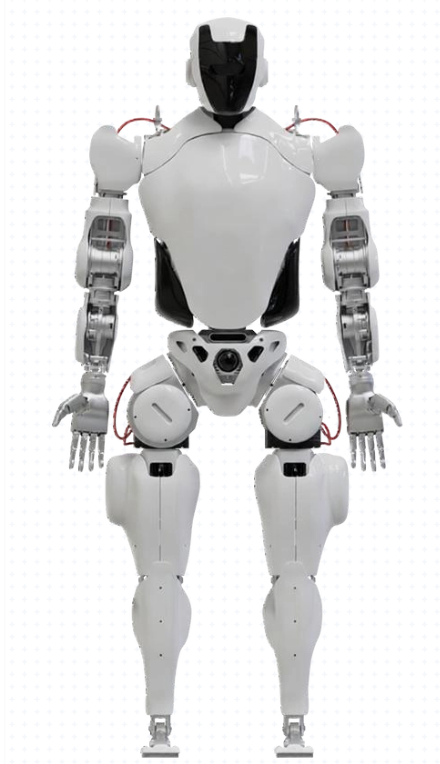
Embodied intelligence matters because artificial intelligence is beginning to participate more directly in real productive activity. In the past, artificial intelligence was mainly used for information processing, content generation, and辅助 decision-making. Today, robots and various intelligent equipment are bringing those capabilities into production sites. They can undertake specific tasks such as handling, assembly, inspection, and maintenance. For enterprises, the ability to complete a few difficult movements is not the most important issue. The most important issue is whether embodied intelligence can work stably over the long term, raise efficiency, lower costs, and reduce the need for people to enter dangerous and高强度 positions. Promoting embodied intelligence into an “operation mode” is a key step from technological innovation toward real productivity.
- Policy direction moves embodied intelligence toward an operation mode
The policy emphasis on real-scene training reflects a broader understanding that embodied intelligence cannot mature only in laboratories or exhibition halls. Representative scenarios, application validation, and regular deployment are not decorative phrases. They describe a demanding transition: products must leave controlled demonstrations and enter environments where任务 boundaries, production rhythms, safety requirements, and economic calculations are all real. Embodied intelligence must therefore be evaluated by whether it can sustain work, not by whether it can produce a single impressive moment.
For industry, this means the conversation around embodied intelligence is changing. Instead of asking only whether a humanoid robot can walk, grasp, or manipulate an object, companies are asking whether embodied intelligence can adapt to a workstation, cooperate with existing equipment, follow production schedules, and recover from anomalies. The operation mode requires reliability, maintainability, and measurable value. It also requires a realistic understanding of where embodied intelligence is ready and where it still needs development.
The policy direction does not reduce the importance of innovation. It sharpens it. When embodied intelligence enters real work, every technical weakness becomes visible. Stability, generalization, safety, and cost are no longer abstract research topics. They become conditions for deployment. That pressure can guide technical priorities, data collection, model improvement, and product design. In this sense, the movement toward operation mode is not a retreat from ambition. It is a more demanding form of ambition.
- Embodied intelligence gains ground as artificial intelligence enters physical production
Embodied intelligence represents a significant extension of artificial intelligence. Traditional artificial intelligence often operates on digital inputs and outputs. It may classify information, generate text, recommend decisions, or optimize schedules. Embodied intelligence adds a physical body and a physical environment. It must perceive, decide, and act under real-world constraints. A robot using embodied intelligence may need to identify an object, plan a movement, apply the right force, avoid collisions, and respond to changes in the workspace.
This physical dimension makes embodied intelligence both promising and difficult. The promise is that artificial intelligence can help with labor shortages, dangerous tasks, repetitive work, and operations that are difficult to automate with fixed machinery. The difficulty is that the physical world is unpredictable. Lighting changes, object positions shift, materials vary, and equipment behaves differently over time. Embodied intelligence must handle these variations without constant human intervention.
For enterprises, the value proposition of embodied intelligence is practical. A robot must improve efficiency, reduce costs, or protect workers. If embodied intelligence cannot do that, it remains a demonstration. If it can do that, it becomes part of production. The movement from demonstration to application is therefore not merely a technical milestone. It is an economic and organizational milestone.
- Industrial competition broadens across models, data, bodies, and manufacturing
In recent years, the industrialization of embodied intelligence in China has accelerated. Competition is no longer limited to a single整机 breakthrough. It is shifting toward coordinated development across models, data, bodies, and manufacturing. This broadened competition reflects the complexity of embodied intelligence. A strong model alone is not enough. A capable robot body alone is not enough. A large dataset alone is not enough. Success depends on how these elements work together in real scenarios.
Models must understand tasks and environments. Data must capture physical interactions. Bodies must execute movements reliably. Manufacturing must produce systems at acceptable cost and quality. Application scenarios must provide the conditions for validation and improvement. When these elements are aligned, embodied intelligence can move from a laboratory result to a deployable product. When they are not aligned, progress can stall despite advances in individual components.
The shift toward coordinated competition also changes the role of users. Enterprises are not simply buyers of finished robots. They are often co-developers of embodied intelligence because their production sites generate the data and experience needed for improvement. The boundary between supplier and user becomes more porous. This creates opportunities for joint innovation, but it also requires clear rules for data use, intellectual property,成果转化, and benefit sharing.
- Real-world scenarios show embodied intelligence moving from validation to production
Application scenarios are expanding from demonstration and validation toward actual production. Shanghai, for example, is advancing embodied models, embodied data, and industrial scenario applications around the intelligent transformation of manufacturing. The focus is not only on building robots but on connecting models, data, and industrial needs. This integrated approach recognizes that embodied intelligence requires an ecosystem, not just a product.
In Jiangxi, some electronic manufacturing enterprises have tried using robots for loading and unloading operations on tablet computer production lines. The purpose is to test production rhythm and作业 efficiency through continuous operation. This kind of deployment is significant because it moves beyond a one-time demonstration. The robot must operate within a real line, meet production demands, and maintain performance over time. Such tests reveal whether embodied intelligence can withstand the pace and pressure of actual manufacturing.
Hangzhou is combining pilot testing, industry application, and scenario demonstration. The emphasis is on solving the problems that appear after technical research: how to achieve volume production, how to enter the market, and how to scale from a single application to broader use. This approach addresses a common gap in embodied intelligence. A technology may work in principle, but it still needs manufacturing capability, application support, and market mechanisms to become a product.
As applications deepen, enterprises are paying less attention to whether a robot can complete a single task. They are paying more attention to whether embodied intelligence can adapt to production rhythm, maintain stable operation, and demonstrate efficiency and cost advantages over long-term use. These are the criteria that determine whether embodied intelligence becomes a lasting part of production.
- Real scenes are reshaping how embodied intelligence is developed
Real scenes are changing the way embodied intelligence is developed. Large language models can use massive amounts of text and images from the internet for training. Embodied intelligence requires a different kind of data: interaction data from the physical world. Every time a robot grasps, moves, or operates, it generates information about motion trajectories, force-position control, operation sequences, and exception handling. This information is not merely a byproduct. It is a foundation for improving models and control strategies.
The more such data accumulates, the more conditions exist for continued improvement of embodied intelligence. Models can learn from variations. Control strategies can become more robust. Robots can become better at adapting to new workstations and tasks. This creates a循环: scenarios generate data, data optimizes models, models improve bodies, and bodies enter more scenarios. The循环 is not automatic. It requires deliberate collection, labeling, management, and use of data. It also requires scenarios that are stable enough for learning and varied enough for generalization.
This data-driven development process gives an advantage to organizations that can operate in real environments. Factories, mines, warehouses, and energy sites become living laboratories for embodied intelligence. But this advantage depends on cooperation. Users must be willing to share operational experience. Technology providers must be able to translate that experience into model improvements. Rules must protect sensitive information while enabling learning. Without such cooperation, the data cycle remains fragmented.
- The data-model-body-scenario cycle is central to embodied intelligence
The cycle connecting data, models, bodies, and scenarios is central to the maturation of embodied intelligence. In this cycle, data from real operations help train and refine models. Better models improve the capabilities of robot bodies. Improved bodies can enter more scenarios. Those scenarios generate new data, which begins the cycle again. Each turn of the cycle can increase the range and reliability of embodied intelligence.
However, the cycle can also break down. If data are not collected systematically, models cannot learn efficiently. If models are not connected to robust bodies, improvements do not translate into reliable action. If bodies cannot enter scenarios, data remain limited. If scenarios do not provide feedback, the cycle loses its driving force. For embodied intelligence to advance, all parts of the cycle must be supported. This is why policy attention to real-scene training is important. It strengthens the connection between technical development and practical application.
The cycle also has implications for competition. Companies that control only one part of the cycle may find it difficult to lead. Companies that can integrate data, models, bodies, and scenarios may create stronger products. Ecosystems that bring together model developers, robot makers, component suppliers, research institutions, and user enterprises may have an advantage. The future of embodied intelligence is likely to depend on how well these different actors collaborate.
- Embodied intelligence still faces serious constraints in real production
Despite progress, embodied intelligence still faces many constraints when entering real production sites. Some products can complete a single demonstration, but their stability and generalization in complex environments remain insufficient. A demonstration may occur under controlled conditions. A production site is different. It includes noise, variable lighting, moving people, changing materials, and unexpected events. Embodied intelligence must handle these conditions without failing.
Some solutions rely heavily on on-site customization. Changing a workstation or changing a material may require retraining and debugging. This raises replication costs. A solution that works in one factory may not work in another without significant adaptation. For embodied intelligence to scale, it must become more adaptable and easier to deploy. Otherwise, each application becomes a custom project rather than a product.
Some regions place greater emphasis on whole-machine projects and production capacity while investing less in data, models, training platforms, and application ecosystems. This imbalance can slow the development of embodied intelligence. Whole machines are visible and attractive. Data infrastructure and model improvement are less visible but equally important. Without them, embodied intelligence may remain dependent on manual engineering and may struggle to improve over time.
For user enterprises, the decision to adopt embodied intelligence ultimately depends on continuous operation time, task success rate, frequency of manual intervention, and input-output ratio. These factors are practical and demanding. They determine whether embodied intelligence is worth using. The hotter the embodied intelligence industry becomes, the more important it is to prevent a focus on demonstration over application, quantity over quality, and construction over efficiency.
- Validation must reflect the realities of production
Application validation for embodied intelligence cannot be based only on whether a single demonstration succeeds. It must use long-cycle, continuous testing to examine task success rate, equipment reliability, safety, and economic performance. A robot that performs well for a short period may still fail when required to operate across shifts, days, or weeks. Production environments demand consistency. They also demand predictability. Embodied intelligence must be evaluated with these demands in mind.
A more realistic evaluation system should include continuous operation time, anomaly recovery capability, manual takeover frequency, unit operation cost, and other indicators tied to actual production. These indicators help distinguish a promising prototype from a deployable solution. They also help enterprises compare embodied intelligence with existing automation and manual labor. Validation should not be a formality. It should be a learning process that reveals both strengths and weaknesses.
After a solution has passed actual production testing, it should be promoted from one workstation to a production line, and from one enterprise to similar enterprises. This progression can help the industry move from “one scenario, one project” toward “one type of scenario, one product.” Such a shift can reduce repeated development and deployment costs. It can also help embodied intelligence achieve economies of scale and become more accessible to a wider range of users.
From demonstration to operation: how embodied intelligence changes its focus Dimension Demonstration-focused approach Application-focused operation mode Primary goal Show technical capability in a controlled setting Complete real work reliably in a production setting Success measure One-time or short-term performance Continuous operation, task success, and economic value Data source Limited scripted interactions Long-term physical interaction data from real scenarios Deployment model Customized demonstration project Replicable product for a class of scenarios Business case Visibility and technical validation Efficiency improvement, cost reduction, and risk reduction Risk management Failures contained within the demonstration Safety, reliability, recovery, and insurance mechanisms - Scenario supply quality determines the pace of embodied intelligence adoption
To accelerate embodied intelligence into operation mode, the quality of scenario supply must improve. Not every scenario is equally valuable. High-value scenarios should be identified around manufacturing, energy, mining, logistics, emergency rescue, and other fields. These scenarios should involve作业 links with high labor intensity, high danger, labor shortages, or significant difficulty in automation transformation. Such conditions create strong demand for embodied intelligence and provide meaningful tests of its capabilities.
High-value scenarios should have clear task boundaries,明确 technical indicators, and quantifiable application effects. Clear task boundaries help define what embodied intelligence must do. Technical indicators help measure performance. Quantifiable effects help enterprises evaluate return on investment. Without these elements, embodied intelligence projects can become open-ended experiments rather than focused deployments.
Large manufacturing enterprises and central state-owned enterprises have advantages in scenario supply. They often have many production sites, complex working conditions, and stable application demand. These conditions can provide embodied intelligence with long-term training and validation opportunities. By opening such scenarios to technology providers, these enterprises can help accelerate learning while addressing their own operational needs. The result can be a shared benefit: better embodied intelligence and more efficient production.
- Manufacturing offers repetitive, precise, and rhythm-sensitive tasks for embodied intelligence.
- Energy and mining offer dangerous and remote tasks that can benefit from embodied intelligence.
- Logistics offers handling, sorting, and transport tasks that require adaptability.
- Emergency rescue offers unpredictable and high-risk tasks where embodied intelligence can support human teams.
- Application validation and promotion mechanisms need to be strengthened
Embodied intelligence cannot be judged only by whether a demonstration succeeds once. It must be tested through long-cycle, continuous operation. Validation should examine task success rate, equipment reliability, safety, and economics. These dimensions are interconnected. A high task success rate is valuable only if the system remains reliable over time. Safety is essential for deployment near people and equipment. Economics determines whether adoption can scale.
A production-oriented evaluation system should include continuous operation time, anomaly recovery capability, manual takeover frequency, unit operation cost, and other practical indicators. These metrics help technology providers improve their products and help user enterprises make informed decisions. They also create a common language for discussing embodied intelligence performance. Without such a language, adoption decisions may rely on impressions rather than evidence.
Promotion mechanisms should support replication. A solution validated at one workstation should be adapted for a production line. A solution validated in one enterprise should be adapted for similar enterprises. This progression can move embodied intelligence from isolated projects to standardized products. It can reduce重复 development and deployment costs. It can also help suppliers invest in product improvement rather than treating every deployment as a new engineering challenge.
Promotion should not mean forcing identical solutions into different environments. It should mean identifying common task patterns and building adaptable platforms. Embodied intelligence needs enough flexibility to handle variation while retaining enough structure to be reliable. This balance is difficult, but it is necessary for scale.
- Lowering the initial market entry threshold is essential for embodied intelligence
The initial application of embodied intelligence faces a threshold. Early users bear not only equipment investment but also the trial-and-error risk associated with immature technology. This risk can discourage adoption even when the long-term potential is attractive. Lowering the initial market entry threshold can help embodied intelligence gain real-world experience and improve faster.
Several mechanisms can share the cost and risk of first application. Operating leases can reduce upfront investment. Pay-per-use models can link payment to actual use. Robot-as-a-service arrangements can turn embodied intelligence into a service rather than a capital purchase. Insurance compensation mechanisms can help manage unforeseen failures. These approaches do not eliminate risk, but they distribute it more rationally among technology providers, users, and financial partners.
Joint research and collaboration can also lower barriers. Model companies, robot companies, component companies, research institutions, and user units can work together on embodied intelligence projects. Clear rules for data use, intellectual property,成果转化, and revenue distribution are necessary. When these rules are clear, partners can cooperate over repeated iterations. When they are unclear, cooperation can stall even when the technology is promising.
For embodied intelligence to become a durable part of production, the business model must support continuous improvement. One-time sales may not provide the feedback needed for long-term learning. Service models, shared data agreements, and performance-based contracts can create ongoing relationships. These relationships can help embodied intelligence adapt to new tasks and environments.
- Data, models, training platforms, and application ecosystems require balanced investment
The development of embodied intelligence requires balanced investment. Whole-machine projects and production capacity are important, but they are not sufficient. Data infrastructure, models, training platforms, and application ecosystems are also essential. If investment is unbalanced, embodied intelligence may produce impressive machines that cannot learn efficiently or adapt to new tasks.
Data are especially important for embodied intelligence because physical interaction data are harder to obtain than text or images. Training platforms can help collect, organize, and use data. Models can turn data into improved capabilities. Application ecosystems can connect technology providers with users and enable replication. Each element supports the others. A weakness in one area can limit progress in the entire system.
Balanced investment does not mean equal investment in every area. It means recognizing dependencies. A robot body without a strong model may be limited. A model without physical data may not generalize. A training platform without users may not generate relevant data. An application ecosystem without clear rules may not sustain cooperation. For embodied intelligence to advance, investors and policymakers must consider the entire chain.
- User enterprises need clear criteria for adopting embodied intelligence
User enterprises are practical. They do not adopt embodied intelligence because it is fashionable. They adopt it because it solves a problem. The criteria are often straightforward: continuous operation time, task success rate, manual intervention frequency, safety, and input-output ratio. If embodied intelligence cannot meet these criteria, it will remain outside the core production process.
Continuous operation time matters because production does not stop after a demonstration. Task success rate matters because errors can disrupt schedules and damage materials. Manual intervention frequency matters because frequent intervention reduces the labor-saving benefit. Safety matters because robots often work near people and expensive equipment. Input-output ratio matters because adoption must make economic sense.
These criteria also provide direction for technology development. If embodied intelligence providers understand what users measure, they can prioritize improvements. They can focus on reliability rather than novelty. They can design for maintenance and recovery. They can build systems that fit production rhythms. The result can be embodied intelligence that is not only intelligent but also useful.
- Avoiding the risks of hot industry cycles is critical for embodied intelligence
The embodied intelligence industry is attracting significant attention. Attention can bring investment, talent, and experimentation. It can also bring exaggeration and duplication. The risk is that embodied intelligence becomes associated with impressive demonstrations while failing to deliver durable value. To avoid this, the industry must remain focused on application, quality, and efficiency.
Demonstration over application can lead to products that perform well in staged settings but fail in real work. Quantity over quality can lead to many similar projects that do not advance the technology. Construction over efficiency can lead to facilities and capacity that are underused. These risks are not unique to embodied intelligence, but they are especially relevant because the technology is complex and the expectations are high.
A healthy embodied intelligence ecosystem should reward real deployment and continuous improvement. It should support long-term validation and replication. It should encourage cooperation across models, data, bodies, and scenarios. It should also accept that progress may be gradual. Embodied intelligence is unlikely to transform every workplace overnight. It is more likely to enter production step by step, task by task, and scenario by scenario.
- Collaboration across the embodied intelligence chain is necessary for scale
Scaling embodied intelligence requires collaboration across the value chain. Model developers need access to physical data. Robot manufacturers need models that can run reliably on their hardware. Component suppliers need requirements that are stable enough for product planning. Research institutions need real-world problems to guide inquiry. User enterprises need solutions that fit their operations. No single actor can easily provide all these elements.
Collaboration should be based on clear rules. Data use rules should protect sensitive information while allowing learning. Intellectual property rules should recognize contributions without blocking improvement. Commercialization rules should define how value is shared. Revenue distribution rules should align incentives over time. When these rules are clear, partners can focus on technical and operational challenges rather than negotiating basic terms repeatedly.
Collaboration should also be practical. Joint teams can work on specific workstations, production lines, or scenario classes. They can define tasks, collect data, test performance, and iterate. This kind of focused cooperation can produce concrete results and build trust. Over time, successful collaborations can expand into broader platforms and standards for embodied intelligence.
- Embodied intelligence can become real productivity through sustained application
The future of embodied intelligence depends on sustained application. Policy support, technological innovation, and industrial investment all matter. But the decisive test occurs in real production. Embodied intelligence must demonstrate that it can work continuously, handle variation, recover from anomalies, and provide economic value. It must move from being a fascinating technology to being a reliable tool.
This transition requires patience and discipline. It requires measuring the right things. It requires investing across the entire chain. It requires sharing risk and reward. It requires learning from real scenarios and using that learning to improve models, bodies, and deployment methods. When these conditions are met, embodied intelligence can become a meaningful part of modern production.
The movement toward operation mode is therefore not a narrowing of ambition. It is a test of whether embodied intelligence can deliver on its promise. Demonstration can inspire attention. Application can create value. For embodied intelligence to matter in the long run, it must do both: it must continue to advance technically, and it must prove itself in the everyday work of factories, warehouses, mines, energy sites, logistics networks, and emergency-response operations. The next stage of embodied intelligence will be defined not by how impressive it looks, but by how reliably it works.