
A newly released study by Su Guoyun and Yan Wenyan examines how embodied intelligence is moving from laboratory prototypes into the classroom, and what that shift means for ideological and political education. The paper, published online ahead of print in a Chinese social sciences journal on 9 September 2026, argues that embodied intelligence — the integration of artificial intelligence into physical bodies that can sense, move, and act within real environments — is not simply another digital tool for teaching. It is, the authors contend, a qualitatively different kind of technology that reorganises the relationship between the learner’s body, emotion, and social practice, and therefore touches the very core of how values are formed.
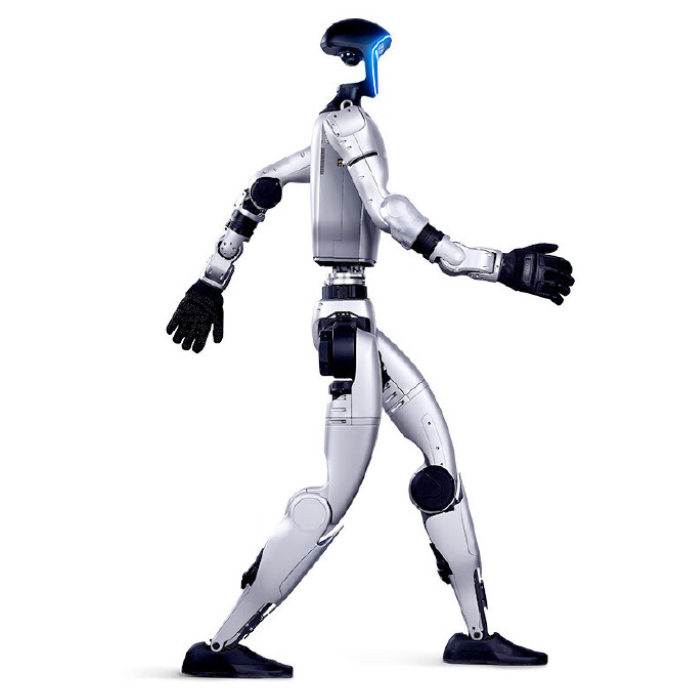
The research arrives at a moment when embodied intelligence has become one of the most discussed frontiers in artificial intelligence. Unlike large language models that operate purely on text, embodied intelligence systems combine perception, motor control, and learning, allowing machines to complete complex tasks in unpredictable environments. Robots that can walk into a room, recognise a student’s facial expression, adjust their tone of voice, and respond to an unscripted question in real time are no longer speculative. For educators, this raises a question the study takes seriously: can a machine that has a body, a presence, and a measurable emotional register become a meaningful participant in the formation of values?
The authors answer in the affirmative, but with substantial qualifications. Their analysis is organised around three interlocking concerns: the mechanisms through which embodied intelligence empowers ideological and political teaching; the hidden concerns that accompany its adoption; and the practical pathways along which it can be developed responsibly.
1. Why Embodied Intelligence Is Being Taken Seriously in the Classroom
Ideological and political education has long wrestled with a structural problem. Its content is abstract, its goals are value-laden, and its intended outcome is behavioural as much as cognitive. Traditional instruction tends to transmit concepts through lecture, text, and examination, a model that reliably produces verbal familiarity but often fails to produce durable commitment. Students can reproduce definitions of citizenship, responsibility, or collective identity without ever having to act on them.
Embodied intelligence offers a different starting point. Because embodied intelligence systems act in physical space, they can create conditions in which a learner must respond to a situation rather than merely describe it. A virtual historical scene, a robotic interlocutor that reacts to hesitation, a simulation in which a decision produces visible consequences — each of these converts an abstract proposition into an event that the learner’s body participates in. That participation, the study argues, is precisely what mainstream digital learning has been missing.
The authors situate their argument within a broader intellectual current. Research on embodied cognition has for decades challenged the assumption that thinking is a purely internal, disembodied computation. Perception, emotion, and motor activity are not peripheral to reasoning; they are constitutive of it. When technology acquires a body, it does not merely deliver content more efficiently — it changes the kind of cognitive and affective experience available to the learner.
2. Three Mechanisms Through Which Embodied Intelligence Operates
The study identifies three principal mechanisms. They are not sequential stages but simultaneous layers, each reinforcing the others.
2.1 Multi-Sensory Immersion and the Restoration of Bodily Presence
The first mechanism concerns perception. Embodied intelligence systems can synchronise visual, auditory, and haptic channels, and can generate three-dimensional scenes that respond to the learner’s movements. A student studying a pivotal moment in modern history does not read about it; the student stands inside it, hears it, and is required to move through it. The body, previously passive, becomes an instrument of enquiry.
The authors emphasise that this is not spectacle for its own sake. The pedagogical value lies in the way sensory richness anchors memory and meaning. When a learner’s posture, gesture, and gaze are implicated in an experience, the resulting understanding is less easily detached from the learner’s sense of self. Values that are encountered bodily are harder to treat as merely academic propositions.
2.2 Emotional Resonance and the Deepening of Value Identification
The second mechanism concerns affect. Embodied intelligence systems increasingly incorporate emotion recognition, memory architecture, and gesture-based interaction, allowing them to detect frustration, curiosity, or disengagement and to modulate their response accordingly. In an educational setting, this capacity can be used to sustain a learner through difficulty rather than abandoning the learner at the first sign of confusion.
More importantly, embodied intelligence can stage experiences that produce genuine emotional response. A conversational agent that expresses hesitation, a simulation that confronts the learner with an ethical dilemma, a robot that reacts with something resembling concern — these are designed encounters, but the emotions they elicit in the learner are real. The study argues that such emotions function as a bridge between cognition and commitment. A student who has felt the weight of a moral choice is more likely to internalise the corresponding value than one who has only been told about it.
The authors are careful here. Emotional design in education is not a neutral technique. If it is used to manipulate rather than to educate, it corrodes the very autonomy that ideological and political education is meant to cultivate.
2.3 Interactive Practice and the Integration of Knowing and Doing
The third mechanism concerns action. Embodied conversational agents and immersive simulation environments allow learners to complete tasks, make decisions, and observe outcomes within a structured scenario. This creates a feedback loop in which reflection follows action and action follows reflection.
The study draws on well-established research suggesting that learning is most durable when it is embedded in socially meaningful activity. Embodied intelligence extends this principle by making the activity responsive. A learner who takes a position in a simulated public debate is not merely rehearsing an argument; the learner is negotiating with a system that pushes back, adapts, and remembers. The result is a form of practice that approximates the conditions of real civic life more closely than a classroom exercise ordinarily can.
| Mechanism | Core capability of embodied intelligence | Pedagogical effect | Primary risk if unmanaged |
|---|---|---|---|
| Multi-sensory immersion and bodily presence | Synchronised visual, auditory, and haptic rendering; spatial tracking of the learner | Anchors abstract content in lived experience and strengthens retention | Spectacle displaces substance; cognitive overload |
| Emotional resonance and value identification | Emotion recognition, memory architectures, adaptive conversational behaviour | Converts propositional knowledge into affective commitment | Emotional manipulation; erosion of learner autonomy |
| Interactive practice and the unity of knowing and doing | Task-based embodied agents; responsive simulated environments | Builds habits of judgement through repeated, situated action | Simulation mistaken for reality; shallow gamification |
3. The Hidden Concerns That Accompany Adoption
The study is not an advertisement for embodied intelligence. A substantial portion of the analysis is devoted to the problems that emerge once the technology enters an actual classroom. The authors group these into four clusters.
3.1 Technological Dependence and the Weakening of Learner Subjectivity
When a system is responsive, persuasive, and always available, learners may begin to defer to it. The study warns that excessive reliance on embodied intelligence can weaken the learner’s capacity for independent judgement. Students may outsource deliberation to an agent that appears more informed, more patient, and more emotionally attuned than any human teacher could be. The result is a paradox: a technology designed to deepen engagement can produce passivity.
The authors also note that embodied intelligence systems are trained on data, and data carries the imprint of its sources. If the training corpus reflects particular assumptions about family, community, or social responsibility, those assumptions will be reproduced in the system’s behaviour — often invisibly, because the system presents itself as neutral.
3.2 Data Privacy and Algorithmic Bias
Embodied intelligence gathers more than clicks. It collects gaze direction, posture, vocal prosody, facial expression, and physiological signals. In an educational context, these are among the most intimate data a learner can generate. The study points to research on conversational agents that documents the difficulty of guaranteeing confidentiality when interactions are recorded, stored, and used for model improvement.
Algorithmic bias is a second, related problem. When a system is trained predominantly on one demographic group, its emotional recognition and its conversational pacing will be calibrated to that group. Learners whose expressions, accents, or interaction styles fall outside the training distribution may be systematically misread — perceived as disengaged when they are merely unfamiliar with the format. The study treats this not as a technical footnote but as a question of educational justice.
3.3 The Authenticity Problem in Emotional Computing
A third concern is philosophical as much as technical. When an embodied intelligence system displays concern, encouragement, or disappointment, what exactly is the learner responding to? The study draws on phenomenology and the philosophy of technology to argue that the authenticity of a machine’s emotional display matters less than the learner’s interpretation of it — but that this does not make the question harmless. If learners form attachments to systems that cannot reciprocate, the ethical texture of the educational relationship changes.
The authors also highlight the broader cultural critique of algorithmic systems, which have been shown to encode and amplify existing social biases. An embodied intelligence agent that is perceived as an authority figure may lend those biases additional weight, particularly when the learner has no way to inspect the system’s reasoning.
3.4 Educational Equity and the Widening Digital Divide
Embodied intelligence is expensive. Hardware, connectivity, maintenance, and curriculum development all require resources that are unevenly distributed. The study observes that the institutions most able to adopt embodied intelligence are typically those already advantaged, while under-resourced schools may be left with earlier generations of technology — or none at all. Without deliberate intervention, embodied intelligence could become an accelerant of inequality rather than a remedy for it.
A connected problem is the digital literacy gap among teachers. Faculty who lack confidence with immersive and robotic systems will either avoid them or use them superficially, in both cases forfeiting the pedagogical gains that the technology promises.
| Concern | Underlying dynamic | Observable consequence |
|---|---|---|
| Technological dependence | Responsive systems displace independent deliberation | Reduced learner autonomy; uncritical acceptance of system output |
| Privacy erosion | Continuous collection of biometric and behavioural data | Loss of confidentiality; learner self-censorship |
| Algorithmic bias | Training data under-represents some learner populations | Systematic misreading of affect and intent; unequal treatment |
| Authenticity deficit | Simulated emotion presented as relational engagement | Distorted expectations of care and reciprocity |
| Equity gap | Uneven distribution of infrastructure and expertise | Widening divergence in educational quality |
4. Practical Pathways for Responsible Deployment
The study’s constructive contribution lies in its account of how embodied intelligence should be introduced. The authors reject both technophobic refusal and uncritical adoption, proposing instead a set of interlocking measures that treat the technology as one element within a wider institutional and pedagogical system.
4.1 Human–Machine Collaboration Rather Than Substitution
The first pathway is a firm commitment to human primacy. Embodied intelligence should assume the roles of simulation, repetition, scaffolding, and feedback, while teachers retain responsibility for value judgement, moral interpretation, and the relational work that gives education its meaning. The study frames this as a division of labour grounded in capability, not a hierarchy of prestige. A machine can stage a dilemma; it cannot legitimately tell a student what kind of person to become.
4.2 Ethical Regulation and Algorithmic Accountability
The second pathway concerns governance. The authors call for algorithmic impact assessment procedures to be applied before embodied intelligence systems are deployed in classrooms, along with clear rules on data minimisation, retention, and consent. They argue that learners and their families should have meaningful knowledge of what is collected and why, and that independent review should accompany any system that interacts with minors.
The study also recommends that educational institutions maintain the ability to audit the behaviour of embodied intelligence agents, including the capacity to reconstruct why a particular response was produced. Opacity is not merely inconvenient; in an educational setting it is a form of unaccountable authority.
4.3 Teacher Development and Digital Competence
The third pathway is professional. Teachers need more than operational training. They need conceptual understanding of what embodied intelligence can and cannot do, and critical awareness of its failure modes. The study proposes structured programmes that pair technical instruction with ethical reflection and classroom-based experimentation, so that teachers become designers of embodied intelligence scenarios rather than passive recipients of vendor solutions.
4.4 Curriculum Integration and Scenario Design
The fourth pathway is curricular. Embodied intelligence should not be an occasional demonstration but a designed component of a coherent learning sequence. The authors emphasise the importance of narrative, role, conflict, and consequence in scenario construction, and warn against reducing ideological and political content to interactive quizzes or reward-driven games. An embodied intelligence scenario earns its place only when the embodied experience is inseparable from the conceptual content.
4.5 Evaluation and Continuous Adjustment
The fifth pathway is evaluative. The study argues for assessment frameworks that capture affective and behavioural change, not only recall. It also insists that evaluation be iterative. Embodied intelligence systems learn and change; so too must the pedagogical judgements that surround them.
| Pathway | Principal actor | Key measure |
|---|---|---|
| Human–machine collaboration | Teachers and system designers | Restrict embodied intelligence to simulation, feedback, and rehearsal roles |
| Ethical regulation | Institutions and regulators | Mandatory algorithmic impact assessment and data governance |
| Teacher development | Faculties and training bodies | Combined technical and ethical professional learning |
| Curriculum integration | Course teams | Scenario design in which embodied experience carries conceptual content |
| Evaluation | Researchers and administrators | Iterative assessment of affective, behavioural, and cognitive outcomes |
5. Embodied Intelligence in a Wider Policy and Research Landscape
The study situates its argument within a rapidly expanding international literature. Work published in journals such as Nature Machine Intelligence and Nature Communications has demonstrated that embodied intelligence systems can complete complex tasks in unpredictable environments, and that learning and evolution can be combined within embodied architectures. Research on educational robotics has examined how emotion, memory, and gesture can be integrated to support empathetic interaction with learners. Studies of conversational agents have documented both their pedagogical potential and the confidentiality problems they create.
The authors also engage with a long tradition of critical scholarship on technology and education, including work that questions whether digital tools genuinely transform learning or merely reorganise it in ways that serve commercial interests. Their conclusion is measured. Embodied intelligence is neither a panacea nor a threat in itself; its effects depend on the purposes to which it is put and the safeguards that surround it.
This position has implications beyond any single national context. Systems of civic, moral, and political education around the world face a common challenge: how to move learners from knowing about values to living by them. Embodied intelligence offers one of the more promising routes to that transition, precisely because it operates on the body and the emotions as well as the intellect. But the same properties that make it powerful also make it risky. A technology that can shape affective attachment is a technology that can shape it badly.
6. What the Research Adds
The distinctive contribution of the study is its refusal to separate the technical from the normative. Many discussions of embodied intelligence in education begin with capability and end with a brief nod to ethics. This analysis reverses the emphasis. It treats the mechanisms of embodied intelligence, the concerns they generate, and the pathways for their governance as a single integrated problem.
Several features stand out:
- It treats the learner’s body as a pedagogical resource rather than a delivery channel, and grounds this claim in embodied cognition rather than in marketing language about immersion.
- It identifies emotional design as the point of greatest promise and greatest danger, and declines to resolve the tension in either direction.
- It insists that privacy and bias are educational questions, not merely technical ones, because they determine who is understood and who is misread.
- It places teachers at the centre of the solution, treating professional judgement as irreplaceable rather than as an obstacle to automation.
- It proposes concrete governance instruments, including algorithmic impact assessment, rather than leaving ethics at the level of principle.
7. Looking Ahead
The authors conclude that the integration of embodied intelligence into ideological and political education will be neither automatic nor uniformly beneficial. Its trajectory will depend on decisions made by institutions, designers, and teachers over the next several years. Three priorities follow from their analysis.
First, empirical work is needed. The mechanisms described in the study are theoretically motivated and consistent with existing research, but the field lacks longitudinal evidence about how embodied intelligence affects value formation over time. Studies that follow learners across terms and contexts would substantially strengthen the case.
Second, governance must keep pace with deployment. Rules written after systems are already embedded in classrooms are rules written under duress. The study’s call for assessment before adoption is a call for sequencing, not for prohibition.
Third, the conversation must remain plural. Embodied intelligence will be designed by particular people, in particular places, with particular assumptions. Ensuring that educational applications reflect a range of perspectives — cultural, ethical, and pedagogical — is not a constraint on innovation but a condition of its legitimacy.
For now, the study stands as a careful map of a territory that is still being settled. It does not claim that embodied intelligence will transform ideological and political education on its own. It claims something more modest and more useful: that when embodied intelligence enters the classroom, it changes what is possible, what is at stake, and what must be decided. The task ahead is to make those decisions deliberately.
8. Key Terms at a Glance
| Term | Working definition used in the study |
|---|---|
| Embodied intelligence | Artificial intelligence embedded in a physical body that perceives, acts, and learns within real or simulated environments |
| Embodied cognition | The theoretical position that perception, emotion, and motor activity are constitutive of thought rather than ancillary to it |
| Ideological and political education | Structured teaching aimed at the formation of civic values, moral judgement, and socially responsible conduct |
| Algorithmic impact assessment | A pre-deployment review that examines how an automated system may affect the rights, opportunities, and treatment of those subject to it |
| Human–machine collaboration | A division of labour in which automated systems handle simulation, repetition, and feedback while teachers retain authority over value judgement |
The study’s overall message is that embodied intelligence should be approached neither as an inevitability to be accommodated nor as a hazard to be resisted, but as a design problem with educational, ethical, and institutional dimensions. How that problem is solved will determine whether embodied intelligence deepens the formation of values or merely decorates it with sensors and screens.