
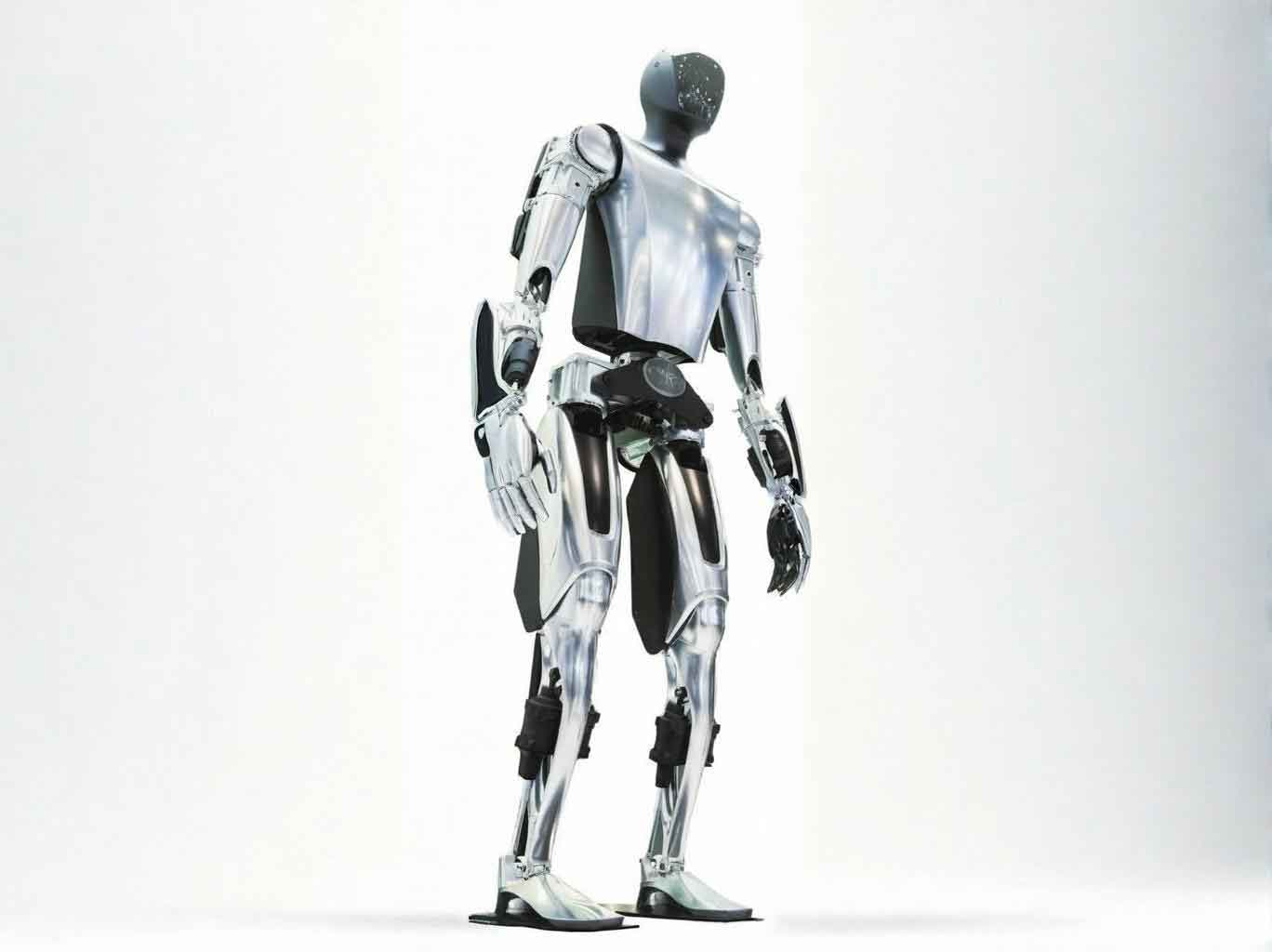
The evolution of artificial intelligence is accelerating from virtual environments towards a new era of interacting with the real world, marked by the rise of Embodied Intelligence. As a researcher deeply immersed in this field, I observe embodied intelligence as a transformative paradigm that merges AI with robotics, enabling intelligent agents—or embodied AI robots—to perceive, decide, and act within three-dimensional physical spaces, thereby closing the “perception-decision-action” loop. This concept, which can be traced to foundational ideas like the “subsumption architecture,” challenges traditional AI’s reliance on symbolic reasoning, proposing instead that intelligence emerges naturally from the continuous, real-time interaction between a physical body and its environment. The environmental adaptability demonstrated by humanoid robots in recent competitive events signifies a pivotal transition for embodied AI robots from laboratory prototypes to industrial viability.
Recent breakthroughs are creating a multi-dimensional evolutionary landscape. In large-scale pre-training, open-source model series have significantly lowered development barriers. In hardware innovation, companies have achieved global dominance in legged robots, while others are building open-source development ecosystems for humanoid platforms. At the software-hardware synergy level, simulation platforms now support the parallel training of millions of agents, and advanced humanoid robots are demonstrating semantic-level human-robot interaction. These advancements empower embodied AI robots with active environmental modification capabilities, a path widely considered crucial toward Artificial General Intelligence (AGI).
With the global industrial landscape rapidly restructuring, my country has shown prominent development in embodied intelligence. The field was included in the national strategic blueprint, and patent applications account for a significant portion of the global total. Industrial applications are flourishing: in industrial settings, humanoid robots have achieved the world’s first human-robot collaborative production lines; in service domains, tens of thousands of commercial service robots have been deployed worldwide; in healthcare, assistive exoskeletons are helping restore mobility for the elderly.
Concurrently, the standardization of embodied intelligence has entered a critical phase. Technical standards for data collection are beginning to address the fragmentation of multi-source heterogeneous data. Evaluation systems, such as benchmark methods covering multiple real-world scenarios, are being proposed by industry alliances. Industrial ecosystems are constructing large-scale training grounds to enable closed-loop “data-model-training” iteration. However, formidable challenges remain, including the high cost and non-standardization of hardware, relatively low efficiency in multimodal fusion algorithms, and ambiguous ethical accountability. Through this article, I aim to analyze the synergistic development mechanism of “technological evolution-standard construction-evaluation verification” in embodied intelligence, exploring pathways for its standardized research and evaluation methodologies.
The Imperative for Standardization: Needs and Multifaceted Challenges
The development and deployment of embodied AI robots necessitate a robust framework of standards to ensure safety, interoperability, reliability, and fair assessment. From my perspective, the core demands driving standardization are multifaceted.
| Core Standardization Need | Description & Rationale |
|---|---|
| Technical Unification & Interoperability | Current systems suffer from incompatible hardware configurations, software architectures, and communication protocols. Unified standards for interfaces, data formats, and protocols are essential for modular design, system integration, and reduced development costs for embodied AI robots. |
| Performance Evaluation & Benchmarking | The lack of consistent metrics and benchmarks makes it difficult to objectively compare the capabilities of different embodied AI systems. A scientific evaluation system is crucial for identifying technical gaps, guiding R&D, and informing user selection. |
| Safety, Ethics & Compliance | Operating in the physical world alongside humans, embodied AI robots raise critical concerns regarding safety, privacy, and ethical behavior. Standards for safe design, data security, and ethical guidelines are non-negotiable for trustworthy deployment. |
| Industrial Ecosystem Development | A cohesive standard system facilitates collaboration across the supply chain, from core components and manufacturing to application services, accelerating commercialization and the formation of a healthy industry ecosystem for embodied intelligence. |
However, the path to effective standardization is fraught with significant challenges that we must collectively address.
- High Technical Complexity: Embodied intelligence sits at the convergence of AI, robotics, sensor fusion, computer vision, and communications. Coordinating standards across these disciplines to ensure a coherent and complete system is a monumental task.
- Rapid Technological Evolution: The field is advancing swiftly, with parallel development paths (e.g., control-based vs. learning-based intelligence). Standards must balance the need for stability with the flexibility to accommodate innovation, avoiding premature specifications that could stifle progress.
- Diversity of Application Scenarios: The environments and tasks for an embodied AI robot in a factory, hospital, home, or public street are vastly different. Creating a universal evaluation framework that remains relevant across all domains while allowing for scenario-specific supplements is highly challenging.
- Scarcity of Authoritative Benchmarks: Even with proposed metrics, validating their effectiveness requires extensive, high-quality experimental data. Currently, there is a shortage of open, large-scale, high-fidelity datasets and testing benchmarks, hindering the development of robust standards.
- International Coordination Difficulties: Different nations and regions may promote standards based on their own technological advantages and strategic interests. Achieving global consensus and mutual recognition of standards is essential to avoid market fragmentation but is politically and technically complex.
Addressing these challenges requires a concerted strategy: strengthening data resource construction, promoting synchronous development of standards and technology, establishing a multi-level standard system, and deepening international cooperation to align with global frameworks.
Architecting the Framework: Core Competencies and Evaluation Dimensions
To ground standardization and evaluation in technical reality, we must first deconstruct the core capabilities of an embodied AI robot. I propose that the architecture of any standardization or assessment system should be built upon the following interconnected technological pillars, each with quantifiable metrics.
| Core Technological Pillar | Key Description | Exemplary Evaluation Metrics |
|---|---|---|
| Multimodal Perception & Semantic Modeling | The ability to fuse heterogeneous data (vision, audio, LiDAR, touch) to construct a semantically rich, actionable model of the environment. This is the foundation for spatial understanding and interaction. | Object recognition accuracy (mAP), semantic segmentation IoU, mapping precision (cm), cross-modal alignment latency (ms). |
| Task-Driven Hierarchical Decision & Control | The capacity to decompose high-level language or goal instructions into actionable plans and execute precise, adaptive physical control sequences. | Task success rate (%), causal reasoning accuracy, path planning optimality (e.g., shortest path deviation), plan execution time (s). |
| Morphology-Driven Behavior & Energy Efficiency | The synergy between a robot’s physical form (e.g., soft actuators, biomimetic design) and its control policies to generate robust, energy-efficient movements. | Motion tracking error (rad/m), energy consumption per task (J), terrain adaptation success rate, actuator lifetime cycles. |
| Adaptive Learning & Knowledge Transfer | The capability to learn from interaction, transfer skills across tasks or environments, and perform online, incremental learning without catastrophic forgetting. | Cross-task transfer success rate, knowledge retention rate after incremental learning, sample efficiency (tasks learned/ samples), generalization error. |
| Multimodal Human-Robot Interaction (HRI) | The proficiency in engaging with humans via natural language, gesture, and socio-emotional cues, understanding context and social norms. | Natural language command understanding rate, intent recognition precision, multi-turn dialogue completion rate, user satisfaction score. |
| System Integration & Cross-Platform Interoperability | The effectiveness of integrating sensing, cognition, decision, and actuation modules, often from diverse vendors, into a cohesive, reliable system. | Module interoperability failure rate, system reconfiguration time post-failure (s), mean time between failures (MTBF). |
| Agent Communication & Collaboration | For multi-robot systems, the protocols and mechanisms enabling efficient task allocation, state synchronization, and collaborative problem-solving. | Inter-agent communication latency (ms), collaborative task success rate, bandwidth utilization efficiency, fault tolerance (agent dropout recovery). |
| Ethical Compliance & Functional Safety | Embedded mechanisms ensuring safe operation, privacy protection, behavior explainability, and adherence to ethical guidelines and regulations. | Unsafe interaction/collision rate, privacy data leakage incidents, audit trail completeness for action decisions, compliance checklist pass rate. |
These pillars are not isolated; they interact dynamically. For instance, effective Multimodal Perception directly influences the quality of Task-Driven Decisions. Similarly, Adaptive Learning can enhance Morphology-Driven Behavior over time. Therefore, evaluation must also consider these interactions. A holistic performance score $P_{total}$ for an embodied AI robot on a composite task could be modeled as a weighted function of these capabilities:
$$
P_{total} = \sum_{i=1}^{8} w_i \cdot f_i(C_i, T)
$$
where $C_i$ represents the performance score of the i-th core competency (e.g., perception accuracy, task success rate), $T$ represents the task context and difficulty, $f_i$ is a function mapping competency and task to a normalized score, and $w_i$ are weights reflecting the relative importance of each competency for the given application domain (e.g., higher $w$ for HRI in service robots, higher $w$ for Control in industrial robots).
The Evaluator’s Toolbox: Methods, Benchmarks, and Platforms
A critical component of standardization is the methodology and infrastructure for evaluation. The community has developed a variety of approaches, from abstract capability scales to high-fidelity simulation platforms.
1. Capability-Centric Hierarchical Evaluation:
The ADeLe (Annotated Demand Levels) framework represents a meta-evaluation approach. It doesn’t test the robot directly but annotates tasks based on the demand they place on 18 predefined universal capabilities (e.g., spatial reasoning, long-term planning, social understanding). Each capability has levels from 0 (no demand) to 5 (extremely high demand). By annotating large benchmarks with ADeLe using advanced AI, we can predict and explain an embodied AI robot’s performance profile before physical testing, identifying which core competencies are likely to be its bottlenecks for a given task set.
2. Integrated Simulation & Benchmark Platforms:
Simulation is indispensable for scalable, safe, and reproducible testing. Several platforms have become cornerstones for evaluation:
- BEHAVIOR-1K: This benchmark defines 1,000 everyday activities (e.g., “make a cup of coffee”) across diverse home and office scenes. It emphasizes long-horizon, mobile manipulation tasks, pushing the limits of an embodied AI robot’s planning, interaction, and execution consistency in complex, realistic settings. Success is measured by the precise completion of activity goals defined in a formal language.
- AI Habitat & RoboMIND: These platforms provide high-performance simulators with realistic physics and sensor models. They offer standardized environments and task suites for navigation, object rearrangement, and articulated object manipulation. Their value lies in providing a common, reproducible testbed where different embodied AI algorithms and models can be fairly compared using metrics like Success weighted by Path Length (SPL) for navigation or manipulation success rate.
- Tong Test & DEPSI Environment: Aiming at higher-level AGI evaluation, this framework introduces Dynamic Embodied Physical and Social Interactions. It generates tasks requiring an embodied agent to understand self, others, and group dynamics, assessing not just physical intelligence but social value alignment and theory of mind—crucial for the next generation of collaborative embodied AI robots.
3. In-Situ and Field Testing:
Ultimately, validation must move to the real world. Standardized physical test fields, like the “Kylin” training ground, replicate real-world scenarios (warehouse aisles, mock living rooms, industrial workcells) with instrumented environments to collect ground-truth data. Field testing in pilot factories, hospitals, or public spaces provides the final, most relevant performance data, focusing on metrics like mean time between assists (MTBA) in collaborative settings, user acceptance scores, and long-term reliability under operational conditions.
The choice of evaluation method depends on the development stage. Simulation and capability analysis are ideal for early-stage R&D and algorithm comparison. Standardized physical test fields are crucial for pre-deployment certification. In-situ field testing validates performance under true operational conditions.
From Theory to Practice: Standardization in Action
The true test of any standardization and evaluation framework is its application in real-world scenarios. Let’s examine its role in key domains for embodied AI robots.
Service Robotics: Consider a home companion robot. A standard like the Capability Requirements and Evaluation Methods for Home Companion Robots provides a concrete checklist. An evaluator would test its Multimodal Perception by measuring object-finding accuracy in cluttered rooms. Its HRI is tested through success rates in understanding and executing complex, multi-step voice commands (e.g., “Bring the remote control from the living room, but avoid the sleeping dog”). Safety is rigorously assessed through obstacle avoidance tests and privacy protocol audits. This standardized evaluation allows consumers and businesses to compare products objectively and guides manufacturers in refining specific competencies.
Intelligent Manufacturing: Here, the embodied AI robot is often a collaborative robot (cobot) or mobile manipulator working alongside humans. Standards like ISO 10218-2 and ISO/TS 15066 provide the non-negotiable safety foundation, defining force and speed limits for safe physical contact. Beyond safety, performance standardization is key. For a bin-picking task, metrics include the mean cycle time, successful grasp rate under varying part poses, and the system’s ability to adapt to new part geometries without extensive reprogramming—a test of its Adaptive Learning capability. Standardized communication protocols (e.g., OPC UA, DDS) ensure the embodied AI robot can seamlessly integrate into the factory’s digital ecosystem, a practical aspect of System Interoperability.
Smart Cities: Autonomous delivery robots and security patrol robots operating on sidewalks and in public spaces face a complex standardization landscape. Performance evaluation for an autonomous delivery robot involves a battery of tests in a controlled urban test field: its Perception system is challenged with dynamic obstacles (e.g., pedestrians, pets); its Decision logic is evaluated on compliance with traffic rules for robots; its HRI is assessed when it needs to politely ask a pedestrian for the right of way. Regulatory bodies use these standardized test results, alongside data from pilot deployments, to grant operating licenses, ensuring that only robust and predictable embodied AI robots are deployed at scale.
Synthesis and Forward Look
Embodied intelligence represents a fundamental shift in AI, moving cognition into the physical realm through the vessel of the embodied AI robot. This exploration has underscored that systematic standardization and rigorous, multifaceted evaluation are not mere administrative exercises but are foundational to the field’s responsible and accelerated progress. We have moved from conceptual understanding to identifying core competency pillars, analyzing contemporary evaluation toolkits, and witnessing the application of these frameworks in practice.
The preliminary architecture for standards is taking shape, with progress in data specifications, reference architectures, and domain-specific requirement documents. Yet, significant gaps persist. Standards for advanced Multimodal HRI and true Agent Collaboration in heterogeneous teams are still nascent. Our evaluation tools, while impressive, must continuously evolve to keep pace with the increasing complexity of tasks and the rise of foundation models for embodiment. The integration of large language and vision models into the control loops of embodied AI robots introduces new evaluation challenges concerning reasoning transparency, hallucination in physical planning, and safe grounding.
Looking forward, I believe the trajectory of standardization and evaluation must focus on several key avenues:
- Developing Granular, Domain-Specific Standard Clusters: Beyond high-level frameworks, we need detailed standards for sub-domains like “embodied AI robots for elderly care” or “field inspection robots,” complete with application-tailored safety and performance benchmarks.
- Building Authoritative, Open Benchmarking Ecosystems: The community should coalesce around a set of universally accepted, ultra-realistic simulation benchmarks and open-source physical test protocols. These ecosystems must support the full lifecycle, from training to certification.
- Championing International Alignment: Active participation and leadership in international standards bodies (ISO, IEC, IEEE) are paramount. The goal should be to contribute our research and practical insights into globally recognized standards, facilitating international trade and collaborative R&D for embodied AI robots.
- Anticipating Technological Convergence: Standardization must proactively address the fusion of embodied AI with technologies like digital twins (for continuous simulation-to-reality calibration) and neuromorphic computing (for low-power, responsive control).
- Embedding Ethics and Law from the Start: Standardization work must run in parallel with the development of ethical guidelines and legal frameworks. Standards should incorporate requirements for auditability, accountability, and value alignment, ensuring embodied AI robots are developed and deployed as trustworthy partners in society.
The future points toward a world of “multi-form synergy,” where diverse embodied AI robots—humanoid, legged, wheeled, flying—seamlessly collaborate with each other and with humans. A mature, internationally harmonized standard and evaluation system will be the bedrock upon which this open, innovative, and reliably safe ecosystem is built. By committing to this foundational work today, we are not just regulating a technology; we are actively shaping the responsible and impactful integration of intelligent embodiment into the fabric of our daily lives.