
As an observer deeply involved in the advancement of manufacturing technologies, I believe that the level of manufacturing and application of industrial robots represents a nation’s industrial prowess. For China, developing a robust industrial robot industry is not just an economic imperative but a strategic pathway to transform from a manufacturing giant to a manufacturing powerhouse. The global landscape of industrial robotics, dominated by companies like ABB, FANUC, YASKAWA, MOTOMAN, KUKA, Adept Technology, and COMAU, underscores the critical role these machines play in modern industries. Since the first industrial robot was created in the 1960s, their adoption has skyrocketed, particularly in automotive, electronics, food processing, and logistics sectors. In China, the journey began in the 1970s, but it was not until the Seventh Five-Year Plan and the 863 Program that significant strides were made. Today, with over 30,000 industrial robots in operation, China stands at a crossroads: leveraging this technology to boost productivity, quality, and competitiveness while addressing challenges like reliance on foreign brands and weak foundational components.
The history of China robots dates back to the 1970s, when initial research was slow due to economic constraints. However, the 1980s saw a concerted effort with state-backed projects focusing on spot welding, arc welding, painting, and handling robots. By the 1990s, the 863 Program emphasized both industrial and special robots, leading to the development of seven industrial robot series and over 100 special robots. This period also witnessed the establishment of nine industrial bases and seven research centers, such as the Siasun Robot & Automation Co., Ltd. and Harbin Boshi Automation Equipment Co., Ltd., laying the groundwork for industrialization. Despite this progress, China has yet to form large-scale manufacturers akin to Japan’s FANUC or Germany’s KUKA, highlighting the need for a focused national strategy. The demand for China robots is fueled by rapid industrialization, especially in automotive sectors, where robot density remains low compared to developed nations. For instance, while Japan has 1,710 robots per 10,000 automotive workers, China has fewer than 90, indicating vast untapped potential.
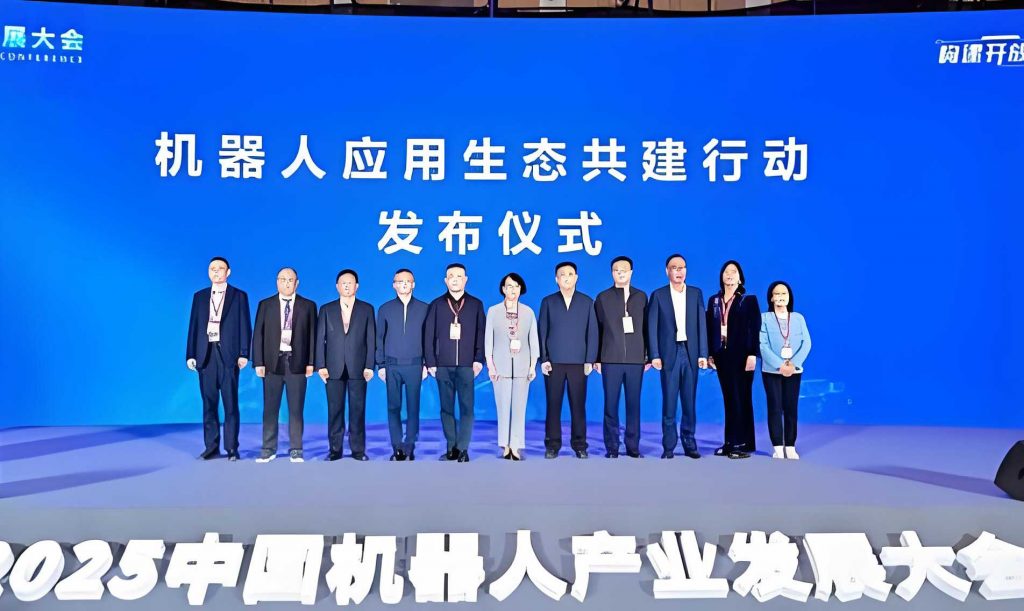
The market for China robots exhibits distinct characteristics, driven by economic growth and technological adoption. Below is a table summarizing key market features:
| Feature | Description | Impact on China Robots |
|---|---|---|
| Automotive Industry Growth | High expansion since 2000, with increased foreign and domestic investment. | Primary driver for robot demand, especially in welding and assembly. |
| Regional Concentration | Coastal areas like Guangdong, Jiangsu, Shanghai, and Beijing account for over 50% of robot usage. | Focus on developed regions with advanced manufacturing needs. |
| Enterprise Type | Foreign-funded and joint ventures are major users due to higher automation levels. | Initial reliance on foreign robots, but domestic firms like Chery are adopting China robots. |
| Labor Cost Rise | Increasing wages and labor shortages pushing automation. | Encourages investment in robots for efficiency and safety. |
| International Competition | Global giants like ABB and KUKA actively compete in the Chinese market. | Pressure on domestic China robots to innovate and reduce costs. |
Industrial robot systems and products in China encompass various types, each serving specific applications. The core categories include spot welding, arc welding, handling, painting, and automated guided vehicles (AGVs). For spot welding robots, commonly used in automotive manufacturing, the payload capacity is critical. A typical model, such as the 165kg robot developed in China, demonstrates advancements in servo motor technology and precision. The dynamic performance can be modeled using equations like: $$ \tau = J \cdot \alpha + B \cdot \omega + \tau_{\text{friction}} $$ where \(\tau\) is the torque, \(J\) the moment of inertia, \(\alpha\) the angular acceleration, \(B\) the damping coefficient, and \(\omega\) the angular velocity. This highlights the engineering sophistication required for China robots. Arc welding robots, integrating sensors for seam tracking, rely on control algorithms: $$ \Delta x = k_p \cdot e(t) + k_i \int e(t) dt + k_d \frac{de(t)}{dt} $$ where \(\Delta x\) is the position correction, \(e(t)\) the error signal, and \(k_p, k_i, k_d\) are PID constants. Handling robots, with payloads up to 500kg, optimize logistics in sectors like electronics and food processing. Painting robots enhance quality in automotive coatings, while AGVs facilitate flexible material transport in warehouses. The proliferation of China robots across these domains underscores their versatility.
Technological foundations for China robots have been built through decades of research. Key areas include robotics theory, such as kinematics and dynamics, where the forward kinematics for a serial manipulator is given by: $$ \mathbf{T} = \prod_{i=1}^{n} \mathbf{A}_i(\theta_i) $$ with \(\mathbf{T}\) as the homogeneous transformation matrix and \(\mathbf{A}_i\) the link transformations. In component development, China has made progress in servo motors, reducers, and controllers, though gaps persist. For instance, harmonic and RV reducers are still imported, affecting cost competitiveness. The system design capabilities are evident in custom robots for welding and assembly, but challenges remain in branding and mass production. A comparative analysis of robot performance metrics can be expressed as: $$ \text{Efficiency} = \frac{\text{Output Quality}}{\text{Energy Input}} \times 100\% $$ This formula emphasizes the need for China robots to achieve higher efficiency to rival international brands.
However, the industrialization of China robots faces several hurdles. First, foundational component manufacturing is weak, particularly for high-precision reducers and servo systems. Second, the lack of a dominant domestic brand limits market recognition. Third, policy support lags behind countries like Japan, which used subsidies to spur adoption. To address these, key technologies must be advanced, as summarized in the table below:
| Technology Area | Description | Relevance to China Robots |
|---|---|---|
| Robot Ontology Optimization | Design lightweight, high-stiffness structures for improved dynamics. | Enhances performance of China robots in high-speed applications. |
| Intelligent Controller Development | Next-gen controllers with AI for adaptive control. | Boosts autonomy and precision of China robots. |
| Key Component Manufacturing | Local production of reducers, motors, and sensors. | Reduces costs and supply chain risks for China robots. |
| Offline Programming and Simulation | Software tools for virtual commissioning and path planning. | Accelerates deployment of China robots in complex environments. |
| Sensor-Based Motion Control | Integration of vision, force, and tactile sensors for real-time adjustments. | Improves adaptability of China robots to uncertain tasks. |
| Industrialization Manufacturing Techniques | Scalable production processes for consistent quality. | Enables mass production of China robots. |
| Remote Diagnostics and Repair | IoT-based monitoring for predictive maintenance. | Enhances reliability and uptime of China robots. |
| Multi-Robot Coordination | Algorithms for synchronized operations in production lines. | Facilitates integration of China robots into automated systems. |
| Mechanical System Optimization | Design analysis for complex机电 systems to minimize vibration and wear. | Strengthens durability of China robots. |
| Dynamic Modeling and Control | Advanced control theories for flexible, high-acceleration robots. | Supports development of next-gen China robots with higher payloads. |
To propel the growth of China robots, a multifaceted development strategy is essential. First, market demand should guide priorities, with a focus on high-impact sectors like automotive. For example, spot and arc welding robots could be targeted for breakthroughs, leveraging China’s automotive boom. The economic impact can be modeled as: $$ \text{Growth} = \alpha \cdot \text{Robot Adoption} + \beta \cdot \text{Policy Incentives} $$ where \(\alpha\) and \(\beta\) are coefficients reflecting productivity gains. Second, national专项 should be established to fund R&D in critical components and整线 systems. This could include tax breaks for domestic robot purchases, mirroring incentives for electric vehicles. A subsidy formula might be: $$ \text{Subsidy} = \text{Base Rate} \times \text{Robot Cost} \times \text{Domestic Content Ratio} $$ encouraging use of China robots. Third, fostering产学研 alliances can pool resources from enterprises, universities, and research institutes, accelerating innovation. Fourth,政策 support must be robust, including higher import tariffs on完整 robots and lower duties on key parts, alongside regulations mandating robot use in hazardous jobs. Such measures would stimulate demand for China robots while building a competitive industry.
In conclusion, the future of China robots hinges on strategic alignment with national industrial goals. As manufacturing evolves toward智能化 and informatization, robots will become indispensable. With a concerted effort to overcome technical and market barriers, China can establish a vibrant robot industry, reducing reliance on imports and enhancing global competitiveness. The journey from模仿 to innovation requires persistence, but the rewards—increased productivity, safer workplaces, and economic resilience—are immense. By embracing this vision, China robots will not only transform domestic manufacturing but also contribute to the global robotics landscape, solidifying China’s position as a leader in advanced制造.