
As a strategic future industry highlighted in national development agendas, embodied intelligence, or Embodied AI, signifies a profound shift from purely digital intelligence to systems capable of physical interaction and autonomous learning within real-world environments. This evolution promises to reshape industries, including the financial sector, by integrating perception, cognition, and action into a unified, adaptive framework. This article explores the conceptual foundation, technological drivers, industrial landscape, and application scenarios of embodied intelligence, culminating in a strategic perspective on its deep integration into commercial banking operations, asset allocation, and core management models.
Conceptual Foundation and Defining Characteristics
Embodied Intelligence (Embodied AI) refers to intelligent systems where artificial intelligence is integrated into a physical form, enabling it to perceive, learn, decide, and act autonomously within a physical environment. The core philosophy hinges on the inseparability of the “mind” (the AI) and the “body” (the physical platform), emphasizing that intelligence emerges from dynamic interaction with the environment. Unlike traditional, non-embodied AI operating in constrained digital spaces, an embodied AI robot leverages Multi-modal Large Models (MLMs) and World Models (WMs) to build an understanding of its surroundings and plan actions, demonstrating generalization and adaptive learning.
The distinction between traditional AI and Embodied AI can be summarized as follows:
| Aspect | Traditional/Non-embodied AI | Embodied AI |
|---|---|---|
| Execution Domain | Virtual/Cyber Space | Physical World |
| Learning Source | Static, pre-existing datasets | Dynamic, real-time environmental interaction |
| Core Capability | Pattern Recognition, Data Analysis | Perception-Action Loop, Physical Task Completion |
| Adaptation | Limited to training data scope | Continuous adaptation to novel situations |
The intrinsic characteristics of embodied intelligence are encapsulated in three key principles and can be formally represented:
- Physical Interaction & Closed-Loop Perception-Action: Intelligence is grounded in sensorimotor experience. The system’s actions affect the environment, which in turn provides new sensory input, creating a continuous learning loop. This can be modeled as:
$$ S_{t+1} = f(S_t, A_t) $$
$$ A_t = \pi(S_t|\theta) $$
where $S_t$ is the state (perception) at time $t$, $A_t$ is the action taken, $f$ represents the environment dynamics, and $\pi$ is the policy (controller) parameterized by $\theta$ which is updated through experience. - Generalization and Environmental Adaptation: An embodied AI robot must apply learned skills to unseen scenarios. This relies on robust world models $W$ that simulate potential outcomes:
$$ \hat{S}_{t+1} = W(S_t, A_t) $$
The agent uses this model for planning, choosing actions that maximize expected future rewards $R$:
$$ A_t^* = \arg\max_{A_t} \mathbb{E} \left[ \sum_{\tau=t}^T \gamma^{\tau-t} R(S_\tau, A_\tau) | W \right] $$ - Autonomous Evolution via Lifelong Learning: The system improves its policy $\pi$ continuously through interaction, minimizing a loss function $L$ that often represents task error or inefficiency:
$$ \theta_{new} = \theta_{old} – \alpha \nabla_\theta L(\pi_\theta) $$
where $\alpha$ is the learning rate.
Core Technological Architecture and Drivers
The rise of embodied intelligence is the inevitable confluence of advancements in AI and robotics. AI provides the “brain” for cognition and decision-making, while robotics provides the “body” for interaction and data collection. The critical technological pillars enabling modern embodied AI robot development include:
- AI Brains (Large Models): Multimodal Large Language Models (MLLMs) and Vision-Language-Action (VLA) models process diverse sensory inputs (text, image, depth, force) and generate actionable plans or control signals.
- World Models: These are internal simulations of physics and causality, allowing the agent to predict outcomes and plan complex sequences before execution.
- Smart Chips & Hardware Acceleration: Specialized processors (GPUs, NPUs, domain-specific SoCs) are crucial for the low-latency, high-throughput computation required for real-time perception and control.
- Whole-Body Motion Control: Advanced algorithms for dynamics, balance, and compliant control enable stable and dexterous movement in complex terrains or during manipulation tasks.
The integrated architecture forms a high-efficiency闭环 (closed-loop): Perception → Learning/Cognition → Decision → Action.
Global Industrial Landscape and Development Status
The strategic importance of the embodied intelligence industry is globally recognized, with major economies like the United States, the European Union, Japan, and South Korea launching dedicated national robotics initiatives. This global competition is often described as a new form of “arms race” for technological supremacy.
Supportive policies, mechanism guarantees, and substantial financial investments have been implemented to foster industrial clustering. Key measures include establishing national innovation application pilot zones, founding manufacturing innovation centers for embodied AI robot and humanoid robotics, and setting up significant state-guided investment funds to catalyze industry-academia-research collaboration. Efforts in standard-setting and cultivating specialized, innovative enterprises are also pivotal.
The market is experiencing rapid expansion. Forecasts indicate substantial growth, as shown below:
| Year | Estimated Market Size (China) | Key Segments & Share | Notable Trend |
|---|---|---|---|
| 2024 | ~$120 billion (863.4B CNY) | Robotics (55.6%), Autonomous Vehicles (44.4%) | Foundation year for scale |
| 2025 (Projected) | ~$136 billion (973.1B CNY) | Robotics share expected to grow | Deemed the “First Year of Mass Production” |
The robust industrial chain benefits from innovation in core components like high-performance chips, sensors, and actuators. Domestic manufacturing provides a crucial cost advantage for global hardware. Leading enterprises are building competitive moats through integrated hardware-software design, which creates unique data flywheels: proprietary data from custom processors and interfaces optimizes performance in ways difficult for competitors to replicate.
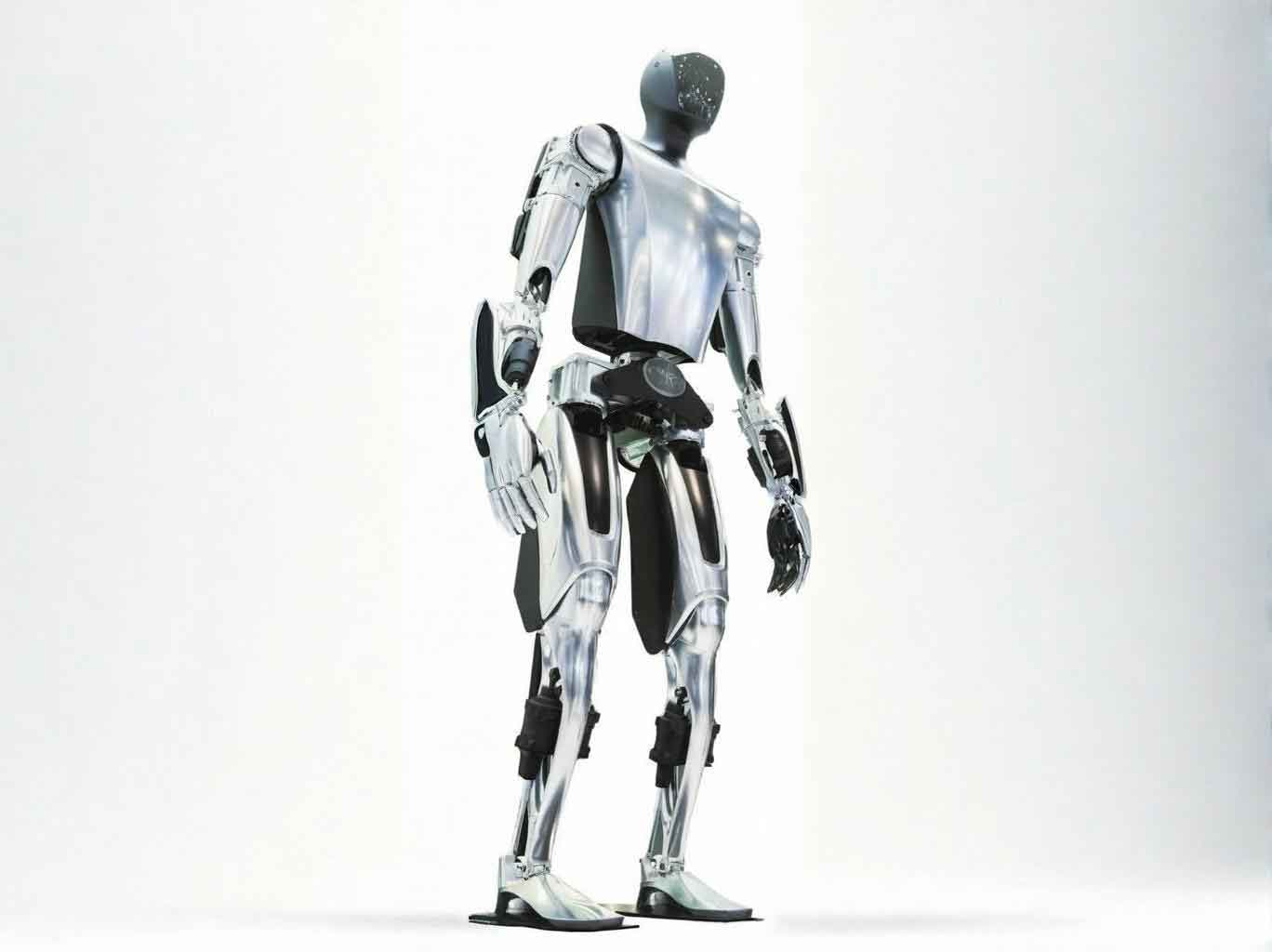
Major technology conglomerates and specialized startups are vigorously deploying resources in this field, creating a vibrant competitive landscape. However, the industry, still in its growth phase, faces challenges including evolving technical roadmaps, supply chain constraints for key technologies, data security concerns, and geopolitical risks. Continuous iteration on robot morphology, actuator modules, dexterous hand technology, and motion control algorithms remains essential to improve performance, enable more applications, and accumulate valuable training data for positive feedback loops.
Application Scenarios and Developmental Pathways
Successful scenario deployment is the core task and ultimate validation for the embodied intelligence industry. Current development follows three primary pathways:
- Specific-Task, Non-Humanoid Platforms: Utilizing existing collaborative robots or commercial service robots for professional tasks (e.g., precision assembly, logistics sorting, disinfection).
- General-Purpose, Humanoid Platforms: Focusing on humanoid robots as versatile carriers for broad, everyday tasks in homes, offices, or public spaces, aiming for general adaptability.
- Autonomous Vehicle Platforms: Applying embodied AI principles to self-driving cars, aerial drones, and other mobility solutions for transportation and logistics.
The diversity of embodied AI robot products covers vast markets:
- Industrial & Fixed Robots: For high-precision manufacturing, lab automation.
- Mobile Robots (Wheeled/Tracked): For warehouse logistics, security patrols, agricultural inspection.
- Legged Robots (Quadrupeds): For complex terrain inspection, search and rescue, and hazardous environment operation.
- Humanoid Robots: For customer service, healthcare assistance, companionship, and collaborative work in human-centric environments.
In the long term, as the technology matures, embodied AI robot systems are expected to take over repetitive, dangerous, or mundane tasks, liberating human potential for more creative and strategic endeavors, thereby achieving a physical liberation of human capability.
Strategic Integration in Commercial Banking
Embodied intelligence represents the next wave of technological transformation, poised to have an even more disruptive impact on production and lifestyles than previous AI advancements due to its physical problem-solving capabilities. From the perspective of commercial banking management, proactively engaging with this future industry is imperative. Integration should progress from superficial to deep layers across service operations, asset configuration, and management paradigms.
1. Service Operation Enhancement
The application of embodied AI robot in banking has broad prospects. They can be deployed in customer-facing roles to enhance efficiency and service quality:
- Customer Reception & Guidance: Greeting customers, directing them to appropriate service counters or self-service terminals.
- Business Consultation & Processing: Providing information on products (loans, deposits, investments), explaining procedures, and assisting with form filling or document submission using interactive screens and natural language processing.
- Personalized Product Recommendation: Analyzing customer queries and profile (with consent) to suggest relevant financial products.
The value proposition can be quantified by metrics such as reduced wait times, increased transaction accuracy, and improved customer satisfaction scores (CSAT).
2. Strategic Asset Allocation and Industry Financing
Banks must deepen their engagement in the embodied intelligence ecosystem, providing precise financial services tailored to the lifecycle needs of hard-tech companies with robust technical moats and viable business models. The investment focus should align with the core industrial chain:
| Industrial Segment | Key Components/Activities | Banking Service Focus |
|---|---|---|
| Software & Infrastructure | AI Algorithms, OS, Middleware, Cloud, Chips | VC/PE financing linkage, R&D project loans, IP-backed financing |
| Hardware & Motion Control | Controllers, Sensors, Motors, Drives, Power Systems | Supply chain finance, equipment financing, working capital loans |
| System Integration & Service | Robot Manufacturing, Deployment in verticals (Industry, Healthcare, Logistics, Service) | Order/Receivables financing, merger & acquisition advisory, project finance for large-scale deployments |
Banks should foster collaboration between government, capital markets, and third-party services to offer multi-dimensional solutions: “Equity + Debt,” “Financing + Intelligence,” and “Corporate + Personal” services. Acting as a financial mediator, banks can also facilitate “Industry-University-Research-Media” platforms to promote resource integration within the ecosystem.
3. Management Model Reconstruction
The adoption of AI is merely the starting point. The pervasive capabilities of embodied intelligence will ultimately drive a reconstruction of banking management models in technology, business, and ecosystem strategy.
- Technology Innovation: Adoption will accelerate upgrades in computational power (edge/cloud hybrid models), sophisticated data governance for multimodal physical data, and enhanced physical-cyber security frameworks to protect robotic endpoints.
- Business Model Evolution: The client-centric philosophy gains powerful new tools. Embodied AI robot can enable hyper-personalized in-branch services, real-time physical risk assessment (e.g., in collateral inspection), and even create new revenue streams through robotic process automation (RPA) in physical document handling and logistics.
- Ecosystem Competition & Cooperation: The boundaries of financial ecosystems will expand. An embodied AI robot in a smart home could become a point-of-sale for financial services; autonomous logistics platforms will require embedded financing solutions. This convergence will unleash immense imaginative potential for innovative service delivery and partnership models, fundamentally reshaping the competitive landscape of financial services.
In conclusion, embodied intelligence is not merely another technological trend but a foundational shift towards interactive, physical-world AI. For commercial banks, a strategic, phased approach to integration—from operational augmentation to deep strategic realignment—is essential to harness this new engine of industry transformation and secure a competitive advantage in the forthcoming era.