
In recent years, the integration of artificial intelligence (AI) and robotics has catalyzed transformative changes across various sectors, with healthcare standing out as a prime area for innovation. As we move into an era where embodied intelligence—the fusion of physical presence and cognitive capabilities—becomes more prevalent, the potential for embodied robots to revolutionize clinical nursing is immense. These embodied robots are not mere tools but dynamic systems capable of perceiving, interacting,, and adapting to complex environments. In this article, I will explore the current landscape, core competencies, conceptual frameworks, and future implications of embodied robots in clinical nursing, emphasizing their role in enhancing patient care and streamlining healthcare processes. The journey of embodied robots in nursing is just beginning, and their evolution promises to redefine how care is delivered, making it more personalized, efficient, and humane.
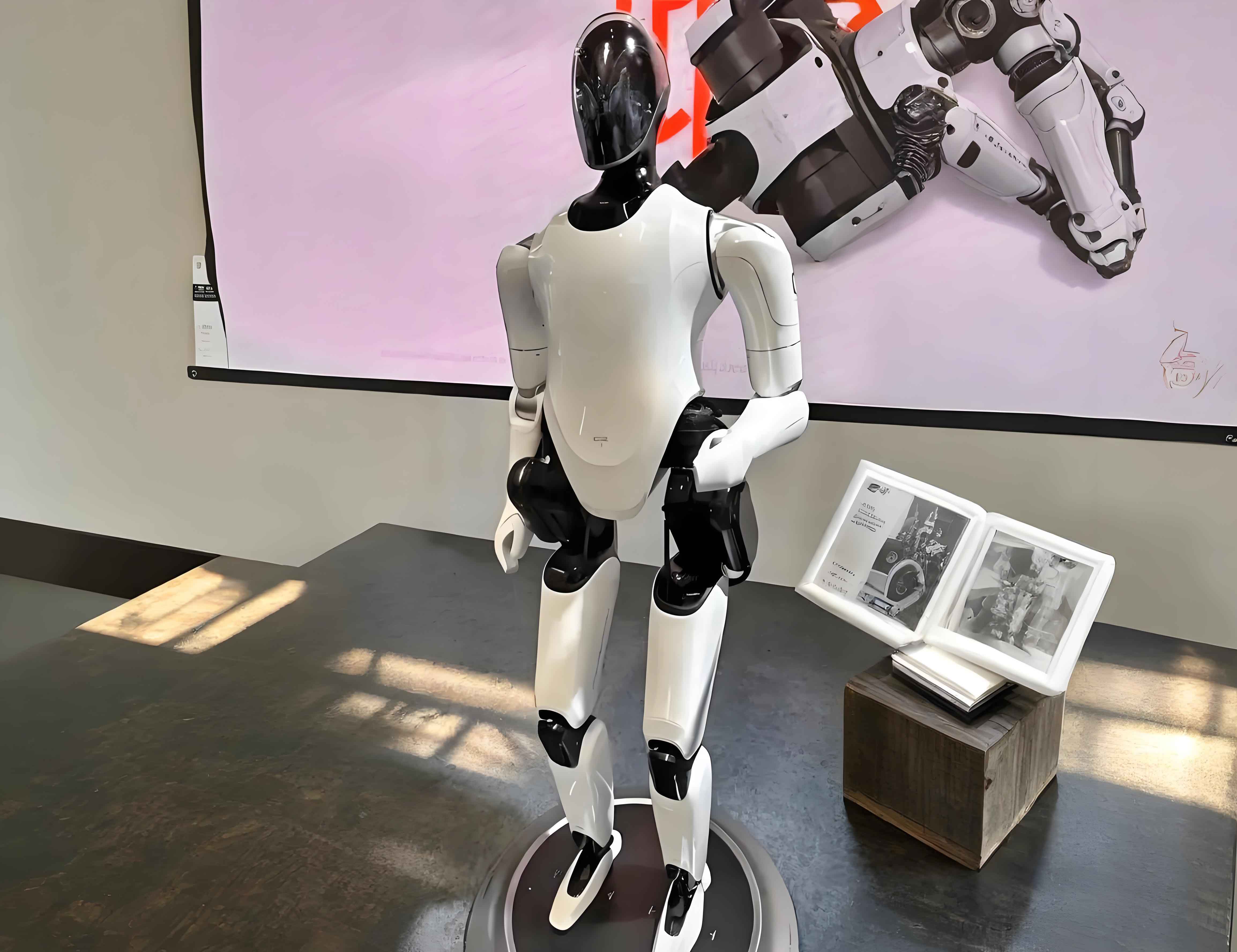
The concept of embodied intelligence revolves around a closed-loop mechanism of “perception-decision-action,” enabling robots to engage with their surroundings in a manner that mimics human-like understanding and responsiveness. This is particularly crucial in clinical nursing, where tasks often require nuanced interactions and real-time adaptations. Unlike traditional AI systems that operate in isolation, embodied robots embody physical forms that interact directly with patients, healthcare providers, and the environment. For instance, an embodied robot might use sensors to monitor a patient’s vital signs, process that data to assess risk, and then execute an action like alerting a nurse or administering medication. This seamless integration of sensing, reasoning, and acting is what sets embodied robots apart, making them invaluable assets in modern healthcare settings.
Currently, the application of robots in clinical nursing is still in its nascent stages, with most systems functioning as assistive devices for repetitive tasks. However, the advent of embodied intelligence is pushing the boundaries, allowing these embodied robots to take on more complex roles. In this article, I will delve into the core capabilities that future embodied robots must possess, including environmental interaction, emotional engagement, and self-learning abilities. I will also propose a five-layer conceptual framework to guide their deployment, discuss the potential shifts in nursing practices, and address the challenges that lie ahead. By doing so, I aim to provide a holistic perspective on how embodied robots can become integral partners in clinical nursing, fostering a synergy between technology and human compassion.
Current State of Embodied Robots in Clinical Nursing
The integration of embodied robots into clinical nursing has been gradual, with early applications focusing on task automation and support. Historically, robots in healthcare were limited to surgical assistants or rehabilitation devices, but embodied robots are now emerging as versatile entities in nursing care. These embodied robots can perform a range of functions, from monitoring patients to assisting with daily activities, thereby reducing the physical burden on nurses. For example, in hospital wards, embodied robots might handle medication delivery, patient transportation, or disinfection tasks, allowing nurses to concentrate on more critical aspects of care. Studies have shown that embodied robots can improve efficiency in settings like intensive care units (ICUs), where they assist with procedures such as venipuncture or medication preparation, minimizing human error and exposure to hazards.
Despite these advancements, the widespread adoption of embodied robots faces several hurdles. Many existing systems are prototypes or limited to specific scenarios, lacking the generalizability required for diverse clinical environments. Moreover, the interaction capabilities of current embodied robots are often rudimentary, hindering their ability to fully integrate into nursing teams. To illustrate the current applications, I have compiled a table summarizing key tasks performed by embodied robots in clinical settings, based on recent literature and practical implementations.
| Task Category | Specific Tasks | Examples of Embodied Robots | Benefits |
|---|---|---|---|
| Basic Nursing Care | Vital signs monitoring, medication delivery, patient turning | Humanoid robots, mobile assistive robots | Reduces nurse workload, minimizes human error |
| Specialized Nursing | IV assistance, surgical instrument management, emergency response | Robotic arms, AI-driven systems | Enhances precision, supports complex procedures |
| Emotional Support | Companionship, mood assessment, health education | Conversational robots, socially assistive robots | Improves patient satisfaction, addresses psychological needs |
As the table indicates, embodied robots are already making strides in various domains, but their potential remains largely untapped. The transition from task-specific robots to fully embodied intelligent systems requires a deeper integration of AI, robotics, and nursing science. In the following sections, I will explore the core competencies that will define the next generation of embodied robots in clinical nursing.
Core Competencies of Future Embodied Robots in Clinical Nursing
For embodied robots to become effective partners in clinical nursing, they must possess a set of core competencies that enable them to operate autonomously, interact empathetically, and evolve over time. These competencies are rooted in the principles of embodied intelligence, which emphasize the interplay between physical presence and cognitive processing. Based on current technological trends and nursing requirements, I identify three key areas where embodied robots must excel: environmental interaction, emotional interaction, and self-learning with evolution.
Environmental Interaction Capability
Environmental interaction refers to the ability of an embodied robot to perceive, interpret, and respond to its physical surroundings. This involves using multi-modal sensors—such as cameras, microphones, and tactile sensors—to gather data about the environment, which is then processed to inform decisions and actions. For instance, an embodied robot in a hospital room must be able to navigate around obstacles, recognize different objects (e.g., medical equipment), and adapt to dynamic changes, such as moving patients or staff. The perceptual data can be modeled using algorithms that fuse sensory inputs to create a coherent understanding of the scene. Mathematically, this can be represented as a function where perception $P$ leads to a decision $D$ and an action $A$:
$$ A = f(D) \quad \text{and} \quad D = g(P) $$
where $P$ denotes the perceptual input from sensors, $D$ is the decision derived through AI algorithms, and $A$ is the resulting action. In practice, this allows an embodied robot to, for example, detect a fallen patient and immediately summon help. Moreover, the physical design of embodied robots—whether humanoid or animal-like—plays a critical role in how they interact with environments. Recent research has focused on enhancing bimanual coordination in humanoid embodied robots using large language models (LLMs) as “brains” to facilitate tasks like patient handling. This underscores the importance of adaptable morphologies for different clinical scenarios.
Emotional Interaction Capability
Emotional interaction is essential for embodied robots to provide holistic care that addresses patients’ psychological well-being. This capability involves recognizing human emotions through natural language processing, facial expression analysis, and vocal tone detection, and then responding in a supportive manner. For example, an embodied robot might identify signs of anxiety in a patient and offer calming words or notify a nurse for intervention. The integration of LLMs has shown promise in enabling embodied robots to engage in empathetic dialogues, thereby improving user experience and trust. Emotion recognition can be formalized using probabilistic models, where the robot estimates the emotional state $E$ based on observed features $F$:
$$ P(E|F) = \frac{P(F|E) P(E)}{P(F)} $$
Here, $P(E|F)$ represents the probability of an emotional state given the features, which guides the robot’s response. In clinical nursing, this allows embodied robots to deliver personalized emotional support, aligning with patient-centered care principles. As these systems evolve, they will better mimic human empathy, making embodied robots more than just machines but companions in the care process.
Self-Learning and Evolution Capability
Self-learning and evolution enable embodied robots to improve their performance over time through continuous data acquisition and algorithm refinement. This involves two aspects: adapting to individual patient needs and optimizing overall nursing services. For instance, an embodied robot can learn from longitudinal data to predict a patient’s health trends and adjust care plans accordingly. Similarly, by aggregating data across multiple robots, the system can enhance its collective intelligence. The learning process can be modeled using reinforcement learning, where the robot takes actions $A$ in states $S$ to maximize a reward $R$:
$$ Q(S,A) \leftarrow Q(S,A) + \alpha [R + \gamma \max_{A’} Q(S’,A’) – Q(S,A)] $$
In this equation, $Q(S,A)$ represents the expected utility of action $A$ in state $S$, $\alpha$ is the learning rate, and $\gamma$ is the discount factor. This approach allows embodied robots to, for example, learn optimal ways to assist with patient mobility through trial and error. Projects like Mobile Aloha demonstrate how embodied robots can acquire skills from minimal human demonstrations, reducing training costs and accelerating deployment in clinical settings.
Together, these core competencies form the foundation for advanced embodied robots in nursing. The following table summarizes these capabilities and their implications for clinical practice.
| Competency | Description | Key Technologies | Clinical Impact |
|---|---|---|---|
| Environmental Interaction | Ability to perceive and adapt to physical surroundings | Multi-modal sensors, navigation algorithms | Enhances safety and efficiency in task execution |
| Emotional Interaction | Capacity to recognize and respond to human emotions | LLMs, affective computing | Improves patient satisfaction and mental health support |
| Self-Learning and Evolution | Capability to learn from data and improve over time | Reinforcement learning, federated learning | Enables personalized and adaptive care delivery |
As embodied robots develop these competencies, they will transition from passive assistants to active participants in nursing teams. In the next section, I will present a conceptual framework to guide their integration into clinical environments.
Conceptual Framework for Embodied Robots in Clinical Nursing
To ensure the successful deployment of embodied robots in clinical nursing, a structured framework is essential. I propose a five-layer conceptual model that spans from core ethical considerations to ecosystem-level integration. This framework is designed to address the multifaceted challenges of implementing embodied robots, focusing on safety, functionality, collaboration, interaction, and scalability. Each layer builds upon the previous one, creating a cohesive system that supports the evolution of embodied robots as intelligent care partners.
Core Safety and Ethics Layer
The core layer establishes the foundational principles of safety and ethics, which are non-negotiable for embodied robots in healthcare. Safety encompasses system reliability, redundancy for fault tolerance, risk预警, and data security, while ethics involves adherence to medical norms, respect for patient autonomy, and a human-centric approach. For example, an embodied robot must prioritize patient dignity in all interactions and ensure data privacy through encryption. This layer can be represented as a set of constraints that govern robot behavior, such as:
$$ \text{Maximize } U(A) \quad \text{subject to } C(E) \leq \theta $$
where $U(A)$ is the utility of action $A$, $C(E)$ represents ethical constraints, and $\theta$ is a threshold. By embedding these principles, embodied robots can operate within trusted boundaries, fostering acceptance among patients and staff.
Basic Functionality Layer
The basic functionality layer encompasses the core operations of perception, decision-making, and execution. Here, embodied robots use sensors to collect data (e.g., patient vitals), process it with AI algorithms to make decisions (e.g., risk assessment), and perform actions (e.g., administering care). This closed-loop process is fundamental to embodied intelligence and can be modeled as:
$$ \text{Perception} \rightarrow \text{Decision} \rightarrow \text{Action} $$
For instance, multi-agent systems can leverage deep reinforcement learning to monitor physiological signals and initiate interventions. This layer ensures that embodied robots have the necessary skills to perform nursing tasks effectively and reliably.
Intelligent Collaboration Layer
The intelligent collaboration layer focuses on system integration, adaptive learning, and multi-robot coordination. Embodied robots act as edge nodes in a network, sharing data with hospital information systems and other devices to enable seamless workflows. Adaptive learning allows them to improve their responses to complex scenarios through continuous exposure, while multi-robot coordination uses collaborative algorithms to distribute tasks efficiently. The overall efficiency of such a system can be quantified using a utility function:
$$ U_{\text{system}} = \sum_{i=1}^{n} w_i U_i $$
where $U_i$ is the utility of robot $i$, and $w_i$ are weights representing task priorities. This layer promotes a “collective intelligence” among embodied robots, enhancing their ability to handle large-scale nursing operations.
Human-Robot Interaction Layer
The human-robot interaction layer emphasizes the quality of engagement between embodied robots and humans, including patients, nurses, and families. It involves designing intuitive interfaces, building trust mechanisms, and capturing interaction data for optimization. For example, an embodied robot might use natural language to explain its actions, increasing transparency and acceptance. The interaction dynamics can be analyzed using models of trust evolution:
$$ T_{t+1} = f(T_t, I_t) $$
where $T_t$ is trust at time $t$, and $I_t$ is the interaction experience. By refining this layer, embodied robots can become more relatable and effective in their roles.
Ecosystem Expansion Layer
The ecosystem expansion layer addresses the broader integration of embodied robots into healthcare systems, covering scalability, policy compliance, and service optimization. This includes modular designs for easy customization, adherence to regulatory standards, and continuous improvement based on feedback. For instance, embodied robots might be deployed across hospitals, communities, and homes, with policies ensuring data security and interoperability. The long-term value can be expressed as:
$$ V = \int_{0}^{\infty} e^{-\rho t} B(t) \, dt $$
where $V$ is the net present value, $\rho$ is the discount rate, and $B(t)$ represents the benefits over time. This layer ensures that embodied robots contribute sustainably to the healthcare ecosystem.
The following table outlines the five layers, their components, and practical examples.
| Layer | Key Components | Examples | Outcomes |
|---|---|---|---|
| Core Safety and Ethics | Risk management, privacy protection, ethical guidelines | Data encryption, patient consent mechanisms | Builds trust and ensures compliance |
| Basic Functionality | Perception, decision, execution modules | Vital signs monitoring, automated medication delivery | Enables core nursing tasks |
| Intelligent Collaboration | System integration, adaptive learning, multi-robot coordination | Networked robots sharing data for task allocation | Enhances efficiency and scalability |
| Human-Robot Interaction | Communication interfaces, trust building, data logging | Emotional support dialogues, transparent decision explanations | Improves user experience and adoption |
| Ecosystem Expansion | Modularity, policy adherence, continuous optimization | Cross-institutional deployments, regulatory audits | Fosters long-term integration and innovation |
This framework provides a roadmap for developing and deploying embodied robots in clinical nursing, ensuring they meet practical needs while adhering to ethical standards. In the subsequent sections, I will discuss how these embodied robots could transform nursing practices and address potential challenges.
Transformation of Clinical Nursing Models Driven by Embodied Robots
The integration of embodied robots into clinical nursing is poised to catalyze significant changes in care delivery, professional roles, and patient relationships. As these embodied robots become more capable, they will shift from performing isolated tasks to participating in comprehensive care processes, ultimately leading to a redefinition of nursing models. In this section, I will explore three key areas of transformation: the evolution of service models, the reshaping of nurse-patient relationships, and the restructuring of nursing roles and responsibilities.
Evolution of Service Models
Embodied robots will automate routine and physically demanding tasks, such as patient rounding, supply delivery, and environmental cleaning, freeing up nurses to focus on complex clinical decision-making and emotional support. This automation will drive a shift toward personalized and proactive care, where embodied robots use data analytics to anticipate patient needs and intervene early. For example, an embodied robot might detect subtle changes in a patient’s condition and adjust care plans in real-time, reducing the incidence of adverse events. The overall efficiency gain can be modeled using a production function:
$$ Y = A \cdot F(K, L) $$
where $Y$ represents nursing output, $A$ is technological productivity (embodied by robots), $K$ is capital, and $L$ is labor. As $A$ increases, the same input yields higher output, demonstrating how embodied robots enhance productivity. This transformation will make nursing services more responsive and patient-centric, aligning with the goals of modern healthcare systems.
Reshaping of Nurse-Patient Relationships
With emotional interaction capabilities, embodied robots will add a new dimension to nurse-patient relationships by providing continuous companionship and psychological support. They can engage patients in conversations, monitor mental health, and offer interventions for anxiety or loneliness, thereby complementing human nurses’ efforts. This fosters a holistic care environment that addresses both physical and emotional needs. The impact on patient well-being can be quantified through metrics like satisfaction scores or reduced stress levels, often represented as:
$$ \Delta W = \beta_0 + \beta_1 E + \epsilon $$
where $\Delta W$ is the change in well-being, $E$ is the level of emotional support from embodied robots, and $\epsilon$ is error. By enhancing these interactions, embodied robots help create a more compassionate care experience, strengthening the human aspect of nursing.
Restructuring of Nursing Roles and Responsibilities
As embodied robots take over repetitive tasks, nurses will transition into roles that emphasize coordination, supervision, and data analysis. They will become managers of “human-robot-patient” networks, overseeing embodied robots’ operations, interpreting AI-generated insights, and handling exceptions. This may lead to the emergence of new positions, such as AI nursing coordinators or robotic system administrators, requiring additional training in technology management. The changing role dynamics can be described using a skill matrix:
$$ S_{\text{new}} = S_{\text{traditional}} + \Delta S_{\text{tech}} $$
where $S_{\text{new}}$ is the updated skill set, and $\Delta S_{\text{tech}}$ represents technological competencies. This evolution promises to diversify career paths in nursing, making the profession more dynamic and future-ready.
In summary, embodied robots will not replace nurses but augment their capabilities, leading to more efficient and empathetic care. However, this transition is not without challenges, which I will address in the following section.
Challenges and Solutions for Embodied Robots in Clinical Nursing
Despite the promising potential of embodied robots, their adoption in clinical nursing faces several obstacles related to technology, ethics, and practical implementation. As an advocate for innovation in healthcare, I believe it is crucial to identify these challenges and propose actionable solutions to ensure that embodied robots can be integrated safely and effectively.
Technological Challenges
Technologically, embodied robots struggle with the “hallucination” issues of AI models and the complexities of real-world environments. For instance, LLMs may generate inaccurate responses in medical contexts, and robots often fail to navigate unpredictable clinical settings. To overcome this, I recommend three approaches: first, curate high-quality, domain-specific training data; second, optimize algorithms for robustness through techniques like transfer learning; and third, establish simulated clinical environments for testing and iteration. The improvement in performance can be expressed as a function of data quality $Q_d$ and algorithm efficiency $E_a$:
$$ P_{\text{robot}} = \alpha \log(Q_d) + \beta E_a $$
where $P_{\text{robot}}$ is the robot’s performance metric. By investing in these areas, we can enhance the reliability of embodied robots in nursing tasks.
Ethical and Safety Challenges
Ethically, the use of embodied robots raises concerns about data privacy, accountability, and the potential dehumanization of care. For example, continuous monitoring by embodied robots could lead to unauthorized data access or ethical dilemmas in decision-making. Solutions include implementing privacy-preserving technologies like federated learning, developing clear guidelines for robot behavior, and defining liability frameworks for errors. A risk assessment model can help prioritize issues:
$$ R = P \times I $$
where $R$ is risk, $P$ is probability of an adverse event, and $I$ is impact. By addressing these concerns proactively, we can build trust in embodied robots and ensure they align with healthcare values.
Clinical Application Challenges
In practice, resistance from nursing staff and integration hurdles can hinder the deployment of embodied robots. Nurses may be skeptical of new technologies or lack training to collaborate with them. To mitigate this, I suggest involving nurses in the design process, creating user-friendly interfaces, and developing standardized protocols for human-robot teamwork. The adoption rate $A_r$ can be modeled as:
$$ A_r = \frac{U_{\text{ease}} \times T_{\text{training}}}{C_{\text{complexity}}} $$
where $U_{\text{ease}}$ is usability, $T_{\text{training}}$ is training effectiveness, and $C_{\text{complexity}}$ is system complexity. Through education and collaboration, embodied robots can become seamless additions to clinical teams.
By tackling these challenges head-on, we can unlock the full potential of embodied robots in nursing, paving the way for a future where technology and humanity coexist harmoniously in healthcare.
Conclusion
In conclusion, embodied robots represent a paradigm shift in clinical nursing, offering unprecedented opportunities to enhance care quality, efficiency, and personalization. Through their core competencies in environmental and emotional interaction, coupled with self-learning abilities, these embodied robots are evolving from simple assistants into intelligent partners. The five-layer framework I proposed—spanning safety, functionality, collaboration, interaction, and ecosystem integration—provides a structured approach to their deployment, ensuring that ethical and practical considerations are addressed. As embodied robots transform nursing models, they will redefine roles, strengthen relationships, and overcome challenges through innovation and collaboration. Embracing this future requires a proactive stance from nurses, policymakers, and technologists alike. By fostering a synergy between human compassion and robotic precision, we can usher in an era of smart nursing that prioritizes both technological advancement and holistic patient care. The journey of embodied robots in clinical nursing is just beginning, and I am optimistic about the positive impact they will have on healthcare worldwide.