
The global manufacturing landscape is undergoing a profound transformation, driven by the convergence of advanced technologies such as big data, cloud computing, the Internet of Things (IoT), and Artificial Intelligence (AI). This fusion is reshaping production models, organizational structures, and industrial paradigms. At the heart of this evolution are industrial robots, the critical enablers for manufacturing upgrade and transformation. As a global leader in robotics and machine automation, we are at the forefront of this change, committed to empowering the rise of intelligent manufacturing, particularly within the dynamic and crucial market of China.
The impetus for automation is clearer than ever. A shrinking global workforce, explosive growth in e-commerce, and urgent demands for sustainability and adaptability are compelling enterprises across sectors to accelerate their adoption of robotic and automation technologies. The goal is to achieve smarter, more efficient, and more agile operations. We are dedicated to helping businesses of all sizes and across diverse fields—from automotive and electronics to logistics—enhance their resilience, boost operational efficiency, and improve production flexibility. Our mission is to guide them toward the future of interconnected and collaborative factories.
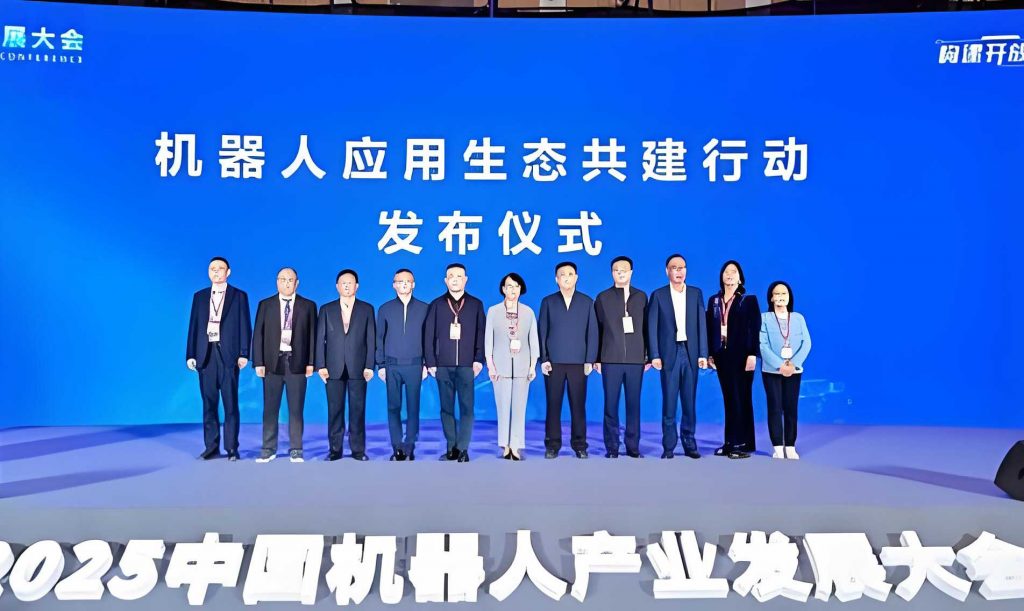
The significance of the China robots market is undeniable. As one of the world’s most advanced and automated economies, China represents a pivotal arena for technological advancement. It is the fastest-growing robotics market globally, with its industrial robot sales accounting for over half of the world’s total for ten consecutive years. This growth is fueled by a combination of policy guidance, market drivers, and technological enablement against the backdrop of demographic shifts and industrial upgrading. It is projected that robot density in China will double by 2025. Our automation technologies are instrumental in helping Chinese enterprises address critical labor and skill shortages, enhance their adaptability and flexibility, and propel sustainable development. The journey of China robots from widespread adoption to intelligent innovation is a central narrative in modern industrial history.
Deepening Local Roots: A Comprehensive Value Chain in China
Our commitment to the China robots ecosystem is long-term and comprehensive. Since entering the Chinese industrial robot market, we have consistently deepened our local footprint. We pioneered local research and development (R&D) and local manufacturing for industrial robots among multinational corporations. For nearly three decades, we have built a complete, localized value chain encompassing R&D, manufacturing, sales, engineering, system integration, and services, establishing ourselves as a true insider in the China robots industry.
The inauguration of our state-of-the-art robotics factory in Shanghai in December 2022, with an investment of 1.5 billion USD, marks a monumental step in this journey. This facility is a cornerstone of our global manufacturing network and a testament to our “in China, for China and the world” strategy.
| Metric | Data / Projection | Implication for China Robots Development |
|---|---|---|
| Global Sales Share | >50% | China is the world’s largest and most active market for industrial robots. |
| World Ranking | #1 for 10 consecutive years | Sustained, long-term growth and adoption momentum. |
| Robot Density Growth | Projected to double by 2025 | Immense market potential and accelerated integration into manufacturing. |
| Key Growth Drivers | Policy Support, Market Demand, Tech Innovation | A synergistic environment fostering the China robots ecosystem. |
| Primary Enterprise Needs | Overcome labor shortages, Increase flexibility, Enhance sustainability | Robots are strategic tools for solving core industrial challenges. |
The super factory currently manufactures over 95% of our robot product variants sold globally and more than 90% of the robots sold in the China market. Its operation significantly strengthens our complete local value chain and amplifies our capacity to support China’s high-quality economic growth. Adjacent to the factory, our expanded R&D center in Shanghai, spanning 8,000 square meters, focuses on accelerating innovation in AI, digitalization, and software. Key research areas include autonomous mobile robots, digital twins, machine vision, and low-code programming software, all aimed at making robots smarter, more flexible, safer, and easier to use.
We will continue to root ourselves deeper in China, further enhancing the localization and diversification of our entire supply chain. While automation penetration in China’s traditional manufacturing sectors still holds great potential for growth, we are committed to supporting the increased adoption of China robots in these established applications while also pioneering innovative trials in emerging industries.
Boundary-Pushing Innovation: Expanding the Horizons of Robotics
Innovation is ingrained in our DNA. For nearly three decades, we have helped advance China’s progress in advanced manufacturing by introducing our latest, fastest, and most sophisticated products. The year 2023 has been a testament to this, marked by a series of breakthroughs. Our new generation of modular large robots, the IRB 6710-6740 series, achieves energy savings of up to 20% when paired with our OmniCore controller. Simultaneously, we expanded our collaborative robot (cobot) portfolio with the new GoFa 10 and GoFa 12 models, offering greater reach and higher payloads to empower a wider range of applications within the China robots landscape.
Our innovation extends beyond hardware. To meet the demands of intelligent manufacturing, we launched RobotStudio® in the cloud. This platform enables global teams to collaborate in real-time on robot programming and simulation. Building on over 25 years of offline programming expertise, it offers cutting-edge digital tools that reduce time-to-test for robotic solutions, allowing for instant optimization without sacrificing production time. The power of this cloud technology was vividly demonstrated in a pilot project where a YuMi cobot in Sweden, controlled via the cloud, performed critical seeding tasks for a jungle conservation project in the Peruvian Amazon—truly a landmark in remote robotic operation.
| Product/Technology | Key Features | Impact on China Robots Applications |
|---|---|---|
| IRB 6710-6740 Series | Modular design, up to 20% energy saving with OmniCore, payload 150-310kg. | Enables efficient, high-precision tasks like welding and assembly for heavy industries. |
| GoFa 10 & 12 Cobots | Increased reach and payload, user-friendly design. | Brings automation to SMEs and diverse sectors previously hesitant to adopt China robots. |
| RobotStudio® Cloud | Real-time global collaboration, offline programming, simulation. | Accelerates deployment and reduces risk for automation projects across China. |
| AI & Machine Vision Integration | Enables learning, defect detection, autonomous navigation. | Makes China robots more adaptable, precise, and capable in dynamic environments. |
We are entering a new era of automation where AI, machine learning, and virtual technologies are unlocking unprecedented possibilities. AI is not new to robotics, but its maturity in machine vision and smart learning is transformative. Robots excel at tasks that are strenuous, repetitive, dull, dirty, or dangerous. AI empowers them to perform these tasks even better: they become capable of learning from experience rather than just explicit programming; they can operate safely in dynamic environments or around people. This significantly expands the potential and applicability of China robots.
For instance, our robots equipped with AI vision can perform precise welding and, through machine learning, detect defective welds faster and more accurately than humans. In warehouses, they learn to identify different objects for high-speed sorting and packing. Furthermore, China robots utilizing vision and AI can navigate autonomously without pre-defined guides, efficiently transporting items throughout facilities.
A critical barrier to adoption has traditionally been programming complexity. We are focused on making robots more flexible, easier to use, and more accessible. For a growing number of businesses, ease of use is paramount. AI-powered programming has the potential to be a game-changer—generating robot programs through natural language commands or intuitive interfaces. This dramatically lowers the integration barrier and makes robotics viable for small and medium-sized enterprises (SMEs), further proliferating the use of China robots. Imagine instructing a robot with a simple voice command to execute a new task immediately; the intelligence to understand and act lies within the AI.
The integration of robotics into production can be modeled as an enhancement to the classic Cobb-Douglas production function, reflecting how China robots contribute to total factor productivity:
$$ Y_t = A_t \cdot (L_t^\alpha \cdot K_t^\beta) \cdot R_t^\gamma $$
Where:
- $Y_t$ is the total manufacturing output at time $t$.
- $A_t$ represents baseline total factor productivity (technology level).
- $L_t$ and $K_t$ represent labor and traditional capital input, with elasticities $\alpha$ and $\beta$.
- $R_t$ represents the stock of robotic capital (China robots).
- $\gamma$ is the output elasticity of robots, signifying their marginal contribution.
The adoption of China robots ($R_t$) directly boosts output $Y_t$. Furthermore, they elevate $A_t$ by enabling flexible, data-driven smart manufacturing, and can offset constraints in $L_t$ (labor shortages). The strategic deployment of China robots is thus a multiplicative factor for industrial output.
Enabling Sustainability: Supporting China’s Dual Carbon Goals
Green and low-carbon development is a global imperative. In China, the national “Carbon Peak and Carbon Neutrality” strategy has intensified the demand for industrial低碳转型 (low-carbon transition) and efficiency gains. We are committed to supporting these goals through our products and practices.
Our new generation of energy-efficient robots, including the IRB 6710, 6720, 6730, and 6740 models, exemplifies this commitment. Through the combination of our OmniCore controller and lightweight robot design, this series achieves up to 20% energy savings compared to previous generations. The OmniCore controller also delivers precise motion control, with repeatability as high as 0.03mm, making these China robots ideal for high-quality, complex tasks like spot welding and laser welding in automotive manufacturing, where precision reduces waste.
Smarter, more efficient China robots help our customers meet sustainability targets by improving energy efficiency, reducing waste, and shrinking their operational footprint. Beyond energy-efficient new equipment, circular economy practices like remanufacturing are vital. Our global network of robot remanufacturing centers gives older robots a new life, preventing premature scrapping and maximizing resource utilization—a powerful step towards sustainable production.
We also provide upgraded processes that contribute to low-carbon goals. Our PixelPaint solution, for example, uses inkjet-head technology to eliminate overspray, achieving 100% paint utilization. It speeds up painting by 50% and allows for color changes and个性化图案 (personalized patterns) in a single pass without masking, significantly boosting sustainability in paint shops.
Moreover, we lead by example. Our new Shanghai super factory itself is a model of green manufacturing. It incorporates a power management system, a rainwater collection system, and an energy consumption monitoring system. Annually, these measures save 4.2 million kWh of electricity, 7,660 cubic meters of water, and reduce carbon emissions by 3,855 tons compared to a facility without such installations.
| Initiative Category | Specific Action/Product | Sustainability Benefit |
|---|---|---|
| Energy-Efficient Products | IRB 6710-6740 Series with OmniCore | Up to 20% lower energy consumption for end-users. |
| PixelPaint No-Overspray Solution | 100% material utilization, 50% faster process, no waste. | |
| Circular Economy | Global Robot Remanufacturing & Upgrade Services | Extends robot lifecycle, reduces resource consumption and e-waste. |
| Green Operations | Shanghai Super Factory Eco-Features | Saves 4.2 GWh of power, 7,660m³ water, cuts 3,855t CO₂ annually. |
The carbon reduction impact of deploying energy-efficient China robots can be quantified. The total operational carbon savings ($\Delta C$) achieved by a factory replacing older automation with new, efficient robots is given by:
$$ \Delta C = \sum_{i=1}^{n} (P_{old,i} – P_{new,i}) \cdot H_i \cdot EF $$
Where:
- $n$ is the number of robot units.
- $P_{old,i}$ and $P_{new,i}$ are the power consumption (kW) of the old and new robot $i$, respectively.
- $H_i$ is the annual operational hours for robot $i$.
- $EF$ is the local electricity grid’s carbon emission factor (kg CO₂/kWh).
For our IRB 6710-6740 series, $(P_{old} – P_{new})$ is significant, leading to substantial $\Delta C$ and supporting China’s national carbon reduction targets.
In conclusion, under the global wave of digital transformation, Chinese manufacturing is rapidly evolving from the “world’s factory” to an innovation hub for “Intelligent Manufacturing in China.” This shift is powered by digital and innovation-driven development. In this new era of transformation, we envision China robots not merely as tools for profit, but as powerful instruments for enhancing productivity, reducing industrial energy consumption, and ultimately acting as a driving force for sustainable economic development. We are committed to providing Chinese enterprises with automated solutions that span the entire value chain and transcend traditional industry boundaries. We will continue to contribute to the upgrade and transformation of Chinese manufacturing with our integrated innovative力量 (strength) in automation, digitalization, and intelligence. The future of China robots is intelligent, collaborative, and sustainable, and we are proud to be shaping it.