
In the rapidly evolving field of robotics, the integration of humanoid robots into daily life and commercial services is becoming increasingly prevalent. These machines, designed to mimic human form and functions, hold immense potential for enhancing productivity and assistance in various sectors. However, a significant challenge persists: the often cold, rigid appearance of humanoid robots can evoke user resistance and reduce acceptance. To address this, researchers have turned to affective design principles, focusing on imbuing humanoid robots with亲和力—a quality that fosters trust, comfort, and positive emotional connections. A recent study delves into this area, employing Kansei engineering and artificial intelligence (AI) techniques to explore and generate亲和力-focused外观 designs for humanoid robots. By training stable diffusion (SD) models with carefully curated datasets, this research aims to revolutionize how humanoid robots are perceived, making them more approachable and user-friendly in real-world applications.
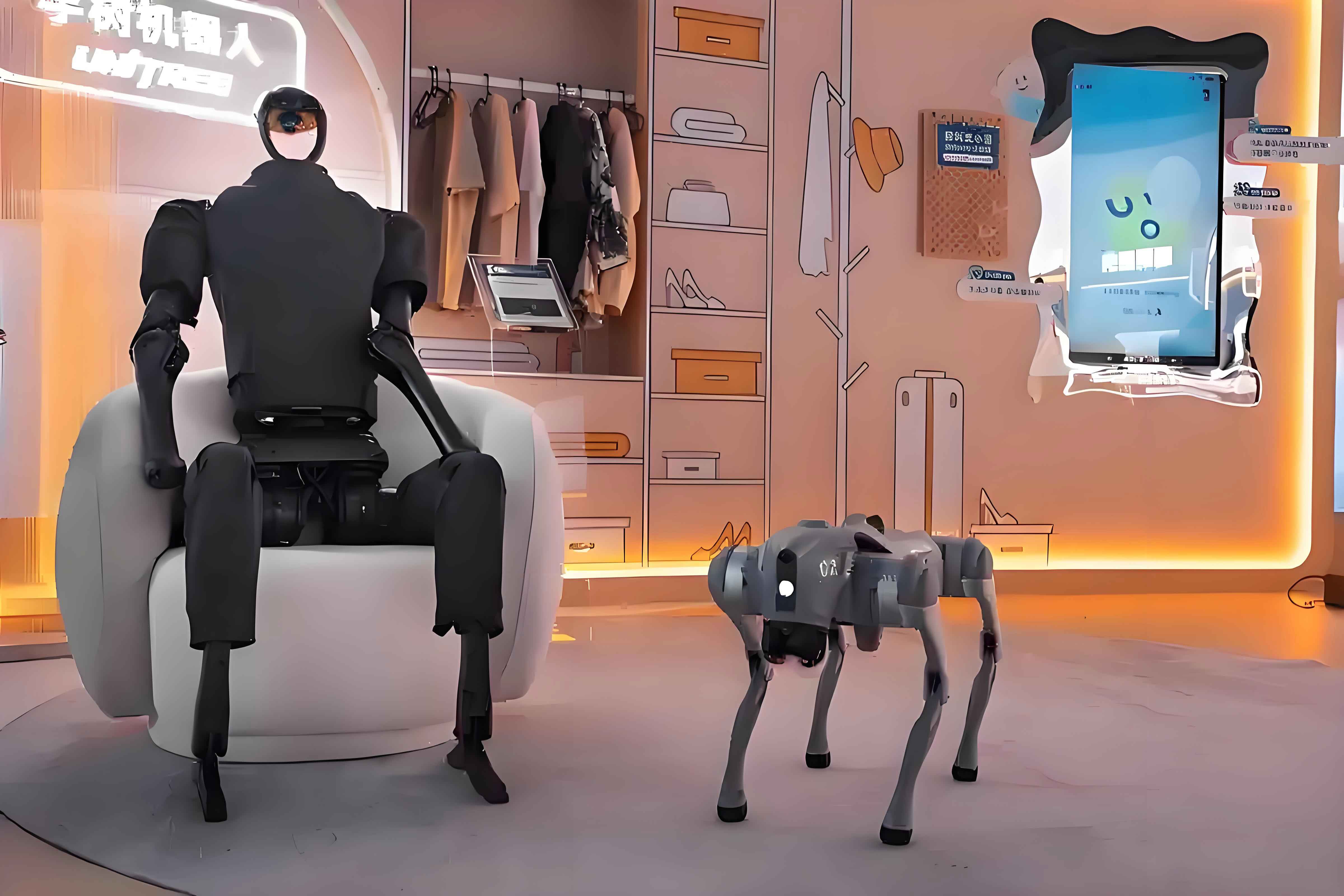
The study begins by recognizing that the外观 of humanoid robots plays a crucial role in shaping user perceptions. As humanoid robots become more common in environments like healthcare, retail, and domestic settings, their design must not only prioritize functionality but also emotional appeal.亲和力, in this context, refers to the ability of a product to align with human physiological and psychological factors, evoking feelings of pleasure, comfort, and ease. For humanoid robots, this translates to外观 features that reduce anxiety and encourage interaction. Traditional design approaches for humanoid robots have often emphasized engineering efficiency, resulting in designs that may appear intimidating or impersonal. This research shifts the focus by quantifying亲和力 through design elements such as shape, material, and color, and leveraging AI to generate optimized designs efficiently.
To systematically investigate亲和力 in humanoid robots, the researchers adopted the Kansei engineering methodology. This approach translates subjective emotional responses into tangible design parameters, allowing for a data-driven analysis of how specific外观 features influence user perceptions. The study identified three key dimensions for evaluating亲和力: approachability (measuring the sense of closeness), gentleness (reflecting caring and tender qualities), and liveliness (indicating vitality and dynamism). These dimensions were derived from a selection of semantic differential pairs, such as冷漠-亲和,冷硬-温柔, and严肃-活泼, which were refined through expert discussions and voting by design professionals. This framework provided a structured way to assess how different design elements contribute to the overall亲和力 of humanoid robots.
The research involved a comprehensive questionnaire survey to gather user preferences on various design aspects of humanoid robots. A total of 645 valid responses were collected, focusing on elements like head shape, eye design, body proportions, materials, and colors. The head shapes analyzed included square, circle, vertical oval, horizontal oval, and semi-circle, while eye designs featured circular, square, vertical oval, and horizontal oval forms. Body proportions were categorized based on developmental stages, such as infant-like, child-like, adolescent, and adult figures, further divided into slender and robust types. Materials examined included plastic, fabric, metal, and transparent substances, each with different surface treatments, and colors spanned warm, cool, and neutral hues with variations in saturation and brightness.
Analysis of the survey data revealed that head shape had the most significant impact on亲和力, followed by facial expressions, color, material, and body proportions. For instance, horizontal oval heads and vertical oval eyes were rated highest for亲和力, while certain body proportions, like those resembling adolescents, scored better than adult-like figures. In terms of materials, fabrics with textured surfaces, such as plush finishes, were perceived as more亲和力 than smooth plastics or metals. Colors played a vital role, with lighter, less saturated shades—particularly warm tones like soft yellows and oranges—enhancing亲和力, whereas darker, high-saturation colors diminished it. These findings were compiled into a亲和力 scoring table, which assigned numerical values to each design feature, enabling precise guidelines for creating亲和力-focused humanoid robots.
| Design Element | Category | Affinity Score |
|---|---|---|
| Head Shape | Square (A1) | 3 |
| Circle (A2) | 3 | |
| Vertical Oval (A3) | 0 | |
| Horizontal Oval (A4) | 3 | |
| Semi-circle (A5) | 0 | |
| Eye Design | Circular (B1) | 1 |
| Square (B2) | 1 | |
| Vertical Oval (B3) | 3 | |
| Horizontal Oval (B4) | 0 | |
| Body Proportions | Infant-like Slender (C1) | 3 |
| Child-like Robust (C2) | 2 | |
| Child-like Slender (C3) | 4 | |
| Adolescent Slender (C4) | 3 | |
| Adolescent Robust (C5) | 2 | |
| Adult Robust (C6) | 1 | |
| Adult Robust (C7) | 0 | |
| Materials and Surface | Plastic Smooth (D1) | 1 |
| Plastic Textured (D2) | 2 | |
| Fabric Plush (D3) | 3 | |
| Fabric Woven (D4) | 3 | |
| Metal Smooth (D5) | 0 | |
| Metal Textured (D6) | 0 | |
| Transparent Smooth (D7) | 1 | |
| Transparent Textured (D8) | 1 | |
| Colors | White (E1) | 4 |
| Gray (E2) | 2 | |
| Black (E3) | 2 | |
| High Saturation Warm (E4) | 1 | |
| Low Saturation Warm (E5) | 3 | |
| High Saturation Cool (E6) | 0 | |
| Low Saturation Cool (E7) | 0 |
Building on these insights, the study progressed to the AI-driven phase, where stable diffusion models were trained to generate亲和力-enhanced designs for humanoid robots. Stable diffusion, a cutting-edge AI image generation technology, operates by transforming noise into clear images through a process involving text encoders, latent diffusion models, and autoencoders. However, standard SD models often struggle to produce designs with specific亲和力 traits based solely on text prompts. To overcome this, the researchers employed training methods like Dreambooth and Lora, which fine-tune the model’s neural networks using curated datasets. Dreambooth adjusts all layers of the SD model to learn specific features and styles, while Lora inserts additional computational layers for faster, more efficient training. This dual approach ensured that the models could generate diverse, high-quality designs while maintaining computational efficiency.
The training process involved several iterative steps, starting with the creation of training samples based on the亲和力 scoring table. Samples were selected to represent a range of亲和力 features, such as rounded shapes, soft materials, and温和 colors, while ensuring variety in details to promote model generalization. Tools like Controlnet, image-to-image transformations, and software like Photoshop were used to refine initial素材, enhancing them from overall structure to fine details. Each sample was meticulously annotated with descriptors like “affinity robot,” “organic form,” and specific attributes for head shape, eye design, and materials. For example, a sample might be labeled as having an oval head, vertical eyes, white plastic body, and adolescent figure to align with high亲和力 scores.
During training, parameters such as learning rate, iteration count, batch size, and optimizer settings were carefully tuned. The models underwent multiple epochs, with loss values monitored to gauge performance; ideal loss values around 0.08 indicated effective learning. Through successive rounds, the training samples were adjusted based on generated outcomes—for instance, early rounds produced designs that were too cartoonish, so realism was increased in later iterations. The亲和力 scores of each round’s samples improved over time, as seen in the transition from scores of 12 to 16 in representative samples. This iterative refinement ensured that the final models could generate humanoid robots with balanced亲和力 across all dimensions.
Evaluation of the trained models involved analyzing loss value curves and using XY cross-plots to visualize results under different weight settings. Models from the sixth epoch, with weights between 0.6 and 0.8, yielded the best亲和力 outcomes, as confirmed by scoring against the亲和力 table. The trained SD models were then applied to generate a style matrix of humanoid robot designs, combining the亲和力-focused base model with various style models to produce a wide array of options. This matrix allowed for rapid筛选 of high-affinity designs, such as those with gentle curves, warm colors, and soft textures, demonstrating the method’s efficiency in creating appealing humanoid robots for diverse applications.
The implications of this research are profound for the future of humanoid robots in society. By quantifying亲和力 and integrating it into AI-driven design, the study offers a scalable approach to enhancing user acceptance and trust. In practical terms, this could lead to humanoid robots that are more readily adopted in settings like elderly care, education, and customer service, where emotional connection is paramount. For instance, a humanoid robot with a friendly appearance could reduce anxiety in healthcare environments or improve engagement in retail interactions. The use of stable diffusion models not only accelerates the design process but also enables customization, allowing for humanoid robots tailored to specific cultural or contextual needs.
However, the study acknowledges limitations, such as the relatively homogeneous sample group in the questionnaire, which may affect the generalizability of the findings. Future research could expand to cross-cultural studies, incorporate more diverse design styles, and explore the integration of外观 with interactive behaviors for a holistic approach to亲和力. As AI technologies continue to advance, this methodology could be adapted for other robotic forms or even virtual assistants, further bridging the gap between machines and humans.
In conclusion, the exploration of亲和力 in humanoid robot外观 through Kansei engineering and stable diffusion model training represents a significant leap forward in robotic design. By transforming subjective emotional responses into quantifiable design elements and leveraging AI for efficient generation, this research provides a robust framework for creating humanoid robots that are not only functional but also emotionally resonant. As the deployment of humanoid robots expands across various sectors, such innovations will be crucial in fostering positive human-robot interactions and unlocking the full potential of these intelligent machines in everyday life.