
The rapid evolution of technology, driven by artificial intelligence, has propelled humanoid robots into mainstream discourse. As these entities approach real-world deployment in policing, healthcare, and domestic services, urgent ethical and responsibility questions demand rigorous examination. A recent study published in the Journal of Yangtze Normal University employs historical materialism to analyze whether humanoid robots can embody human-like ethics or assume human-equivalent responsibility.
1. Key Concepts and Definitions
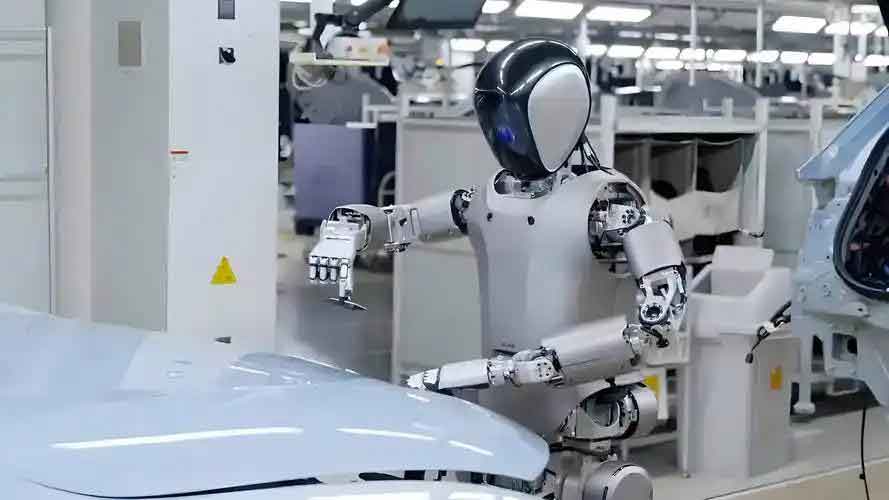
1.1 Humanoid Robots: Defined as machines with human-like morphology and features, humanoid robots range from basic anthropomorphic forms to near-human replicas. Historical materialism contextualizes their development as extensions of human industrial evolution, where machines replicate human physical capabilities but lack consciousness. Current examples include Tesla’s Optimus, Boston Dynamics’ Atlas, and Sanctuary AI’s Phoenix.
1.2 Anthropomorphism: Humans instinctively attribute human traits to non-human entities—a tendency amplified with humanoid robots. This occurs through deliberate design (“anthropomorphic encoding”) or user perception (“anthropomorphic decoding”). While anthropomorphism enhances interaction fluency, it risks creating unrealistic expectations about humanoid robot capabilities.
1.3 Ethics Frameworks: Applied to humanoid robots, ethics encompasses three domains:
- Implementing ethical systems within robots
- Ethical conduct by designers/users
- Human treatment of humanoid robots
The “Collingridge Dilemma” highlights regulatory challenges: ethical impacts become clear only after widespread adoption.
2. Humanoid Robot Ethics: Can Humanoid Robots Possess Human-like Morality?
Efforts to instill ethics in humanoid robots follow three approaches:
| Approach | Method | Limitations |
|---|---|---|
| Top-Down | Programming rules (e.g., utilitarianism/deontology) | Fails in complex real-world scenarios; e.g., prohibits necessary deception in medical/educational roles |
| Bottom-Up | Learning ethics from data/experience | Reinforces biases in training data; lacks moral reasoning |
| Hybrid | Combining rules and learning | Cannot replicate human contextual sensitivity |
Historical materialism reveals fundamental barriers:
- Absence of Emotion/Consciousness: Humanoid robots lack the affective states essential for genuine moral agency.
- Operational vs. Functional Morality: Current humanoid robots operate under pre-defined rules (“operational morality”) but cannot achieve “functional morality” involving autonomous value judgments.
- Normative Bias: Programming social norms risks perpetuating outdated or discriminatory practices (e.g., gender biases in workplace behavior).
Ethics in humanoid robots remains a superficial simulation of human morality, unable to navigate dilemmas requiring empathy or contextual awareness.
3. Human-like Responsibility: Can Humanoid Robots Be Accountable?
Accountability requires meeting two conditions:
- Control: Free will in actions
- Epistemic Awareness: Understanding actions’ consequences
Humanoid robots inherently fail both criteria, creating a “responsibility gap.” Proposed solutions face philosophical and practical hurdles:
3.1 Human-Only Accountability: Assigning blame exclusively to designers/users ignores humanoid robots’ autonomy, excusing unpredictable AI-driven actions.
3.2 Shared Responsibility: Distributing accountability between humans and humanoid robots is untenable since responsibility requires moral agency—which humanoid robots lack.
3.3 Quasi-Responsibility: Treating humanoid robots as “moral patients” (entities receiving ethical consideration) doesn’t equate to holding them accountable. Punishing a humanoid robot is functionally meaningless and legally inapplicable.
Historical materialism emphasizes that humanoid robots’ mechanistic nature precludes true responsibility. Delegating critical decisions to them risks ethical evasion, as corporations might exploit anthropomorphic perceptions to shift blame onto machines.
4. Conclusion: Governance Implications
The study concludes that humanoid robots cannot attain human-equivalent ethics or responsibility due to ontological limitations. Historical materialism underscores that humanoid robots are social constructs shaped by—not independent of—human systems. To mitigate risks:
- Regulatory Agility: Implement iterative, evidence-based policies adapting to humanoid robot evolution.
- Human-Centered Design: Prioritize transparency and user safety over deceptive anthropomorphism.
- Legal Frameworks: Develop accountability structures addressing the responsibility gap without anthropomorphizing machines.
Integrating China’s social governance experience can guide ethical humanoid robot deployment. Proactive, historically grounded regulation remains essential to ensure humanoid robots serve human welfare without compromising societal values.