
As I reflect on the recent World Artificial Intelligence Conference held in Shanghai this July, I am struck by the profound implications of the inaugural governance document for humanoid robots—the “Humanoid Robot Governance Guidelines.” This milestone event underscores the accelerating integration of embodied AI robots into our societal fabric. Embodied AI robots, as a driving force in the new wave of technological revolution and industrial transformation, promise to redefine human-machine interactions. They are poised to serve not only as practical assistants in daily life but also as emotional companions, offering unprecedented opportunities for enhancing well-being and productivity. However, this rapid advancement brings forth significant ethical and safety risks, necessitating a robust framework for governance. In this article, I will explore the multifaceted landscape of embodied AI robot development, emphasizing the imperative of harmonizing emotional ethics and legal norms to foster trust and sustainable progress in the AI era.
The concept of embodied AI robots refers to intelligent systems that possess a physical form, enabling them to perceive, interact with, and adapt to their environments in a human-like manner. Unlike traditional AI confined to software, embodied AI robots embody intelligence in a tangible entity, blurring the lines between machines and living beings. This embodiment amplifies their potential impact, as they can directly influence physical spaces and human emotions. For instance, an embodied AI robot designed as a caregiver may provide companionship to the elderly, but it also raises questions about dependency, privacy, and emotional manipulation. As I delve deeper, it becomes clear that the governance of these entities must address both technical and socio-ethical dimensions to prevent unintended consequences.
From an application perspective, embodied AI robots hold vast prospects across various sectors. In healthcare, they can assist with rehabilitation exercises, monitor patient vitals, and offer psychological support. In education, they serve as interactive tutors, personalizing learning experiences for students. In domestic settings, embodied AI robots manage household chores, provide security, and even engage in social interactions to alleviate loneliness. The table below summarizes key application domains and their potential benefits, highlighting how embodied AI robots are transforming industries.
| Application Domain | Potential Benefits | Examples of Embodied AI Robot Roles |
|---|---|---|
| Healthcare | Improved patient care, reduced workload for staff, emotional support | Caregiver robots, surgical assistants, therapy companions |
| Education | Personalized learning, increased engagement, accessibility for diverse learners | Tutoring robots, language practice partners, special needs aides |
| Domestic and Personal Use | Enhanced convenience, safety monitoring, companionship | Home assistants, security patrols, social robots for elderly |
| Industrial and Service | Increased efficiency, cost reduction, hazardous task handling | Manufacturing robots, customer service agents, logistics helpers |
Despite these promising applications, embodied AI robots introduce complex risks that demand careful scrutiny. Ethical dilemmas arise from their ability to simulate emotions and form bonds with humans. For example, if an embodied AI robot is programmed to express empathy, users might develop emotional attachments, leading to potential exploitation or psychological harm when the robot malfunctions or is decommissioned. Safety concerns include physical hazards, such as collisions or misuse in critical environments, and cybersecurity threats, where malicious actors could hack into the robot’s systems to cause damage. To quantify these risks, I propose a risk assessment formula that considers multiple factors: $$R = \sum_{i=1}^{n} (P_i \cdot S_i)$$ where \(R\) represents the total risk score, \(P_i\) is the probability of risk event \(i\), and \(S_i\) is the severity impact of that event. This formula can help policymakers prioritize governance measures for embodied AI robots based on empirical data.
The release of the “Humanoid Robot Governance Guidelines” marks a pivotal step toward addressing these challenges. These guidelines outline principles for the responsible development and deployment of embodied AI robots, emphasizing transparency, accountability, and human-centric design. They call for interdisciplinary collaboration among technologists, ethicists, legal experts, and stakeholders to ensure that embodied AI robots align with societal values. As I analyze the guidelines, several core tenets emerge: first, embodied AI robots should respect human autonomy and dignity; second, they must incorporate fail-safe mechanisms to prevent harm; third, their decision-making processes should be explainable to foster trust. The table below distills these principles into actionable items for developers and regulators of embodied AI robots.
| Governance Principle | Description | Implementation Strategies for Embodied AI Robots |
|---|---|---|
| Transparency | Ensuring that the operations and decisions of embodied AI robots are understandable to users. | Provide user-friendly interfaces, log decision trails, disclose data usage policies. |
| Accountability | Establishing clear lines of responsibility for the actions of embodied AI robots. | Designate legal entities for liability, implement audit systems, enable grievance redressal. |
| Safety and Security | Protecting users from physical and digital harms caused by embodied AI robots. | Incorporate emergency stop functions, regular security updates, risk assessments. |
| Ethical Alignment | Aligning embodied AI robot behavior with ethical norms and human values. | Integrate ethics committees, use value-sensitive design, conduct ethical impact assessments. |
A critical aspect of governing embodied AI robots is the co-governance mechanism between emotional ethics and legal norms. Emotional ethics pertains to the moral considerations surrounding the affective interactions between humans and robots. For instance, should an embodied AI robot be allowed to mimic love or grief? Legal norms, on the other hand, provide enforceable rules to regulate conduct and assign liability. The interplay between these two domains is essential for creating a holistic framework. I posit that the effectiveness of co-governance can be modeled using a synergy equation: $$C = \alpha E + \beta L + \gamma (E \cdot L)$$ where \(C\) is the co-governance effectiveness, \(E\) represents emotional ethics compliance, \(L\) denotes legal norm adherence, and \(\alpha\), \(\beta\), \(\gamma\) are weighting coefficients that reflect contextual factors. This equation underscores that simply having ethics or laws in isolation is insufficient; their interaction amplifies outcomes for embodied AI robot governance.
In practice, implementing such co-governance requires concrete steps. For emotional ethics, developers of embodied AI robots should adopt design principles that prioritize user well-being over engagement metrics. This might involve limiting the degree of emotional manipulation or ensuring that robots clearly indicate their non-human status. From a legal perspective, regulations must evolve to address novel scenarios, such as data privacy breaches by embodied AI robots or accidents in public spaces. International cooperation is also vital, as embodied AI robots operate across borders, necessitating harmonized standards. The following table contrasts ethical and legal approaches to common issues involving embodied AI robots, illustrating their complementary roles.
| Issue | Ethical Approach for Embodied AI Robots | Legal Approach for Embodied AI Robots |
|---|---|---|
| Emotional Attachment | Program robots to discourage over-dependence, provide disclaimers on emotional capabilities. | Enact laws requiring informed consent for emotional interaction features, set limits on bonding simulations. |
| Data Privacy | Design privacy-by-default systems, minimize data collection to essential functions. | Implement data protection regulations (e.g., GDPR for robots), mandate breach notifications. |
| Physical Safety | Incorporate ethical decision-making in emergencies (e.g., prioritizing human life). | Establish safety certifications, define liability in case of accidents, set manufacturing standards. |
| Autonomy and Control | Ensure users retain ultimate control over embodied AI robots, avoid deceptive autonomy. | Legislate on user rights to override robot decisions, ban autonomous functions in critical areas without oversight. |
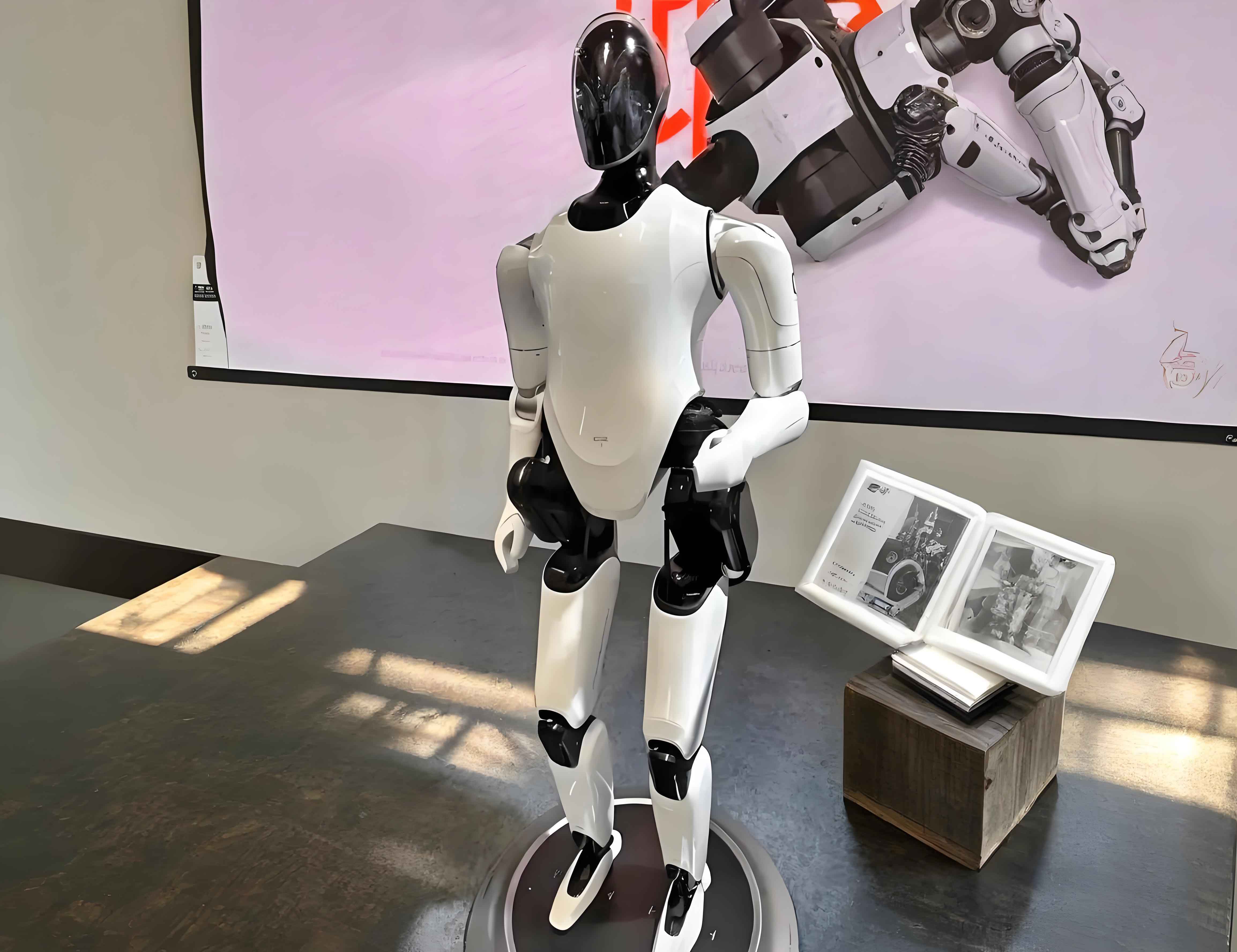
As the industry for embodied AI robots expands, it is crucial to visualize its growth and impact. Below, I insert an image that depicts the burgeoning embodied robot industry, showcasing its technological diversity and societal integration. This visual complements our discussion by highlighting the real-world context in which governance must operate.
The future trajectory of embodied AI robots will largely depend on our ability to foster trust through robust governance. Trust is not merely a soft factor; it is a prerequisite for widespread adoption and positive human-robot relationships. To build trust, embodied AI robots must demonstrate reliability, predictability, and alignment with human values. This involves continuous monitoring and adaptation, as technologies evolve. For example, as embodied AI robots gain more advanced emotional intelligence, we may need to update ethical guidelines to address emerging dilemmas, such as robot rights or moral status. Mathematical models can aid in this dynamic process. Consider a trust evolution formula: $$T(t) = T_0 + \int_{0}^{t} [f(R, E, L) – g(Risk)] \, dt$$ where \(T(t)\) is trust level at time \(t\), \(T_0\) is initial trust, \(f\) is a function increasing with reliability \(R\), ethical compliance \(E\), and legal adherence \(L\), while \(g\) decreases with perceived risk. This integral approach emphasizes that trust in embodied AI robots accumulates over time through consistent positive interactions and effective governance.
Moreover, the economic implications of embodied AI robots cannot be overlooked. They are poised to disrupt labor markets, create new industries, and influence global competitiveness. Policymakers must balance innovation incentives with social safeguards, such as retraining programs for displaced workers. In this regard, embodied AI robots should be viewed as tools to augment human capabilities rather than replace them entirely. The table below outlines potential economic impacts and mitigation strategies related to embodied AI robot deployment.
| Economic Aspect | Potential Impact of Embodied AI Robots | Mitigation Strategies |
|---|---|---|
| Employment | Job displacement in routine tasks, creation of new roles in robot maintenance and ethics oversight. | Invest in STEM education, promote lifelong learning, implement social safety nets. |
| Productivity | Increased efficiency in sectors like manufacturing and services, leading to economic growth. | Encourage adoption in small businesses, provide subsidies for ethical embodied AI robot integration. |
| Inequality | Risk of widening digital divides if access to embodied AI robots is uneven across regions or demographics. | Develop inclusive policies, fund community-based projects, ensure affordable access. |
| Innovation Ecosystem | Acceleration of R&D in robotics, AI, and related fields, fostering startup growth. | Support research grants, establish innovation hubs, facilitate public-private partnerships. |
In conclusion, the journey toward harmonizing human-robot relations in the age of embodied AI robots is both exciting and daunting. The “Humanoid Robot Governance Guidelines” provide a foundational step, but much work remains. As I see it, the path forward involves embracing a co-governance paradigm that intertwines emotional ethics and legal norms. This requires ongoing dialogue among all stakeholders—developers, users, regulators, and ethicists—to adapt to the rapid pace of change. Embodied AI robots, with their unique blend of physical presence and intelligence, challenge us to rethink traditional boundaries. By fostering trust through transparent design, accountable practices, and inclusive policies, we can unlock their potential while mitigating risks. Ultimately, the goal is to ensure that embodied AI robots serve humanity ethically and sustainably, enriching our lives without compromising our values. The mathematical frameworks and tables presented here offer tools to navigate this complex landscape, but it is our collective commitment that will determine the outcome. Let us strive to create a future where embodied AI robots are trusted partners in our shared societal progress.
To further elaborate on the technical governance of embodied AI robots, consider the algorithmic transparency required for their decision-making. Many embodied AI robots use machine learning models that operate as “black boxes,” making it difficult to understand why they act in certain ways. This opacity can erode trust, especially in sensitive applications like healthcare or childcare. To address this, researchers are developing explainable AI (XAI) techniques tailored for embodied AI robots. For instance, a robot might provide verbal justifications for its actions or highlight the data points influencing its decisions. A formula for explainability could be: $$X = \frac{1}{n} \sum_{i=1}^{n} I_i \cdot C_i$$ where \(X\) is the explainability score, \(I_i\) is the interpretability of decision component \(i\), and \(C_i\) is the clarity of communication to the user. Higher \(X\) values indicate better transparency for embodied AI robots, facilitating user comprehension and trust.
Another key area is the emotional intelligence of embodied AI robots. As these robots become more adept at recognizing and responding to human emotions, ethical guidelines must define appropriate boundaries. For example, should an embodied AI robot offer psychological advice? To model emotional appropriateness, we can use an ethical threshold function: $$A_e = \begin{cases} 1 & \text{if } E_r \leq E_{max} \\ 0 & \text{otherwise} \end{cases}$$ where \(A_e\) is the appropriateness indicator (1 for appropriate, 0 for not), \(E_r\) is the robot’s emotional response intensity, and \(E_{max}\) is the maximum allowed intensity set by ethical standards. This binary function helps ensure that embodied AI robots do not overstep into domains requiring human expertise, such as therapy.
Furthermore, the security of embodied AI robots is paramount, as they often collect and process sensitive data. Cybersecurity risks include hacking that could lead to physical harm or privacy violations. A risk mitigation framework can be expressed as: $$M = \frac{1}{1 + e^{-k(S – S_0)}}$$ where \(M\) is the mitigation effectiveness (ranging from 0 to 1), \(S\) is the security investment level, \(S_0\) is a threshold, and \(k\) is a scaling factor. This sigmoid function suggests that initial security investments yield rapid gains in protection for embodied AI robots, but diminishing returns set in after a point, guiding resource allocation.
In terms of legal norms, international harmonization is crucial for embodied AI robots, given their global mobility. Differing regulations across countries could create compliance burdens or safety gaps. A harmonization index might be calculated as: $$H = \frac{\sum_{j=1}^{m} w_j \cdot O_j}{\sum_{j=1}^{m} w_j}$$ where \(H\) is the harmonization score (closer to 1 indicates better alignment), \(O_j\) is the overlap in regulations for aspect \(j\) (e.g., safety standards), and \(w_j\) are weights reflecting importance. This index can track progress toward unified governance for embodied AI robots, promoting consistency and reducing barriers.
Lastly, public perception plays a critical role in the adoption of embodied AI robots. Surveys and studies show that trust varies based on factors like prior experience and cultural context. To model perception shifts, we can use a diffusion equation: $$\frac{\partial P}{\partial t} = D \nabla^2 P + \gamma G(t)$$ where \(P\) is public trust perception, \(D\) is the diffusion coefficient representing information spread, \(\nabla^2\) is the Laplacian operator for spatial variation, and \(G(t)\) is a governance effectiveness function over time. This partial differential equation captures how trust in embodied AI robots propagates through society under the influence of governance actions.
By integrating these technical, ethical, and legal perspectives, we can advance toward a comprehensive governance framework for embodied AI robots. The tables and formulas provided here are not exhaustive but serve as starting points for deeper analysis. As embodied AI robots continue to evolve, so too must our approaches to ensuring they benefit humanity responsibly. I encourage ongoing research and dialogue to refine these tools, always keeping the human element at the forefront. Together, we can navigate the complexities of embodied AI robot integration, building a future where technology and ethics walk hand in hand.