
The rapid expansion of the humanoid robot industry is placing unprecedented pressure on data protection rules. Humanoid robot systems collect and process large volumes of personal information through cameras, microphones, sensors, and multimodal perception systems. This data supports interaction, navigation, task execution, and continuous model improvement. As the humanoid robot industry chain becomes more complex and humanoid robot application scenarios become more diverse, regulators face a difficult question: how can the purpose principle be applied when the purposes of processing are increasingly difficult to specify in advance?
A detailed legal and policy analysis argues that the existing purpose principle, which combines purpose limitation and data minimization, needs systemic review. The humanoid robot sector illustrates why. A humanoid robot may begin with a clear service purpose, then use the same data for algorithm training, safety monitoring, fault correction, and performance improvement. The humanoid robot may also operate in homes, hospitals, factories, warehouses, and public spaces. Each humanoid robot scenario creates different data needs and different privacy expectations. The result is a regulatory gap that cannot be closed by simply repeating the demand for clear purposes.
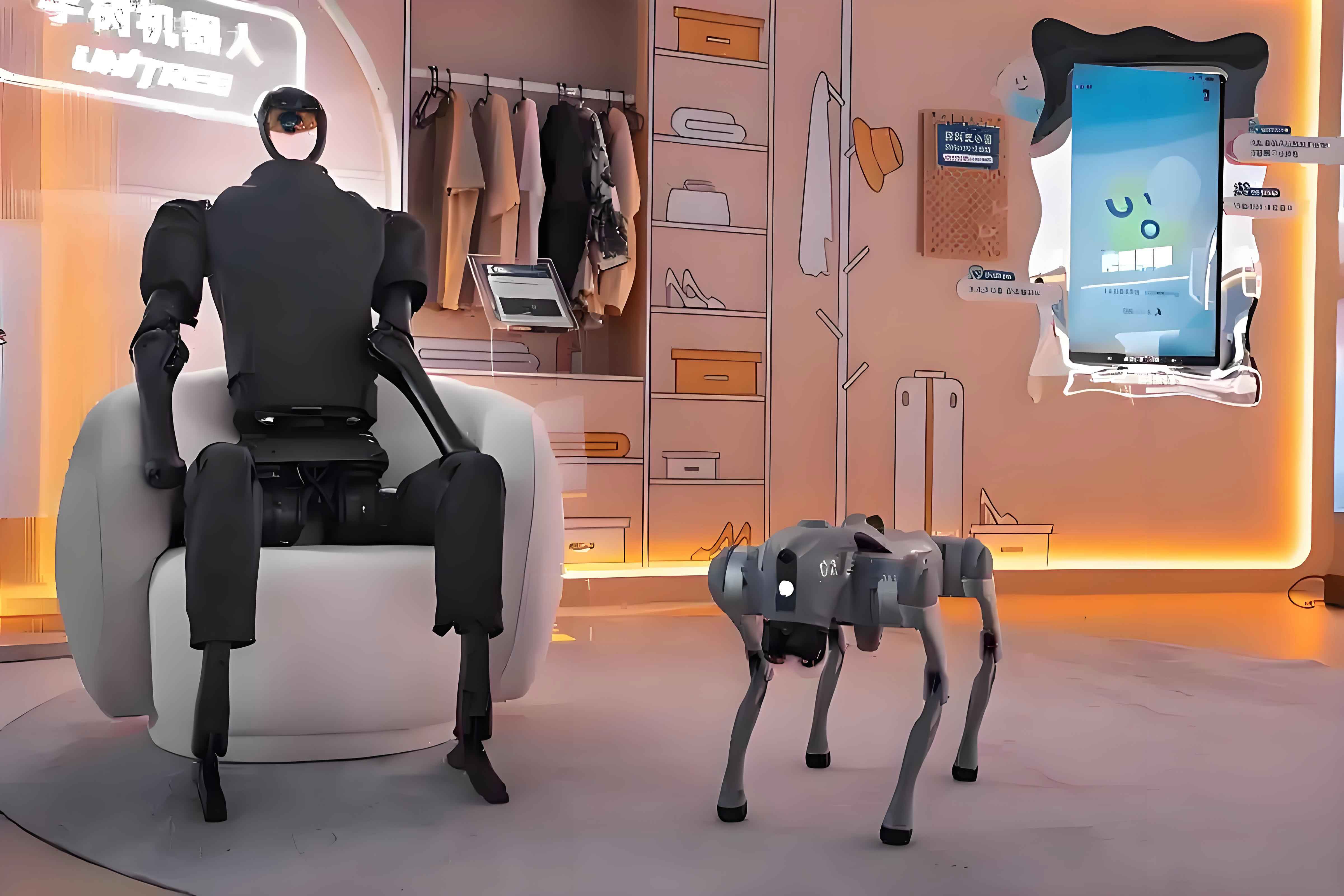
The analysis traces the purpose principle to the European Convention on Human Rights and Convention 108. It then follows the principle through the OECD privacy guidelines and the GDPR. In China, the purpose principle appears in Article 6 of the Personal Information Protection Law. The humanoid robot case shows that the principle remains essential, but its application must become more concrete. The debate is not whether to abandon purpose protection. The debate is how to keep purpose protection workable for humanoid robot innovation.
1. Humanoid Robot Data Demand and the Purpose Principle
The purpose principle requires that personal information be collected for a specific, explicit, and legitimate purpose. Processing must be directly related to that purpose. The means used must be the least intrusive among available options. The interests promoted must be proportionate to the rights affected. For sensitive personal information, the threshold is higher. A humanoid robot that captures facial features, voiceprints, fingerprints, emotional signals, health indicators, and environmental data therefore operates close to the core of personal information protection.
European law separates purpose limitation from data minimization. At the collection stage, the controller must identify a specific, explicit, and legitimate purpose. At the use stage, processing must be adequate, relevant, and limited to what is necessary. The GDPR also allows further processing for archiving in the public interest, scientific or historical research, and statistical purposes. For new purposes, the controller may rely on consent, a legal obligation, or a compatibility assessment. This structure is often described as narrow entry and broad exit. The humanoid robot industry tests both ends of that structure.
China’s Personal Information Protection Law integrates purpose limitation and minimization into the purpose principle. Processing must have a clear and reasonable purpose. The processing behavior must be directly related to that purpose. The processing method must cause the least harm to personal rights. The benefits to the individual or the public must be proportionate to the harm. The Security Specification for Personal Information adds operational detail by referring to business relevance, collection frequency, and collection volume. Yet the humanoid robot case reveals that these general tests are difficult to apply when a humanoid robot learns from data and when its functions evolve after deployment.
The humanoid robot is not a simple sensor platform. It is an artificial intelligence system that combines visual, auditory, tactile, and environmental perception. A humanoid robot may collect images, text, voice, force, heat, and electromagnetic data. These data may be used to train algorithms and improve large models. A humanoid robot in a care setting may monitor falls, detect medication errors, and predict health changes. A humanoid robot in a logistics setting may collect location, contact, and payment information. A humanoid robot in a public setting may collect data from people who are not the primary user. The purpose principle must therefore address not only the user but also bystanders and third parties.
2. Humanoid Robot Data Demand Exposes Limits of Advance Purpose Specification
The value of data lies in continuous accumulation. The purpose principle slows that accumulation by requiring a link between collection and use. This tension is especially visible in the humanoid robot sector. A humanoid robot generates data that improves its own performance. The improved humanoid robot then collects more data. The cycle supports better interaction, better navigation, and better task execution. The same cycle can also concentrate data in the hands of a few platforms. The humanoid robot industry therefore raises both privacy concerns and competition concerns.
The analysis notes that data-driven scale and scope economies can strengthen platform power. A platform that combines data from applications, operating systems, websites, and humanoid robot devices can use that data for many unspecified purposes. Purpose protection is one tool for limiting this accumulation. It prevents a humanoid robot provider from treating all data as available for any future use. It also supports user trust. If users believe that a humanoid robot collects only what is needed for a stated purpose, they may be more willing to use the humanoid robot in sensitive settings.
Industry criticism is also understandable. Machine learning often detects correlations that were not anticipated. A humanoid robot may need more data than expected to reach a safe level of performance. In a medical scenario, a lower-limb exoskeleton humanoid robot may use gyroscopes, accelerometers, and electromyographic signals to infer movement intention. The humanoid robot must judge the degree of movement in real time. If data minimization is applied too strictly, the humanoid robot may lose the precision needed to control its motors safely. The humanoid robot therefore needs a purpose framework that allows development-oriented processing while preserving user choice.
Home care illustrates the difficulty. A humanoid robot in a hospital may have a relatively narrow purpose, such as rehabilitation support or medication delivery. A humanoid robot in a home may serve as companion, monitor, assistant, and emergency responder. The same humanoid robot may process health data, emotional data, location data, and household data. The purposes are multiple and may change over time. A privacy notice written at the point of sale cannot fully describe every future humanoid robot function. The purpose principle therefore needs a more dynamic and scenario-based application.
3. Humanoid Robot Scenarios Test Direct Relevance and Secondary Use Rules
The purpose principle distinguishes commercial purposes from other purposes. Other purposes include legal obligations, fraud prevention, tax withholding, and assistance with public functions. Commercial purposes include providing a product or service and optimizing that product or service. Optimization is especially difficult to define. A humanoid robot provider may claim that data collection is necessary to improve user experience. The provider may use search volume, usage frequency, or interaction success as the measure of improvement. The choice of measure affects what data is considered necessary. The underlying algorithm also affects the result. Minimization therefore depends on technical choices that are not always visible to users or regulators.
A further problem is that minimization assumes a static system. In a learning system, one user’s minimal data may become training data for another user’s service. Reducing one user’s data may affect the humanoid robot’s performance for other users. A humanoid robot that stops collecting data may become less accurate when a user’s interests change. A rescue humanoid robot operating outdoors faces changing terrain, variable objects, and natural interference. Different variables affect the humanoid robot’s decisions in different ways. A uniform rule on data collection may therefore harm data-intensive functions without meaningfully protecting privacy.
China’s Security Specification uses the idea of direct or reasonable relevance. It treats reasonable relevance as an exception that does not require separate consent. Academic research and general descriptions of natural, scientific, social, and economic phenomena may fall within reasonable relevance if the results are de-identified. The Personal Information Protection Law uses the stricter phrase directly related. Some scholars argue that compatibility is broader than direct relevance. Others argue that direct relevance keeps processing tightly connected to the original purpose. The analysis argues that direct relevance and compatibility answer different questions. Direct relevance addresses the link between purpose and processing at the collection stage. Compatibility addresses whether collected data may be used for a new purpose. China’s law currently leaves little room for secondary use without fresh consent.
This gap matters for the humanoid robot sector. A humanoid robot needs testing, error correction, and safety auditing. These activities may not fit neatly within the original service purpose. If every such activity requires fresh consent, the cost of humanoid robot development rises. If every such activity is allowed without limits, the purpose principle loses force. The humanoid robot sector needs a middle path that identifies reasonable secondary uses and subjects them to safeguards.
4. Judicial Practice Shows Uneven Application of Purpose Limits
The Digi case before the Court of Justice of the European Union illustrates the problem. A Hungarian internet and media service provider collected user data to perform subscription contracts. The provider later created a subdatabase for testing and correction. The court found that the later use was closely related to the original purpose. Errors in the service affected contract performance. Creating the subdatabase did not exceed the customer’s reasonable expectations. The case shows a relaxed approach to compatibility. The key factors were the link between processing and purpose and the reasonable expectations of the data subject. Other factors were not applied in detail.
The Digi case reflects a practical dilemma. Data processing must have a clear legal basis, and interpretation is becoming stricter. At the same time, testing and correction are essential to data management and can serve user interests. The humanoid robot industry faces the same dilemma. A humanoid robot must be tested in realistic environments. A humanoid robot must correct errors that could affect safety. A humanoid robot must audit its own performance. These activities are not always separate from the original service purpose, but they are not always identical to it either.
Chinese judicial practice also shows uneven application. In one case, a court found that personalized course recommendations based on personal information analysis were not directly related to the course service. The court treated the recommendations as an optimization function. In another case, a court found that a platform could use user relationship information in related products if the use complied with law and matched the product’s positioning. The court treated the use as related to social sharing. These outcomes are difficult to reconcile at the edges. Most real-world processing has some connection to a stated purpose. Relevance is a matter of degree. A binary test of direct relevance is therefore hard to apply.
The humanoid robot makes the problem more acute. A humanoid robot may collect data for navigation, then use the same data for safety prediction. A humanoid robot may collect voice data for command recognition, then use the same data for emotion detection. A humanoid robot may collect environmental data for obstacle avoidance, then use the same data for map improvement. Each use has a connection to the original function. Each use also creates a new privacy risk. The purpose principle must distinguish between these uses without freezing humanoid robot development.
5. Why Humanoid Robot Compliance Cannot Be Reduced to Code
Some researchers try to solve the purpose problem through technical tools. Purpose constraints and access control are the main approaches. Open Digital Rights Language can describe permissions for viewing, copying, editing, or distributing digital content. It can attach conditions to data use and manage access according to preset purposes. Purpose-based access control can decide whether to grant access based on the purpose of the request. These tools can help demonstrate compliance. They can make data access more granular. They can show how data is collected, stored, processed, and shared.
These tools face serious limits. Open Digital Rights Language is often static. Permissions are set when content is published or distributed. The system does not easily adjust to different users, environments, scenarios, or needs. A humanoid robot is dynamic. It must update its data capture in response to user feedback and environmental change. Purpose-based access control often relies on abstract purposes. It grants permission for a series of possible actions. It may not precisely match layered and changing purposes. A research project may require sequential, linked, and time-bound data processing. A simple purpose label cannot capture that structure.
The deeper problem is language. The word purpose has multiple meanings. The intent of a statement depends on context. An abstract purpose can map to many concrete purposes. The compatibility of a new purpose depends on context and human judgment. The analysis argues that the purpose principle cannot be fully quantified. It must remain open and dynamic. Principles set the values. Standards can provide adaptive detail. In fast-moving fields, standards should be reviewed regularly and revised when necessary. The humanoid robot sector needs this combination of stable principles and adaptable standards.
6. Scenario-Based Standards Offer a Practical Path for Humanoid Robot Oversight
Standards are a form of social self-governance. They are developed through consultation and consensus. They are plural in form and soft in legal effect. In China’s cybersecurity and data governance fields, standards are widely used to make legal rights and duties more concrete. Standards are not formal sources of law, but courts and regulators may rely on them. They can become a basis for fact-finding. They can support warning interviews, administrative inspections, and other informal regulatory measures. In private law, standards can affect product liability. Compliance with a standard may support a defense. A humanoid robot standard can therefore guide industry and shape legal judgment.
The humanoid robot sector needs standards that are specific to scenarios. A healthcare humanoid robot has different risks from a logistics humanoid robot. A home care humanoid robot has different risks from an industrial humanoid robot. A public service humanoid robot has different risks from a research humanoid robot. The analysis proposes that direct relevance be understood more broadly within the same scenario when life and health are at stake. A medical humanoid robot may need to process data from the patient and from other people in the environment. A care humanoid robot may need to map a room, recognize obstacles, and send information to a cloud platform for safety management. These activities can be treated as necessary extensions of the same care scenario. Using patient data for unrelated medical device marketing would fall outside the scenario.
Logistics and industrial humanoid robot scenarios require stricter control. A logistics humanoid robot may collect location, contact, and payment information. A workplace humanoid robot may observe employees. The analysis argues that monitoring employees through a humanoid robot should be strictly prohibited unless justified by a narrower purpose. When an employment relationship exists, the purpose test should consider whether less intrusive alternatives exist, how long monitoring lasts, where monitoring occurs, what types of information are collected, how much information is collected, and how long information is retained.
Standards should be digital where possible. They should include calculation and measurement methods. They should avoid purely verbal descriptions that expand by analogy. They should avoid simply restating rights and duties in legislative language. A standard that only repeats legal phrases will not solve operational problems. A standard that is too vague will not provide safety. Standards should cover common information types and processing purposes. They should encourage standardized definitions and descriptions. The standardization process should be coordinated across the humanoid robot supply chain and industrial ecosystem.
| Governance issue | Humanoid robot context | Regulatory implication |
|---|---|---|
| Advance purpose specification | A humanoid robot collects multimodal data and updates functions after deployment. | Purpose descriptions should be scenario-based and reviewed as the humanoid robot evolves. |
| Secondary use | A humanoid robot uses service data for testing, error correction, and safety auditing. | Reasonable secondary uses should be identified with safeguards rather than left to case-by-case consent alone. |
| Direct relevance | A humanoid robot may use the same data for navigation, safety, and interface improvement. | Relevance should be assessed within the humanoid robot scenario and with attention to user expectations. |
| Healthcare and care | A care humanoid robot processes health, location, and environmental data to protect safety. | Broader relevance may be justified within the care scenario, but unrelated marketing remains outside. |
| Logistics and workplace | A logistics or workplace humanoid robot may collect location and employee data. | Stricter necessity and proportionality tests should apply, with strong limits on monitoring. |
| Scientific research | A humanoid robot development project may generate data for model training and testing. | Research purposes should remain open, while commercial deployment should face tighter rules. |
7. Rebuilding the Purpose Principle for Humanoid Robot Ecosystems
The word purpose is inherently uncertain. Even purposive legal interpretation gives courts discretion. China’s Personal Information Protection Law requires purposes to be clear and lawful. In practice, a clear purpose must be identifiable. Vague and broad statements can empty the purpose principle of meaning. Google was criticized for a privacy policy that said personal information would be used for product development, market innovation, and advertising. The working party found that such statements did not give users sufficient knowledge. Consent based on such statements could not provide a valid basis.
The humanoid robot industry should learn from this experience. General claims such as improving user experience or marketing are not enough. A humanoid robot provider should explain what the humanoid robot collects, why the humanoid robot collects it, how long the humanoid robot retains it, and which functions depend on it. The explanation should be linked to the humanoid robot’s concrete operating scenario. A humanoid robot used in a hospital should describe clinical functions. A humanoid robot used in a warehouse should describe logistics functions. A humanoid robot used in a home should describe care and safety functions.
The analysis also discusses the deep business logic of platforms. A platform may present basic services as the main purpose of data processing. The deeper purpose may be building user circles, forming an internal ecosystem, and providing media services. A narrow focus on the minimum range needed for basic functions may not capture this reality. China’s recommended national standard on mobile application personal information collection divides functions into basic business functions and extended business functions. Basic functions serve the user’s main purpose. Extended functions are additional. Information necessary for basic functions is necessary personal information. The standard also recognizes non-necessary but related personal information and unrelated personal information.
This three-part structure is useful for the humanoid robot sector, but it needs adjustment. The humanoid robot provider should treat the collection of non-necessary but related information for extended functions as a separate purpose. The scope of that purpose should be defined by scenario standards rather than by an exhaustive list. Standards should be one-directional. They should regulate the provider’s behavior. They should not depend on complex interactions with the user in every case. Standards should also be supported by licensing and certification for artificial intelligence tools and suppliers. The humanoid robot supply chain is complex, and reliability cannot be assumed.
8. Rethinking Compatibility Rules for Humanoid Robot Data Reuse
The GDPR compatibility standard is often treated as a golden standard. In practice, European countries apply it differently. Belgium uses a reasonable expectation test. Germany and the Netherlands use a balancing test. The United Kingdom and Greece use transparency, legality, and fairness. The European Data Protection Board has listed factors for compatibility: the link between the original and new purposes, the relationship between the data subject and the controller, the sensitivity of the data, the consequences of further processing, and the existence of safeguards. These factors are not static. They require case-by-case judgment.
This flexibility has costs. The compatibility test increases the burden on judges and regulators. It also makes consumer expectations unstable. A humanoid robot provider cannot know in advance how a court will weigh the factors. A user cannot know whether data collected by a humanoid robot today will be used for a new function tomorrow. The analysis argues that China should not simply import the compatibility standard. China already has useful practices. The Security Specification treats processing for maintaining product and service safety and stability as a situation that does not require separate authorization. This approach recognizes that some secondary uses are inherent in service delivery.
The humanoid robot sector needs a clearer list of reasonable secondary uses. Testing, error correction, security auditing, and safety monitoring can be recognized as exceptions subject to safeguards. These uses should not require a full compatibility assessment in every case. They should also not be left entirely unregulated. The provider should document the use, limit the data, restrict access, and retain the data only as long as necessary. Standards can convert shared privacy expectations into written rules. They can exclude reasonable secondary uses from the consent requirement while preserving oversight. This approach would support humanoid robot innovation without abandoning the purpose principle.
9. Keeping Scientific Research Open for Humanoid Robot Innovation
Artificial intelligence is part of the new quality productive forces. The humanoid robot industry depends on innovation. Innovation depends on data. The purpose principle can raise the cost of data processing. For this reason, scientific research purposes are often treated as an exception. The GDPR does not define scientific research in detail. Academic institutions and public funders are clearly covered. Private company research is less clear. Many companies separate research departments from product departments, but the final goal may still be commercial. If all private research is excluded, companies may create separate research entities to avoid secondary use rules.
The United Kingdom Information Commissioner’s Office has interpreted research-related processing broadly. It includes technological development and demonstration, basic research, applied research, and privately funded research. The European Union’s Artificial Intelligence Act uses a broad definition of artificial intelligence. It covers machine learning, logic-based and knowledge-based methods, and statistical methods. A broad definition can support innovation, but it can also allow too many commercial activities to be labeled as research. If every humanoid robot development activity is treated as scientific research, the purpose principle may become empty.
The analysis recommends distinguishing development research from commercial application. China’s interim measures for generative artificial intelligence services adopt a cautious and inclusive approach. They regulate generative artificial intelligence services rather than internal research and development. This approach reflects a policy of wide research and tight application. The humanoid robot sector should follow a similar logic. Early-stage humanoid robot research should have more flexibility. Commercial deployment of a humanoid robot should face stricter purpose specification and secondary use rules. The boundary between research and application should be transparent.
International collaboration adds another dimension. A space service humanoid robot may operate in a human-machine team with a shared mental model. The humanoid robot must understand human intentions, monitor task status, and adjust to feedback. Future space missions may rely on human and humanoid robot teams supported by multiple countries. Keeping scientific research purposes open is important for such projects. The humanoid robot may generate data that is valuable for research but difficult to specify in advance. A flexible research exception, combined with safeguards, can support this kind of humanoid robot innovation.
10. Balancing Supportive Structures and Adaptive Change in Humanoid Robot Policy
The core problem of institutional design is how to balance supportive structures with adaptive change. The humanoid robot sector makes this problem visible. Technology changes quickly. Data practices change quickly. Legal categories change slowly. A pulse of new legislation may be premature when the facts are unclear. The analysis argues that existing law should be applied to humanoid robot cases where possible. New legislation should be limited. Procedural adjustments may be more useful than sweeping new rules. Standards can provide the first layer of governance while legislation develops.
The humanoid robot industry also has constructive tools. Outlier detection can identify and remove noise and rare anomalies from data. Feature selection can remove features that do not contribute to learning or that cause harm. Active learning can select only the data that needs to be labeled or added to a model. These techniques can reduce data use in practice. They show that humanoid robot providers can regulate their own behavior. They also show that privacy protection and humanoid robot innovation are not always opposed. Technical choices can support the purpose principle.
The purpose principle remains necessary. It prevents the humanoid robot from becoming a general data capture device. It protects users and bystanders. It supports trust in the humanoid robot market. But the purpose principle cannot remain a purely abstract test. It needs scenarios, standards, and periodic review. The humanoid robot sector needs a governance framework that distinguishes healthcare, home care, logistics, workplace, public service, and research. It needs rules for secondary use that are clear enough for humanoid robot developers and protective enough for data subjects. It needs a research exception that is open but not unlimited.
The humanoid robot debate is therefore not a narrow technical dispute. It is a question about the boundaries of personal rights in a data-rich society. The humanoid robot will collect more data than many earlier technologies. The humanoid robot will operate in more contexts. The humanoid robot will blur the line between service, research, and monitoring. The purpose principle must be reexamined so that the humanoid robot can develop without eroding the legal protections that make trust possible. The balance between supportive structures and adaptive change will determine whether humanoid robot governance can keep pace with the humanoid robot industry itself.