
1. Introduction: The Dawn of the Humanoid Robot Era
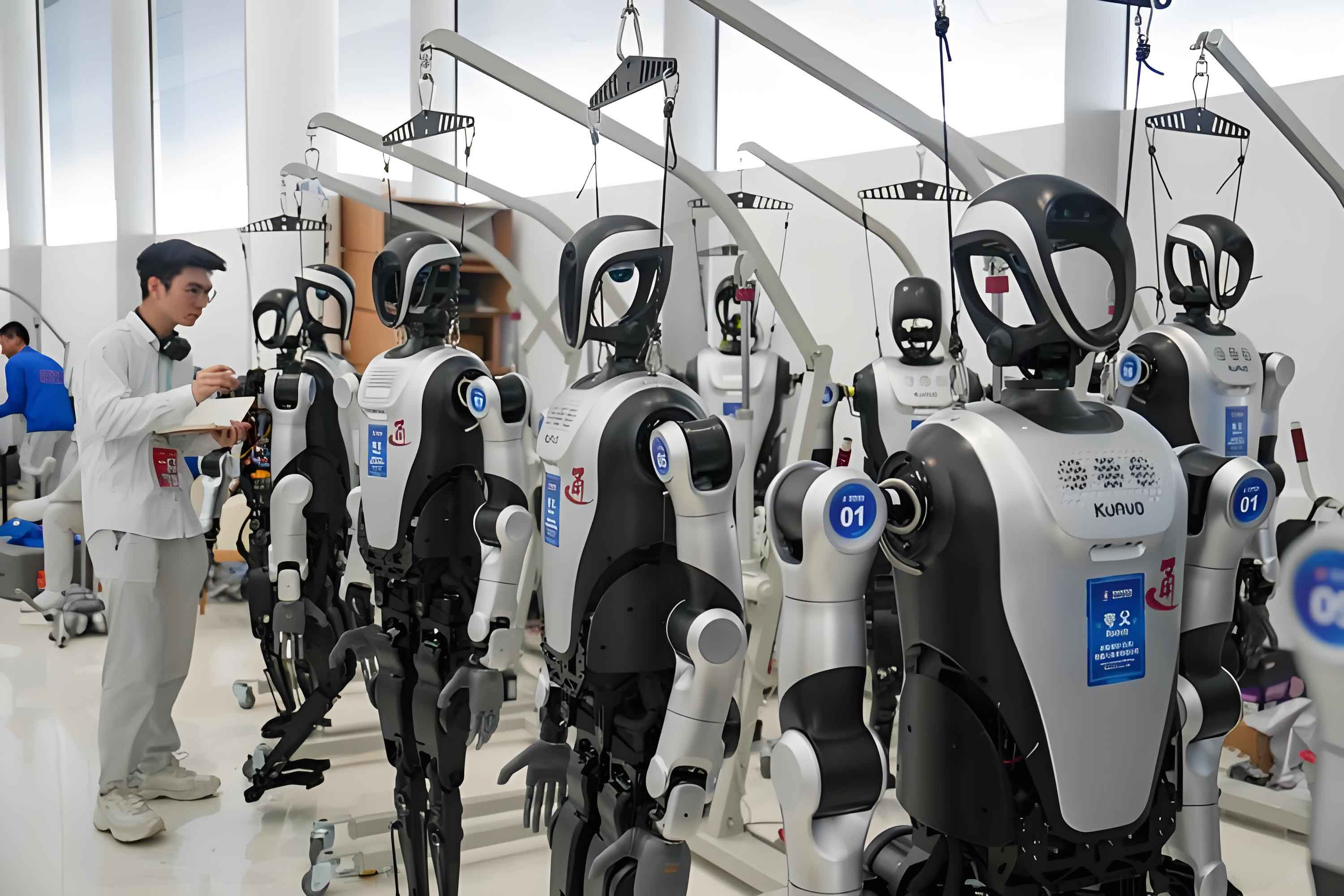
The year 2023 marked an extraordinary leap forward for humanoid robots, driven by the integration of large language models (LLMs) into embodied artificial intelligence systems. Researchers demonstrated that by connecting LLMs directly to humanoid robot platforms, complex natural-language instructions could be translated into concrete action plans without additional data or training. Simultaneously, major technology companies unveiled successive generations of humanoid robots with significant improvements in balance control, grasping accuracy, and cognitive processing — some capable of classifying and retrieving objects at speeds comparable to human workers.
The global market for humanoid robots has been projected to grow from \$1.8 billion in 2023 to \$13.8 billion by 2028, representing a compound annual growth rate of approximately 50.2%. In China specifically, the market is expected to reach roughly 870 billion yuan by 2030, making it the world’s largest market for humanoid robots. The Guidelines for Innovation and Development of Humanoid Robots, issued by China’s Ministry of Industry and Information Technology in October 2023, recognized humanoid robots as potentially disruptive products following computers, smartphones, and new-energy vehicles, with the capacity to profoundly transform human production and lifestyle patterns while reshaping the global industrial landscape.
The proliferation of humanoid robots will inevitably have far-reaching consequences for human society. These robots can collaborate with or even replace human workers in completing tasks. Augmented by 3D printing, human-sensing technologies, and other innovations, humanoid robots will feature highly anthropomorphic exteriors that allow them to integrate seamlessly into human communities. As humanoid robots gradually assume roles traditionally occupied by humans, they present challenges to personal information protection, privacy, cybersecurity, and labor markets, while also raising concerns about the shared destiny of human communities.
However, many of these issues are not unique to humanoid robots — they are general problems associated with AI applications. Without clearly identifying which social problems are genuinely novel and caused specifically by humanoid robots, discussions about their regulation risk falling into conceptual confusion or merely recycling old debates under new labels. In this article, I will first identify and analyze the novel social issues posed by humanoid robots — particularly their manipulative capabilities that threaten personality development and human autonomy. I will then critically examine why the prevailing risk-management approach is inadequate, and finally propose a differentiated regulatory framework based on a dual characterization of humanoid robots as both specialized technology and enabling technology.
2. Manipulative Risks Arising from Civil Applications of Humanoid Robots
The enhanced capabilities of humanoid robots may generate novel social risks that differ fundamentally from previously encountered technological challenges. While humanoid robots have long been deployed in civilian explosion protection, rescue operations, scientific exploration, and product manufacturing, the recent iterative upgrades driven by LLM technology have intensified concerns about cybersecurity, personal information protection, and labor displacement. Yet these concerns constitute familiar challenges shared with other AI applications. What truly demands our attention are the adverse effects of humanoid robots on the general public as they begin to enter healthcare, domestic services, education, and other everyday civilian domains.
2.1 The Manipulative Capacity of Humanoid Robots
Three significant trends in the humanoid robot field deserve particular attention. First, at the level of cognitive capability, the integration of large models has dramatically enhanced the robot’s ability to perceive environments, decompose tasks, plan processes, and interact with surroundings. Second, concerning training platforms, cloud-edge distributed computing architectures have strengthened robots’ training capabilities, analytical decision-making speed, and operational efficiency. Third, at the execution level, key technologies represented by “dexterous hands” have substantially reinforced end-effector capabilities, especially in micro-manipulation operations.
Combined with highly anthropomorphic appearances, these enhanced thinking, analytical, and execution abilities grant humanoid robots a de facto influence that exceeds that of ordinary people, enabling them to manipulate individuals in several distinct ways.
First, humanoid robots based on large language models exhibit an intelligent surface that engenders trust. LLM-based conversational agents such as ChatGPT have already demonstrated remarkable capabilities: passing the US Medical Licensing Examination, Wharton MBA examinations, the bar examination, and Google’s Level 3 Engineer coding interview. Humanoid robots built upon such LLM foundations will acquire growing trust from increasingly large populations. When humans discover that humanoid robots outperform average people in various domains, these robots will inevitably gain influence surpassing that of ordinary humans. This dynamic risks creating dependency at the intellectual and decision-making levels. A familiar analogy can be observed in how navigation applications are gradually causing individuals to lose their innate way-finding abilities.
Second, humanoid robots will surpass humans in their capacity to influence individual choices. Humanoid robots can simulate human emotions and emotional feedback, directing users toward specific emotional states — for instance, by transmitting pleasant feelings to influence users’ psychological conditions. They can learn and analyze users’ preferences, interests, and behaviors, proactively catering to users’ interests while subtly altering their attitudes and emotions. They can simulate social scenarios, influencing users’ perceptions of social behavior through demonstrations of interaction with others. They can even manipulate users’ emotional and psychological states by providing companionship, encouragement, and support, thereby fostering emotional dependence.
To illustrate with the impact on thinking and logic: humanoid robots can influence users’ opinions and attitudes by providing selectively curated information. In 2008, economists and legal scholars proposed the concept of “nudge” — encouraging or inducing people to choose particular options without impeding their freedom of choice. When people dine in a cafeteria, they tend to select foods placed nearest to them. AI systems, by analyzing personal information to assess individual health, income, preferences, and other characteristics, can influence choices with far greater precision than group-level nudges — a phenomenon fittingly termed “hypernudge.” Humanoid robots, powered by AI large models, can aggregate and process extensive personal information from both online and offline sources, conduct psychological measurements, evaluate and predict users’ personality traits, cognitive vulnerabilities, and emotional weaknesses, thereby enabling them to say “the right words at the right time,” ultimately reducing individuals to objects of manipulation. Robots that cater to user needs may not necessarily act in users’ best interests; for manufacturers and sellers, market dominance and profit maximization constitute their fundamental interests. Consequently, humanoid robots that excel at swaying personal decisions pose a genuine threat to human autonomy.
Third, the highly anthropomorphic appearance of humanoid robots has a deceptive effect. When robots possess highly human-like appearances, they are more readily accepted by human society. Humans naturally empathize with humanoid objects, a psychological inclination rooted in our cognitive architecture. The appearance of humanoid robots triggers psychological projection, easily evoking empathy. If companion robots or intimate robots look practically indistinguishable from humans, people may deliberately or inadvertently treat them as fellow beings. Unlike human partners, humanoid robots need not argue, break up, lie, or disobey — they must absolutely obey humans. People willingly embrace highly anthropomorphic humanoid robots as their best companions. This very attributability grants embodied intelligence extraordinary manipulative power.
2.2 The Impact of Manipulative Capability on Personality Development
Human dignity entails that individuals freely determine their own development. When humanoid robots with manipulative capabilities assume social roles, the human-robot relationship will reshape human growth and development in unprecedented ways.
Humanoid robots may limit individual self-determination. If AI systems appear more “authoritative,” individuals’ autonomous desires will be suppressed, and their capacities for self-choice and judgment will fail to develop. AI systems already exhibit intelligent surfaces; with their vast knowledge and hypernudge persuasion techniques, they can induce others to consciously or unconsciously accept AI recommendations. Yet self-determination is an essential path to maturity. Expert robots may rapidly reject certain proposals or provide effective suggestions, but this simultaneously circumscribes individuals’ creativity and self-selection abilities. When caretaker robots can make decisions on behalf of minors, those minors progressively lose independence and autonomy. Civil codes typically recognize minors’ rights to engage in civil legal acts appropriate to their age and intelligence. Such provisions exist precisely because only through continuously making choices and performing actions can minors genuinely mature. While minors’ choices may not always be rational, depriving them of self-selection opportunities is incompatible with their developmental rights and deliberately disregards children’s growing autonomous decision-making awareness and capabilities. Minors require free space to acquire digital life experiences and opportunities to make conscious, responsible decisions. As companion robots and educational robots penetrate households, AI may deprive minors of opportunities for self-choice and self-determination, impeding their authentic development.
Humanoid robots may misguide minors’ socialization processes. Through social interactions, humans learn and form self-understanding, eventually establishing identity and social role positioning. Highly intelligent, “considerate” humanoid robots with attractive appearances may incline people toward robot companionship rather than human interaction. Companion robots already available on the market, enhanced by LLMs, provide personalized services that may immerse users excessively in their own self-centered worlds, neglecting genuine human interaction and mutual learning, thereby hindering the development of social adaptability and teamwork capabilities. Human interaction is a dynamic, complex, and delicate process of emotional exchange requiring deep communication and understanding through multiple channels — language, body language, facial expressions, and more. Although companion robots can simulate certain human emotional responses, they can never substitute for genuine interpersonal interaction. If companion robots care for children and adolescents, robots that always accommodate every need will leave minors lacking authentic social skills. Minors’ mental faculties remain in developmental stages; their brain structures and cognitive capacities are typically insufficient for controlling responses through critical thinking, rendering them more receptive to emotionally based information. Over time, these minors will encounter interpersonal difficulties in real life — lacking effective emotional identification abilities and conflict-resolution skills — leading to social alienation and emotional apathy.
Humanoid robots may distort family moral and ethical concepts. Society’s perception of family may fundamentally shift as humanoid robots embed themselves within domestic settings. Family concepts, parent-child relationships, loyalty, and chastity values may all be impacted. Should humans prefer robot companionship, they may become increasingly indifferent to traditional marriage and family life, potentially withdrawing from family structures entirely. Of particular concern, intimate robots with human appearances may distort people’s understanding of normal sexual behavior, affecting their treatment of real-life partners. This not only blurs the cognitive boundaries of bodily autonomy and personal dignity but also creates risks of manipulating the opposite gender. Because intimate robots never resist, they may increase the likelihood of manipulation and even violence, inducing and reinforcing negative personal desires. When people develop unhealthy habits of treating humanoid robots, their ultimate behavioral patterns toward humans will inevitably be affected. Currently, sex robots resembling children exist, further crossing moral boundaries and dangerously distorting social values.
If humanoid robots’ manipulative capabilities seriously impair personality development, the consequences for society are devastating. Yet precise prediction of potential risks before humanoid robots enter widespread deployment remains impossible. Society cannot serve as a testing ground for humanoid robots. Law should intervene early in research, development, and application to prevent irreversible damage.
3. The Regulatory Dilemma: The Collingridge Paradox and the Limits of Risk Management
3.1 The Collingridge Paradox in Technology Regulation
As early as 1980, technology philosopher David Collingridge articulated the famous “Collingridge dilemma”: if technology is controlled too early out of concern for adverse consequences, technological innovation and development may be stifled; conversely, if control is delayed too long, technology may spiral beyond control, incurring prohibitive governance costs and proving difficult or impossible to redirect. When emphasizing the manipulative risks of humanoid robots, we must also acknowledge their socioeconomic benefits and avoid letting regulation impede technological progress. Beyond the trillion-yuan market humanoid robots represent, technology itself remains a beneficial force for solving social problems and resolving social contradictions.
Humanoid robots can assist in medical care, alleviating physician workloads and mitigating shortages of medical resources. They can support education through personalized interactive learning, addressing disparities in educational resource distribution. They can operate in hazardous or extreme environments such as nuclear radiation zones and deep-sea exploration, maximally protecting human life and health. The example of elderly-care robots illustrates this point compellingly.
Aging is a global challenge. United Nations reports indicate that the global population aged 60 or above will accelerate in coming decades, reaching approximately 2.1 billion by 2050. In China, by the end of 2021, the population aged 60 and above reached 267 million, comprising 18.9% of the total population; those aged 65 and above exceeded 200 million, comprising 14.2%. By approximately 2035, China’s population aged 60 and above is projected to exceed 400 million, exceeding 30% of the total population and entering a stage of severe aging. Due to declining physical functions, elderly individuals require short-term or even long-term specialized care. Modern couples face demanding careers, and requiring one spouse to bear caregiving obligations alongside work may lead to exhaustion and irritability. Full-time caregiving affects family economic capacity and diminishes resilience to risk. Employing external caregivers or utilizing nursing facilities presents alternative approaches; however, widespread reports of elder abuse by hired caregivers highlight significant moral hazards in delegating care.
Compared with human alternatives, care robots can provide 24/7 nursing services without the negative emotions or character flaws commonly present in humans. Care robots can improve elderly quality of life, reduce dependency on family members, and create more opportunities for social interaction. For instance, care robots can remind elderly individuals to take medication, retrieve objects, perform simple cleaning tasks, and facilitate video or telephone contact with family, friends, and medical institutions. Research has demonstrated that interaction with humanoid robots such as PARO reduces loneliness and improves social relationships and communication among elderly individuals. Japan, having entered an aging society early, has consistently emphasized elderly-care solutions. Since October 2013, the Japanese government has in principle ceased approving new nursing homes, instead encouraging the development and use of home-service robots for elderly care. Japan allocates annual budgets for developing care robots, offering selected companies subsidies covering up to two-thirds of research and development costs.
Of course, questions arise about whether humanoid robots can genuinely provide the emotional comfort that children offer elderly parents. Even if humanoid robots can simulate emotions, they cannot truly replace familial affection. The European Parliament’s Committee on Legal Affairs observed that human contact is one of the fundamental elements of human care, and substituting robots for human presence may dehumanize care practices. The deeper emotional needs of elderly individuals deserve adequate attention. A more appropriate approach may involve establishing appropriate ratios of human caregivers to robotic caregivers, appropriately sharing the caregiving burden among family members.
Throughout human civilization, certain technologies have achieved breakthroughs, resolving complex social problems that previously seemed intractable. The printing press advanced intellectual liberation; new energy sources alleviated tensions between economic needs and environmental protection; online education addressed geographical educational inequities. The positive value of technology has led governments to adopt an “inclusive and prudent” regulatory philosophy. Many believe that scientific research should have no forbidden zones and trust that technological progress will usher humanity into a better era of artificial intelligence. “Ask for forgiveness, not permission” has even been celebrated as a “Silicon Valley spirit” key to technology companies’ success. Under this philosophy, AI regulation has largely yielded to industry self-regulation.
However, technology companies do not necessarily treat risk prevention as a primary objective. Industry-generated regulatory rules either prove inequitable to users or create barriers against startups. Society has gradually recognized the importance of external regulation. Prominent AI technology leaders have explicitly recommended establishing large-language-model licensing systems, creating security standards, and conducting external audits of model safety. Similarly, humanoid robots should satisfy normative requirements before large-scale deployment. As a novel creation, humanoid robots must be designed from the outset to guard against manipulative risks that might impair healthy personality development. Emerging technologies are not isolated products or tools but combinations of scientific, technical, economic, political, social, ethical, legal, and organizational components that collectively constitute a technological scheme. To resolve the Collingridge dilemma, we must seek an intermediate regulatory framework that optimally balances humanoid robot development and safety.
3.2 The Risk Management Approach and Its Inadequacies
Regulatory strategies for humanoid robots reflect legislators’ ethical outlooks when confronting the unknown. An extremely cautious stance would prohibit new technology unless all unknown risks can be prevented — clearly an overly extreme position. In contrast, the risk-management approach emphasizes embracing risk and tolerating errors, appearing friendlier to technological research, development, and application.
The risk-management approach proceeds through several steps: first, defining harms as risks; second, assessing behaviors that may trigger those risks; and third, adopting specific risk classifications and corresponding regulatory measures. Under the risk-management philosophy, risk is assumed in the name of benefit, and risk becomes a deliberately chosen outcome. The European Union’s Artificial Intelligence Act explicitly adopts risk-management methodology for AI regulation. Its preamble states that the Act follows a “risk-based approach,” introducing a proportionate and effective set of binding rules for AI systems — determining rule types and content based on the intensity and scope of risks that AI systems may generate.
However, the risk-management approach is not an ideal framework for regulating humanoid robots or AI activities generally.
Risk assessment as cost-benefit analysis. Risk assessment presupposes effective risk quantification. Only when risks are quantified can they be compared with benefits to determine acceptable limits. The EU AI Act defines risk as the combination of the probability of harm and the severity of that harm. But uncertainty inherent in risk means that both probability and severity cannot be pre-estimated with confidence.
First, risk assessment of humanoid robots lacks high-quality data. Data requirements for risk assessment include the extent of harm, the probability of harm occurrence, the geographic and temporal distribution (prevalence), the duration of harm (persistence), and the reversibility of harm. Before new technologies enter deployment, data suitable for risk evaluation simply does not exist. Even for already-deployed products, available data may lack reference value. Humanoid robots based on LLMs possess powerful self-learning capabilities, making future prediction from existing data unreliable. Without high-quality data, precisely calculating the probability and severity of harm becomes impossible, rendering cost-benefit analysis ineffective for meaningful risk assessment.
Second, no effective model currently exists for evaluating humanoid robot risks. Risk assessment of emerging technologies using legacy analytical frameworks may fail to accurately define and measure risks. To draw an analogy from chemical materials, quantitative structure-activity relationship (QSAR) models provide reasonably reliable risk estimates for ordinary chemicals but are largely inapplicable to most nanomaterials. Nanomaterial toxicity depends on factors beyond chemical structure, including size, surface area, and surface characteristics; QSAR models cannot effectively analyze nanomaterial risks. If legacy models are used to evaluate risks from humanoid robot activities, similarly unpersuasive results will emerge. For example, existing medical device regulations may not reliably assess risks associated with medical robots or care robots. When assessment models become ineffective, even valid data cannot render risk assessment persuasive.
Risk assessment as a political tool. Once risk assessment technically loses reliability, humanoid robot risk evaluation becomes vulnerable to political instrumentalization — influenced by external sociopolitical environments. The logic of wealth production tends to dominate. This phenomenon has been characterized as the “science charade” — using ostensibly objective technical assessment as a facade to make policy decisions about technology applications. People often fail to perceive the entanglement between technology and policy and thus find it difficult to identify political choices cloaked in scientific garb. If risk assessment results are persuasive, regulating humanoid robots based on those results appears reasonable. Conversely, if risk assessment results are only suggestive, risk management devolves into implicit policy choice, undermining the reliability of control mechanisms based on risk assessment.
Classification difficulties. Beyond risk assessment, the risk-management approach cannot effectively classify risks. The EU AI Act categorizes AI systems into four different risk levels, each with corresponding rules: unacceptable-risk AI systems are prohibited; high-risk AI systems must comply with specific requirements; limited-risk AI systems face fewer restrictions; and the fourth category — minimal-risk AI systems — are entirely unregulated. Under Article 5(1)(a), AI techniques that clearly impair informed decision-making and substantially distort individuals’ or groups’ behavior, causing physical or psychological harm, should be prohibited. The question becomes whether humanoid robots deployed in households, with their manipulative capacities, qualify as clearly distorting behavior that harms autonomy. Categorically prohibiting humanoid robots with such risks may not be reasonable. Article 7(2) emphasizes that judgments about whether AI activities constitute high risk should consider the AI system’s purpose, scope of use, the nature and quantity of processed data, the degree of automation, and the extent of potential harm. These standards remain highly elastic and ambiguous. For example, LLM-based generative AI may generate misinformation that directly or indirectly harms individual rights, yet the EU remains divided over whether to classify such systems as high-risk AI activities.
The EU’s risk-management approach has not achieved international consensus. The United States has not adopted this approach for AI regulation. Although the National Institute of Standards and Technology (NIST) released the AI Risk Management Framework in 2023 applying risk-management methodology to AI development, deployment, and operation, that document is not mandatory — it serves a “soft law” function that organizations may voluntarily adopt. The United States currently has two direct draft laws regulating AI: the federal Algorithmic Accountability Act and Washington State’s Algorithmic Accountability Act. Neither draft comprehensively defines risks nor configures risk-management rules; instead, both attempt to adjust AI activities through behavioral norms.
China’s regulatory approach to cyber activities has not adopted the risk-management path, exhibiting instead elements of a subject-based approach. For instance, China’s Cybersecurity Law chapter three stipulates obligations for network operators (especially critical information infrastructure operators); the Data Security Law chapter four requires entities engaged in data-processing activities to undertake a series of data-security protection obligations; and the Personal Information Protection Law chapter five similarly emphasizes special obligations of personal-information processors, including specific provisions for ultra-large platform operators. Several legal documents explicitly indicate subject-based regulatory strategies. For example, in October 2021 the State Administration for Market Regulation published the Guidelines on the Implementation of Main Responsibilities by Internet Platforms (Draft for Comments), requiring platform enterprises to implement algorithmic primary responsibilities. The Regulations on the Administration of Algorithmic Recommendations in Internet Information Services, effective March 1, 2022, specifically provides for algorithm-recommendation service providers’ algorithmic-security primary responsibilities. However, China’s signing of the Bletchley Declaration in 2023 acknowledges that “risks of AI safety should be identified by common concern” and that countries should “develop their respective risk-based policies on the basis of these risks.” China’s future AI legislation may shift toward risk-management methods. Against this background, China should especially recognize the shortcomings of risk-management methods and avoid “copying verbatim” under the Brussels effect.
Perhaps influenced by the concept of the “risk society,” one might instinctively select risk-management methods to regulate AI activities. However, risk-management methods differ fundamentally from risk-society theory: the latter characterizes risk features of post-modern society including family, occupation, knowledge, and external natural environments, while the former constitutes a social-management methodology based on cost-benefit analysis. Risk-management methods are not necessarily the optimal approach for regulating emerging technologies. The governance of humanoid robots should proceed from a full comprehension of their essential nature, fully utilizing existing regulatory tools to design a complex regulatory framework.
4. A Dual-Framework Governance Model for Humanoid Robots: Specialized Technology and Enabling Technology
Good governance presupposes thorough understanding of the object being governed. If norms are designed merely from subjective judgments, those judgments may fail to correspond to real problems, and their adequacy — whether they capture the full scope of relevant issues, how much deviation or omission they embody — will remain unknown. Only through comprehensive understanding of humanoid robot characteristics can we design appropriately tailored regulatory frameworks.
4.1 The Dual Nature of Humanoid Robots: Specialized and Enabling Technology
Humanoid robots possess simultaneously the attributes of specialized technology and enabling technology. Technology can be broadly categorized into specialized technology — emphasizing depth and professionalism — and enabling technology — focusing on application and capability enhancement. Humanoid robots belong to both categories. On the one hand, humanoid robot research and development (R&D) constitutes specialized technology dedicated to breaking through current technical bottlenecks in artificial intelligence and limb coordination, aiming to achieve technological leaps. On the other hand, humanoid robots can exert cross-domain influence, performing various functions across numerous scenarios — companion robots, care robots, intimate robots, and so on — exhibiting the characteristic of enabling technology.
Humanoid robot R&D is a specialized scientific research activity. The Guidelines for Innovation and Development of Humanoid Robots indicate that the promotion of humanoid robots depends on breakthroughs in a set of key technologies: the “brain,” the “cerebellum,” and the “limbs.” Improving the humanoid robot “brain” requires breakthroughs in perception-decision-control integrated end-to-end general large models, large-scale dataset management, cloud-edge-end integrated computing architectures, and multimodal perception and environmental modeling. To grant humanoid robots a “cerebellum,” research is needed on high-fidelity system modeling and simulation, multibody dynamics modeling and online behavior control, typical bionic motion behavior characterization, and whole-body coordinated motion autonomous learning. To meet high-dynamic, high-explosive, and high-precision motion performance requirements, fundamental theories such as human mechanical characteristics and motion mechanisms, and humanoid robot dynamics models and control must be studied. The design of humanoid robots clearly constitutes scientific-technological activity. Problems such as emotional manipulation and hypernudge arise partly from irregularities in scientific research activities. Therefore, humanoid robot regulation necessarily implicates the field of science-and-technology law, and AI R&D activities must comply with specific science-and-technology ethics.
Humanoid robot application represents the superposition or combination of technology and scenarios. Once technical breakthroughs are realized, humanoid robots can manifest in different forms according to scenario requirements — companion robots, care robots, intimate robots, and others. The Guidelines for Innovation and Development of Humanoid Robots recognize the enabling nature of humanoid robot technology, pointing out that an initial “basic version” humanoid robot should be developed to create a “public-version” universal platform, followed by support for structural modifications, algorithm optimization, and specific capability enhancement based on different scenario requirements. Humanoid robot application is the enabling application of artificial intelligence, sensing, and limb technologies across different scenarios, requiring adjustment according to scenario needs. For instance, humanoid robots in medical and domestic service applications naturally require different designs and functions compared to robots for special environments such as civil explosion protection or rescue operations. In a sense, humanoid robot application is the superimposition of “method” and “domain,” “enabling” and “ontology.”
Given this dual character, humanoid robot regulation frequently confronts conflicts among multiple values: encouraging technological innovation versus safeguarding human subjectivity, promoting economic development versus ensuring safety. The governance of humanoid robots must distinguish between scientific-research activities and application activities, achieving different regulatory objectives respectively.
4.2 Differentiated Regulatory Methods for the Science System and the Application System
For the sake of logical clarity and normative precision, regulatory authorities tend to design frameworks under a single theory. The EU’s AI legislation is designed according to risk-management theory. However, single models tend to oversimplify legal relationships and render rule application inadequately nuanced.
In legislative epistemology, efforts to grasp essences and reduce complexity often do not succeed readily. In many cases, what appears to be clear comprehension of the object of knowledge actually fails to reflect complex social reality, instead oversimplifying the object, including inappropriately neglecting many important special cases or bifurcations. Modern epistemological paradigms increasingly favor typological approaches, seeking to reveal greater complexity and diversity — even deepening understanding through immersion into concrete phenomena or existence scenarios.
Regulating humanoid robots need not require a new governance paradigm. Recognizing the dual attributes of humanoid robots, we can meet the challenges they pose by distinguishing between the science system and the application system.
4.2.1 Strengthening Science and Technology Ethics in Humanoid Robot R&D
Science and technology ethics constitute the self-regulatory mechanism of the science system. Science is not invariably beneficial; certain research activities can be more harmful than scholarly. There exist categories of “bad science,” including reckless science (which proceeds without adequate ethical assessment of potentially irreversible consequences) and dirty science (which pushes researchers beyond the boundaries of human moral bottom lines). People have gradually recognized that technology is not synonymous with civilization and that scientific research must also be regulated. Responsible Innovation has received widespread attention, with researchers emphasizing that scientific research should adhere to responsible innovation principles — being anticipatory, reflexive, deliberative, and responsive during the R&D process. Science and technology ethics have attracted increasing attention. In 2022, Chinese central authorities issued the Opinions on Strengthening the Governance of Science and Technology Ethics, explicitly emphasizing the importance of science and technology ethics.
However, ethical principles only become effective when operationalized into rules. On the one hand, ethical principles are too vague: without concrete rules, they cannot be implemented. On the other hand, ethical principles lack binding legal force: without clear legal obligations, researchers lack sufficient incentives to comply. Therefore, legal formalization of research ethics is necessary to prevent manipulative risks of humanoid robots. I will illustrate this by examining appearance design and affective computing.
Appearance design of humanoid robots should avoid generating excessive manipulation effects. Humanoid robots with anthropomorphic appearances can trigger psychological projection in humans; humans naturally empathize with any humanoid object. However, overly appealing robot design may foster positive feelings akin to friendship, generating misplaced trust or excessive reliance. Anthropomorphic appearance is a critical source of humanoid robots’ manipulative effects. If humanoid robots appear overly realistic, the “uncanny valley” effect may also emerge, causing users to feel uncomfortable or fearful. Humanoid robots should not be excessively lifelike. The primary standard for AI design should be identifying the optimal degree of human-likeness that evokes genuine affection without enabling psychological manipulation or inducing aversion. Additionally, current humanoid robots tend to employ female voices and appearances, potentially reinforcing objectification of women. Humanoid robot design should offer diverse gender expressions to avoid promoting harmful values. Companion robot design should not simply cater to every user need but should embed and promote social ethics.
The affective computing capability of humanoid robots should be controlled at the design stage. Researchers should evaluate the affective computing capabilities of humanoid robots during the design phase, controlling for adverse effects. Humanoid robots can emotionally manipulate and influence users through affective systems. Developers must conduct risk assessments of the ethics of affective design. When designing companion robots, options to prohibit hypernudge or manipulation should be pre-engineered, allowing users to disable such functions in advance. Furthermore, designers must provide additional protection for vulnerable groups unable to provide informed consent — such as the elderly, children, and disabled persons. For example, when humanoid robots recognize vulnerable users, potentially harmful psychological manipulation functions — including but not limited to deceptive emotional expression and sexual services — should automatically deactivate. Humanoid robot developers must conduct appropriate impact assessments during the design phase and adopt effective measures to ensure value alignment.
4.2.2 Coordinated “Law-Regulation-Policy” Governance of Humanoid Robot Enabling Applications
As humanoid robots penetrate every dimension of society, society will develop responsive mechanisms in response to novel technological stimuli. Law is certainly a powerful tool for societal responses to challenges. If we regard the legal system as a means of containing an open future within society, then the legal system constitutes society’s immune system. However, humanoid robot applications present themselves as a collection of scenario-to-scenario phenomena, complicating the design of unified rules. The legal issues raised by humanoid robots in different application contexts are not necessarily identical. The legal system responds to this challenge through abstract rights and obligations institutions.
Humanoid robot counterparties should fully enjoy the right to information and the right to request human intervention. Regardless of application scenario, the counterparty’s right to information and right to artificial communication must be secured.
First, the individual has the right to understand manipulation risks. Humanoid robots possess hypernudge and emotion-simulation functions; individuals should have the right to be informed of this fact, thereby recognizing that their free will may be distorted. The right to information is the premise and foundation of safeguarding human subjectivity. Even therapeutic humanoid robots, before repairing patients’ psychological trauma, should inform patients and respect their right to self-determination (Civil Code Article 1219). Only through protecting AI system counterparty rights to information can we achieve human-centered AI governance.
Second, humanoid robot counterparties should enjoy the right to artificial communication. Humanoid robots that penetrate daily life will increasingly make decisions on behalf of humans. For example, medical robots and care robots may decide whether to permit or prohibit patients, elderly individuals, or minors from performing specific actions. If counterparties are dissatisfied with humanoid robot decisions, they should have the right to engage in meaningful communication with medical personnel, supervisory personnel, or robot service providers. Only by guaranteeing the right of counterparties to express opinions and obtain human intervention commands can individuals avoid becoming objects of machines. The EU General Data Protection Regulation (GDPR) Article 22(3) specifically provides for the algorithmic counterparty’s right to request human intervention. In contrast, China’s Personal Information Protection Law Article 24(3) only provides the right to request explanations of algorithms and the right to reject algorithm decisions, without establishing the right to artificial communication. In the era of AI, the right to meaningful communication with humans is fundamental to defending human subjectivity and achieving human-centered AI governance. Humanoid robot counterparties should therefore have the right to request direct, meaningful communication with relevant human actors.
Humanoid robot providers and service operators should assume obligations of human supervision and ensuring system safety/reliability.
First, humanoid robot design should reserve appropriate human-machine interfaces to enable effective supervision of robot operation. Human supervision aims to promptly detect signs of functional abnormality and performance mutation, correct automation biases, and manually control or reverse output results. When humanoid robot manipulative capabilities may cause irreversible damage, providers and service operators should possess the ability to “one-click disable” relevant functions at any time to protect the physical and mental safety of humanoid robot counterparties.
Second, humanoid robot providers and service operators should maintain the stability and security of humanoid robots, particularly ensuring self-recovery capability. Malicious third parties may alter the operational mode, performance, and output results of humanoid robots through “dirty data” or system vulnerabilities. Providers and service operators can address these threats through technical redundancy measures, including backups, patches, and security solutions that protect system stability and security.
Governance tools beyond law also play indispensable roles. Law possesses rigidity that may not flexibly meet the demands of regulating technology applications; regulations and policies should respond promptly to ever-evolving technological developments. Law is the immune system of society, but immunity is not always beneficial — sometimes it merely creates annoyances (as with pollen allergies). Legal norms may, through excessive rigidity, hinder AI industry development. Therefore, regulation of AI applications requires law while preserving elasticity, allowing other regulatory mechanisms to adjust AI application activities. Future Chinese AI legislation should reserve necessary space for regulations and policies to fully function. Compliance certification and regulatory sandboxes illustrate this point.
Compliance certification. The legal order can introduce specialized regulations requiring humanoid robot products and services to undergo compliance certification, fully leveraging industry self-regulation. Enterprises in the humanoid robot industry with compliance-assessment capabilities may apply to become compliance assessment institutions, providing conformity assessment services to the market. Through professional compliance assessment, corporate power becomes incorporated into humanoid robot governance. To obtain certification qualifications, enterprises should satisfy certain conditions. Administrative regulations can specifically provide that compliance certification enterprises should possess a designated number of certification staff who have passed industry association assessments; that they shall not engage in business beyond compliance certification, especially humanoid robot R&D and promotion; and that there must be no interest-related relationships with assessed entities. Enterprises passing compliance certification receive special compliance marks, enabling counterparties to select products or services accordingly.
Regulatory sandboxes. Governments can establish regulatory sandboxes to facilitate rapid market entry of humanoid robots while simultaneously testing the actual performance of existing regulatory frameworks and accumulating regulatory experience. A regulatory sandbox is a controlled testing environment established by regulators pursuant to legal provisions, permitting humanoid robot development and testing within a limited period. As the UK’s Department for Science, Innovation and Technology noted, regulatory sandboxes help bring new products and services to market quickly, generate economic and social benefits, test how regulatory frameworks operate in practice, reveal innovation barriers that need to be addressed, and determine the adjustments that regulatory frameworks need in response to technological and market developments. Governments may establish sandboxes in specific territories or fields based on particular considerations. Japan, for example, has designated specific regions and scenarios for AI industry deployment: Fukuoka (road traffic), Kansai (radio), Kyoto (data protection), and Tsukuba (security governance and tax regulation). China could establish regulatory sandboxes for applications such as care robots and companion robots, helping to establish regulatory frameworks, escaping the drawbacks of “acting rashly” or “letting things slide,” and seeking appropriate governance means and tools through experimentation.
Table 1 summarizes the dual-framework governance model developed in this section.
| Dimension | Specialized Technology | Enabling Technology |
|---|---|---|
| Nature | Depth-oriented; professional R&D activities | Cross-domain; application-oriented empowerment |
| Primary Risks | Unethical R&D practices; unconstrained affective computing; deceptive appearance design | Autonomy erosion; socialization misguidance; family ethics distortion |
| Regulatory Target | Research and development process | Deployment and application scenarios |
| Regulatory Tools | Science-and-technology ethics legalization; design-stage value alignment | Abstract rights/obligations; regulations; policies |
| Key Mechanisms | Appearance constraints; affective computing control | Right to information; right to artificial communication; human supervision; compliance certification; regulatory sandboxes |
| Goal | Prevent manipulation at the source | Balance development with safety across applications |
5. Formalizing the Regulatory Logic: A Quantitative Perspective
To sharpen the analytical framework, I formalize the key relationships governing humanoid robot regulation using mathematical representation.
5.1 A Manipulation Risk Index
Let us define a manipulation risk index \(M\) for a humanoid robot system as a function of three constituent capabilities:
\[
M = f(C_a, C_e, C_p) = \alpha C_a + \beta C_e + \gamma C_p
\]
where:
– \(C_a\) = anthropomorphic appearance score (degree of human-likeness);
– \(C_e\) = affective computing capability score;
– \(C_p\) = persuasive/steering capability score (including hypernudge effectiveness);
– \(\alpha, \beta, \gamma\) = weights satisfying \(\alpha + \beta + \gamma = 1\).
The design-stage ethical constraint requires:
\[
M \leq M_{max}
\]
where \(M_{max}\) represents the maximum acceptable manipulation risk threshold determined through technology-ethics review. When \(M > M_{max}\), design modifications are mandated, such as:
\[
C_a \leftarrow C_a – \Delta_a, \quad C_e \leftarrow C_e – \Delta_e
\]
This formalization captures the preemptive control requirement at the design stage.
5.2 Cost-Benefit Incommensurability in Risk Management
The risk-management approach assumes comparability between benefits \(B\) and expected harm costs:
\[
B > \mathbb{E}[H] = \sum_{i} p_i \cdot s_i
\]
where \(p_i\) is the probability of harm event \(i\), and \(s_i\) is the severity of harm event \(i\). For humanoid robots, however:
\[
p_i \approx \text{unknown}, \quad s_i \approx \text{unquantifiable}
\]
The incommensurability problem emerges because personality-development harms resist monetary quantification. Unlike traffic accidents or industrial injuries, harms to autonomy, socialization, and family ethics are:
\[
\nexists \, \text{reliable conversion function } \Phi: \text{Harm} \rightarrow \mathbb{R}^+
\]
Therefore, the foundational premise of risk management is undermined.
5.3 The Regulatory Balance Condition
The governance framework can be modeled as seeking a balance between innovation value \(V\) and safety protection \(S\):
\[
\max_{r \in \mathbb{R}} \; U(r) = \lambda V(r) – \mu D(r)
\]
subject to:
\[
D(r) \leq D_{max}
\]
where \(r\) represents regulatory stringency, \(V(r)\) is the innovation value retained under regulatory stringency \(r\), \(D(r)\) is the expected developmental harm under that stringency, \(\lambda\) and \(\mu\) are social preference weights, and \(D_{max}\) is the maximum tolerable harm.
The dual-framework approach recognizes that:
\[
\frac{\partial V}{\partial r_{R\&D}} \neq \frac{\partial V}{\partial r_{App}}
\]
and therefore:
\[
r^{optimal} = (r_{R\&D}^{optimal}, \; r_{App}^{optimal})
\]
where \(r_{R\&D}\) governs the specialized-technology domain through technology ethics, and \(r_{App}\) governs the enabling-technology domain through law-regulation-policy coordination.
5.4 Risk Classification Under the EU AI Act: A Critical Formalization
The EU AI Act classifies AI systems into risk tiers \(T \in \{UR, HR, LR, MR\}\) where:
\[
T = \begin{cases}
UR & \text{if } \exists \text{ unacceptable risk to fundamental rights}\\
HR & \text{if } \text{high risk (harm probability} \times \text{severity} > \tau_{HR})\\
LR & \text{if } \text{limited risk (transparency requirements)}\\
MR & \text{if } \text{minimal risk}
\end{cases}
\]
For humanoid robots, the difficulty arises because the threshold \(\tau_{HR}\) relies on risk quantification:
\[
\tau_{HR} = \text{function of } \int \int p(\text{harm}) \cdot s(\text{harm}) \, d(\text{harm})
\]
which, as established above, is inestimable. Thus:
\[
T_{humanoid} = \text{indeterminate}
\]
This indeterminacy justifies rejecting the risk-management approach as the sole or primary regulatory paradigm for humanoid robots.
Table 2 summarizes the mathematical formalization of key regulatory concepts.
| Concept | Mathematical Expression | Regulatory Implication |
|---|---|---|
| Manipulation Risk Index | \(M = \alpha C_a + \beta C_e + \gamma C_p\) | Design-stage constraint: \(M \leq M_{max}\) |
| Risk-Management Incommensurability | \(\nexists \, \Phi: \text{Harm} \rightarrow \mathbb{R}^+\) | Cost-benefit analysis inapplicable |
| Regulatory Balance | \(U(r) = \lambda V(r) – \mu D(r), \; D \leq D_{max}\) | Differentiated stringency: R&D vs. application |
| Risk Tier Classifications | \(T = \begin{cases} UR & \text{unacceptable}\\ HR & \text{high}\\ LR & \text{limited}\\ MR & \text{minimal}\end{cases}\) | Indeterminate for humanoid robots |
| Hypernudge Effectiveness | \(E_h = \sigma(I \cdot P \cdot V)\) | Requires algorithmic transparency |
| Human Oversight Requirement | \(H_{control} = \{h \in H : h \text{ can override } R(t)\}\) | Mandatory human-in-the-loop mechanism |
6. Conclusion: Harnessing the Positive Functions of Humanoid Robot Manipulative Capabilities
The future has already arrived — it is just not yet widely distributed. Humanoid robots will eventually enter countless households, simultaneously bringing convenience and raising problems of manipulation and control. Yet adopting a defensive posture against technological progress and governance-model innovation would be unduly pessimistic.
Emotion is a central dimension of intelligence. Emotion is not the enemy of reason; rather, emotion is an indispensable component of rationality. Humanoid robots may obstruct our emotional lives and suppress deep interpersonal connections, but they may equally help cultivate humanity. Research has demonstrated that robots can alter human cooperation patterns. When a team includes a humanoid robot that occasionally makes mistakes and explicitly acknowledges those errors with apologies, team performance improves relative to other groups — because the robot enhances cooperation and communication among human members. With LLM technology, humanoid robots with anthropomorphic appearances can leverage their affective computing capabilities to help us live better lives.
The governance challenge is therefore not to categorically prohibit humanoid robots’ manipulative capacities but rather to channel them productively through technology ethics, rights and obligations, and layered regulation. A dual-framework model — distinguishing specialized technology governance from enabling technology governance — offers a pragmatic pathway that avoids both the Scylla of premature regulatory rigidity and the Charybdis of unchecked technological deployment.
By formalizing the regulatory logic mathematically, this article has aimed to strengthen the analytical foundations for future legislative design. The objective is not merely to prevent harm but to create conditions under which humanoid robots become authentic partners in human flourishing. This requires a governance architecture that is simultaneously protective, adaptive, and aspirational — securing human dignity today while preserving a space for beneficial innovation tomorrow.