
The rapid rise of the humanoid robot has moved public attention beyond the laboratory and into everyday social and industrial life. As the humanoid robot becomes more visible in sports events, manufacturing trials, international exhibitions, educational programs, and public-interest initiatives, public relations has emerged as a critical bridge between technical progress and public understanding. The humanoid robot industry is no longer judged only by mechanical capability, motion control, or software performance. It is also judged by whether the public can trust the technology, understand its social value, and imagine a constructive role for the humanoid robot in workplaces, homes, schools, hospitals, and public spaces.
For companies and institutions working in this field, public relations is not a decorative layer added after engineering is complete. It is a strategic function that helps translate complex capabilities into credible narratives, converts technical demonstrations into social meaning, and creates the conditions for collaboration across industry, academia, government, and civil society. The public relations experience of the humanoid robot sector shows that carefully designed communication can reduce anxiety, strengthen brand positioning, support ecosystem building, and prepare the market for commercial adoption.
The 2025 Beijing Yizhuang Half Marathon and Humanoid Robot Half Marathon offered a vivid example of how public attention around the humanoid robot can be shaped. The event drew widespread interest not only because it displayed motion and endurance, but also because it placed the humanoid robot in a public, emotionally engaging setting. When a humanoid robot experienced a technical issue and continued running after its head detached, public relations teams quickly reframed the moment. Rather than allowing the incident to be interpreted only as a failure, they emphasized resilience and the “romance of mechanical life.” The narrative shift helped transform a potentially negative event into a discussion about the character and charm of the humanoid robot, while also easing public concern about technical risk. The episode illustrates a broader principle: public relations can help the humanoid robot industry move from technology-driven communication toward value-driven communication.
-
Public Relations as the Trust Layer for Humanoid Robot Adoption
The humanoid robot often attracts attention because it resembles the human form. That resemblance can create fascination, but it can also trigger caution. Public concerns about the “uncanny valley effect,” privacy, safety, employment impact, and ethical boundaries are real challenges for the humanoid robot industry. Public relations cannot make these concerns disappear through slogans alone. It must create contexts in which the public can see the humanoid robot in a more complete light: as a product of engineering, as a tool for human benefit, as a subject of responsible governance, and as a technology whose development depends on public dialogue.
Story-driven communication has become one of the most effective ways to address this challenge. Instead of presenting the humanoid robot only through specifications, companies can explain why a capability matters, who it may help, and what kind of future it is intended to support. The marathon case demonstrated how a public relations team can respond quickly when an unexpected event occurs. By framing the humanoid robot’s continued movement as an expression of persistence, the team gave the public a human-readable narrative. The response did not hide the technical issue. It redirected attention toward the humanoid robot’s perceived character and the broader spirit of innovation. This kind of narrative work is especially important for a technology that is often viewed through the lens of risk.
The trust layer for the humanoid robot is built through repetition and consistency. A single event can generate attention, but sustained public relations work is required to build confidence. Companies need to explain how the humanoid robot is tested, where it is deployed, what safeguards are in place, and how human oversight is maintained. They also need to show that the humanoid robot is being developed with input from ethicists, researchers, workers, users, and communities. When public relations helps the humanoid robot industry communicate transparently, it supports acceptance and reduces the likelihood that misunderstanding will harden into opposition.
The humanoid robot sector also benefits when public relations treats the public as a partner in sense-making rather than as a passive audience. Questions about the humanoid robot are legitimate. They deserve serious answers. Communication that acknowledges uncertainty and explains the path of development can be more credible than overly polished claims. For the humanoid robot industry, credibility is a strategic asset. It influences investment, regulation, talent recruitment, customer adoption, and the willingness of partners to collaborate.
-
Scenario-Based Demonstrations and Brand Value for Humanoid Robot Enterprises
Scenario-based demonstrations have become a central public relations method for the humanoid robot industry. Technical parameters such as walking speed, joint flexibility, dexterity, battery life, and control accuracy are important, but they are not always meaningful to general audiences. Public relations can translate those capabilities into concrete social and economic value by showing the humanoid robot in real or realistic settings. When audiences see a humanoid robot performing a task, the technology becomes easier to understand and evaluate.
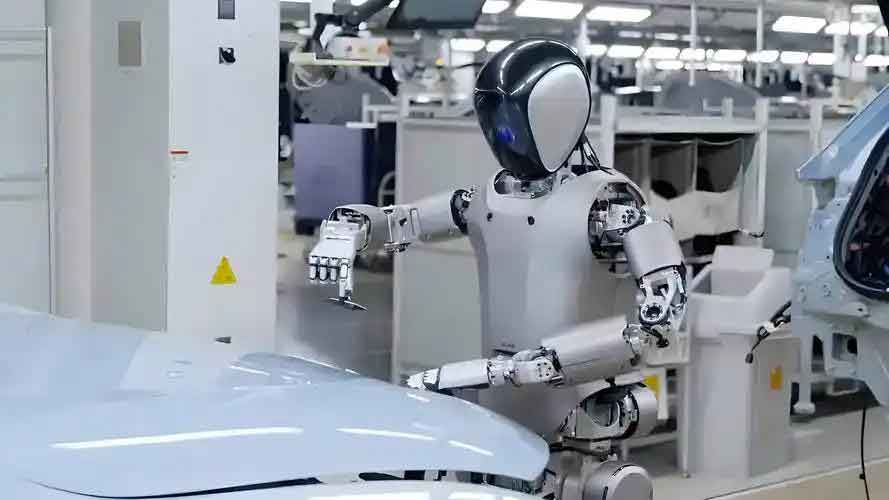
The industrial deployment of UBTECH’s Walker S humanoid robot in automotive manufacturing training provided a strong example. The video communication around the humanoid robot did more than show motion. It demonstrated that the humanoid robot could be relevant to industrial work and helped reinforce the company’s positioning as a pioneer in intelligent manufacturing. For industrial audiences, the message was about practicality and integration. For general audiences, the message was about the humanoid robot entering productive environments. For partners and investors, the message was about commercial potential. A single scenario can therefore serve multiple public relations objectives while keeping the humanoid robot at the center of the narrative.
International exhibitions and industry events also play a major role in humanoid robot public relations. In Shanghai, the World Artificial Intelligence Conference and similar international platforms have created spaces for dialogue among researchers, developers, companies, and policymakers. The display of the “Qinglong” open-source humanoid robot, combined with a public relations communication matrix, helped attract global developer attention and supported a cycle of “technology showcase and ecosystem co-creation.” The humanoid robot was presented not as an isolated machine but as part of an open innovation environment. This kind of scenario-based communication can turn technical strength into industry appeal and give the humanoid robot a clearer path from laboratory research toward commercial application.
Brand value for the humanoid robot is strengthened when public relations connects technical capability with a memorable identity. A company may be known for agility, safety, intelligence, affordability, openness, or human-centered design. But that identity must be demonstrated repeatedly across events, media, social platforms, and partner activities. The humanoid robot is a complex product, and its brand meaning is shaped by many small signals: how it moves, how it interacts, how it is presented, how failures are handled, and how its benefits are explained. Scenario-based public relations gives the humanoid robot industry a way to manage those signals coherently.
-
Ecosystem Diplomacy: Public Relations and Humanoid Robot Industry Collaboration
The humanoid robot industry depends on collaboration across the value chain. Hardware suppliers, software developers, artificial intelligence researchers, sensor specialists, manufacturers, universities, regulators, and end users all contribute to the development of the humanoid robot. Public relations can act as ecosystem diplomacy by organizing summits, seminars, partnership meetings, and technical exchange platforms. These activities do more than generate publicity. They create the social and professional connections that allow the humanoid robot sector to mature.
The China Humanoid Robot Industry Alliance conference illustrated how a public relations platform can bring together government, industry, academia, and research institutions. By discussing technical innovation and scenario deployment, the conference created a space for ideas to collide and for priorities to be shared. For the humanoid robot industry, such events help align expectations and reduce fragmentation. They also signal to external audiences that the sector is organized, serious, and capable of collective action.
The Beijing Humanoid Robot Innovation Center, described as a national and local joint innovation center for embodied intelligent robots, has used seminars and workshops to encourage universities and research institutes to share progress in sensors, algorithms, and related technologies while allowing enterprises to communicate market needs. This two-way exchange accelerates the translation of research into application. Public relations supports this process by giving visibility to collaborative achievements and by framing the humanoid robot as a shared platform rather than a single company’s product.
Ecosystem public relations also helps the humanoid robot industry speak to policymakers and the public with a more unified voice. When multiple stakeholders explain the benefits, limits, and governance needs of the humanoid robot, the public receives a richer picture. This can reduce polarization and create room for constructive regulation. The humanoid robot is too complex to be developed in isolation. Public relations can help build the trust networks that innovation requires.
-
Content Creation and Public Understanding of Humanoid Robot Technology
Content creation is one of the most direct ways to improve public understanding of the humanoid robot. Companies and research institutions can produce professional yet accessible articles, high-quality videos, explanatory graphics, and creative comics that introduce the principles, application scenarios, and development trends of the humanoid robot. The goal is not to overwhelm audiences with engineering detail, but to give them clear mental models. When people understand how a humanoid robot perceives its environment, controls its movement, or collaborates with humans, they are better prepared to evaluate claims and participate in public discussion.
High-visibility content can have a powerful effect. Boston Dynamics’ videos of its humanoid robot and related robotic systems have attracted global audiences by showing remarkable movement ability and flexibility. The public relations value of such content lies in its ability to make advanced technology visible and discussable. The humanoid robot becomes a topic of conversation across media, social platforms, classrooms, and workplaces. For the humanoid robot industry, this kind of content helps expand the audience beyond specialists and creates a broader cultural context for innovation.
High-exposure events and cultural scenarios are also effective for humanoid robot communication. Sports events, festivals, television programs, and art performances can place the humanoid robot in front of audiences who may not follow technology news. The appearance of Zhongqing Robot’s SE01 humanoid robot in a CCTV New Year’s Eve performance, described as a dance within a “blue light tunnel,” showed how artistic expression can reshape public perception. The precise rhythm of the mechanical movement, combined with light and stage design, helped break the stereotype of the humanoid robot as merely a tool. It constructed a more emotional image of the humanoid robot as a future artistic partner and created a two-way connection between technical communication and emotional resonance.
Content for the humanoid robot should be designed for different levels of audience knowledge. Some viewers want to understand the engineering; others want to know how the humanoid robot may affect daily life; still others are interested in ethics, safety, or business. A layered content strategy allows the humanoid robot industry to serve all these audiences without reducing every message to the same format. Public relations teams can develop deep technical explainers, short social videos, interactive web features, classroom materials, and public exhibition guides. Each format can strengthen a different dimension of public understanding.
-
Media Partnerships and Credibility for Humanoid Robot Deployment
Media partnerships remain essential for humanoid robot public relations. Cooperation with technology media, industry media, and general media can expand the reach and influence of humanoid robot information through news releases, special reports, and in-depth analysis. The humanoid robot is a complex subject, and journalists need access to accurate information, credible spokespeople, and clear context. Public relations teams that provide timely, factual, and well-organized materials can improve the quality of coverage and reduce the risk of sensationalism.
Tesla’s launch communication for the Optimus humanoid robot demonstrated the power of coordinated global media engagement. Comprehensive reporting across major media outlets generated widespread public attention and contributed to market awareness for the humanoid robot category. The lesson is not that every company can replicate the same scale of attention, but that coordinated media communication can shape how the humanoid robot is understood. A launch is not only a product event; it is also a moment when the public forms expectations about the humanoid robot’s capabilities, timeline, and social role.
Case-based communication is another way to build industry credibility. In the high-altitude power operation scenario involving the Yunnan Honghe Power Supply Bureau, a humanoid robot, under human motion control, used dexterous hands to assist with the installation of spacers for live-line work. The communication around the case emphasized reduced safety risk and the replacement of human labor in dangerous conditions. This helped position the humanoid robot as an “industrial safety guardian.” It also supported discussion of industry standards and paved the way for wider application. The humanoid robot was presented not as a spectacle but as a practical solution with clear social value.
Media partnerships should also support accountability. When the humanoid robot industry communicates through the media, it should be prepared to answer questions about testing, limitations, safety, maintenance, and human oversight. Credibility grows when the humanoid robot is presented with both strengths and constraints. Overpromising may generate short-term attention, but it can damage long-term trust. For the humanoid robot sector, media relations is therefore a tool for both promotion and public accountability.
-
Social Media, Community, and Word-of-Mouth in Humanoid Robot Communication
Social media has changed the way the humanoid robot reaches the public. Platforms such as Weibo, WeChat, Douyin, and LinkedIn allow companies to share technical breakthroughs, application cases, and corporate updates while interacting directly with users. The humanoid robot is highly visual and often emotionally engaging, which makes it well suited to short-form video and interactive content. When a humanoid robot demonstration is shared and discussed across social networks, public relations can benefit from the multiplier effect of word-of-mouth communication.
UBTECH’s creative video content on platforms such as Douyin helped the company attract a large following and become a recognizable brand in the humanoid robot field. The value of such communication goes beyond entertainment. Social media can make the humanoid robot feel more familiar. It can show personality, progress, and everyday relevance. It can also create a feedback loop in which audience comments, questions, and suggestions inform future communication and product development.
Interactive social media features such as comments, likes, polls, and question-and-answer sessions can strengthen user participation. Online activities such as humanoid robot programming contests and creative design challenges encourage users to engage with the technology and share their own ideas. This can increase brand loyalty, uncover potential applications, and provide insights for product improvement and market promotion. For the humanoid robot industry, social media is not only a broadcast channel. It is a listening tool and a community-building space.
Community communication requires consistency and responsiveness. The humanoid robot may provoke strong reactions, from excitement to anxiety. Public relations teams should monitor discussions, respond to recurring concerns, and avoid dismissing legitimate questions. When social media users raise issues about safety, privacy, or employment, the humanoid robot industry can use those moments to explain safeguards and invite dialogue. A community that feels heard is more likely to remain open to the humanoid robot’s development.
-
Social Responsibility, Public Interest, and the Human Side of Humanoid Robot Innovation
Social responsibility and public-interest activities are important complements to humanoid robot public relations. By organizing science popularization activities, participating in charitable work, and supporting education, companies can improve their social image and public recognition while creating a more favorable environment for humanoid robot adoption. These activities show that the humanoid robot is not only a commercial product but also a platform for public learning and social benefit.
Some humanoid robot companies have brought their technologies into schools and communities for lectures and demonstrations. These activities allow the public to see the humanoid robot up close, ask questions, and develop a more concrete understanding of what the technology can and cannot do. For young people, such experiences can spark interest in science and engineering. For communities, they can demystify the humanoid robot and reduce fear based on misunderstanding.
The humanoid robot can also support special populations and public-interest causes. Rehabilitation robots, for example, can provide movement guidance and real-time feedback for people with disabilities, helping them with recovery training and improving quality of life. Humanoid robot technologies can be explored for elderly care and companionship, where emotional interaction and physical assistance may complement human care. Companies can cooperate with public-interest organizations, donate equipment, or provide technical support to causes such as education equity and environmental protection. These efforts can enhance the social image of the humanoid robot industry and demonstrate the human warmth of technology.
Public-interest communication must be authentic. If social responsibility activities appear purely promotional, they can reduce trust. The humanoid robot industry should connect public-interest work to its actual capabilities and to the needs of the communities it serves. Long-term commitment, measurable contribution, and transparent partnership are more valuable than one-off events. When the humanoid robot is presented as a tool for human well-being, public relations helps align innovation with social values.
-
Crisis Communication and Ethical Anticipation for Humanoid Robot Risks
As the humanoid robot expands into more areas of society, the industry must prepare for potential risks and crises. Privacy leakage, employment impact, social ethical controversy, technical failure, and safety incidents are among the issues that may arise. Crisis communication for the humanoid robot cannot be improvised. It should be built on a systematic ethical framework and integrated into product development, production, and application.
One important step is to develop an ethics white paper or equivalent framework that clarifies the boundaries of technology application and the allocation of responsibility. The humanoid robot industry should define what the technology is designed to do, what it should not do, and how human oversight will be maintained. Ethical norms should be embedded throughout the lifecycle of the humanoid robot. This preparation gives public relations teams a substantive basis for communication when difficult questions arise.
Public dialogue is another essential element. Companies can work with ethicists, social scientists, and community representatives to organize seminars, academic lectures, forums, and small public salons on the social impact of the humanoid robot. These discussions can help guide rational public understanding at an early stage and reduce potential resistance. When a crisis occurs, public relations teams should respond quickly and transparently. If a humanoid robot technical failure causes public concern, a timely press conference can explain the cause, impact, and solution while demonstrating a responsible attitude. The goal is not to defend every incident, but to maintain trust through honesty and action.
A dynamic monitoring mechanism can help the humanoid robot industry track public ethical concerns through sentiment analysis and social research. By combining crisis warning with ethical assessment, public relations can shift from passive response to active guidance. This is particularly important for the humanoid robot because public expectations are still being formed. Early signals can shape standards, product design, and communication strategy. A responsible humanoid robot industry should treat crisis communication as part of its commitment to sustainable development.
-
Multidimensional Ecosystem Strategy for Humanoid Robot Public Relations
The future of humanoid robot public relations will depend on multidimensional ecosystem strategies. One direction is the creation and operation of open-source platforms. Companies can work with government and research institutions to provide technical resources and exchange spaces for developers. Public relations activities such as developer contests and project collaborations can stimulate participation and accelerate innovation. For the humanoid robot industry, open platforms can create a shared technical base while also generating public evidence of an active innovation community.
Another direction is the expansion and display of application scenarios. An application case library for the humanoid robot can collect and organize examples from different settings and present their social value through data visualization. For example, the humanoid robot may be shown improving efficiency in industrial production or supporting rehabilitation in medical settings. Such a library can increase public recognition, guide technical research, and encourage scenario innovation. It can also help partners see where the humanoid robot fits within their own operations.
Public relations can also help create a favorable public opinion environment for the humanoid robot industry. By guiding attention toward the positive contributions and development potential of the humanoid robot, communicators can attract social resources and support industrial growth. This does not mean ignoring risks. It means presenting a balanced picture in which innovation, governance, and social value are discussed together. A favorable environment is one in which the humanoid robot can be debated honestly and supported responsibly.
-
Multi-Layer Communication: Cross-Sector Partnerships and Data-Informed Messaging
Cross-sector partnerships can expand the cultural reach of the humanoid robot. Cooperation with STEM education organizations, for example, can bring the humanoid robot into classrooms through “robot in the classroom” activities that integrate technology communication into youth science education. Partnerships with fashion brands or cultural tourism intellectual property can help create cultural symbols and strengthen emotional identification. These collaborations can make the humanoid robot more relevant to audiences who may not otherwise follow technology developments.
Data-informed communication can improve the precision of humanoid robot public relations. Multimodal data analysis, including social media sentiment monitoring and scenario application feedback, can help teams optimize content placement and message design. Industrial customers may respond more to efficiency and reliability evidence, while family users may respond more to emotional companionship and safety narratives. The humanoid robot industry should use segmentation carefully and ethically. Personalization should serve understanding, not manipulation.
Warm storytelling is another important layer. Public relations can explore the stories and values behind humanoid robot products and present the brand as emotionally resonant and socially responsible. For example, when a humanoid robot is used in education, communication can focus on how technology supports educational equity and brings quality resources to remote schools. This kind of narrative shows the human side of innovation and helps build trust. The humanoid robot should not be presented as a cold replacement for humans, but as a technology whose meaning depends on how society chooses to use it.
-
New Frontiers: Virtual Identities, Digital Humans, and Immersive Humanoid Robot Engagement
The combination of the humanoid robot with virtual social platforms and digital-human technologies opens new communication frontiers. A humanoid robot can participate in virtual social spaces as a virtual image or digital identity, breaking physical limits and reaching audiences that may be difficult to access in the physical world. This expands the communication boundary of the humanoid robot and allows more people to encounter the technology in accessible, low-pressure environments.
The humanoid robot can also take on multiple roles, such as virtual anchor, guide, or delivery assistant, and interact with users in immersive ways. These interactions are novel and can go beyond traditional interface limitations. Users can experience personalized engagement while learning about the humanoid robot’s advantages, such as efficiency, stability, and customization. Such experiences can increase awareness and interest in the humanoid robot and related products and brands.
Virtual interaction can also help users form emotional connections with the humanoid robot. When users perceive the humanoid robot as a partner with a recognizable personality, the sense of it being merely a machine may weaken. This emotional connection can translate into brand loyalty and a greater willingness to follow and support humanoid robot development. However, the humanoid robot industry should handle emotional design responsibly. Attachment, dependency, and privacy must be considered. The goal is to create meaningful engagement while maintaining transparency about what the humanoid robot is and what it is not.
-
The Road Ahead: Governance, Transparency, and Value-Driven Humanoid Robot Communication
The humanoid robot is entering a phase in which public expectations, commercial promises, and ethical questions are increasingly intertwined. Public relations will be most effective when it is integrated into strategy rather than treated as a final announcement. The humanoid robot industry needs communication that can explain technical progress, demonstrate practical value, invite collaboration, and prepare for disagreement. This requires close coordination among engineers, ethicists, designers, marketers, public relations professionals, and community representatives.
The shift from technology-driven communication to value-driven communication is central. Technology-driven communication asks what the humanoid robot can do. Value-driven communication asks why it matters, who benefits, what risks must be managed, and how society should decide. The humanoid robot industry will be stronger if it can answer those questions with evidence and humility. Scenario-based demonstrations, transparent media relations, social media engagement, public-interest programs, and ethical crisis preparation all contribute to that goal. Together, they form a communication system that supports trust and adoption.
The following table summarizes the main public relations functions, communication paths, and future directions discussed for the humanoid robot sector.
Public Relations Framework for the Humanoid Robot Industry Dimension Humanoid Robot Public Relations Focus Strategic Outcome Trust and perception Use story-driven narratives to address uncanny valley concerns, technical incidents, and ethical questions around the humanoid robot. Greater public understanding, reduced anxiety, and a more balanced view of the humanoid robot. Brand and market positioning Show the humanoid robot in industrial, public, and cultural scenarios that translate technical capability into social and economic value. Clearer brand identity, stronger credibility, and improved readiness for commercial adoption. Ecosystem collaboration Organize summits, seminars, and partnerships that connect industry, academia, government, and users around the humanoid robot. Shared platforms, faster translation of research, and a more coordinated innovation environment. Media and content Combine accessible explainers, high-quality video, media partnerships, and case-based reporting about the humanoid robot. Wider reach, improved public literacy, and stronger industry credibility. Social engagement Use social media, interactive activities, and community dialogue to build familiarity with the humanoid robot. Higher participation, better feedback, and stronger word-of-mouth communication. Social responsibility Apply the humanoid robot in education, rehabilitation, elderly care, and public-interest initiatives. Demonstrated social value, improved public recognition, and a more supportive adoption environment. Crisis and ethics Prepare ethical frameworks, transparent response plans, and monitoring systems for risks associated with the humanoid robot. Active guidance, reduced polarization, and long-term trust in the humanoid robot industry. Future communication Explore open-source ecosystems, data-informed segmentation, cross-sector partnerships, and virtual humanoid robot engagement. Broader reach, deeper participation, and a sustainable value-driven brand narrative. The humanoid robot industry is still in an early stage of public meaning-making. The images, stories, and expectations created today will shape how the humanoid robot is received for years to come. Public relations has a responsibility to make that meaning-making process inclusive, evidence-based, and ethically aware. The humanoid robot should not be presented as a spectacle alone, nor as an inevitable force beyond human control. It should be presented as a human project, shaped by choices about design, governance, access, and purpose.
When public relations for the humanoid robot is done well, it does more than generate headlines. It helps the public understand what is at stake, gives industry a clearer social mandate, and invites partners to collaborate on shared challenges. The humanoid robot may be judged by its motors and algorithms, but its acceptance will depend on trust. That trust will be built through consistent communication, visible responsibility, and a commitment to explaining not only what the humanoid robot can do, but what kind of future it is meant to serve.