
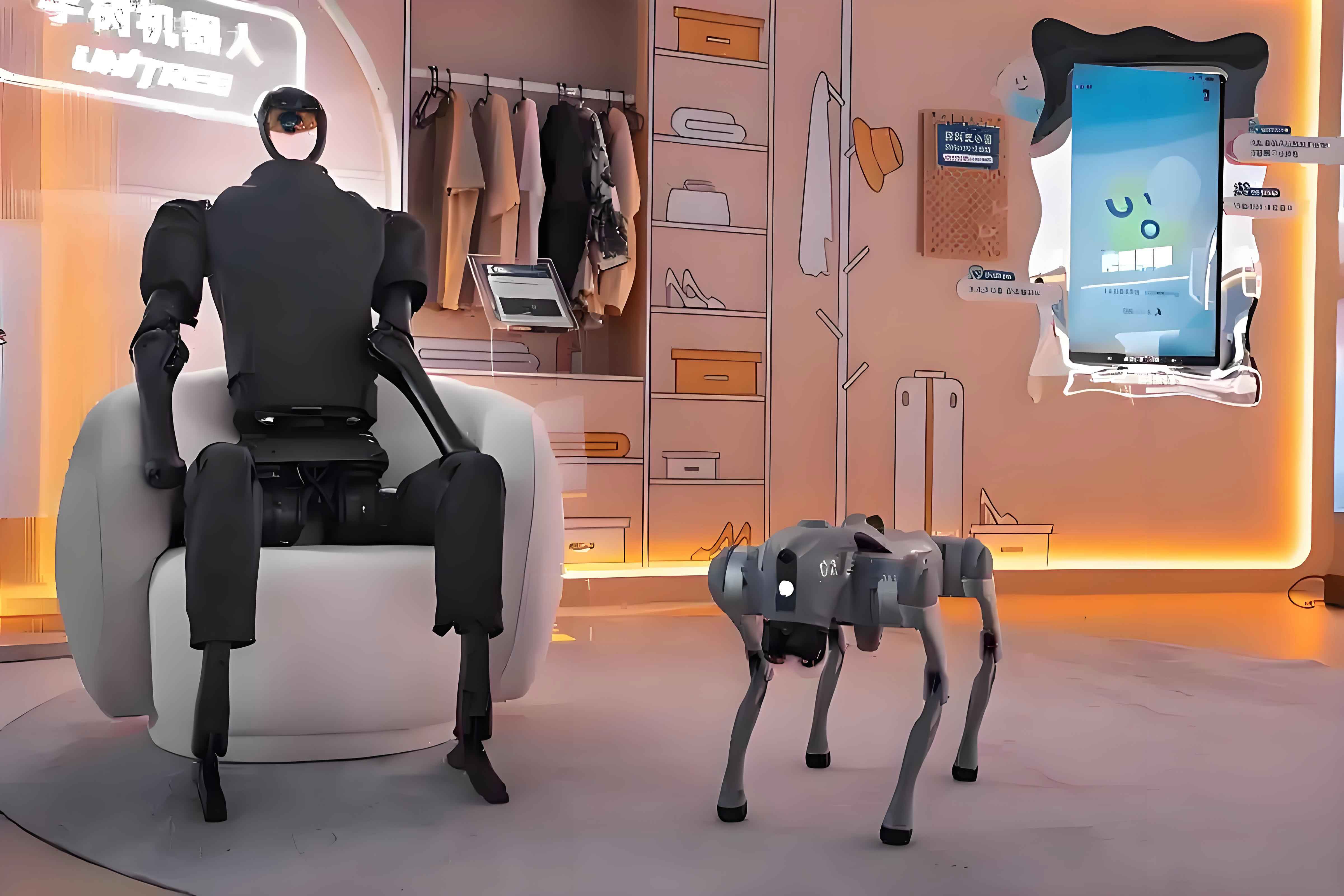
BEIJING — The Second World Humanoid Robot Games in Beijing offered a vivid and unexpectedly divided portrait of the global humanoid robots industry. On the track and in the field, humanoid robots drew cheers as they refreshed records in the 100-meter, 400-meter, and high-jump events. The performances were powerful, fast, and visually spectacular. They suggested that humanoid robots are becoming stronger, quicker, and more capable of dynamic movement than many observers once expected.
Then the attention shifted to the dexterity hand special competition. In events such as block building, picking up beans with tweezers, and powder weighing, the same humanoid robots that had impressed with speed and power suddenly appeared slow and clumsy. The contrast was so sharp that it raised an immediate public question: can humanoid robots truly replace human labor? The answer is not a simple yes or no. The confusion among spectators reflects the real condition of the humanoid robots sector, which is advancing rapidly in some areas while still facing deep obstacles in others.
The scene captured both the promise and the bottleneck of humanoid robots. It showed that humanoid robots can achieve remarkable feats in controlled and specialized conditions. It also showed that humanoid robots still struggle with the kind of fine, adaptive, contact-rich tasks that humans perform almost without thinking. That difference matters because the value of humanoid robots in the real economy will depend less on whether they can run quickly and more on whether they can work reliably in homes, factories, hospitals, warehouses, and public spaces.
- A Tale of Two Capabilities for Humanoid Robots
The Second World Humanoid Robot Games in Beijing created a useful diagnostic moment for humanoid robots. The record-breaking runs and jumps demonstrated the progress of humanoid robots in hardware design, motion control algorithms, and industrial chain capability. These are not minor achievements. They show that humanoid robots can coordinate complex joints, maintain balance under high dynamic loads, and execute powerful movements with increasing precision. For an industry that was once dominated by laboratory demonstrations, such public performances represent a meaningful step forward.
Yet the dexterity hand special competition revealed another side of humanoid robots. Block building, bean picking with tweezers, and powder weighing require more than strength or speed. They require touch, force regulation, visual judgment, and the ability to adjust in real time when objects shift, slip, or differ slightly from expectation. Humanoid robots may be able to sprint across a stage, but they can still hesitate when asked to pick up a small object or place a block with millimeter-level care. That is the gap now commanding attention in the humanoid robots field.
The contrast is not a reason to dismiss humanoid robots. It is a reason to understand them more accurately. Humanoid robots are not a single technology. They are an integration of mechanical systems, sensors, actuators, power systems, control software, artificial intelligence models, and application-level design. Progress in one layer does not automatically produce progress in every other layer. A humanoid robots platform can be excellent at dynamic locomotion while remaining limited at fine manipulation. That uneven development is normal in a young industry, but it must be confronted honestly.
Humanoid Robots: Two Capability Pathways Capability Area Demonstrated Progress Remaining Constraint Locomotion and athletic performance Humanoid robots refreshed records in the 100-meter, 400-meter, and high-jump events at the Second World Humanoid Robot Games in Beijing. Record-breaking movement does not automatically transfer into useful manipulation in messy or changing environments. Dexterous manipulation Humanoid robots competed in block building, picking beans with tweezers, and powder weighing. Humanoid robots appeared slow and clumsy in fine fingertip tasks that demand contact-rich control. Fixed-scenario artificial intelligence Models can approach near 100% success after specialized training in fixed settings. Success rates fall sharply when the environment or the object changes. General-purpose deployment Industry attention is shifting from whether humanoid robots can run to whether humanoid robots can work. Embodied intelligence generalization remains insufficient for homes and livelihood scenarios. - The Real Meaning of Record-Breaking Feats by Humanoid Robots
The records set by humanoid robots in Beijing should not be reduced to entertainment. They are evidence that humanoid robots are expanding their ability boundaries. A humanoid robots system that can run, jump, and recover balance is doing something difficult. It must sense its posture, coordinate many actuators, respond to ground contact, and manage energy and stability in real time. These capabilities matter for future humanoid robots that may need to move through stairs, uneven ground, disaster zones, construction sites, and other unstructured spaces.
At the same time, speed and power are not the same as usefulness. A humanoid robots platform that can run 100 meters or clear a high jump may still be unable to prepare a meal, sort fragile objects, or assemble a small component. Real work is often repetitive but not identical. It involves small variations in position, texture, weight, and resistance. Humanoid robots must handle those variations without constant human intervention. That is why the dexterity hand special competition was so important: it exposed the distance between spectacular movement and practical labor.
The achievements of Chinese humanoid robots are built on deep technical progress and a broad industrial chain, not on empty display. The event brought together hundreds of teams and more than 2,000 robots, with humanoid robots from China occupying the absolute majority. That scale reflects the depth of talent accumulation and resource gathering in the humanoid robots sector. It also shows that humanoid robots are no longer a niche laboratory topic. They are becoming a platform for competition, collaboration, investment, and public imagination.
For the humanoid robots industry, the record-breaking performances are therefore both inspiring and incomplete. They prove that humanoid robots can achieve feats that would have seemed unlikely not long ago. They also remind researchers, engineers, and companies that the next phase will be harder. The humanoid robots that can run fastest are not necessarily the humanoid robots that can work most productively. The industry must now pursue both speed and sensitivity, both power and patience.
- The Dexterity Challenge Facing Humanoid Robots
The dexterity hand special competition placed humanoid robots in a different kind of test. Building with blocks requires alignment, grip control, and spatial reasoning. Picking beans with tweezers requires extreme precision and steadiness. Weighing powder requires careful handling of materials that can spill, scatter, or stick. These tasks are simple for most humans, but they are formidable for humanoid robots. They require the integration of vision, touch, force feedback, motion planning, and real-time adjustment.
Fine manipulation is difficult because the physical world is not perfectly predictable. A block may be slightly misaligned. A bean may roll. A powder may clump. A human hand adjusts continuously through thousands of tiny corrections, often without conscious thought. Humanoid robots must replicate some of that adaptability through sensors, models, and control algorithms. If a humanoid robots system relies only on pre-planned movements, it will fail when conditions change. If it relies too much on vision, it may struggle when objects are occluded or transparent. If it lacks tactile sensing, it may crush fragile items or drop smooth ones.
The slow and clumsy performances in the dexterity events were not a humiliation for humanoid robots. They were a clear signal about where the hard work remains. The humanoid robots industry has made impressive progress in making machines move. It has made less progress in making machines feel, judge, and adapt at the fingertip level. That is the frontier. It is also the area where humanoid robots must improve if they are to move from staged demonstrations into everyday work.
The event also showed why public expectations need to be calibrated. Humanoid robots can be simultaneously advanced and limited. They can shatter records in one domain and struggle in another. That does not mean the technology is fake or doomed. It means humanoid robots are complex systems in transition. The task for the industry is to close the gap between isolated strengths and reliable, general capability.
- The Physical AI Gap in Humanoid Robots
The central difficulty facing humanoid robots can be described as the physical AI gap. In fixed scenarios, after specialized training, artificial intelligence models can achieve success rates close to 100%. This is a major accomplishment. It shows that humanoid robots can learn and execute tasks within known boundaries. But once the environment or the operation object changes, success rates can fall sharply. That drop is the core problem for humanoid robots that must operate in the real world.
Real-world environments are variable, cluttered, and unpredictable. A home is not a laboratory. A warehouse is not a stage. A factory floor is not a simulation. Humanoid robots must cope with changes in lighting, object placement, human behavior, noise, temperature, and wear. They must also cope with unexpected events: a dropped tool, a moving person, a slippery surface, a damaged package. Humanoid robots cannot rely on a single trained path or a fixed set of conditions. They need generalization.
Generalization means that a humanoid robots system can apply knowledge and skills across new situations. It can recognize that a cup is still a cup even if it is a different color or size. It can understand that a task goal remains the same even when the objects are arranged differently. It can adapt its grip when an object is heavier than expected. This is not merely a software challenge. It affects sensors, actuators, control, data collection, simulation, testing, and safety. It is a whole-system challenge for humanoid robots.
The physical AI gap explains why the contrast at the Second World Humanoid Robot Games was so striking. Running and jumping can be optimized in controlled conditions. Dexterous manipulation in a changing world is far more complex. Humanoid robots may look impressive when the task is bounded. They may look awkward when the task is open-ended. The industry must now focus on the open-ended world, because that is where humanoid robots will create value.
- The Inflection Point for Humanoid Robots
The Chinese humanoid robots industry is now at a critical inflection point: the transition from the laboratory to real scenes. This is a more difficult phase than the early demonstration phase. During the demonstration phase, humanoid robots can be designed around specific tasks and controlled environments. During the deployment phase, humanoid robots must survive contact with reality. They must be safe, reliable, maintainable, and economically useful. They must also be accepted by the people who work alongside them.
Within this transition, dexterous manipulation and generalization are harder than locomotion. This may surprise those who assume that walking is the hardest problem for humanoid robots. Walking is indeed difficult, and the record-breaking performances in Beijing show how far the field has come. But hands are unique. They interact with the world at close range. They must apply just enough force, not too much. They must detect slip, texture, and shape. They must coordinate with vision and planning. The humanoid robots that can master hands will be far more useful than those that can only move well.
The industry must therefore treat dexterous manipulation and generalization as a must-conquer challenge. It is the Everest of humanoid robots. There is no shortcut around it. More data, better models, improved tactile sensors, stronger simulation, and real-world testing will all be necessary. Progress may be uneven, and timelines may be longer than public enthusiasm expects. But the direction is clear. Humanoid robots must become capable not only of impressive motion but also of dependable work.
This inflection point also changes how success should be measured. A record in the 100-meter event is easy to understand. A robot completing a multi-step manipulation task in a messy environment is harder to score but more meaningful for deployment. Humanoid robots will need new benchmarks that reflect real-world variability. They will need tests that combine perception, movement, manipulation, and decision-making. They will need evaluation methods that reward reliability rather than one-time spectacle.
- Industrial Depth and the Foundation for Humanoid Robots
The progress of Chinese humanoid robots is not built on air. It rests on a foundation of technical advancement and industrial chain strength. The Second World Humanoid Robot Games in Beijing demonstrated this foundation through scale. Hundreds of teams and more than 2,000 robots participated, and humanoid robots from China were the absolute protagonists. Such participation reflects a deep pool of talent and a concentration of resources. It also shows that humanoid robots have become a serious national and industrial priority.
As a leading enterprise, Unitree Robotics has reported that its core components self-research rate exceeds 90%. That figure is significant for humanoid robots because it points to vertical integration and supply chain control. When a company can develop key components internally, it can iterate faster, manage costs more effectively, and reduce dependence on external suppliers. This kind of industrial thickness can continuously correct the direction of the humanoid robots industry and accelerate its speed of development.
Supply chain strength does not solve every problem. It does not automatically produce generalizable artificial intelligence or perfect dexterous hands. But it creates the conditions for rapid experimentation. It allows humanoid robots companies to test new designs, replace weak components, and scale production when demand emerges. It also supports collaboration among component makers, software developers, and application partners. The humanoid robots ecosystem becomes stronger when each participant can focus on its strengths and contribute to a shared platform.
For these reasons, patience is warranted. Technical breakthroughs in humanoid robots will not arrive on a smooth schedule. There will be periods of rapid progress and periods of frustration. There will be public excitement followed by public doubt. But a deep industrial base gives the humanoid robots sector the ability to keep moving forward. The day of breakthrough will come, but it must be prepared for through sustained engineering and investment.
- Generalization as the Core Bottleneck for Humanoid Robots
The difficulty facing humanoid robots is not only mechanical. It is also about embodied intelligence. Wang Xingxing, founder of Unitree Robotics, has said that global general-purpose humanoid robots have not yet fully entered homes or landed in livelihood scenarios. The core issue is insufficient generalization in embodied intelligence. This is a key technical bottleneck that the entire humanoid robots industry urgently needs to break through.
Generalization is what allows a system to handle novelty. For humanoid robots, novelty is everywhere. A new room, a new object, a new instruction, a new person, or a new disturbance can all change the task. If humanoid robots cannot generalize, they must be reprogrammed or retrained for every variation. That is expensive and slow. It prevents humanoid robots from becoming general-purpose tools. It keeps them trapped in narrow applications where the environment can be tightly controlled.
To overcome this bottleneck, technology companies need to abandon zero-sum thinking and form supply chain cooperation. No single company can solve every problem in humanoid robots alone. The challenges span actuators, sensors, batteries, materials, control theory, artificial intelligence, data infrastructure, safety standards, and user interfaces. Collaboration does not weaken competition. It can strengthen the entire humanoid robots ecosystem by allowing companies to build on common foundations and focus on differentiated value.
Wang Xingxing has predicted that the ChatGPT moment for embodied intelligence in humanoid robots may arrive in as soon as 2 to 3 years, or as long as 5 to 10 years. That range is wide, but it is realistic. It reflects both the rapid pace of progress and the depth of the remaining challenges. The humanoid robots industry should neither dismiss the timeline as too distant nor assume that breakthrough is automatic. It should use the time to improve the fundamentals.
Humanoid Robots: Industry Bottleneck and Timeline Signals Question Industry View What is the core bottleneck for general-purpose humanoid robots? Insufficient generalization in embodied intelligence. When could the ChatGPT moment for embodied intelligence in humanoid robots arrive? Fast: 2 to 3 years. Slow: 5 to 10 years. When does the critical point for industry explosion arrive? When humanoid robots enter an unfamiliar environment and complete 80% of tasks through voice and other instructions. What should companies avoid? Zero-sum thinking; they should pursue supply chain cooperation. - From Showmanship to Application for Humanoid Robots
A positive shift is underway in the public conversation around humanoid robots. The focus is beginning to move from whether humanoid robots can run to whether humanoid robots can work. This is a healthy change. It signals that the industry is maturing. Spectacle can attract attention, but application creates value. Humanoid robots must ultimately be judged by their ability to perform useful tasks, not only by their ability to impress an audience.
The industrial center of gravity is also shifting from showmanship to application. Companies are increasingly asking how humanoid robots can be deployed in real settings. They are considering tasks that are repetitive, dangerous, physically demanding, or labor-constrained. They are examining how humanoid robots can work alongside humans, not just replace them. This shift does not mean that demonstrations are useless. Demonstrations can prove capability, attract talent, and build public trust. But demonstrations are a means, not an end.
For intelligent technology companies, the temporary clumsiness of humanoid robots in dexterity tests should not cause a loss of confidence. It should provide a clear research agenda. The weaknesses are visible, and visible weaknesses can be addressed. The humanoid robots industry needs better hands, better tactile sensing, better models of physical interaction, and better evaluation environments. It also needs more real-world data from messy, unpredictable settings. Each failed grasp, each dropped object, and each awkward attempt can become a useful lesson if the system is designed to learn from it.
The public should also understand that humanoid robots do not need to be perfect to be useful. A humanoid robots system that can complete most of a task, with human supervision or intervention for the rest, may still deliver significant value. The key is reliability within a defined operational envelope. As reliability improves, the envelope can expand. That is how many transformative technologies have been adopted: not in one sudden leap, but through repeated cycles of deployment, feedback, and improvement.
- The Coming Critical Point for Humanoid Robots
Wang Xingxing has offered a practical threshold for the coming critical point. When humanoid robots enter an unfamiliar environment and can complete 80% of tasks through voice and other instructions, the critical point for industry explosion will be reached. This is a useful way to think about progress. It does not require humanoid robots to be flawless. It requires them to be general enough, adaptable enough, and useful enough that deployment becomes economically and operationally attractive.
An 80% threshold matters because real-world work is not a scripted test. In many settings, a humanoid robots system that handles the majority of tasks can reduce workload, improve consistency, and free human workers for more complex responsibilities. The remaining 20% may require human judgment, unusual dexterity, or social understanding. That division of labor can still be valuable. As humanoid robots improve, the percentage they can handle will rise. The critical point is not perfection; it is usefulness at scale.
Voice and other instructions are also important. If humanoid robots require specialized programming for every new task, they will remain tools for experts. If they can understand natural instructions and translate them into action, they become accessible to ordinary users. That accessibility expands the market for humanoid robots. It allows small businesses, households, and public institutions to consider deployment without building a robotics engineering team. Natural interaction is therefore not a luxury feature. It is a driver of adoption.
The coming critical point will not be announced by a single event. It will emerge from many improvements: more robust manipulation, better generalization, safer human-robot interaction, lower costs, longer operating time, and stronger support ecosystems. Humanoid robots will become more capable in steps. The industry should track those steps carefully. It should celebrate progress without overpromising. It should address failures without losing direction. The critical point will arrive when humanoid robots become dependable enough to be trusted with meaningful work.
- Why Patience and Confidence Are Both Necessary for Humanoid Robots
The humanoid robots sector needs both patience and confidence. Patience is necessary because the hardest problems cannot be solved overnight. Dexterous manipulation, physical AI, generalization, safety, and real-world reliability are deep challenges. They require years of research, engineering, testing, and iteration. Confidence is necessary because the direction of progress is clear. Humanoid robots have already demonstrated remarkable advances in movement, hardware, and industrial capability. The foundation is real, and the talent base is growing.
The contrast at the Second World Humanoid Robot Games should be understood as a snapshot of a transitional moment. Humanoid robots can run and jump with increasing skill. Humanoid robots can also struggle with tweezers and powder. Both facts are true. Neither fact alone defines the future. The important question is whether the industry can close the gap. The answer depends on sustained investment, collaboration, open standards, shared data, and a willingness to learn from real-world deployment.
There is also a broader social dimension. As humanoid robots improve, questions about labor, safety, liability, privacy, and human dignity will become more urgent. These questions should not be ignored until the technology is fully mature. They should be addressed alongside technical development. Humanoid robots will enter workplaces and public spaces only if people believe they are safe, accountable, and beneficial. Building trust is part of building the industry.
The humanoid robots community should avoid two opposite mistakes. The first is hype that treats every demonstration as proof of near-term universal capability. The second is cynicism that treats every failure as proof that humanoid robots will never work. Reality is more gradual. Humanoid robots are advancing, but unevenly. They are promising, but incomplete. They are worth pursuing, but not yet ready for every task. A clear-eyed view is the most useful one.
Time does not speak, but it reveals progress. The high moment for humanoid robots is still on its way. It will arrive through accumulated breakthroughs rather than a single dramatic announcement. The public, industry, and research community have reason for both confidence and patience. Humanoid robots have already shown what they can do. The next challenge is to show what they can do reliably, repeatedly, and usefully in the real world.
- Conclusion: The Next Chapter for Humanoid Robots
The Second World Humanoid Robot Games in Beijing will be remembered for its dramatic contrast. Humanoid robots broke records in the 100-meter, 400-meter, and high-jump events, then struggled with block building, bean picking, and powder weighing. That contrast is not a contradiction. It is a map of the humanoid robots industry. It shows where the field has advanced and where it must still climb.
The record-breaking performances prove that humanoid robots are becoming more capable in hardware, motion control, and industrial integration. The dexterity challenges prove that humanoid robots still lack the generalization and fine manipulation needed for many real-world jobs. Between these two realities lies the inflection point: the transition from laboratory performance to real-world application. This is the phase that will determine how quickly humanoid robots become part of daily life and productive work.
The path forward requires more than enthusiasm. It requires better models of physical interaction, more advanced tactile sensing, stronger supply chain cooperation, and realistic benchmarks. It requires companies to move from zero-sum competition toward ecosystem building. It requires researchers to solve the hard problems of embodied intelligence. It requires the public to understand that humanoid robots will improve in stages, not in a single leap.
Wang Xingxing’s prediction offers a useful horizon. The ChatGPT moment for embodied intelligence in humanoid robots may come in 2 to 3 years, or it may take 5 to 10 years. When humanoid robots can enter unfamiliar environments and complete 80% of tasks through voice and other instructions, the critical point for industry explosion will be near. Until then, the work continues. The progress is real. The bottlenecks are real. The future of humanoid robots is not guaranteed, but it is being built.
For now, the appropriate response is neither blind optimism nor premature disappointment. It is disciplined confidence. Humanoid robots have shown that they can run. The next task is to teach them to work. That task is harder, slower, and more important. If the industry can solve it, the high moment for humanoid robots will be more than a spectacle. It will be a transformation.