
On August 19, Unitree Technology officially listed on the STAR Market, settling the question of which company would become the first A-share humanoid robot stock. The listing process, from acceptance to approval, reportedly took only 73 days, the fastest review record since the STAR Market’s pre-review mechanism was implemented. On its first day of trading, the opening gain reached 629 percent, the highest opening gain among new shares during the year. The market’s response was direct and unmistakable: the humanoid robot sector has become one of the most closely watched frontiers in technology and capital.
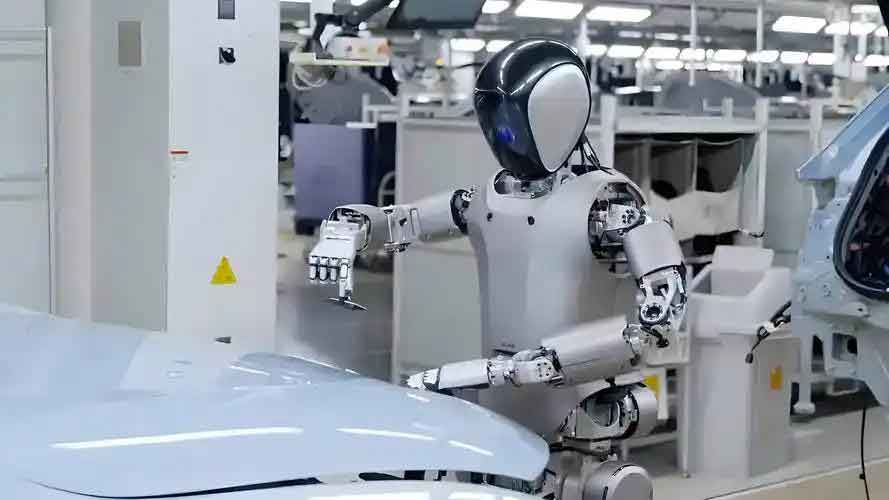
Yet the significance of that moment extends beyond a single listing. It has placed a spotlight on a deeper question that will determine whether the humanoid robot industry can move from demonstration to durable commercial scale. The hardware body of the humanoid robot is becoming more capable. The brain that decides how that body understands the world, makes decisions, and adapts to unfamiliar situations remains far from complete. That gap is not a peripheral issue. It is the central challenge.
| Signal | Reported Detail |
|---|---|
| Listing event | Unitree Technology officially listed on the STAR Market on August 19. |
| Review speed | 73 days from acceptance to approval, described as the fastest under the STAR Market pre-review mechanism. |
| First-day opening gain | 629 percent, described as the highest opening gain among new shares during the year. |
| Market label | First A-share humanoid robot stock. |
| Core bottleneck | The embodied intelligence brain based on world models. |
| Key data challenge | Real physical-world scenario data for humanoid robot training. |
1. A Market Milestone for the Humanoid Robot Sector
The listing of Unitree Technology is more than a capital-market event. It is a public validation of the humanoid robot industry’s potential. For years, the humanoid robot has occupied a unique place in robotics research, artificial intelligence, manufacturing, and public imagination. It promises machines that can work in factories, provide services in homes, support care in elderly institutions, and operate in environments designed for people. That promise has always depended on two things: a body capable of moving and manipulating objects, and a brain capable of understanding and deciding.
The speed of the listing process and the scale of the first-day opening gain show that investors are not treating the humanoid robot as a distant scientific curiosity. They are treating it as a strategic industry. The label of first A-share humanoid robot stock carries symbolic weight. It suggests that the sector has reached a stage where public markets are willing to price not only current revenue but future capability. It also raises expectations. A humanoid robot company that enters the public market must eventually demonstrate more than mechanical agility. It must show that the humanoid robot can perform useful work in unpredictable settings.
That is why the celebration should be accompanied by disciplined analysis. A strong debut does not resolve the hardest technical problems. It may even obscure them. Capital can accelerate research, attract talent, and fund production. It cannot by itself create the data engine, world models, and autonomous decision-making systems that allow a humanoid robot to act intelligently. The market has recognized the sector. The sector must now recognize its own weakest link.
2. Hardware Strength Is Necessary but Not Sufficient
China’s progress in humanoid robot hardware is real and substantial. From reducers and servo motors to dexterous hands, the supply chain in the Yangtze River Delta has demonstrated an ability to push costs lower and iteration faster than many global competitors. This ecosystem is one of the country’s most important advantages in the humanoid robot race. Unitree Technology’s rapid rise reflects that advantage. It shows what can happen when mechanical engineering, electronics, manufacturing scale, and supply-chain density converge around a single product category.
But hardware strength alone cannot answer the defining question: can the humanoid robot stand on its own in a real environment? A humanoid robot may have flexible joints, sensitive hands, and a stable gait. It may walk, turn, kneel, and grasp. Yet if it cannot understand the physical world, make autonomous decisions, and generalize from one situation to another, it remains a controlled platform rather than an intelligent worker. The body is the vehicle. The brain is the driver.
This distinction matters for industrial policy and investment strategy. If the humanoid robot industry focuses only on hardware, it risks competing on components that may become commoditized. If it invests in the brain, it can capture the higher-value layer of the stack. The brain of the humanoid robot is not a single algorithm. It is an operating system for embodied intelligence. It includes perception, world modeling, planning, action generation, memory, and continuous learning. It must operate under uncertainty, with incomplete information, and in environments that were not designed for machines.
The most advanced humanoid robot today can perform impressive demonstrations. It can walk across uneven terrain, pick up objects, and respond to voice commands. These demonstrations are important. They prove that the body is maturing. But demonstrations often occur in structured or carefully prepared settings. The next stage requires the humanoid robot to function in open, dynamic, and unpredictable environments. That is a different order of difficulty.
3. The Brain Is the Real Value Highland
The phrase embodied intelligence describes the integration of artificial intelligence with a physical body. For a humanoid robot, embodied intelligence means that cognition is not detached from action. The robot must perceive, reason, and act in a continuous loop. It must understand that a cup is fragile, that a wet floor is slippery, that a human nearby may move unpredictably, and that a task can be completed in multiple ways. This kind of understanding cannot be reduced to a set of pre-programmed rules. It must emerge from data, learning, and interaction with the physical world.
The autonomous intelligent operating system based on world models is the core of this capability. A world model allows the humanoid robot to form an internal representation of its environment and predict the consequences of its actions. It can ask: if I move this object, what will happen? If I step here, will I remain stable? If a person enters the room, how should I adjust? These predictions are essential for safe and useful operation. Without a world model, the humanoid robot is reactive. With a world model, it can begin to be proactive.
This is why the brain is the true value highland. Hardware can be copied, improved, and manufactured at scale. A mature brain, trained on unique data and embedded in a robust software ecosystem, is much harder to replicate. It creates network effects. More robots generate more data. More data improves the brain. A better brain makes the humanoid robot more useful. Greater usefulness leads to more deployments. More deployments generate more data. This is the flywheel that the humanoid robot industry must build.
Without that flywheel, even an elegant humanoid robot remains a marionette. It may be controlled remotely, scripted for repetitive tasks, or confined to a laboratory. It may look intelligent, but it will not be autonomous. The industry’s long-term value will not come from the number of joints or the elegance of a gait. It will come from the ability to understand, decide, and act in the real world.
4. The Data Flywheel and the Chicken-and-Egg Trap
The humanoid robot industry faces a classic data dilemma. Training a capable brain requires massive amounts of real-world scenario data. That data is generated when the humanoid robot actually works in factories, warehouses, hospitals, homes, and public spaces. But a humanoid robot without a sufficiently intelligent brain cannot easily enter those real scenarios. It may be too slow, too unsafe, too unreliable, or too expensive to deploy at scale. This is the chicken-and-egg problem at the heart of embodied intelligence.
The problem is not unique to robotics, but it is especially severe for the humanoid robot. In digital environments, data can be generated through simulation, web-scale text, images, and video. In the physical world, data must capture contact, force, friction, deformation, spatial relationships, and the consequences of action. A video of a person opening a door is not the same as the force feedback, joint torque, and balance adjustments required for a humanoid robot to open the same door. Physical interaction data is richer, more expensive, and harder to collect.
International competitors have recognized this gap. Some overseas enterprises are already using industrial scenarios in developing countries to accumulate physical interaction data. This raises a strategic issue that goes beyond commercial competition. If the data generated by real-world humanoid robot operations flows primarily to platforms outside the country, then hardware leadership may not translate into leadership in embodied intelligence. Data sovereignty becomes as important as manufacturing capability. The humanoid robot industry must ensure that the data generated in its own economy is collected, governed, and used under clear rules.
The data challenge also has a time dimension. The humanoid robot market is still in an early phase. Standards, best practices, and dominant platforms are not yet fixed. A window exists for countries and regions to shape the rules and build the data infrastructure that will support the next generation of embodied intelligence. Once that window closes, catching up becomes much more difficult. The race is not only about building better humanoid robot hardware. It is about building the institutions, data pipelines, and application ecosystems that allow the humanoid robot brain to learn.
5. Lessons From Intelligent Driving
The technical evolution of the humanoid robot has important parallels with intelligent driving. Both aim to let machines perceive and decide autonomously in the real world. Both depend on sensors, algorithms, computing power, and engineering integration. Both require safety, reliability, and real-time performance. China’s intelligent driving sector has accumulated significant capabilities in these areas. These capabilities are a valuable foundation for the humanoid robot brain.
Intelligent driving succeeded in part because it created a data flywheel. Millions of production vehicles drive on real roads every day. They collect data on traffic, pedestrians, weather, road conditions, and rare edge cases. That data returns to the development pipeline, where it is used to train and improve models. The improved models are deployed to vehicles, which then collect more data. The cycle repeats. This flywheel is one reason why intelligent driving has advanced so quickly.
The humanoid robot does not yet have an equivalent flywheel. There are not millions of humanoid robots working in real environments and returning data around the clock. The number of deployed units is smaller. The tasks are more varied. The environments are less standardized. The safety requirements are different. A humanoid robot that falls in a factory or makes a mistake in a home can cause injury or damage. This makes large-scale data collection more difficult.
Still, the intelligent driving experience offers useful lessons. First, data must be collected systematically, not casually. Second, data must be governed with clear rules for privacy, security, and ownership. Third, simulation can complement real-world data, but it cannot fully replace it. Fourth, engineering integration matters as much as algorithmic novelty. Fifth, deployment and data collection must be designed together. These lessons can help the humanoid robot industry avoid reinventing the wheel as it builds the brain.
6. Why Physical World Data Is Different
The humanoid robot operates in a physical world that is far less structured than a road. A road has lanes, signs, and traffic rules. A factory has workstations, tools, and processes. A home has furniture, pets, children, and unpredictable human behavior. An elderly care facility has patients, medical equipment, and emotional needs. The variety of physical environments is enormous. The humanoid robot must handle that variety without constant reprogramming.
Physical world data includes not only visual information but also tactile, proprioceptive, and force data. A dexterous hand must know how much pressure to apply when holding a glass. A bipedal robot must know how to adjust its balance when carrying an object. A mobile manipulator must know how to coordinate navigation and manipulation. These capabilities require data that captures the interaction between the robot’s body, the object, and the environment.
Collecting such data is expensive. It requires reliable humanoid robot platforms, trained operators, safe testing environments, and long periods of operation. It also requires standardized formats so that data from different robots and different scenarios can be pooled and used. Without standardization, data remains fragmented and underused. With standardization, it becomes a shared asset that can accelerate the entire industry.
The humanoid robot industry therefore needs more than isolated company laboratories. It needs shared data training grounds, pilot-test bases, and open application scenarios. It needs a governance framework that encourages data sharing while protecting legitimate rights. It needs a talent pipeline that combines robotics, artificial intelligence, control theory, cognitive science, and safety engineering. These are not optional extras. They are the infrastructure of embodied intelligence.
7. Shanghai’s Institutional Opportunity
Shanghai is in a distinctive position to address these challenges. The city has a broad industrial base, diverse application scenarios, and early progress in data factor reform. It also has strength in intelligent connected vehicles, artificial intelligence, advanced manufacturing, and financial services. These assets can be combined to support the humanoid robot sector. The task is to turn institutional capacity into industrial advantage.
The humanoid robot will eventually enter workshops, homes, and elderly care institutions. These environments are not only markets. They are data-rich training grounds. A factory floor produces data on manipulation, assembly, and quality control. A logistics center produces data on navigation, picking, and packing. An elderly care facility produces data on assistance, monitoring, and human-robot interaction. If these scenarios are opened in a coordinated way, they can become the raw material for the humanoid robot brain.
Shanghai’s experience with data exchanges and data asset accounting provides a starting point. The city can experiment with rules for collecting, confirming rights to, and circulating physical-world operation data. It can create mechanisms that make enterprises willing to collect data, able to use it, and permitted to trade it. It can also ensure that data sovereignty remains protected. This is a governance challenge as much as a technical one. The humanoid robot industry will need both.
| Layer | Primary Capability | Strategic Importance |
|---|---|---|
| Mechanical body | Joints, reducers, servo motors, dexterous hands, balance, locomotion | Provides physical capability and deployment readiness. |
| Perception | Vision, touch, force sensing, proprioception, spatial awareness | Allows the humanoid robot to understand its environment. |
| World model | Internal representation, prediction, simulation, reasoning | Enables planning and adaptation in uncertain settings. |
| Action generation | Manipulation, navigation, whole-body control, task execution | Translates decisions into physical work. |
| Data engine | Collection, standardization, governance, training, feedback | Drives continuous improvement of the humanoid robot brain. |
| Institutions | Standards, safety rules, data rights, scenario opening, talent | Shapes the speed and direction of industrial development. |
8. Recommendation One: Open Real Scenes Through Institutional Supply
The first recommendation is to use institutional supply to open real application scenarios. Government leadership can play a catalytic role in advanced manufacturing, modern logistics, elderly care, and other fields. Instead of leaving scenario access entirely to individual companies, public authorities can systematically identify and open environments where the humanoid robot can be tested and improved. This does not mean lowering safety standards. It means creating controlled pathways for real-world learning.
Cross-enterprise shared humanoid robot data training grounds and pilot-test bases would be especially valuable. A single company may not have the resources to build a full range of test environments. A shared facility can provide factories, warehouses, simulated homes, care rooms, and public spaces. It can offer standardized instruments, data collection protocols, and safety supervision. It can allow multiple humanoid robot developers to test their systems under comparable conditions. This would accelerate learning and reduce duplication.
Such facilities should not be isolated from actual work. The most valuable data comes from real tasks with real consequences. A humanoid robot that moves boxes in a warehouse learns more than a humanoid robot that moves boxes in a laboratory. A humanoid robot that assists a caregiver learns more than a humanoid robot that performs a scripted demonstration. The goal is to let the humanoid robot learn in practice while maintaining safety and accountability.
Scenario opening also requires coordination among regulators, industry, and research institutions. Rules must be clear enough to attract participation and flexible enough to allow innovation. Insurance, liability, and emergency response mechanisms must be considered. Workers and residents who interact with the humanoid robot should be informed and protected. These measures build trust, and trust is necessary for long-term deployment.
9. Recommendation Two: Activate Data Through Factor Reform
The second recommendation is to activate data through data factor reform. Physical-world operation data is a strategic resource. It should be collected, confirmed, and circulated under rules that are clear and enforceable. Shanghai’s advances in data exchanges and data asset accounting can be extended to the humanoid robot sector. The aim is to create a market and governance environment in which data can flow without becoming either chaotic or stagnant.
Enterprises need to know what data they can collect, how they can use it, and whether they can trade it. They also need to know how to protect personal privacy, commercial secrets, and public interests. A compliance framework should cover consent, anonymization, security, cross-border transfer, and audit. It should distinguish between different types of data, such as sensor data, operational data, human interaction data, and safety data. Different types may require different rules.
Data sovereignty must remain firmly in local hands. The humanoid robot will operate in sensitive environments. It will see, hear, touch, and interact with people and infrastructure. The data it generates can reveal industrial processes, health conditions, and behavioral patterns. If such data is collected and used without adequate governance, it can create security and ethical risks. A robust data factor regime should ensure that the benefits of data are shared while the risks are managed.
The humanoid robot industry also needs technical standards for data formats, labeling, and interoperability. Without common standards, data from one humanoid robot may be difficult to use with another. This limits the scale of the data flywheel. Standards can reduce friction, lower costs, and increase the value of data. They can also make it easier to audit safety and performance. Public authorities, industry associations, and research institutions can work together to develop these standards.
10. Recommendation Three: Connect Cars and Humanoid Robots
The third recommendation is to connect intelligent driving and humanoid robot innovation. The two fields share algorithms, computing power, sensors, and engineering talent. They also share a fundamental goal: enabling machines to perceive and act autonomously in the real world. By building channels between them, Shanghai can use its intelligent connected vehicle strengths as a springboard for the humanoid robot brain.
Vision-language-action models are one area of potential migration. These models combine visual perception, language understanding, and action generation. They are relevant to both autonomous driving and embodied intelligence. Automotive-grade chips are another area. They are designed for reliability, safety, and real-time performance. If adapted for humanoid robot use, they could provide a strong computing foundation. Simulation tools, data pipelines, and safety validation methods can also be shared.
Talent mobility is equally important. Engineers who understand perception, planning, control, and system integration can contribute to both fields. Universities and research institutes can create joint programs that train students in intelligent driving and humanoid robotics. Companies can form cross-sector teams that solve common problems. This kind of collaboration can reduce the time and cost of developing the humanoid robot brain.
The connection should be bidirectional. Intelligent driving can learn from robotics about manipulation, contact, and physical interaction. Humanoid robotics can learn from intelligent driving about large-scale data collection, fleet learning, and operational safety. A vibrant ecosystem will not treat the two as separate silos. It will treat them as related expressions of embodied artificial intelligence.
11. Governance, Safety, and Public Trust
The humanoid robot will enter spaces where people live and work. This makes governance unavoidable. Safety must be designed into the humanoid robot from the beginning. A humanoid robot that can lift heavy objects, operate tools, or assist frail patients must be reliable. It must fail safely. It must recognize when it does not know what to do. It must defer to human judgment in ambiguous or dangerous situations.
Public trust will depend on transparency and accountability. People need to know what the humanoid robot is doing, why it is doing it, and who is responsible if something goes wrong. Privacy protections must be robust. Data collection must be proportionate. Human oversight must be meaningful. These requirements are not obstacles to innovation. They are conditions for adoption.
Standards can help. Certification, testing, and auditing can provide confidence. Insurance and liability frameworks can clarify responsibility. Incident reporting can support learning. Ethical guidelines can address sensitive uses, especially in care settings. The humanoid robot industry should engage with these issues early, before widespread deployment makes them harder to manage.
Shanghai’s institutional capacity can be used to pilot governance models. The city can create regulatory sandboxes for humanoid robot deployment. It can support independent safety assessment. It can encourage data trusts or other mechanisms that balance access and control. It can bring together technologists, ethicists, lawyers, workers, and residents. A participatory approach can improve both the technology and its social acceptance.
12. From First Stock to First Brain
The first A-share humanoid robot stock is a starting point, not an endpoint. When the excitement of the capital market settles, the real competition will become clearer. The winning humanoid robot will not necessarily be the one with the most impressive demonstration video. It will be the one that can understand the world, learn from experience, and perform useful labor autonomously. The race is ultimately about the brain.
China’s humanoid robot hardware base is strong. The supply chain can move quickly and reduce costs. The intelligent driving sector has accumulated valuable capabilities. The data economy is developing. These strengths create a foundation. But a foundation is not a finished building. The humanoid robot industry must now invest in world models, embodied intelligence, data governance, and real-world deployment. It must solve the chicken-and-egg problem by creating shared scenarios and shared data infrastructure.
Shanghai can play a leading role if it moves first in scenario opening, data circulation, and institutional innovation. The city can connect manufacturers, logistics providers, care institutions, technology companies, researchers, and regulators. It can turn scattered application scenarios into a concentrated source of learning. It can turn data reform into a competitive advantage. It can turn intelligent driving expertise into a springboard for the humanoid robot brain.
The significance of such progress would extend beyond one industry. The humanoid robot is a test of how a society integrates advanced artificial intelligence with physical labor, public services, and everyday life. It raises questions about work, care, safety, privacy, and human dignity. How those questions are answered will shape the intelligent era. A city or country that can develop the technology and the governance together will be better positioned to capture the benefits and manage the risks.
The humanoid robot sector has earned the market’s attention. It now needs the discipline, infrastructure, and institutional creativity to justify that attention. The first stock has arrived. The first brain has not. The next phase of the humanoid robot race will be won by those who can build both the body and the mind, and who can do so in a way that is safe, trusted, and useful in the real world.