
On August 26, the five-day second World Humanoid Robot Games concluded, bringing together 666 teams from 16 countries across six continents and more than 2,000 robots in 51 competition events. The event produced multiple gold medals and a series of technical breakthroughs. Among the most closely watched results, the Tianzhuo team’s humanoid robots completed the 100-meter race in 9.39 seconds, surpassing the human world record of 9.58 seconds.
While humanoid robots accelerated toward new performance limits, a risk protection plan designed specifically for the event was running in parallel. As the strategic partner of the second World Humanoid Robot Games, PICC developed a customized comprehensive protection plan in response to the high value of humanoid robots and the complex risk scenarios involved. The company also assembled a professional team to provide on-site services, supporting the stable operation of the event.
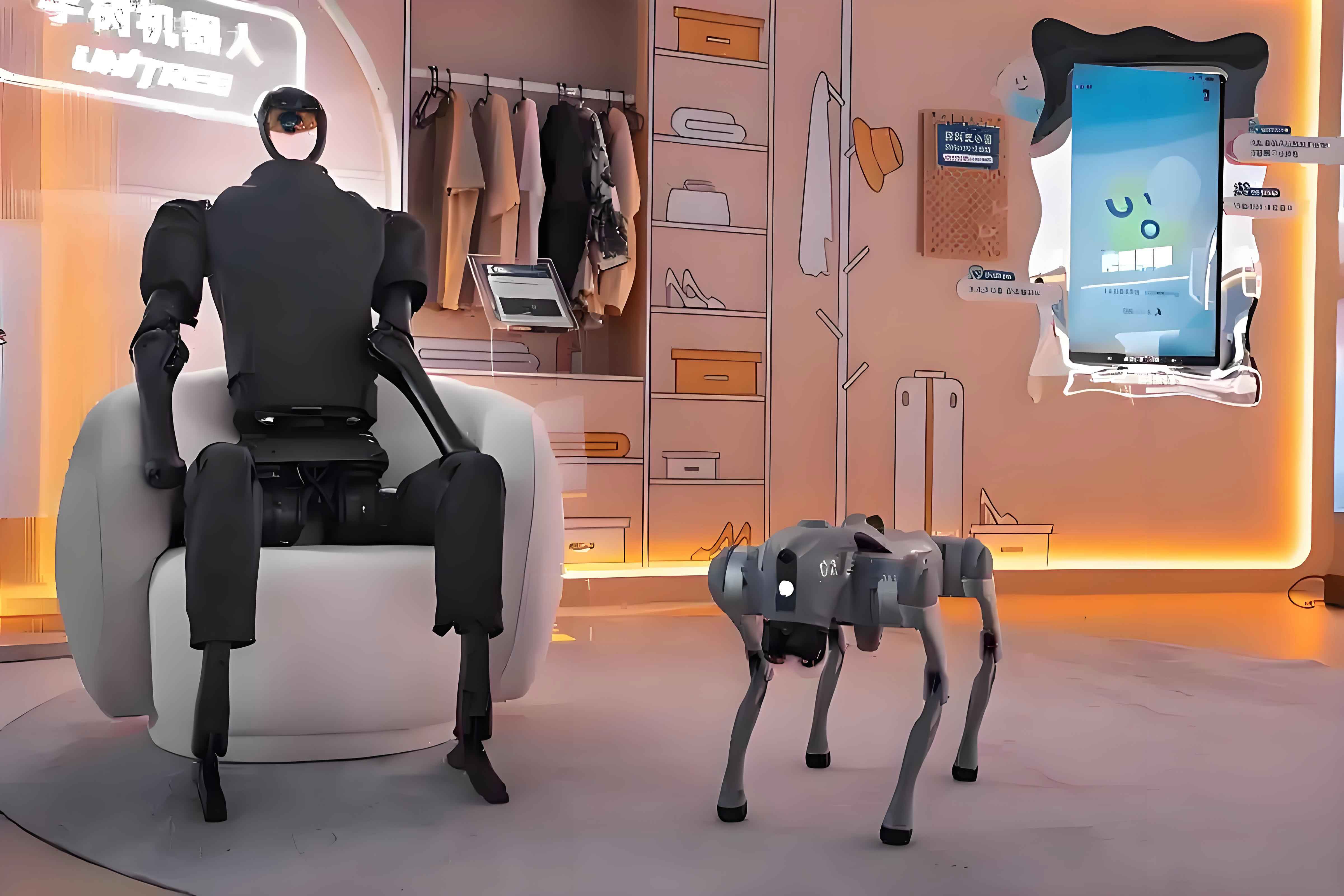
The scale of the event underlined both the rapid progress of humanoid robots and the widening exposure to risk. The number of participating teams reached 666, an increase of 138 percent from the first edition. The number of participating robots quadrupled. Competition events expanded from 26 to 51, with new high-intensity confrontational events such as weightlifting, tug-of-war, and table tennis. Scenario competitions also moved from simulated venues into real factories, hotels, and home environments. As humanoid robots entered more varied and less controlled settings, the risk landscape became more complicated.
| Metric | Figure or Detail |
|---|---|
| Duration | Five days |
| Closing date | August 26 |
| Participating countries | 16 |
| Continents represented | Six |
| Participating teams | 666 |
| Growth in teams from first edition | 138 percent |
| Participating robots | More than 2,000 |
| Growth in robot number | Quadrupled |
| Competition events | 51 |
| Events in first edition | 26 |
| New event categories | Weightlifting, tug-of-war, table tennis, and other high-intensity confrontational events |
| Scenario competition locations | Real factories, hotels, and home environments |
| Notable result | Tianzhuo team humanoid robots completed the 100-meter race in 9.39 seconds |
| Human 100-meter world record cited | 9.58 seconds |
The event therefore offered more than a showcase of speed and dexterity. It also demonstrated why insurance protection for humanoid robots must evolve alongside the technology itself. As humanoid robots move from controlled demonstrations into dynamic competition and real-world scenarios, insurers face the challenge of protecting valuable equipment, third parties, event personnel, and digital systems at the same time.
- Full-Chain Coverage Builds a Safety Barrier for Competition
According to official data, the second World Humanoid Robot Games attracted 666 teams, up 138 percent from the first edition, while the number of participating robots quadrupled. The event program expanded from 26 to 51 events, adding weightlifting, tug-of-war, table tennis, and other high-intensity confrontational events. Scenario competitions moved from simulated venues into real factories, hotels, and home environments. The expansion of scale and complexity naturally increased the risk exposure for organizers, teams, spectators, equipment, and venues.
PICC stated that, building on its experience from the first edition, it fully considered the unique risk characteristics of humanoid robot events and tailored a dedicated comprehensive risk protection plan for the second edition. The plan innovatively included embodied intelligent robot body loss insurance, embodied intelligent robot third-party liability insurance, and artificial intelligence service liability insurance. Together, these products formed a multi-dimensional protection system covering property and material loss, third-party liability, accidental personnel injury, and cybersecurity risks.
The insurer built its event protection system around three dimensions. On the underwriting side, it customized a combined insurance plan covering both competition-time and daily operations. On the claims side, it established a green channel and a rapid-response mechanism. On the service side, it provided full-cycle, high-efficiency professional technical support. This three-part structure was designed to address risks before, during, and after the event, rather than treating insurance only as a post-accident compensation tool.
During the event, PICC’s on-site service team remained on duty throughout the competition. The team followed the progress of each event in real time, monitored venue dynamics, and carried out front-line work such as risk reminders, consultation coordination, and on-site surveys. If sudden situations arose, such as accidental injury to personnel or damage to robot equipment, the service team responded immediately. It simplified coordination procedures and quickly completed on-site surveys and verification, helping protect the safety of event personnel and equipment.
This approach allowed participating teams to reduce their concerns about operational and liability risks and focus on technological competition. For humanoid robots, which are often high-value assets with complex hardware, software, sensors, and artificial intelligence systems, the ability to transfer and manage risk is becoming increasingly important. A single accident can involve mechanical damage, data loss, third-party injury, and reputational consequences. Insurance therefore becomes part of the infrastructure that allows innovation to proceed with greater confidence.
The event protection plan also reflects a broader shift in the insurance market. Humanoid robots are no longer viewed only as laboratory prototypes or exhibition attractions. They are becoming participants in competitive events, industrial pilots, service scenarios, and commercial leasing operations. As their roles expand, the insurance needs of humanoid robots expand from simple equipment protection to integrated risk solutions that combine property, liability, technology, and cybersecurity coverage.
- Insurers Race to Expand Product Supply for Commercial Deployment of Humanoid Robots
When humanoid robots are no longer limited to showing off on stage and gradually enter real application scenarios such as industrial assembly, elderly care, and special operations, new questions arise. If a collision causes damage, if an algorithm failure leads to loss, or if an accident occurs during human-robot interaction, who bears the responsibility? These questions are driving demand for insurance products designed specifically for humanoid robots.
Humanoid robot insurance is becoming a new track that insurers are eager to develop. PICC, China Pacific Insurance, Ping An, and other insurers have successively launched customized insurance products for embodied intelligent robots. At present, this type of insurance mainly covers two major categories. The first is robot body loss protection, which covers equipment damage caused by natural disasters, accidental collisions, operational errors, and similar events. The second is third-party liability protection, which compensates for personal injury or property damage to third parties caused by malfunctions, communication anomalies, and other issues during robot use.
| Coverage Category | Typical Scope |
|---|---|
| Robot body loss protection | Damage to equipment caused by natural disasters, accidental collisions, operational errors, and related risks |
| Third-party liability protection | Personal injury or property damage to third parties caused by malfunction, communication anomalies, or other operational issues |
| Embodied intelligent robot body loss insurance | Protection for the physical robot asset in complex event and operational scenarios |
| Embodied intelligent robot third-party liability insurance | Liability protection when humanoid robots interact with people, property, and public environments |
| Artificial intelligence service liability insurance | Coverage linked to risks arising from artificial intelligence services and related systems |
| Cybersecurity risk protection | Protection against digital and network-related exposures within a multi-dimensional insurance framework |
In the reinsurance sector, China Re P&C has also been active. As early as 2022, it worked with multiple insurers and robot companies to launch the first mobile robot insurance product in the country. In 2026, it will expand the scope of protection to humanoid robots, quadruped robots, robotic arms, and other forms. This expansion signals that reinsurers see long-term potential in the risk pool created by robotics and embodied intelligence.
As commercial leasing models emerge, humanoid robots will circulate among different customers and different operating environments. This increases the probability of equipment wear and tear and makes damage assessment and liability determination after an accident more difficult. Many market participants have recognized that insurance is an important supporting element for scaling the robot leasing business model. Some insurers are trying to combine the two major categories of protection with leasing operations and explore flexible models such as sharing premiums into rent, thereby reducing the financial pressure on enterprises that purchase and use high-value humanoid robots.
“Comprehensive insurance is not a single risk-control action, but an important component of the platform operating system,” said Li Yiyan, chief executive officer of the robot leasing platform Qingtianzu. “Embodied intelligence insurance is a precondition for the robot leasing business model to be viable. For Qingtianzu, every robot on the platform must be included in the insurance and risk-control system. Insurance is not a simple policy, but an industry-level foundational mechanism connecting insurers, robot manufacturers, service providers, partners, and end customers.”
In April this year, an embodied intelligent robot on Qingtianzu accidentally tipped over during use. Its main camera and some components were damaged, and the case ultimately resulted in a compensation payment of 5,976 yuan. The incident illustrates both the practical risks faced by humanoid robots in commercial use and the role of insurance in absorbing losses when accidents occur. It also shows that insurance claims for humanoid robots can involve relatively small component damage as well as larger liability questions.
For the leasing market, insurance provides more than financial compensation. It can also support risk screening, maintenance planning, incident reporting, and customer confidence. When a platform can assure customers that humanoid robots are covered by a structured insurance and risk-control system, leasing becomes easier to scale. When insurers can collect better data from real operations, they can improve pricing, underwriting, and claims handling for humanoid robots over time.
- Collaborative Iteration Deepens the Growth Foundation for the Humanoid Robots Industry
As the humanoid robot industry moves from technical competitions to application sites across many industries, demand for supporting insurance services is entering a period of concentrated release. The growth of the sector is no longer only a matter of mechanical performance or artificial intelligence capability. It also depends on whether risks can be identified, priced, transferred, and managed in a way that supports commercialization.
Industrial demand is warming rapidly. Data released by the Ministry of Industry and Information Technology shows that in 2025, the number of humanoid robot whole-machine enterprises in China had exceeded 140, and the number of released products had exceeded 330. The China Academy of Information and Communications Technology forecasts that by 2035, the market size of humanoid robot whole machines will reach 50 billion yuan. By 2045, the whole-machine market size could reach 10 trillion yuan, and the number of robots could exceed 100 million.
Policy is also sending a clear signal. In March this year, the Ministry of Science and Technology, the Financial Regulatory Administration, the Ministry of Industry and Information Technology, and the National Intellectual Property Administration jointly issued a document titled “Several Opinions on Accelerating the High-Quality Development of Science and Technology Insurance to Strongly Support High-Level Scientific and Technological Self-Reliance.” The document explicitly encourages the development of exclusive science and technology insurance products in key areas such as embodied intelligence. The China Insurance Association has also stated that it will gradually advance model clauses for humanoid robot insurance.
At the current stage, however, robot products iterate quickly, and the causes of faults are complex. Losses triggered by algorithm defects and software program problems are difficult to define. In addition, risk data accumulation remains limited. These factors are realistic obstacles for insurance institutions carrying out related business. Insurers must evaluate new technologies, new usage scenarios, and new liability relationships without the long historical loss data that supports more mature insurance lines.
In the view of industry participants, as the commercialization of embodied intelligence continues to accelerate and testing scenarios continue to broaden, risk samples will become richer. In the next three years, humanoid robot insurance is expected to become an important growth segment in the property insurance field. Insurance will no longer be only a compensation tool after an accident. It will deeply participate in risk reduction management and share the cost of innovation trial and error as humanoid robots move from the competition arena to large-scale commercial deployment.
| Category | Details |
|---|---|
| Market driver | Rapid growth in humanoid robot events, products, enterprises, and commercial scenarios |
| Policy driver | Joint policy document encouraging exclusive science and technology insurance products in embodied intelligence |
| Industry driver | China Insurance Association plans to gradually advance model clauses for humanoid robot insurance |
| Commercial driver | Leasing models require insurance and risk-control systems for humanoid robots |
| Reinsurance driver | China Re P&C expands protection from mobile robots to humanoid robots, quadruped robots, and robotic arms |
| Technical challenge | Fast product iteration and complex fault causes |
| Risk definition challenge | Algorithm defects and software program problems make losses difficult to define |
| Data challenge | Limited risk data accumulation for humanoid robots |
| Operational challenge | Damage assessment and liability determination in leasing and multi-environment use |
The development of humanoid robot insurance therefore depends on collaborative iteration among insurers, reinsurers, robot manufacturers, service providers, leasing platforms, event organizers, and regulators. Each party holds part of the risk information. Manufacturers understand hardware and software failure modes. Leasing platforms understand usage patterns and customer behavior. Insurers understand risk pooling and claims management. Event organizers understand high-intensity competition scenarios. When these perspectives are combined, insurance products for humanoid robots can become more precise and more useful.
For example, event coverage can generate valuable data on collision, component damage, communication disruption, and human-robot interaction. Leasing coverage can generate data on wear, maintenance, operator error, and environmental conditions. Industrial and service deployments can generate data on liability, downtime, and third-party impact. Over time, this data can support better underwriting and more differentiated products for humanoid robots.
There is also a need for standardization. If policy terms, liability definitions, and claims processes vary too widely, customers may struggle to understand what is covered. Insurers may also face disputes when responsibility is shared among robot manufacturers, software providers, operators, and owners. Model clauses and industry guidance can help reduce uncertainty and build confidence in insurance protection for humanoid robots.
- Risk Reduction and the Next Stage of Humanoid Robots Commercialization
The second World Humanoid Robot Games showed that humanoid robots can achieve remarkable results in speed, control, and competition. The 100-meter result of 9.39 seconds by the Tianzhuo team’s humanoid robots attracted attention because it surpassed the human world record of 9.58 seconds. Yet the significance of the event extends beyond records. It demonstrated that humanoid robots are being tested in increasingly demanding environments, where mechanical reliability, software stability, and safety management all matter.
In such environments, risk reduction becomes as important as risk transfer. Insurers can support risk reduction by providing safety recommendations, on-site risk reminders, technical consultation, and rapid claims response. They can also work with robot companies and event organizers to identify recurring causes of loss and encourage improvements. This is particularly relevant for humanoid robots because their value is high, their systems are complex, and their interactions with people and property can create multiple layers of exposure.
The insurance response to humanoid robots is still developing. Coverage for robot body loss and third-party liability provides a foundation. Artificial intelligence service liability insurance and cybersecurity protection add further dimensions. Reinsurance support helps insurers manage accumulation risk as more humanoid robots enter use. Leasing-linked insurance models can make coverage more accessible. Event-specific plans can address the concentrated risks of competitions and demonstrations. Together, these approaches form an emerging ecosystem of protection for humanoid robots.
For enterprises, insurance can reduce the financial pressure of purchasing and using high-value humanoid robots. For leasing platforms, it can be a precondition for scalable operations. For manufacturers, it can support customer adoption by clarifying how accidents and liabilities are handled. For end customers, it can provide confidence that humanoid robots can be deployed in factories, hotels, homes, and other real environments with a structured risk-management framework.
For insurers, the opportunity is significant but not without difficulty. Humanoid robots combine physical assets, artificial intelligence, software, sensors, communications, and human interaction. A single incident may involve property damage, bodily injury, business interruption, data loss, and liability. Underwriting therefore requires technical understanding as well as actuarial analysis. Claims handling requires the ability to assess hardware, software, and operational factors. Risk management requires ongoing collaboration with technology companies and platform operators.
The policy environment is likely to support further innovation. The joint document issued in March encourages exclusive science and technology insurance products in key areas such as embodied intelligence. The China Insurance Association’s plan to gradually advance model clauses for humanoid robot insurance may help standardize the market. The expansion by China Re P&C to humanoid robots, quadruped robots, and robotic arms in 2026 indicates that reinsurance capacity is preparing for broader robotics risks.
At the same time, the industry must address the reality that risk data is still limited. The rapid iteration of humanoid robots means that today’s loss experience may not fully predict tomorrow’s risks. Algorithm defects and software program problems can be difficult to define and attribute. Leasing and multi-environment use can increase wear and complicate liability. These challenges do not remove the need for insurance. Instead, they make collaborative product development, data sharing, and risk-reduction services more important.
- Outlook: Humanoid Robots and Insurance Moving Together
The second World Humanoid Robot Games offered a clear picture of how quickly humanoid robots are advancing. The event brought together 666 teams from 16 countries across six continents, more than 2,000 robots, and 51 competition events. It produced multiple gold medals and technical breakthroughs. The Tianzhuo team’s 100-meter result of 9.39 seconds, compared with the human world record of 9.58 seconds, became a defining moment.
Behind that momentum, insurance protection for humanoid robots is also advancing. PICC’s customized plan for the event covered embodied intelligent robot body loss, third-party liability, artificial intelligence service liability, and other risks. It combined competition-time and daily coverage, established a claims green channel, and provided full-cycle professional technical support. The on-site service team handled risk reminders, consultation coordination, and on-site surveys, helping teams focus on competition.
Beyond the event, insurers are developing products for commercial deployment. PICC, China Pacific Insurance, Ping An, and other insurers have launched customized products for embodied intelligent robots. Coverage generally falls into robot body loss protection and third-party liability protection. China Re P&C is expanding its reinsurance scope to humanoid robots, quadruped robots, and robotic arms. Leasing platforms such as Qingtianzu view insurance as a precondition for their business model, and claim experience is beginning to accumulate, including the 5,976 yuan compensation case in April.
The long-term market outlook is substantial. The Ministry of Industry and Information Technology reported that in 2025, humanoid robot whole-machine enterprises in China exceeded 140, and released products exceeded 330. The China Academy of Information and Communications Technology forecasts that by 2035, the humanoid robot whole-machine market will reach 50 billion yuan. By 2045, it could reach 10 trillion yuan, with more than 100 million robots. These projections suggest that insurance for humanoid robots could become a major risk-management field in the coming decades.
In the next three years, humanoid robot insurance is expected to become an important growth segment in property insurance. The combination of commercial deployment, leasing, event coverage, industrial use, elderly care, and special operations will create diverse risk scenarios. As testing scenarios broaden and risk samples accumulate, insurers will be better positioned to price and manage these risks. Insurance will increasingly participate in risk reduction management and share the trial-and-error costs of innovation.
For humanoid robots to move successfully from competition arenas to factories, hotels, homes, and other real-world environments, insurance must keep pace. The second World Humanoid Robot Games demonstrated that humanoid robots can run, compete, and break records. The next challenge is to ensure that when they work, interact, and operate at scale, the risks they create are understood, priced, and responsibly managed. Insurance protection for humanoid robots is no longer a side issue. It is becoming part of the foundation on which the humanoid robots industry can grow.
The path ahead will require continuous collaboration. Insurers, reinsurers, robot manufacturers, leasing platforms, service providers, event organizers, and policymakers all have roles to play. Product innovation, claims experience, model clauses, risk data, and on-site services will shape how humanoid robots are insured. As humanoid robots continue to advance, insurance will not simply follow behind. It will move alongside the industry, helping to make innovation safer, more predictable, and more sustainable.
In that sense, the race among humanoid robots is not only a race of speed and intelligence. It is also a race of risk management, trust, and commercial readiness. The second World Humanoid Robot Games showed how far humanoid robots have come. The insurance solutions designed for the event, and the products now being developed for commercial use, show how the supporting ecosystem is preparing for the next stage. Humanoid robots are moving quickly. Insurance protection is working to keep pace.