
2026 is being viewed as a critical first year for humanoid robot commercialization, and the first-half earnings season is beginning to show what that shift means for companies across the supply chain. From complete-machine builders and core hardware suppliers to system integrators, the humanoid robot industry is sending stronger profit-improvement signals than it did during the earlier phase of concept-driven market attention. According to Wind data, the A-share humanoid robot concept sector includes 119 companies. More than 80% of those companies reported year-over-year revenue growth in the first half of 2026, and more than half reported year-over-year growth in net profit. The broadening improvement suggests that humanoid robot companies are moving more deeply into real-world application scenarios and accelerating commercialization, which in turn is helping to drive positive first-half performance across the humanoid robot supply chain.
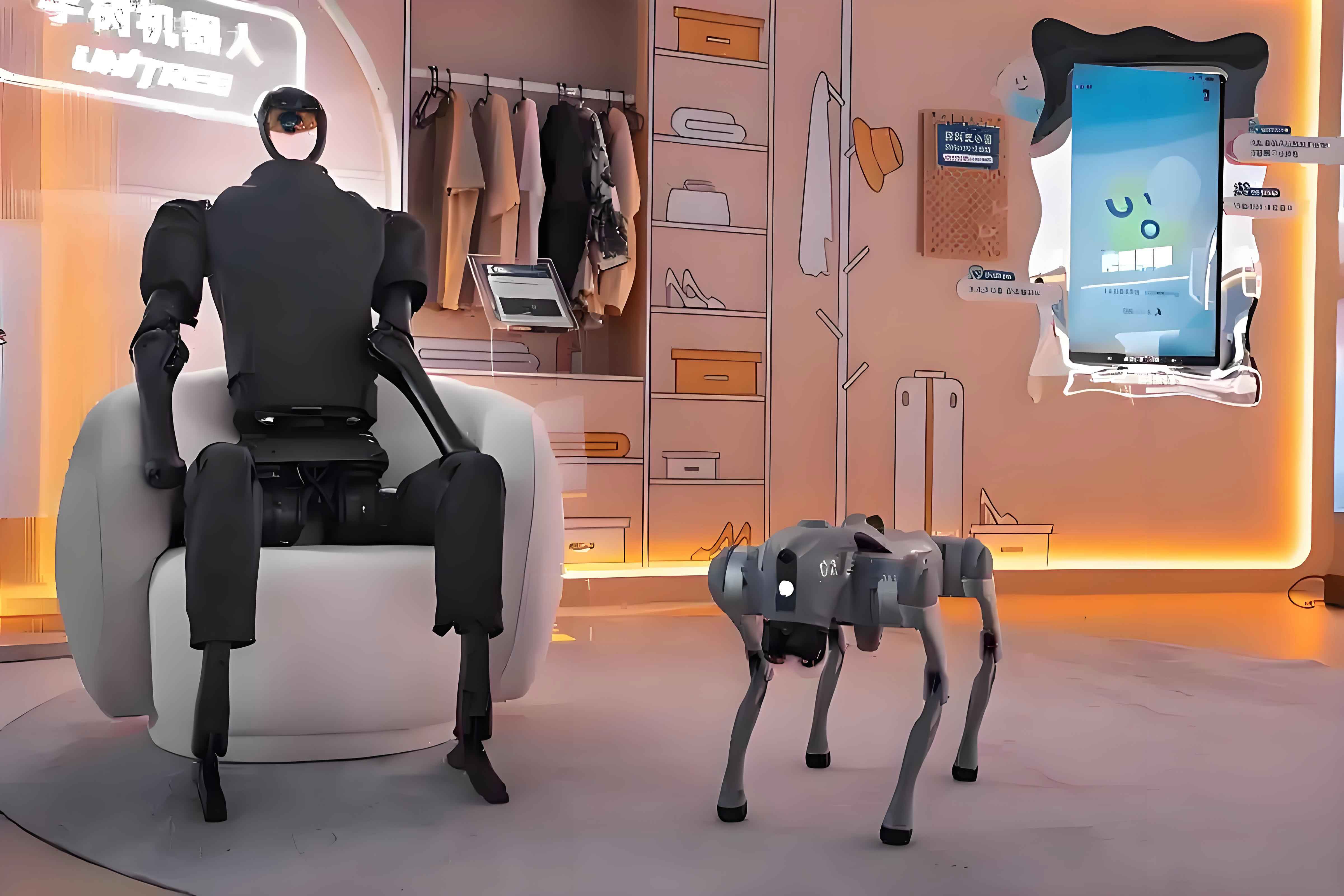
The earnings picture is not uniform, and the humanoid robot sector is still in an early stage of large-scale deployment. Yet the direction of travel is clear. Revenue is rising for many humanoid robot suppliers, orders are beginning to convert into deliveries, and several component makers are starting to report profit improvement linked to robot-related demand. The humanoid robot supply chain is therefore moving from a phase in which investors rewarded technical imagination toward a phase in which execution, mass production progress and actual scenario orders matter more. That transition is central to understanding the first-half results and the outlook for the humanoid robot industry.
1. Humanoid Robot Sector Shows a Clear Earnings Signal in the First Half of 2026
The first half of 2026 provided a broad read on how the humanoid robot industry is translating commercial momentum into financial performance. The key signal is not merely that humanoid robot concept companies reported growth. It is that growth appeared across multiple layers of the value chain, including complete machines, joint modules, motors, dexterous hands, magnetic materials and other core components. The humanoid robot supply chain is broad, and the first-half results show that demand is beginning to reach companies at different stages of the production process.
Wind data show that among the 119 A-share companies associated with the humanoid robot concept, more than 80% achieved year-over-year revenue growth in the first half of 2026. More than half achieved year-over-year net profit growth. These figures are important because they indicate that the humanoid robot theme is no longer expressed only through announcements, prototypes or technical roadmaps. It is increasingly visible in revenue lines and profit statements. The humanoid robot industry is still developing, but the first-half reporting period offered evidence that commercialization is beginning to leave a measurable trace on corporate performance.
The improvement is also consistent with the way humanoid robot companies have been positioning themselves. During 2026, humanoid robot enterprises have moved further into real-world application scenarios and accelerated commercialization efforts. That push has helped drive positive first-half performance across the humanoid robot supply chain. The result is a market environment in which investors and industry participants are paying closer attention to order conversion, batch deliveries, design wins and production ramp-ups rather than relying solely on long-term humanoid robot narratives.
At the same time, the data should be read with discipline. The humanoid robot sector remains at an early stage, and not every company in the humanoid robot supply chain has reached stable profitability. Some companies are still investing heavily in research and development, production capacity and customer validation. Others are seeing revenue growth before profit fully catches up. The first-half results therefore point to a profit inflection that is approaching, but they do not suggest that the humanoid robot industry has already reached maturity. The more accurate conclusion is that the humanoid robot supply chain is moving from technical validation toward commercial validation, with earnings improvement becoming more widespread but still uneven.
The humanoid robot market is also becoming more selective. Companies with products that can be mass-produced, delivered and integrated into customer systems are better positioned to convert humanoid robot demand into recurring revenue. Companies whose humanoid robot exposure remains primarily conceptual may continue to face a gap between market attention and financial contribution. This distinction is likely to become more important as the humanoid robot industry advances from early adoption to broader deployment.
2. Whole-Machine Makers Translate Humanoid Robot Momentum Into Revenue
Complete-machine builders offered some of the clearest evidence of humanoid robot commercialization in the first half of 2026. Unitree Robotics and UBTech Robotics both reported strong revenue and profit-related progress. Their results show that humanoid robot demand is beginning to support meaningful business scale, even as the industry remains in an early phase of deployment.
Unitree Robotics reported first-half 2026 revenue of 1.152 billion yuan, up 48.54% year over year. Its net profit attributable to shareholders reached 274 million yuan, compared with a loss of 32.0245 million yuan in the prior-year period. The swing from a loss to a profit is a significant signal for the humanoid robot supply chain because it shows that a complete-machine builder can improve profitability while scaling revenue. For the humanoid robot industry, this kind of performance supports the argument that commercialization can begin to produce financial returns before the market reaches full-scale maturity.
UBTech Robotics reported total first-half revenue of 1.27 billion yuan, an increase of 104.2% year over year. Its adjusted EBITDA was negative 170 million yuan, and the loss narrowed by 150 million yuan year over year. UBTech’s revenue growth was mainly driven by a 1445.0% year-over-year increase in revenue from full-size embodied intelligent humanoid robots. That figure is among the most direct indicators in the first-half reporting period that humanoid robot products are moving from development programs into revenue-generating deployments. The adjusted EBITDA loss also shows that the humanoid robot business still requires investment, but the narrowing loss indicates that operating leverage and commercialization are beginning to improve.
Industrial robot complete-machine companies also reported generally stronger first-half performance. EFORT Intelligent Equipment, Topstar Technology, Dobot, Estun Automation and Rokae were among the companies cited as achieving growth in the first half. Their results matter for the humanoid robot supply chain because industrial robotics and humanoid robot development share overlapping capabilities in motion control, actuators, sensors, system integration and manufacturing. As humanoid robot commercialization advances, these companies can leverage their industrial robot foundations to support humanoid robot programs and capture new demand.
EFORT Intelligent Equipment reported first-half revenue of 656 million yuan, up 28.93% year over year. Its net loss attributable to shareholders narrowed by 62.48%. Topstar Technology reported revenue of 1.288 billion yuan, up 18.61% year over year, and net profit attributable to shareholders of 104 million yuan, up 262.99% year over year. Dobot reported revenue of 316 million yuan, up 106.6% year over year. These results show that the complete-machine layer of the robotics supply chain is gaining momentum, and that humanoid robot development is taking place alongside a broader improvement in robotics demand and execution.
| Company | Humanoid robot and robotics focus | First-half 2026 revenue | Revenue year-over-year | Profitability metric | Profitability year-over-year |
|---|---|---|---|---|---|
| Unitree Robotics | Humanoid robot and robotics | 1.152 billion yuan | +48.54% | Net profit attributable to shareholders: 274 million yuan | Compared with a loss of 32.0245 million yuan in the prior-year period |
| UBTech Robotics | Full-size embodied intelligent humanoid robots | 1.27 billion yuan | +104.2% | Adjusted EBITDA: negative 170 million yuan | Loss narrowed by 150 million yuan |
| EFORT Intelligent Equipment | Industrial robots and automation | 656 million yuan | +28.93% | Net loss attributable to shareholders | Loss narrowed by 62.48% |
| Topstar Technology | Industrial robots and automation | 1.288 billion yuan | +18.61% | Net profit attributable to shareholders: 104 million yuan | +262.99% |
| Dobot | Robotics | 316 million yuan | +106.6% | Not specified in the reported data | Not specified in the reported data |
| Langxin Electric | Robot joint motors | 667 million yuan | +12.11% | Net profit attributable to shareholders: 44.51 million yuan | +0.39% |
| Leisai Intelligent | Robot joint modules and dexterous hands | 1.247 billion yuan | +39.92% | Net profit attributable to shareholders: 194 million yuan | +62.79% |
| JL Mag Rare-Earth | Embodied robot motor rotors | 4.649 billion yuan | +32.57% | Record high for the same period | Not specified in the reported data |
The complete-machine results also highlight an important feature of the humanoid robot industry: commercialization is not taking place in a single product category. Humanoid robot builders are pursuing different use cases and technical approaches, while industrial robot companies are bringing manufacturing discipline and customer access to the broader robotics market. This diversity is healthy for the humanoid robot supply chain because it creates multiple pathways for components, software and integration services to reach commercial deployment.
At the same time, the complete-machine layer still faces the challenge of scaling production while controlling costs. Humanoid robot products require complex integration across actuators, sensors, control systems and software. Revenue growth alone does not guarantee durable profitability. The first-half results show progress, but the humanoid robot industry will need continued improvement in manufacturing efficiency, product reliability and customer adoption to sustain the earnings momentum.
3. Core Component Suppliers Begin to Convert Humanoid Robot Orders Into Profit
Some of the most important signals in the first-half reporting period came from core component suppliers. The humanoid robot supply chain depends on reducers, servo motors, lead screws, sensors, joint modules, dexterous hands and magnetic materials, among other components. Several companies active in these areas are now beginning to show that humanoid robot-related demand can contribute to revenue growth and profit improvement.
Langxin Electric, which focuses on robot joint motors, reported first-half revenue of 667 million yuan, up 12.11% year over year. Its net profit attributable to shareholders was 44.51 million yuan, up 0.39% year over year. The profit growth was modest, but the company’s commentary added an important perspective on the humanoid robot opportunity. Langxin Electric stated that the high-gross-margin characteristics of the robot track are expected to optimize the company’s overall profit structure over the medium and long term. That view reflects a broader expectation in the humanoid robot supply chain: as robot-related products scale, they may improve the mix of revenue and support margin expansion.
Leisai Intelligent offered a stronger example of humanoid robot component commercialization. The company focuses on two core categories: robot joint modules and dexterous hands. In the first half of 2026, Leisai Intelligent reported revenue of 1.247 billion yuan, up 39.92% year over year, and net profit attributable to shareholders of 194 million yuan, up 62.79% year over year. The company has achieved self-research and mass production of planetary joint modules, harmonic joint modules and multi-degree-of-freedom dexterous hands. Its products have obtained batch orders from mainstream domestic robot manufacturers, and the pace of commercialization continues to accelerate.
Leisai Intelligent’s results are particularly relevant to the humanoid robot industry because joint modules and dexterous hands are critical enabling components. Humanoid robot performance depends heavily on the ability to combine precise motion, force control and dexterity in a compact and reliable package. When suppliers can mass-produce these components and secure batch orders, they help reduce integration risk for complete-machine builders and support the broader humanoid robot commercialization process. The fact that Leisai Intelligent reported both revenue growth and faster net profit growth suggests that humanoid robot-related demand can begin to create operating leverage as volumes rise.
JL Mag Rare-Earth reported first-half revenue of 4.649 billion yuan, up 32.57% year over year, setting a record high for the same period. The company has won a designated project for embodied robot motor rotors from a world-renowned technology company and has delivered small-batch products. This is another important data point for the humanoid robot supply chain because motor rotors are a key element in robot actuation. A design win with a globally recognized technology company, followed by small-batch delivery, indicates that humanoid robot programs are moving through qualification and into early production.
The component layer of the humanoid robot supply chain is often viewed as a leading indicator of commercialization. Complete-machine builders can announce prototypes and development plans, but component suppliers begin to see meaningful demand only when programs move toward pilot production and batch orders. The first-half results from Langxin Electric, Leisai Intelligent and JL Mag Rare-Earth suggest that this transition is underway. The humanoid robot industry is still early, but the movement from sample shipments to batch orders and design wins is a necessary step toward larger-scale deployment.
Component suppliers also face pressure to invest ahead of demand. Humanoid robot customers require consistency, reliability and cost competitiveness. Suppliers must build capacity, refine manufacturing processes and maintain quality standards while customer programs are still evolving. That can weigh on near-term profitability. However, the first-half results show that some companies are already finding a path to profitable growth, which strengthens the case that the humanoid robot supply chain can create value beyond the complete-machine layer.
4. Humanoid Robot Commercialization Is Moving Into Real-World Application Scenarios
The first-half performance of the humanoid robot supply chain reflects a broader shift in how the industry is approaching commercialization. Humanoid robot companies are no longer focusing only on technical demonstrations. They are increasingly moving into real-world application scenarios, where products must meet customer requirements for reliability, safety, ease of use and return on investment. That shift is important because real-world deployment creates the order flow and feedback loop needed for continuous improvement.
For the humanoid robot industry, real-world application scenarios can include manufacturing, logistics, service operations and other environments where repetitive or physically demanding tasks can be supported by robotic systems. The exact pace of adoption will vary by use case, but the direction is consistent with the first-half earnings data. Humanoid robot companies are accelerating commercialization, and the supply chain is beginning to see the effects in revenue and orders.
The movement into real-world scenarios also changes the competitive landscape. Humanoid robot builders must demonstrate that their products can operate reliably over extended periods, integrate with existing workflows and deliver economic value. Component suppliers must show that their products can meet the durability and precision requirements of commercial deployment. System integrators must ensure that humanoid robot systems can be deployed and maintained effectively. The first-half results suggest that companies across the humanoid robot supply chain are making progress on these fronts, but the industry still has substantial work to do.
Another important signal is the growth in batch orders and small-batch deliveries. Leisai Intelligent’s batch orders from mainstream domestic robot manufacturers and JL Mag Rare-Earth’s small-batch deliveries of embodied robot motor rotors show that humanoid robot programs are moving beyond one-off prototypes. These are still early-stage volumes, but they represent a critical bridge between technical validation and scaled commercialization. The humanoid robot supply chain needs such bridge volumes to refine manufacturing processes, reduce costs and improve product performance.
The first-half results also indicate that humanoid robot commercialization is creating opportunities for companies with adjacent robotics expertise. Industrial robot builders and automation suppliers can apply their experience in motion control, system integration and manufacturing to humanoid robot programs. This crossover effect is likely to support the humanoid robot supply chain as it scales, because it brings proven engineering and production capabilities into a new product category.
However, the humanoid robot industry should not be judged solely by revenue growth. Commercial deployment requires repeat orders, service networks and customer confidence. The first-half results provide evidence that the humanoid robot supply chain is making progress, but the next phase will require companies to demonstrate that they can sustain growth as volumes increase. The transition from real-world pilots to repeat commercial orders will be a key test for the humanoid robot industry.
5. Profit Inflection for the Humanoid Robot Chain Is Approaching but Remains Uneven
The first-half results support the view that a profit inflection for the humanoid robot supply chain is approaching. Revenue growth is widespread, order conversion is improving, and several component suppliers are reporting stronger profitability. Yet the inflection remains uneven. Some humanoid robot companies are already profitable, while others are still narrowing losses or investing for future growth. This unevenness is typical of an emerging industry and should be expected as the humanoid robot supply chain moves toward scale.
UBTech Robotics illustrates both the opportunity and the challenge. Its revenue more than doubled in the first half of 2026, driven by strong growth in full-size embodied intelligent humanoid robots. However, its adjusted EBITDA remained negative at 170 million yuan, even though the loss narrowed by 150 million yuan. This combination shows that humanoid robot demand can generate significant revenue growth, but the business still requires investment in product development, manufacturing and market development. The narrowing loss is a positive sign, but sustained profitability will depend on further scale and operating efficiency.
EFORT Intelligent Equipment provides another example of improving profitability without yet reaching net profit. Its revenue rose 28.93% year over year, and its net loss narrowed by 62.48%. The improvement suggests that operational performance is getting better, even as the company continues to invest in growth. For the humanoid robot supply chain, such trends are important because they show that companies can make progress toward profitability while building their positions in emerging robotics markets.
By contrast, Unitree Robotics, Topstar Technology and Leisai Intelligent reported clear net profit growth in the first half. Their results show that humanoid robot and broader robotics demand can translate into bottom-line improvement when product mix, volume and operating execution align. These companies offer evidence that the humanoid robot supply chain is not destined to remain in a loss-making investment phase indefinitely. Commercialization can create profitable growth, provided that companies manage costs and convert orders efficiently.
The humanoid robot industry is also benefiting from a shift in investor and industry focus. CICC noted that the core driver of the global humanoid robot industry will shift from theme investment based on technological imagination to industry value realization based on mass production progress and actual scenario orders. That observation captures the essence of the first-half earnings season. The humanoid robot sector is moving from a narrative-driven phase to an execution-driven phase, and the companies that can demonstrate mass production capability and real orders are likely to be better positioned.
This shift does not mean that technological innovation is less important. Humanoid robot products still require advances in actuation, perception, control and intelligence. However, the market is increasingly asking whether those advances can be manufactured, delivered and supported at commercial scale. The first-half results suggest that the humanoid robot supply chain is beginning to answer that question, even if the answer is not yet complete across every segment.
6. Humanoid Robot Value Realization Will Depend on Mass Production and Actual Orders
The next stage of humanoid robot development will be defined by mass production progress and actual scenario orders. The first-half results show that the humanoid robot supply chain has made meaningful progress, but the industry is still in the early phase of commercialization. Companies must continue to improve manufacturing yields, reduce component costs, enhance product reliability and expand customer deployments. These tasks are essential for converting humanoid robot demand into durable revenue and profit.
Mass production is particularly important for the humanoid robot supply chain because it determines whether suppliers can achieve economies of scale. Many humanoid robot components require precision manufacturing and rigorous quality control. As volumes increase, suppliers can spread fixed costs over a larger number of units and improve margin potential. However, ramping production also brings challenges, including capacity planning, supply chain coordination and workforce training. The first-half results from component suppliers suggest that some companies are making progress on these fronts, but the industry as a whole is still building the infrastructure needed for larger-scale production.
Actual scenario orders are equally important. Humanoid robot products must demonstrate value in specific applications, and customers must be willing to commit to repeat orders. The first-half data show that batch orders and small-batch deliveries are beginning to emerge, which is a positive sign. Yet the humanoid robot industry needs broader customer adoption to sustain growth. Complete-machine builders, component suppliers and system integrators all have a role to play in proving that humanoid robot systems can deliver reliable performance and economic returns in real-world environments.
CICC’s view that humanoid robot industry value will increasingly depend on mass production progress and actual scenario orders aligns with the first-half earnings evidence. Revenue growth among humanoid robot concept companies, profit improvement at selected suppliers and design wins in core components all point in the same direction. The humanoid robot supply chain is moving from concept validation to commercial validation. The companies that can execute on production, delivery and customer service are likely to capture more value as the industry develops.
At the same time, the humanoid robot industry should be prepared for a gradual rollout rather than an immediate mass-market transformation. Commercialization will likely proceed application by application, with different use cases adopting humanoid robot technology at different speeds. That means the humanoid robot supply chain will need flexibility and patience. Companies that invest in product quality, customer relationships and manufacturing capability will be better positioned to benefit as adoption expands.
7. What to Watch Next in the Humanoid Robot Supply Chain
The first-half results provide a foundation for monitoring the next phase of humanoid robot commercialization. Several indicators will be important in determining whether the current earnings momentum can be sustained and expanded across the humanoid robot supply chain.
- Order conversion and repeat demand: The humanoid robot industry needs to move from initial batch orders and small-batch deliveries to repeat commercial orders. Companies that can demonstrate repeat demand will offer stronger evidence of durable commercialization.
- Mass production progress: Humanoid robot suppliers must show that they can ramp production while maintaining quality and controlling costs. Mass production capability is a key link between revenue growth and sustainable profitability.
- Profit quality: Revenue growth alone is not enough. The humanoid robot supply chain will need to show that humanoid robot-related business can contribute to gross margin and operating profit improvement over time.
- Customer diversification: Humanoid robot companies that serve multiple customers and application scenarios may be better positioned to manage program-specific risks and capture broader demand.
- Component cost reduction: Lower component costs are essential for making humanoid robot systems more affordable and encouraging wider adoption. Suppliers that can reduce costs without compromising performance will be important enablers of the humanoid robot industry.
- Real-world deployment evidence: The humanoid robot sector needs more evidence of reliable operation in real-world scenarios. Customer case studies, repeat deployments and service performance will matter as the industry moves beyond early pilots.
These watchpoints are interconnected. Order conversion supports mass production, mass production supports cost reduction, and cost reduction supports broader adoption. The humanoid robot supply chain is therefore entering a phase in which execution across multiple dimensions will determine which companies can turn humanoid robot demand into lasting financial value.
8. Conclusion: Humanoid Robot Earnings Shift From Narrative to Execution
The first-half 2026 earnings season shows that the humanoid robot industry is making meaningful progress toward commercialization. According to Wind data, more than 80% of the 119 A-share humanoid robot concept companies reported year-over-year revenue growth, and more than half reported year-over-year net profit growth. Complete-machine builders such as Unitree Robotics and UBTech Robotics reported strong revenue performance, while industrial robot companies including EFORT Intelligent Equipment, Topstar Technology and Dobot showed improving growth. Core component suppliers such as Langxin Electric, Leisai Intelligent and JL Mag Rare-Earth provided further evidence that humanoid robot-related demand is beginning to reach the supply chain.
The humanoid robot industry is still at an early stage, and the path to scaled commercialization will not be linear. Some companies remain in a loss-narrowing phase, and others are investing ahead of demand. Yet the direction of the first-half results is clear. The humanoid robot supply chain is moving from concept hype toward performance delivery. Revenue growth is broadening, orders are beginning to convert into deliveries, and profit improvement is emerging in selected segments.
CICC’s assessment that the global humanoid robot industry will shift from theme investment based on technological imagination to industry value realization based on mass production progress and actual scenario orders captures the central change now underway. For the humanoid robot supply chain, the next phase will be defined by execution. Companies that can mass-produce reliable products, secure actual orders and convert humanoid robot demand into profitable growth will be best positioned as the industry moves toward broader commercialization. The first-half 2026 results suggest that this transition has begun, and the humanoid robot industry is now entering a period in which financial performance will increasingly separate execution leaders from concept followers.