
In a significant shift from laboratory demonstrations and stage performances, humanoid robots are now rapidly entering factory floors, driven by a series of high-value contracts and technological advancements. Recent announcements from leading Chinese companies highlight a growing trend of large-scale deployments in industrial settings, marking a pivotal moment for the humanoid robot industry. With billion-yuan orders and projections of exponential growth, the era of widespread humanoid robot adoption appears to be dawning, fueled by breakthroughs in core technologies, declining costs, and robust policy support.
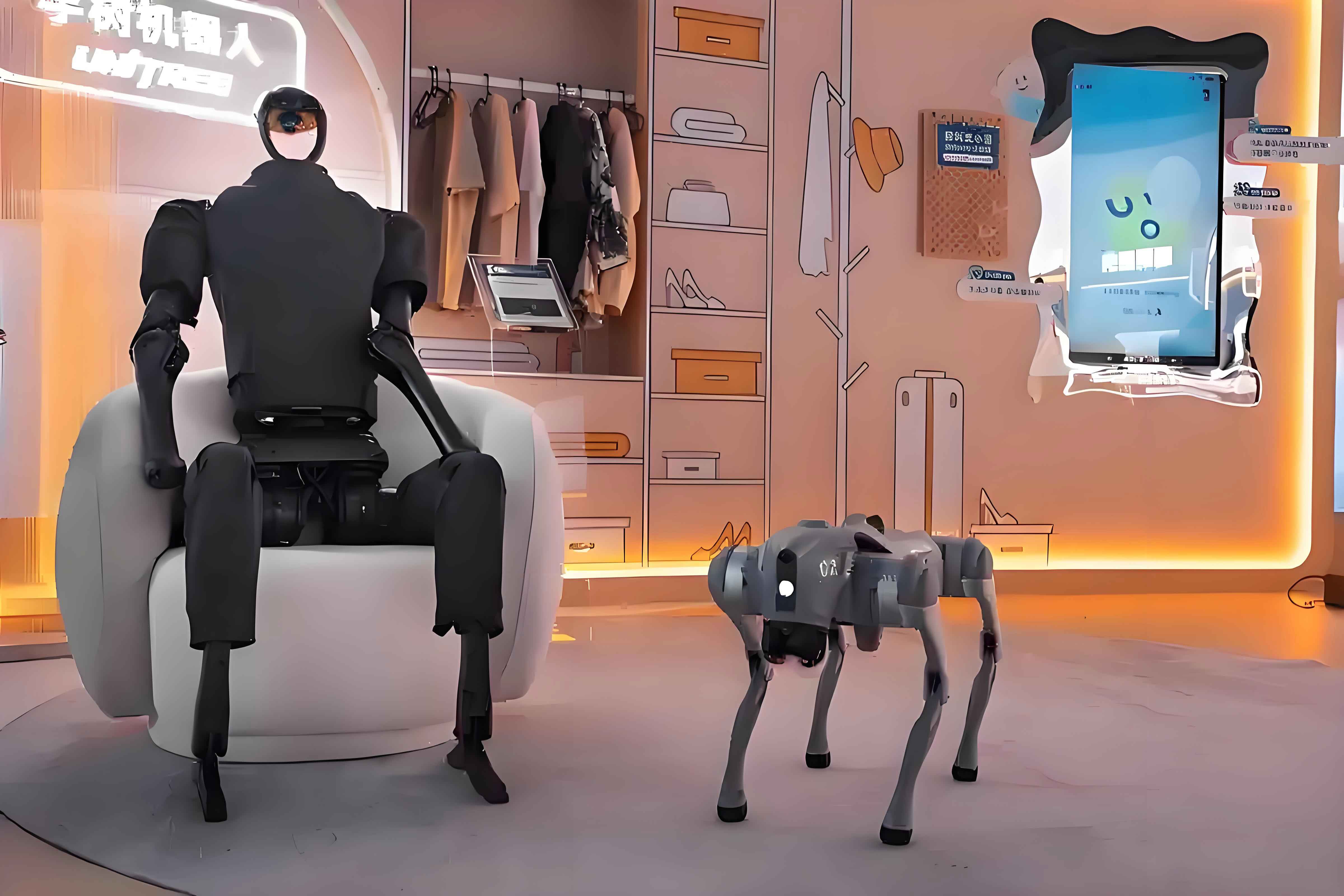
On September 3, Ubtech, a prominent humanoid robot company, revealed it had secured a 250-million-yuan order, currently the largest single contract for humanoid robots globally. This follows the deployment of Ubtech’s Walker S series industrial humanoid robots in multiple factories for training and practical applications. Similarly, recent developments include Zhiyuan Robot and Yushu Technology winning a 124-million-yuan procurement project for humanoid bipedal robot manufacturing services from a subsidiary of China Mobile. Additionally, Xingchen Intelligent announced a collaboration with Xianwai Intelligent to deploy thousands of AI robots over the next two years in industrial manufacturing, warehouse logistics, and other scenarios. These instances of billion-yuan and thousand-unit orders underscore a critical signal: after years of technical validation, humanoid robots are steadily moving toward规模化 and industrialized application.
Industry experts predict that 2025 will be recognized as the “Year of Commercialization for Humanoid Robots.” According to the “2025 Humanoid Robot and Embodied Intelligence Industry Research Report,” China’s embodied intelligence market is expected to reach 5.295 billion yuan this year, accounting for approximately 27% of the global total, while the humanoid robot market is projected to hit 8.239 billion yuan, representing about 50% of the worldwide share. From performing yangko dances on Spring Festival Gala stages to competing in marathons and now working in factories, the expanding applications of humanoid robots rely on several key factors.
- Breakthroughs in Key Core Technologies
The operation of a humanoid robot depends on the coordinated control of three main components: the “brain,” the “cerebellum,” and the “body.” The brain handles decision-making and intelligent information processing, such as analyzing instructions and recognizing environments. The cerebellum focuses on precise control of the body, while the body executes specific movement tasks like walking, jumping, or gripping. Recent product showcases have demonstrated significant improvements in these areas for humanoid robots.
For example, at the 2025 World Robot Conference, Yushu Technology exhibited its G1 combat humanoid robot, which utilizes advanced dynamic balance algorithms to exhibit exceptional cerebellar control capabilities. This humanoid robot performed seamless actions like punching and high-kicking, showcasing high levels of motor coordination. The event also featured various component products, such as six-dimensional force sensors for robot joints and highly sensitive flexible electronic skins, reflecting technological advancements in the humanoid robot sector.
Data indicates that in 2024, China accounted for two-thirds of global robot patent applications. Currently, Chinese firms make up over one-third of the world’s top 100 humanoid robot enterprises. Innovation centers have been established in regions like Beijing and Shanghai, focusing on embodied intelligence and humanoid robots, while provinces such as Zhejiang, Anhui, and Hubei have set up provincial-level robot innovation centers to pool regional industrial strengths and promote technical sharing and collaborative research. These continuous breakthroughs in core technologies, combined with an increasingly robust industrial innovation ecosystem, are powerfully driving the transition of humanoid robots from “laboratory technology” to “large-scale application.”
- Declining Costs Lowering Barriers to Industrialization
Compared to single-scene demonstrations in labs or performances on stages, industrial settings like factories and warehouses are more sensitive to costs. Initially, the research and development cost for a single humanoid robot could reach hundreds of thousands or even millions of U.S. dollars. However, thanks to technological upgrades and supply chain collaboration, the acquisition and operational costs of humanoid robots have decreased significantly.
On one hand, the localization of components is accelerating. In 2024, the domestic production rate for core parts of humanoid robots in China exceeded 70%, with self-controlled technical equipment effectively supporting cost reduction in the industry. On the other hand, mass production will further spread fixed costs like R&D, driving down the price of humanoid robots. Currently, domestic manufacturers such as Ubtech and Yushu Technology are actively planning for the mass production of humanoid robots. In the future, as humanoid robots deepen their integration with artificial intelligence and the Internet of Things, costs are expected to drop further, accelerating the shift toward large-scale commercial use of humanoid robots.
- Policy Support Playing a Crucial Role
In recent years, policies supporting the development of humanoid robots have been frequently introduced. In 2023, the Ministry of Industry and Information Technology issued the “Guiding Opinions on the Innovative Development of Humanoid Robots,” outlining deployments in areas like breaking through key technologies, cultivating key products, and expanding application scenarios. In 2024, the Ministry and six other departments released the “Implementation Opinions on Promoting the Innovative Development of Future Industries,” where humanoid robots ranked first in the “Innovative Iconic Products” section.
This year, policy efforts have intensified. In March, “embodied intelligence” was included in the government work report for the first time. In August, the State Council issued the “Opinions on Deepening the Implementation of the ‘Artificial Intelligence+’ Initiative,” proposing the vigorous development of new-generation intelligent terminals like smart robots. Cities including Hangzhou and Beijing have incorporated humanoid robots into their key development areas and introduced supportive policies. From the central government to local authorities, a multi-dimensional and multi-layered support system has been built around the development of humanoid robots, covering technical R&D, scenario openness, and industrial application.
Looking ahead, the prospects for humanoid robots are vast. A report from the China Academy of Information and Communications Technology, “Humanoid Robot Industry Development Research Report (2024),” estimates that by 2045 and beyond, the number of humanoid robots in use in China will exceed 100 million units, penetrating various industry sectors, with the整机 market scale potentially reaching the 10-trillion-yuan level. From a broader industry perspective, multiple research institutions have provided optimistic forecasts. CITIC Securities believes that 2025 is the year of mass production for humanoid robots, with the industry entering a rapid development phase. Goldman Sachs predicts that, under ideal scenarios with revolutionary technological breakthroughs, the compound annual growth rate of humanoid robot sales from 2025 to 2035 could reach 94%, with the market size hitting 154 billion U.S. dollars by 2035.
Despite the promising outlook, challenges remain, such as immature general intelligence and insufficient depth and breadth in application expansion. To enable humanoid robots to enter factories and daily life more quickly, it is essential to increase R&D investment to drive continuous innovation and breakthroughs in core technologies. Additionally, policy guidance should promote supply chain localization and mass production, further reducing costs. At the same time, capital and society must grant the industry sufficient patience to mature and evolve.
| Year | Projected Market Size (China) | Global Share | Key Drivers |
|---|---|---|---|
| 2025 | 8.239 billion yuan | ~50% | Commercialization milestones, technology breakthroughs |
| 2035 | 154 billion USD (global) | N/A | Mass production, AI integration |
| 2045+ | 10 trillion yuan (China整机) | N/A | Widespread industry adoption |
In summary, the humanoid robot sector is at a turning point, with major orders and technological progress paving the way for broader industrialization. As costs decline and policies strengthen, the vision of humanoid robots becoming commonplace in factories and beyond is steadily becoming a reality, heralding a new era of automation and intelligent systems.