
BEIJING, Aug. 12 (Xinhua) – From performing on the Spring Festival Gala to running a half-marathon alongside humans, from playing soccer on the field to sparring in a boxing ring—the rapid advancements in technology and industry surrounding humanoid robots have captured widespread attention. But can these humanoid robots now work on assembly lines tightening screws or handle household chores? How much longer until we truly see “robots doing the work”? To explore these questions, Xinhua reporters visited the 2025 World Robot Conference in Beijing in search of answers.
- Technological Breakthroughs: The Accelerated Evolution of Humanoid Robots
- Demand-Driven Growth: Accelerating the Shift from Laboratory to Market
- Maintaining Patience: The Timeline for Large-Scale Commercialization
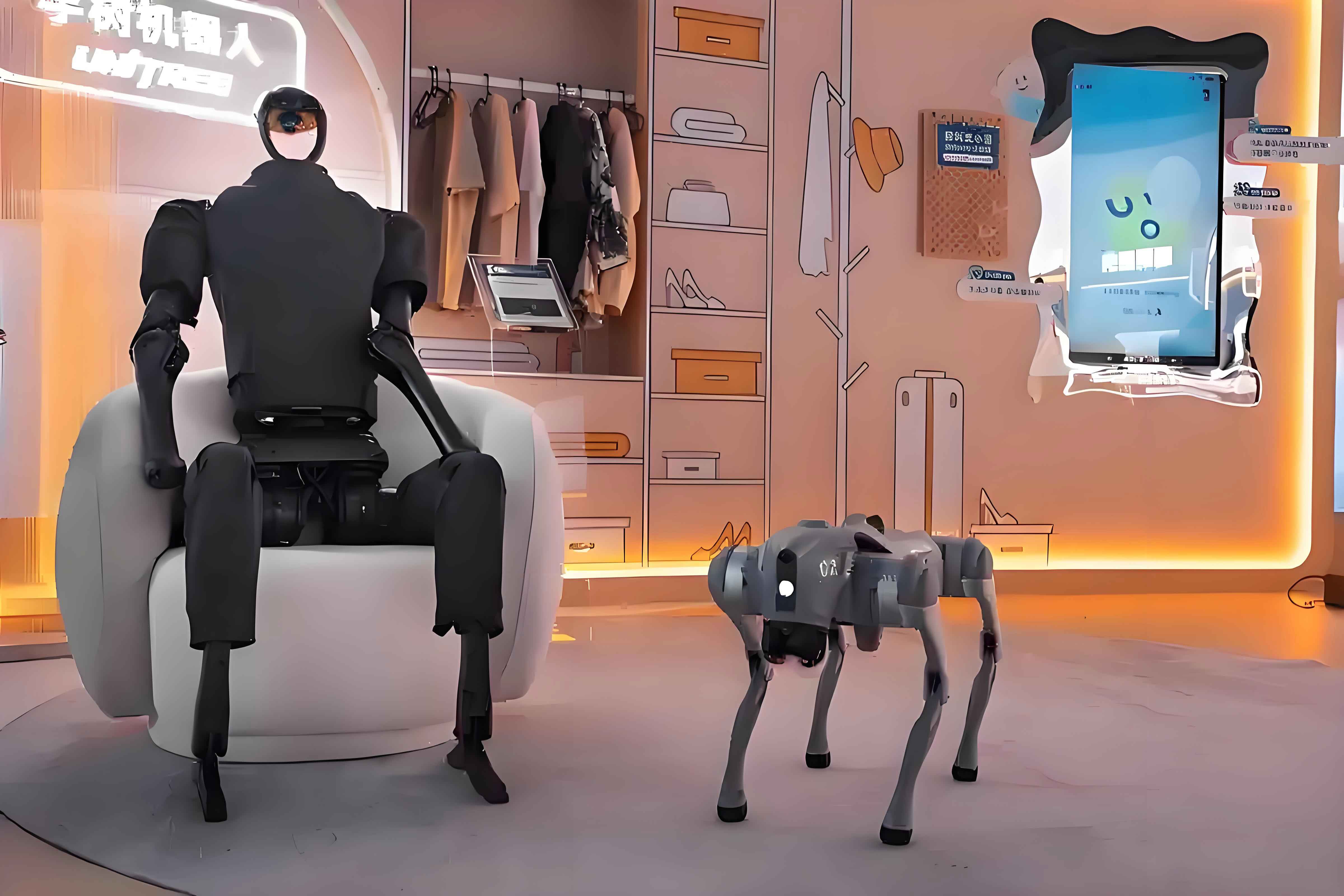
The conference venue was abuzz with excitement, particularly at the Unitree Robotics booth, where crowds gathered tightly, cheering enthusiastically. In the center of the ring, two helmeted and gloved humanoid robots exchanged swift, powerful punches and executed seamless spinning kicks, quickly rising after being knocked down, eliciting gasps and applause from the audience. “The upgraded G1 combat version of the humanoid robot incorporates the latest generation of technology,” said Wang Xingxing, founder of Unitree Robotics. He emphasized that the stability and anti-interference capabilities of the humanoid robot have been significantly enhanced, resulting in faster punches, greater force, and smoother movements.
Throughout the conference, various exhibits of humanoid robots showcased their diverse capabilities. In a simulated home environment, a new model from Xinghai Tu attracted considerable attention. Upon receiving the command, “Please tidy up the bed,” the humanoid robot navigated freely within a randomly arranged scene, intelligently and precisely making the bed. “Our self-developed end-to-end model enables execution and control across 23 degrees of freedom in the joints, from image processing and natural language commands to full-body movement, making intelligent experiences more accessible,” explained Zhang Yujia, Senior Market Manager at Xinghai Tu.
Numerous component manufacturers also presented their latest products, including six-dimensional force sensors covering the “hands and feet joints” of humanoid robots, highly sensitive flexible electronic skin, and vision products that provide comprehensive environmental awareness. Breakthroughs in these core components are making humanoid robots increasingly “human-like.” Since the release of the “Guiding Opinions on the Innovation and Development of Humanoid Robots” in 2023, and with “embodied intelligence” being included in the government work report for the first time this year, policy impetus has accelerated the evolution of humanoid robots in China. Key technological capabilities have advanced from stable walking to dynamic running, propelling embodied intelligence from “laboratory technology” toward “large-scale application.” The integration of artificial intelligence has been pivotal in these developments, with the humanoid robot sector benefiting from enhanced learning algorithms and sensory feedback systems.
Replacing human workers in hazardous environments for regular chemical sampling, executing tasks like item retrieval and delivery in supermarkets and pharmacies, and freeing up human resources in domains such as home care, elderly assistance, and security patrols—the diverse application scenarios displayed at the conference highlighted the feasibility and practicality of humanoid robots. “The industrialization of humanoid robots is accelerating markedly as they move from the laboratory to the market,” stated Xu Xiaolan, Chairman of the China Electronics Society. She noted that while last year’s focus was primarily on showcasing technological prototypes, this year several companies have achieved small-batch deliveries, with market demand shifting from conceptual validation to actual procurement.
Siasun Robot & Automation Co., Ltd., traditionally focused on industrial robotics, has entered the humanoid robot arena this year leveraging its technical expertise. “Once humanoid robots achieve comprehensive breakthroughs, their development potential will far surpass that of industrial robots; companies are concerned that without current technological reserves, they risk falling behind,” said Ha Enjing, General Manager of the Brand and Culture Management Center at Siasun. At the Ubtech exhibition booth, multiple humanoid robots collaboratively performed tasks like sorting and transporting in a smart manufacturing scenario. Ubtech’s humanoid robots have accumulated nearly 20 months of practical training experience in several new energy vehicle factories across China.
Tan Min, Chief Brand Officer of Ubtech, disclosed that 20 Ubtech humanoid robots are set to enter the production lines of Dongfeng Liuzhou Motor Co., Ltd. in a batch deployment. “Currently, the average production efficiency of humanoid robots is only about 30% to 40% of a human’s; we anticipate this could increase to approximately 80% by early 2027,” Tan projected. If industrial settings represent a quicker path to规模化 applications for humanoid robots, then entering households to serve individuals remains a long-term goal for many enterprises. Beijing Acceleration Evolution Co., Ltd. has delivered hundreds of humanoid robots to global users, primarily for robot soccer competitions and educational普及. By engaging in soccer, these humanoid robots comprehensively train their movement, perception, decision-making, and execution capabilities, while simultaneously fostering a developer ecosystem to accumulate technical foundations for future deep applications in home scenarios.
Industry insiders acknowledge that the fervor from capital and media has, to some extent, led to disparities between company valuations and commercialization progress, raising public expectations regarding the capabilities of humanoid robots. Nevertheless, most still believe that the current “overheating” state of the humanoid robot market is more beneficial than detrimental. “For decades, humanoid robot development remained within the realm of scientific research. In recent years, thanks to advances in artificial intelligence, capital and talent have flooded into this field, propelling the entire industry forward at a faster pace,” remarked Zhang Zhengtao, Researcher at the Institute of Automation, Chinese Academy of Sciences, and Founder and Chairman of Lingbao CASBOT. Xu Guanghua, Director of the Medical Engineering Cross-Research Institute at the School of Mechanical Engineering, Xi’an Jiaotong University, added that technological breakthroughs in humanoid robots can spill over into other robotic and service scenarios, thereby boosting the entire robot industry and related sectors.
According to the “Humanoid Robot Industry Development Research Report (2024)” released by the China Academy of Information and Communications Technology, it is projected that by 2045, over 100 million humanoid robots will be in use across various industry sectors in China, with the整机 market scale potentially reaching approximately 10 trillion yuan. Despite this promising outlook, the current stage of humanoid robot development remains in the early commercial phase. Achieving genuine “practicality and user-friendliness” will require additional time, and the industry hopes that capital and society will afford sufficient patience.
Zhao Weichen, Vice President of Beijing Acceleration Evolution Co., Ltd., cautioned, “Progress is not as rapid as many might think. We estimate that within three years, household humanoid robots could achieve simple interactive companionship tasks like conversation, walking dogs, and fetching packages. It may take five to ten years for general-purpose robots capable of家务, cooking, and assisting the elderly to truly become viable.” From a technical perspective, humanoid robots consist of the本体, a “cerebellum” responsible for movement control, and a “cerebrum” handling perception and decision-making. Industry experts point out that while technologies related to the本体 and “cerebellum” still require iteration, significant progress has been made; however, the “cerebrum” remains a notable短板制约 development.
Xu Guanghua believes that within three to five years, specific scenarios and product forms will gradually mature, yielding a range of point applications. In five to ten years, humanoid robots with generalization capabilities suitable for large-scale commercial use may emerge. Beyond ten to fifteen years, humanoid robots could substantially impact social structures. “The true tipping point will be when we see a humanoid robot moving freely around a venue, able to assist with tasks based on casual verbal commands,” Wang Xingxing mused. Compared to traditional robots, humanoid robots possess stronger human-computer interaction and emotional communication abilities, leading to higher user demands for product safety. This results in increased complexity and cost in both software and hardware.
Xu Xiaolan advocates for policy guidance to promote supply chain localization, thereby driving cost reductions through规模化 production. Additionally, she emphasizes the importance of developing modular and standardized designs to lower custom production costs, gradually achieving performance standards, controllable costs, and stable safety. Some interviewed experts also recommend adopting a development path of “using promotion and application to enhance products.” By “putting them to use first,” products can become “more usable,” fostering “more applications,” and ultimately enabling “ecological expansion.” Furthermore, actively exploring and promoting leasing services for humanoid robots could accelerate the formation of replicable and scalable commercial application models.
In summary, the journey of humanoid robots from demonstrative feats to integral components of daily life and industry is well underway, yet it demands sustained innovation, strategic policy support, and realistic timelines. The continued emphasis on advancing the capabilities of the humanoid robot, particularly in artificial intelligence integration and cost-effectiveness, will determine how swiftly these machines transition from fascinating prototypes to indispensable assistants in factories, homes, and beyond. The collective efforts of researchers, companies, and policymakers are crucial in navigating the challenges and unlocking the full potential of the humanoid robot revolution.