
The integration of humanoid robots into the fabric of basic education represents a significant frontier in the ongoing digital transformation of learning environments. As an embodiment of advanced digital intelligence, the humanoid robot is no longer a figment of science fiction but an emerging pedagogical tool with the potential to reshape instructional paradigms. From an international research standpoint, a systematic analysis of how humanoid robots are being studied and applied in primary and secondary education is crucial for informing innovative development and responsible implementation. This article, drawing from a synthesis of international literature, examines the current landscape, identifies persistent dilemmas, and offers reflections for future pathways, aiming to contribute to a more nuanced understanding of humanoid robot integration in classrooms worldwide.
The educational potential of the humanoid robot is multifaceted. Sensorially, these robots, often equipped with high-perception, low-latency voice and facial recognition systems, leverage their physical flexibility and capacity for personalized feedback to significantly enhance the quality of real-time human-robot interaction during instructional activities. Pedagogically, the humanoid robot can foster interactive learning and adapt intelligently based on student responses. Affectively, their anthropomorphic design can trigger student empathy, thereby increasing learning engagement and investment. These attributes position the humanoid robot as a unique agent within the educational ecosystem.
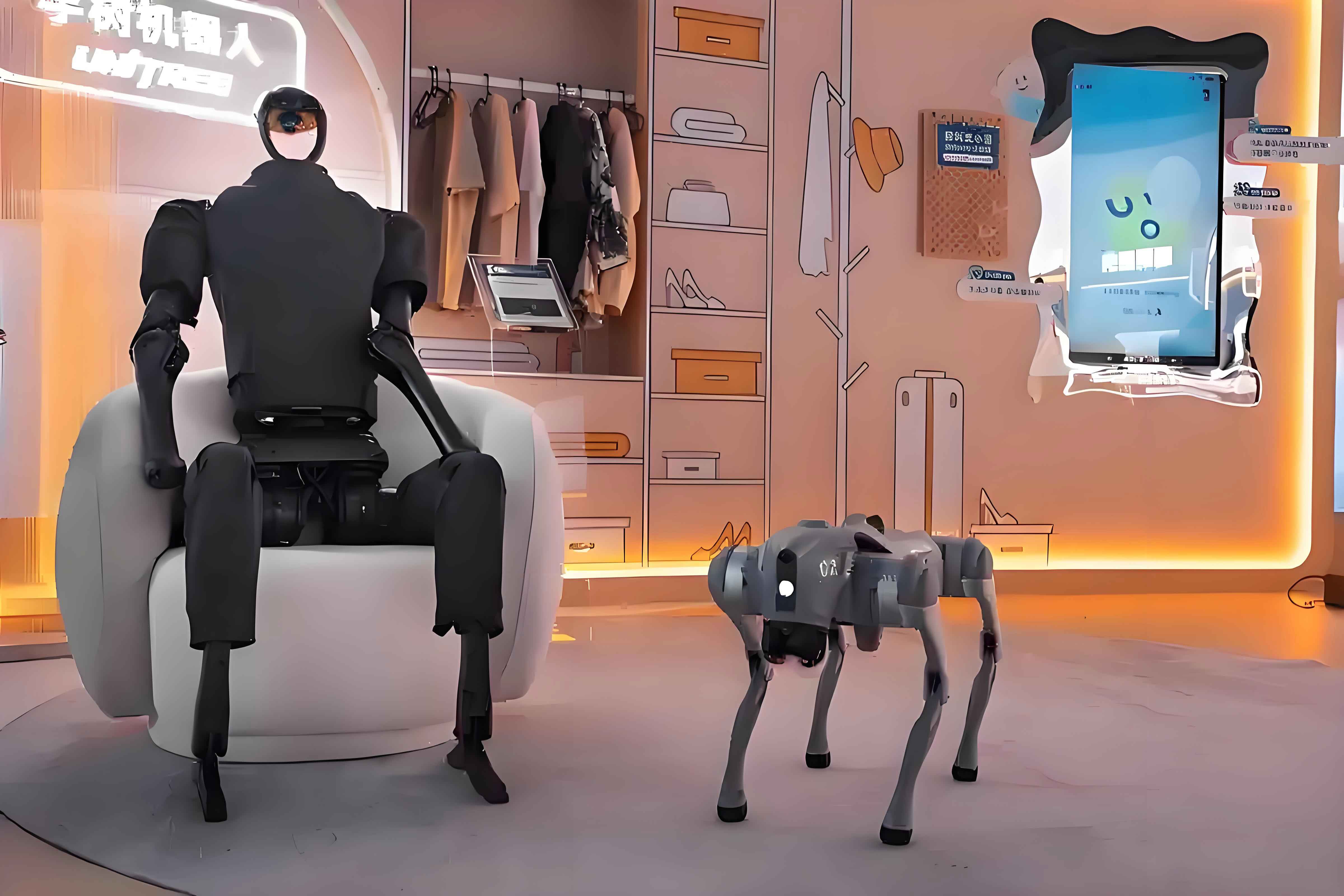
Current Landscape of Humanoid Robot Applications
International research into the application of humanoid robots in basic education reveals several prominent trends and focal areas. A review of studies indicates a concentration on specific educational stages, subjects, and pedagogical roles.
1. Concentration on Primary and Lower-Secondary Education: The majority of applied research focuses on the primary school level, with a smaller but significant body of work in lower-secondary settings. This focus can be attributed to the heightened curiosity and receptiveness to novel technologies found in younger learners, which facilitates the integration of the humanoid robot into interactive and experiential learning activities. The humanoid robot serves as a compelling tool for introducing foundational concepts in programming, computational thinking, and second language acquisition, often through game-based or hands-on methodologies.
2. Dominance of STEM and Language Education: The learning content supported by humanoid robots is currently highly concentrated. Two domains stand out:
- STEM Education: The humanoid robot is frequently utilized as a centerpiece for Science, Technology, Engineering, and Mathematics learning. It acts as a programmable platform for teaching coding logic, a physical model for understanding engineering principles, and an engaging context for applying mathematical concepts. The hands-on, problem-solving nature of robotics aligns seamlessly with STEM pedagogical goals.
- Language Learning: Particularly for second language acquisition, the humanoid robot has shown considerable promise. It functions as a patient, repeatable conversation partner, helping students practice vocabulary, pronunciation, and dialogue structures in a low-anxiety environment. Its ability to integrate gestures and cultural context cues further enriches the language learning experience.
The distribution of research across educational domains can be summarized as follows:
| Educational Domain | Relative Research Focus (Approx. % of Studies) | Primary Application of Humanoid Robot |
|---|---|---|
| STEM & Computer Science | ~54% | Programming platform, engineering model, math application context |
| Language Learning | ~32% | Conversational partner, pronunciation coach, cultural context provider |
| Special Education & Therapy | ~11% | Social skills facilitator, behavioral intervention agent |
| Other Disciplines (Arts, Social Sciences) | ~3% | Emerging applications |
3. Emergence of Diversified Educational Roles: The humanoid robot is not confined to a single function. Research illustrates its adoption in multiple, complementary roles:
- Intelligent Tutor: Providing step-by-step instruction, scaffolding, and personalized feedback.
- Learning Companion: Engaging with students as a peer in collaborative tasks or games, promoting social learning.
- Tool & Platform: Serving as the object of programming or the physical embodiment of a problem to be solved.
- Assistant: Supporting the teacher by managing routine tasks or providing additional interactive stations in the classroom.
The prevalence of these roles can be modeled based on their frequency in study designs. If we let the total observed role instances be Rtotal, the frequency of a specific role ri can be expressed as a proportion:
$$ P(r_i) = \frac{F(r_i)}{R_{total}} $$
Where analysis suggests \( P(\text{Tool/Platform}) > P(\text{Companion}) > P(\text{Tutor}) \approx P(\text{Assistant}) \).
4. Preliminary Attention to Personalized Learning: A promising, though nascent, trend is the use of the humanoid robot to support differentiated instruction. By collecting and analyzing interaction data, the humanoid robot can begin to adapt its responses, difficulty level, or feedback style to individual learner profiles. This moves the application of the humanoid robot beyond a one-size-fits-all model towards a more adaptive learning technology.
Prevailing Dilemmas and Challenges
Despite the enthusiastic exploration, the integration of the humanoid robot into basic education faces significant hurdles that constrain its potential impact.
1. Singularity of Educational Function: Although the humanoid robot possesses a wide spectrum of potential capabilities—from multimodal learning analytics to intelligent tutoring systems—its current application in research and practice remains functionally narrow. Most studies employ the humanoid robot primarily as a basic interactive object for simple programmed responses or scripted dialogues. Its deeper potential for embedded assessment, real-time learning path adaptation, and complex pedagogical reasoning is largely untapped. This underutilization is partly due to a lack of teacher awareness and training on how to integrate the full suite of a humanoid robot’s functionalities into cohesive lesson design.
2. Narrow Concentration of Learning Content: As indicated in the table above, the curriculum areas touched by the humanoid robot are limited. There is a stark paucity of research and practice involving the humanoid robot in humanities, arts, history, or physical education. This creates an implicit association that the humanoid robot is solely a tool for “technical” subjects, neglecting its potential as a storyteller, a historical figure simulator, or a partner in creative performance. The depth of integration is also often superficial, focusing on using the humanoid robot rather than deeply embedding it into the pedagogical content knowledge of a discipline.
3. Weak Synergistic Efficacy with Teachers: Effective education in the age of AI hinges on harmonious human-machine collaboration. However, a critical gap exists in understanding and facilitating the synergistic partnership between the teacher and the humanoid robot. Current models often position the humanoid robot as a replacement or a standalone attraction rather than a collaborative agent. The concept of “co-teaching” with a humanoid robot, where pedagogical responsibilities are dynamically shared based on respective strengths, is under-theorized and under-researched. Furthermore, frameworks for assessing and developing teachers’ competency to effectively collaborate with a humanoid robot—what we might term “Human-Robot Pedagogical Synergy” (HRPS)—are missing. This synergy deficit \( S_d \) can be conceptualized as the gap between potential and realized collaborative efficiency:
$$ S_d = 1 – \frac{E_{observed}}{E_{potential}} $$
where \( E \) represents a composite metric of instructional efficiency, student outcome gains, and teacher satisfaction.
4. Deficiency in Supportive Pedagogical Mechanisms: The implementation of a humanoid robot in the classroom is not merely a technical act but a pedagogical intervention that requires supportive mechanisms. These are currently lacking:
- Student Agency: Risks of over-reliance on the humanoid robot, potentially undermining students’ development of autonomous problem-solving and critical thinking skills.
- Emotional & Social Depth: The limited emotional intelligence of current humanoid robots may lead to impoverished social learning experiences or an inability to provide genuine empathy, potentially affecting socio-emotional development.
- Ethical & Safety Frameworks: Insufficient protocols for data privacy, psychological safety, and the mitigation of algorithmic bias in educational interactions with a humanoid robot.
- Equity Considerations: Emerging evidence suggests differential impacts based on gender or learning style, requiring careful instructional design to ensure equitable benefits from humanoid robot interactions.
The maturity \( M \) of these supportive mechanisms can be seen as a weighted sum critical for sustainable integration:
$$ M = w_1C_{agency} + w_2C_{ethics} + w_3C_{equity} + w_4C_{social} $$
where \( C \) represents the maturity level of each component (0 to 1) and \( w \) their respective importance weights. Currently, for many implementations, \( M \) remains low.
Reflections and Future Directions
To move beyond the current dilemmas and harness the transformative potential of the humanoid robot, future research and practice should pivot towards the following directions:
1. Deep Integration into the Intelligent Teaching-Learning Cycle: The humanoid robot must be woven into the entire pedagogical process, not just as an occasional activity. This means:
- Design: Using the humanoid robot’s capabilities as a core element in instructional design, creating lessons where its interactivity, adaptability, and physical presence are essential to the learning objective.
- Delivery & Interaction: Developing more natural, context-aware, and pedagogically sound interaction scripts that go beyond simple Q&A.
- Assessment & Feedback: Leveraging the humanoid robot as a formative assessment tool that can collect fine-grained process data (e.g., hesitation, engagement cues, error patterns) and provide immediate, adaptive feedback.
- Personalization: Implementing algorithms that allow the humanoid robot to construct and update dynamic learner models, tailoring content pacing, complexity, and scaffolding in real-time.
The goal is to achieve a state where the humanoid robot’s function \( F_{HR} \) is an integral, non-separable part of the lesson’s pedagogical function \( F_{Lesson} \):
$$ F_{Lesson} = f(F_{HR}, F_{Teacher}, F_{Material}, F_{Peer}) $$
where the humanoid robot’s contribution is substantial and synergistic.
2. Fostering Holistic Student Competencies and Dispositions: Moving beyond subject-specific knowledge, the humanoid robot should be strategically used to cultivate 21st-century skills and dispositions. This includes:
- Computational Thinking & Design Thinking: Using the humanoid robot as a canvas for coding, iterative design, and problem decomposition.
- Collaboration & Communication: Structuring tasks where students must collaborate with each other and the humanoid robot to achieve a common goal, practicing negotiation, explanation, and task delegation.
- Critical Thinking & Creativity: Posing open-ended challenges involving the humanoid robot that require evaluation, argumentation, and innovative solution-finding.
- Global & Cultural Awareness: Programming the humanoid robot to share stories, customs, or languages from different cultures, fostering empathy and intercultural understanding.
3. Elevating Teacher Digital-Intelligent Competence (DIC): The successful integration of a humanoid robot is predicated on a teacher who is not just technologically literate but pedagogically intelligent about its use. Teacher professional development must evolve to include:
- DIC Knowledge: Understanding the technical affordances and limitations of the humanoid robot, basics of AI, data ethics, and learning analytics.
- DIC Skills: The ability to co-design lessons with a humanoid robot, manage a hybrid classroom with both human and robotic agents, and interpret the data generated by humanoid robot interactions to inform instruction.
- DIC Dispositions: A mindset of collaborative innovation, ethical scrutiny, and a willingness to experiment and reflect on new pedagogical partnerships with a humanoid robot.
We can model a teacher’s readiness for humanoid robot integration \( R_{HR} \) as:
$$ R_{HR} = K_{DIC} \cdot S_{DIC} \cdot D_{DIC} $$
where \( K, S, D \) represent normalized scores (0-1) for Knowledge, Skills, and Dispositions, respectively. Investment in maximizing \( R_{HR} \) is paramount.
4. Engaging with Robust Privacy and Ethical Governance: As the humanoid robot becomes more integrated and data-rich, proactive ethical governance is non-negotiable. This involves:
- Technical & Data Ethics: Implementing privacy-by-design principles, ensuring transparent data collection and usage policies, and rigorously testing for and mitigating algorithmic biases that could affect student assessment or interaction.
- Relational & Pedagogical Ethics: Establishing guidelines to prevent emotional manipulation or over-attachment, ensuring the humanoid robot’s role complements rather than replaces essential human relationships in learning, and safeguarding student psychological well-being.
- Institutional & Policy Ethics: Developing clear accountability frameworks (who is responsible for the humanoid robot’s actions and decisions?), creating inclusive oversight committees involving educators, parents, and ethicists, and formulating age-appropriate digital citizenship curricula that include human-robot interaction ethics.
The strength of this governance framework \( G \) acts as a necessary precondition and multiplier for the sustainable and positive impact \( I \) of the humanoid robot:
$$ I = G \cdot (P_{Tech} + P_{Ped} + P_{Soc}) $$
where \( P \) terms represent the technical, pedagogical, and social potential of the humanoid robot application. Without strong governance (\( G \rightarrow 0 \)), the realized impact approaches zero regardless of other potentials.
In conclusion, the international journey of integrating the humanoid robot into basic education is one of exciting potential punctuated by complex challenges. The current landscape reveals a tool that is powerfully engaging but not yet deeply transformative. By shifting focus from isolated applications to systemic integration, from content delivery to competency cultivation, from teacher replacement to teacher empowerment, and from technical implementation to ethical stewardship, we can guide the development of the humanoid robot towards a future where it truly augments and enriches the human-centric mission of education. The path forward requires not just better robots, but better pedagogical designs, better-prepared educators, and wiser ethical frameworks to ensure that every interaction with a humanoid robot in the classroom is a step towards more meaningful and equitable learning.