
On August 26, the Second World Humanoid Robot Games concluded, bringing together 666 teams and 2,056 robots across 51 events and 1,301 contests. Multiple records were repeatedly broken during the competition. Beyond the arena, the convergence of technology and finance drew equally strong attention. XPeng Group’s humanoid robots business completed its first financing round of more than USD 900 million, with a post-money valuation of more than USD 6.3 billion. Unitree Technology, described as the first A-share humanoid robots company, listed on the STAR Market on August 19, and its opening price on the first trading day rose 629 percent from its issue price.
From primary-market fundraising to secondary-market listing, from industrial capital deployment to policy-backed financial support, a multi-layered financial system is providing full-lifecycle funding for the humanoid robots industry. Industry participants believe that the humanoid robots sector is accelerating from the technology-validation stage toward a new stage in which capitalization and commercialization develop in parallel.
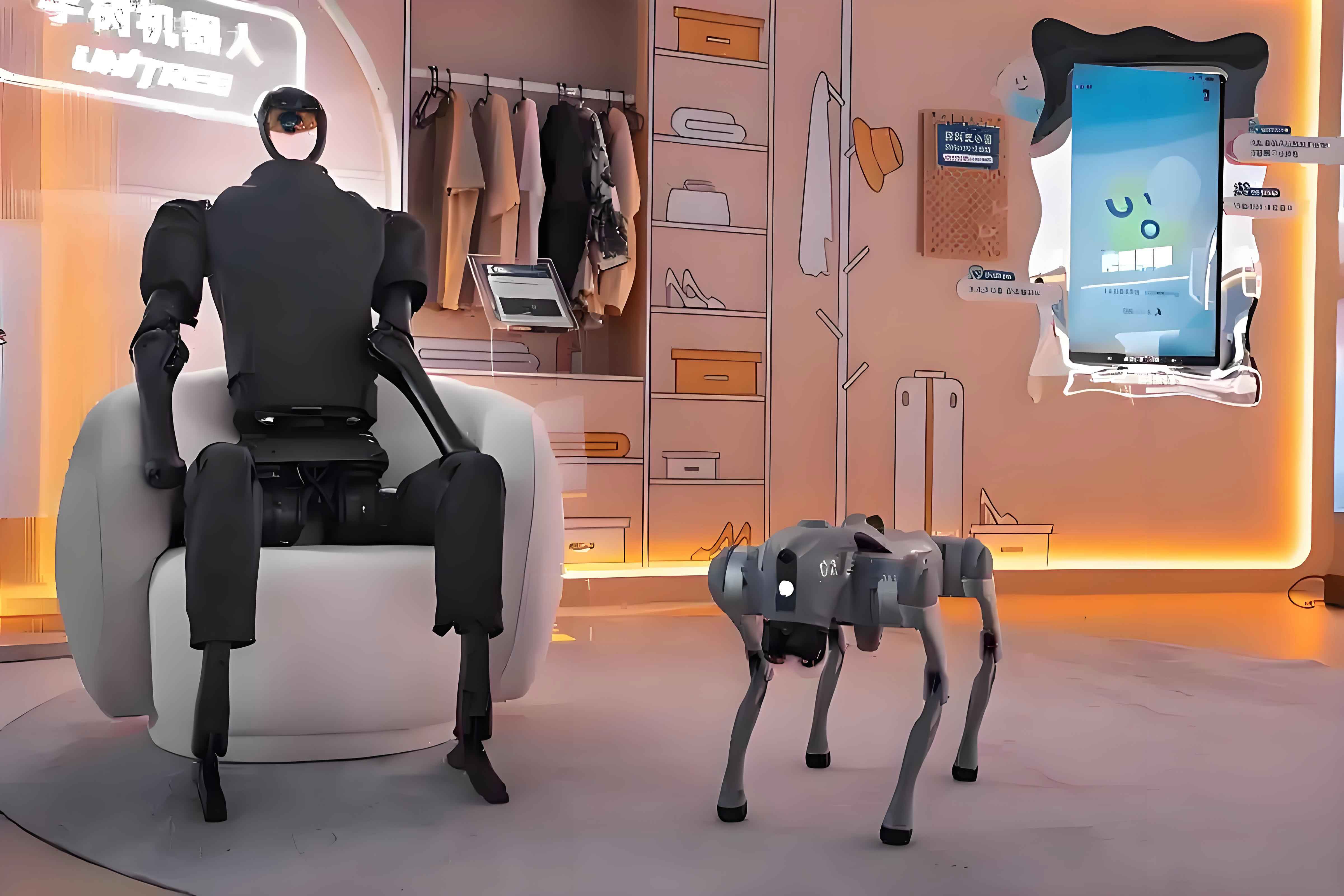
1. Competition Results and Landmark Capital Events Define a New Stage for Humanoid Robots
The Second World Humanoid Robot Games offered a highly visible demonstration of how far humanoid robots have moved in terms of mobility, coordination, endurance, and task execution. The event gathered 666 teams and 2,056 robots, with competition spread across 51 events and 1,301 contests. The scale of participation and the repeated breaking of records underlined that humanoid robots are no longer confined to laboratory demonstrations. They are increasingly being tested in public, competitive, and semi-structured environments that resemble the complexity of real-world deployment.
Yet the significance of the event extended beyond athletic performance. During the same period, two capital-market developments highlighted how quickly the humanoid robots industry is being absorbed into the financial mainstream. XPeng Group’s humanoid robots business completed a first financing round of more than USD 900 million, achieving a post-money valuation of more than USD 6.3 billion. This transaction set a new record for a single private-equity financing round in China’s embodied intelligence sector. Separately, Unitree Technology listed on the STAR Market on August 19, and its first-day opening price rose 629 percent from the issue price, making it a closely watched public-market debut for humanoid robots.
These events matter because they show that the humanoid robots industry is attracting capital from multiple parts of the financial system. Venture capital, private equity, strategic corporate investment, government-guided funds, bank credit, and public equity markets are all beginning to interact with the sector. For an industry that requires long research and development cycles, expensive hardware iteration, large-scale data collection, and eventual mass production, this multi-layered support is not merely helpful. It is essential.
The combination of a high-profile international competition and major financing and listing events also signals a psychological shift. Humanoid robots are being evaluated not only as engineering achievements but also as investable business platforms. The question is no longer whether humanoid robots can perform impressive tasks in controlled settings. The question is whether they can be produced at scale, deployed reliably, and supported by business models that justify continued capital commitment.
| Date | Event | Key figure |
|---|---|---|
| August 26 | Second World Humanoid Robot Games concluded | 666 teams, 2,056 robots, 51 events, 1,301 contests |
| August 24 | XPeng Group humanoid robots business completed first financing round | More than USD 900 million raised; post-money valuation more than USD 6.3 billion |
| August 19 | Unitree Technology listed on the STAR Market | First-day opening price rose 629 percent from issue price |
| August 11 | Daimon Robotics announced financing | Hundreds of millions of yuan; led by Ant Group |
2. Internet Giants Expand Strategic Presence in Humanoid Robots Through Capital and Industrial Synergy
The XPeng Group financing round was led by IDG Capital, with Gaorong Ventures participating, and it also received support from Tencent and Alibaba as strategic investors. XPeng Group will continue to control the humanoid robots business. The proceeds are intended for software and hardware research and development, physical AI model training and iteration, high-quality data collection, construction of a full-chain mass-production base, and global commercialization expansion. The structure of the transaction shows that humanoid robots are no longer a niche interest for specialist funds. They have become a strategic priority for large technology platforms.
IDG Capital stated that embodied intelligence is at a key inflection point, moving from technological breakthroughs toward mass-production deployment. In its view, XPeng humanoid robots have achieved a full-stack self-developed layout covering edge AI chips, physical AI large models, and complete machine hardware. The business also possesses edge-side computing power, training computing power, and a high-quality data closed-loop system. At the same time, the humanoid robots business can generate strategic synergies with intelligent vehicles and autonomous driving operations. These synergies are important because they allow humanoid robots to share perception, planning, control, simulation, and data infrastructure with adjacent intelligent systems.
The participation of Tencent and Alibaba is notable because neither company is entering the humanoid robots field for the first time. Tencent has already invested in multiple embodied intelligence enterprises. Alibaba has continued to invest in robot perception and control through Alibaba Cloud and the DAMO Academy. Their involvement suggests that the competition around humanoid robots is not limited to hardware. It extends to cloud computing, artificial intelligence models, data services, developer ecosystems, and enterprise-level deployment channels.
Beyond Tencent and Alibaba, Ant Group has also been active in embodied intelligence. On August 11, Daimon Robotics, an embodied intelligence startup, announced a financing round of hundreds of millions of yuan, led by Ant Group, with existing shareholders oversubscribing. Ant Group had previously invested in Galaxea and Astribot, among other robot companies. In addition, Ant Lingbo, a wholly owned subsidiary of Ant Group, has launched its first external financing round. These moves indicate that Ant Group is building a broader presence across the humanoid robots and embodied intelligence value chain.
The entry of internet giants brings more than money. It brings industrial coordination, technology empowerment, and scenario openness. This combination is creating an ecosystem that can be described as industry plus capital plus technology. For humanoid robots companies, access to large-scale cloud infrastructure, AI training platforms, consumer and enterprise service scenarios, and supply-chain resources can be as valuable as direct funding. For the internet platforms, humanoid robots represent a potential new interface for artificial intelligence, one that can connect digital intelligence with physical tasks.
Analysts note that internet giants are paying particular attention to the brain of embodied intelligence. By combining the brain with cloud AI, humanoid robots can potentially adapt to more usage scenarios. This is significant because one of the biggest bottlenecks facing embodied intelligence today is the limited range of application scenarios. Hardware improvements alone cannot solve that bottleneck. Better models, richer data, stronger generalization, and closer integration with cloud services are required. The strategic investors are positioning themselves at precisely that intersection.
3. Primary-Market Activity Remains Strong as Capital Concentrates on Scalable Humanoid Robots Projects
Even as the scenario bottleneck remains unresolved, capital has continued to flow into the sector at an accelerating pace. Embodied intelligence has moved from laboratory technology exploration into a critical period of industrialization. It has become a core arena for global technology competition, industrial upgrading, and future industrial planning. Against this background, domestic primary-market investment and financing activity has remained highly active. Expectations for technology deployment are attracting capital quickly, and the industry’s heat is rising through an accelerated upward channel.
Statistics from IT Juzi show that in 2025, domestic embodied intelligence financing events reached 325, with a total financing amount of RMB 39.832 billion. Compared with 2024, the number of events increased by 216 percent, and the financing amount increased by 326 percent. In 2026, the momentum has strengthened further. In the first half of the year, total financing in the domestic embodied intelligence sector exceeded RMB 90 billion, reaching RMB 93.5 billion. The number of financing events reached 322, an increase of 137 percent year on year. These figures reflect sustained and strengthening investor confidence in the embodied intelligence sector.
| Period | Financing events | Financing amount | Year-on-year growth in events |
|---|---|---|---|
| 2025 full year | 325 | RMB 39.832 billion | 216 percent |
| First half of 2026 | 322 | RMB 93.5 billion | 137 percent |
Alongside the rapid growth in financing scale, the flow of funds has undergone a structural change. A research note from BOC International indicates that, compared with 2025, when capital was broadly distributed across early-stage projects, 2026 has seen funds begin to concentrate in mid-to-late-stage projects that possess mass-production potential and clear commercialization paths. This shift suggests that investors are becoming more selective. They are still enthusiastic about humanoid robots, but they are increasingly focused on companies that can demonstrate a credible route from prototype to product, and from product to revenue.
From the perspective of the value chain, the middle stream, including the brain and the body, is the most closely watched direction for capital. The upstream core components sector ranks second. This pattern reflects the current state of the industry. The brain and body determine the intelligence, mobility, and overall capability of humanoid robots. Core components determine cost, reliability, and supply-chain stability. As the industry moves toward commercialization, capital is naturally gravitating toward the segments that most directly affect performance and scalability.
The concentration of capital in later-stage projects does not mean that early-stage innovation has become unimportant. Rather, it indicates that the sector is maturing. Early-stage technologies still need funding, but the market is now placing greater emphasis on execution. Companies that can build complete systems, secure supply chains, collect high-quality data, and establish commercial partnerships are likely to attract disproportionate attention. This is a natural development for an industry that has already generated substantial excitement and now faces the discipline of deployment.
4. Policy and Financial Coordination Add Momentum to Humanoid Robots and Embodied Intelligence
The listing of Unitree Technology is only one symbol of the broader rise of the humanoid robots industry. Major economies around the world continue to increase their investment in embodied intelligence. Within the global embodied intelligence landscape, China has already formed a relatively prominent industrial clustering advantage. Behind that advantage is the coordinated effort of policy and finance.
Since 2025, relevant policy documents have been issued intensively, providing systematic support to the embodied intelligence and humanoid robots industrial chain. Embodied intelligence has been included in the Government Work Report for 2 consecutive years. The outline of the 15th Five-Year Plan also lists embodied intelligence as a future industry, establishing strategic guidance for the development of the sector. In June this year, the Ministry of Industry and Information Technology and the State-owned Assets Supervision and Administration Commission of the State Council jointly issued a notice to officially launch the 2026 special action for real-scenario training of humanoid robots and embodied intelligence. The action aims to promote the normalized deployment and application of humanoid robots and embodied intelligence products in real production and living environments, and to accelerate the realization of scale development.
| Time | Policy or financial action | Relevance to humanoid robots and embodied intelligence |
|---|---|---|
| Since 2025 | Relevant policy documents issued intensively | Systematic support for the embodied intelligence and humanoid robots industrial chain |
| 2025 and 2026 | Embodied intelligence included in the Government Work Report for 2 consecutive years | Strategic guidance for industry development |
| 15th Five-Year Plan outline | Embodied intelligence listed as a future industry | Long-term positioning within future industrial planning |
| June this year | MIIT and SASAC jointly launched the 2026 special action for real-scenario training | Promote normalized deployment in real production and living environments and accelerate scale development |
| June this year | STAR Market reform expanded the fifth set of listing standards to artificial intelligence | Support quantum technology, biomanufacturing, embodied intelligence, and other hard-tech enterprises |
The financial support system is also being improved in parallel. Technology loans from the banking system, government-guided funds, and industrial investment funds are providing diversified, full-cycle financing support for humanoid robots companies. Together, these instruments are forming a technology-finance service pattern characterized by policy guidance, participation by diverse financial entities, and active follow-up by social capital. This pattern is important because humanoid robots companies have different capital needs at different stages. Early-stage companies need patient equity capital for research. Growth-stage companies need larger rounds for data collection, hiring, and pilot production. Mature companies need bank credit, supply-chain finance, and public-market access for mass production and global expansion.
It is also worth noting that the capitalization of robot and embodied intelligence companies has received policy support. In June this year, the STAR Market underwent a new round of reform. The reform expanded the scope of the fifth set of listing standards to the artificial intelligence field and supported more hard-tech enterprises in quantum technology, biomanufacturing, embodied intelligence, and other areas to list on the STAR Market. This is a significant development for humanoid robots companies, many of which require substantial upfront investment and may not fit traditional profitability-based listing criteria in their early years.
Local governments are also seizing future industry opportunities. Through multiple measures such as capacity cultivation, scenario expansion, legislative innovation, and funding support, they are increasing their布局 of the sector. BOC International believes that local policy measures further strengthen the clustering of innovation resources, accelerate the improvement of the industrial chain, and create a more mature industrial environment for pilot applications and mass-production ramp-up. For humanoid robots companies, local support can be especially valuable in areas such as testing grounds, application scenarios, talent attraction, and supply-chain coordination.
5. Commercialization Outlook: Humanoid Robots Move from Validation to Scaled Deployment
The humanoid robots industry is now entering a more demanding phase. Capitalization has become more visible, but commercialization remains the ultimate test. Investors, policymakers, and companies all understand that humanoid robots must eventually demonstrate economic value in real environments. The transition from technology validation to commercial deployment is not automatic. It requires advances in artificial intelligence, hardware reliability, cost reduction, safety, data infrastructure, and service models.
The current financing environment provides important support for that transition. Primary-market capital helps companies survive the long research and development phase. Strategic investment from internet platforms provides cloud compute, AI models, and scenario access. Government-guided funds and bank credit reduce the risk of later-stage expansion. Public listings offer long-term capital and greater transparency. Together, these layers form a full-lifecycle financing system that can accompany humanoid robots companies from startup to scale-up.
5.1 Capitalization and Commercialization Move in Parallel
The phrase most often used to describe the current stage is parallel development of capitalization and commercialization. This means that financial market activity and real-world deployment are advancing at the same time. On the capitalization side, humanoid robots companies are raising larger rounds, attracting strategic investors, and testing public-market valuations. On the commercialization side, they are building mass-production bases, expanding data collection, improving physical AI models, and exploring deployment in production and living environments. The two processes are increasingly interdependent. Capital enables commercialization, while commercialization evidence supports further capital raising.
Unitree Technology’s STAR Market listing illustrates how public markets can validate the humanoid robots theme. The first-day opening increase of 629 percent from the issue price demonstrated intense investor interest. XPeng Group’s financing round, with more than USD 900 million raised and a post-money valuation of more than USD 6.3 billion, showed that private investors are willing to commit large amounts to humanoid robots businesses that can combine hardware, AI, and strategic synergies. These events are likely to encourage more companies in the humanoid robots supply chain to consider capital-market strategies.
5.2 The Brain and Application Scenarios Become the Decisive Battleground
One of the clearest messages from the current investment landscape is that the brain of embodied intelligence is becoming a decisive battleground. Internet giants are especially focused on combining embodied intelligence with cloud AI. This combination could allow humanoid robots to adapt to more scenarios, learn from broader datasets, and improve their generalization capabilities. The brain is not only a software problem. It involves the integration of perception, decision-making, motion control, language understanding, and task planning. It also requires a closed loop between simulation and real-world data.
The biggest bottleneck, however, remains the limited range of application scenarios. If humanoid robots can only perform a narrow set of tasks in controlled environments, their market potential will remain constrained. Expanding scenarios requires more than technical improvement. It requires cost reduction, safety assurance, user acceptance, regulatory clarity, and clear return on investment. Investors are therefore watching closely for companies that can demonstrate repeatable deployments, not just one-off demonstrations.
5.3 Mass Production and Supply-Chain Maturity Will Test Capital Discipline
Mass production is another critical test. The XPeng Group financing specifically includes construction of a full-chain mass-production base. This reflects a broader recognition that humanoid robots must move from handmade prototypes to standardized products. Mass production requires stable supplies of core components, rigorous quality control, efficient assembly, and after-sales service networks. It also requires cost structures that can support commercial adoption.
As capital flows toward mid-to-late-stage projects with mass-production potential and clear commercialization paths, companies will face greater pressure to execute. The ability to scale production while maintaining quality and controlling costs will become a key differentiator. The upstream core components sector will play a vital role in this process. Advances in actuators, sensors, chips, power systems, and lightweight materials can directly affect the performance and affordability of humanoid robots. Capital allocation to both the middle stream and upstream reflects this reality.
5.4 Policy Coordination and Market-Based Finance Must Continue to Work Together
Policy coordination will remain essential. The inclusion of embodied intelligence in the Government Work Report for 2 consecutive years, its designation as a future industry in the 15th Five-Year Plan outline, the 2026 special action for real-scenario training, and the STAR Market reform all provide a supportive framework. These measures reduce uncertainty and signal long-term commitment. Local policies on capacity cultivation, scenario expansion, legislative innovation, and funding support further strengthen the industrial environment.
At the same time, market-based finance must continue to play its role. Government guidance can catalyze investment, but it cannot replace commercial discipline. Banks, venture funds, private-equity firms, strategic investors, and public-market investors each bring different forms of scrutiny. Their participation helps ensure that capital is allocated to companies with credible technology, viable business models, and capable management teams. The interaction between policy support and market discipline is likely to shape the next phase of the humanoid robots industry.
6. Conclusion: A Multi-Layered Capital Ecosystem Reshapes the Humanoid Robots Landscape
The humanoid robots industry has reached a notable inflection point. The Second World Humanoid Robot Games demonstrated the growing capabilities of humanoid robots in competitive settings. XPeng Group’s more than USD 900 million financing round and post-money valuation of more than USD 6.3 billion showed the scale of private capital now available to leading humanoid robots businesses. Unitree Technology’s STAR Market listing and its first-day opening increase of 629 percent highlighted the public market’s appetite for the sector. These developments are not isolated. They are part of a broader shift in which humanoid robots are becoming a focal point for technology, industry, and finance.
Primary-market data reinforce the trend. In 2025, domestic embodied intelligence financing events reached 325, with RMB 39.832 billion raised, representing growth of 216 percent in event count and 326 percent in amount compared with 2024. In the first half of 2026, total financing reached RMB 93.5 billion, while financing events reached 322, up 137 percent year on year. Capital is not only increasing in volume. It is also becoming more selective, moving toward mid-to-late-stage projects with mass-production potential and clear commercialization paths. The middle stream brain and body segments, followed by upstream core components, are attracting the most attention.
Internet giants are playing a distinctive role. Tencent, Alibaba, Ant Group, and other large platforms are investing across the humanoid robots and embodied intelligence value chain. They bring capital, cloud computing, AI models, data infrastructure, and scenario access. Their focus on the brain of embodied intelligence reflects a belief that cloud AI and embodied AI can together expand the range of applications for humanoid robots. This is important because application scenarios remain the sector’s central bottleneck. Solving that bottleneck will require not only better hardware but also smarter software, richer data, and more open deployment environments.
Policy and finance are also converging. Embodied intelligence has been included in the Government Work Report for 2 consecutive years and listed as a future industry in the 15th Five-Year Plan outline. The June launch of the 2026 special action for real-scenario training of humanoid robots and embodied intelligence aims to promote normalized deployment in real production and living environments. The STAR Market reform has expanded the fifth set of listing standards to artificial intelligence and supports embodied intelligence and other hard-tech enterprises. Bank technology loans, government-guided funds, and industrial investment funds are providing diversified support. Local measures on capacity, scenarios, legislation, and funding are strengthening the industrial ecosystem.
For humanoid robots companies, the opportunity is substantial but the requirements are rising. Capital is available, but it is increasingly tied to milestones. Policy support is strong, but commercialization must still be proven. Public markets are open, but they demand transparency and sustainable growth. The next stage of the humanoid robots industry will be defined by execution: the ability to build reliable products, collect high-quality data, improve physical AI models, reduce costs, scale production, and deploy humanoid robots in real production and living environments.
The industry is therefore moving toward a phase in which capitalization and commercialization reinforce each other. Humanoid robots are no longer only a research frontier. They are becoming an industrial and financial platform. The coming years will show which companies can convert capital into capability and capability into commercial value. If the current momentum continues, humanoid robots may become one of the most closely watched intersections of artificial intelligence, advanced manufacturing, and multi-layered capital markets.