
Two major industry gatherings in 2026 have placed humanoid robots at the center of a fast-moving global conversation. The Second World Humanoid Robot Games closed on the evening of August 26, bringing together 666 teams and 2,056 robots. The event staged 51 competitions and more than 1,300 intense contests. Its scale increased by 138 percent compared with the first edition. Earlier, the 2026 World Robot Conference concluded in Beijing. At that conference, the 2026 Humanoid Robot Industry Development Report disclosed that in the first half of 2026, China’s humanoid robots shipments exceeded 40,000 units, accounting for 97 percent of the global total. These two events offered a direct view of the rapid iteration and striking achievements of China’s humanoid robots industry. Humanoid robots are gradually acquiring comprehensive capabilities in autonomous action, operation, perception, and decision-making. Yet the core question for the entire industry remains how to open the doors of factories and homes and complete a full commercial closed loop.
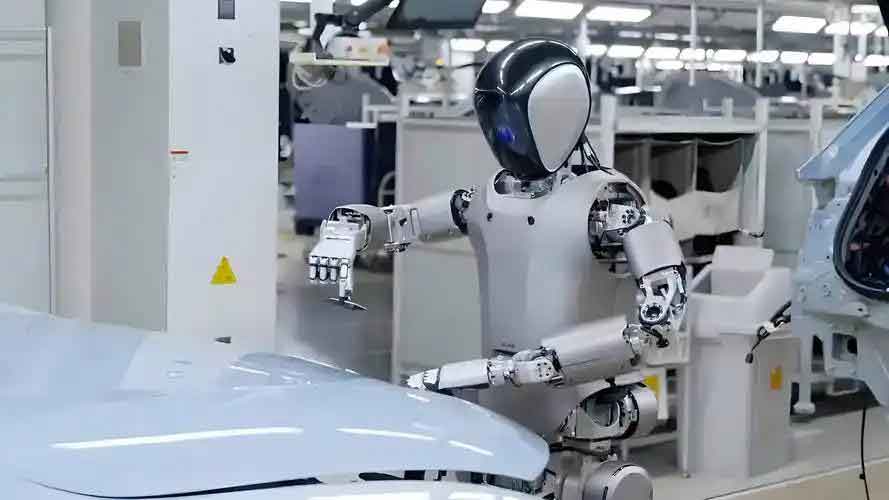
The significance of these gatherings goes beyond spectacle. They function as stress tests for humanoid robots. Sports competitions measure speed, balance, endurance, and recovery. Scenario competitions measure manipulation, navigation, planning, and task completion. Commercial demonstrations measure reliability, continuity, and economic potential. Together, they create a public scorecard for humanoid robots. The scorecard shows that the machines are improving quickly in physical capability. It also shows that intelligence, generalization, and commercial value remain harder problems. Humanoid robots can now run faster than many observers expected. The next challenge is to make them work reliably enough to justify deployment at scale.
1. Two Major Gatherings Reveal the Momentum of Humanoid Robots
The scale and intensity of the Second World Humanoid Robot Games made one point clear: humanoid robots are no longer confined to cautious demonstrations. In just one year, they have moved beyond a stage in which they could barely run and jump. At the 2026 events, humanoid robots repeatedly broke human records in competitions such as the 100-meter sprint and the standing high jump. The numbers are not merely athletic curiosities. They are indicators of progress in energy systems, power, motion control, body structure, and other foundational capabilities that humanoid robots need in real application scenarios. The ability to run, balance, turn, stop, and recover is part of the physical foundation that humanoid robots must master before they can work reliably in factories, warehouses, hotels, hospitals, and homes.
| Metric | First Edition | Second Edition |
|---|---|---|
| Competition events | 26 | 51 |
| Scenario application events | A few areas such as hotels and hospitals | 14 new scenario events covering homes, hotels, logistics, retail, and emergency rescue |
| Teams | Not disclosed in the source material | 666 |
| Robots | Not disclosed in the source material | 2,056 |
| Contests | Not disclosed in the source material | More than 1,300 |
| Scale growth | Baseline | 138 percent increase |
The comparison with the previous year is striking. In 2025, the best 100-meter result for humanoid robots was 21.50 seconds. At the 2026 gathering, the winning performances moved into a different realm. Tiangong robot ran 9.39 seconds at the opening ceremony, surpassing the men’s 100-meter world record held by Usain Bolt. Honor’s robot, named Lightning, ran 9.32 seconds during preparation and then improved to 8.83 seconds in the final. Tiangong robot then ran 8.64 seconds in the final, after a 8.85-second run in the semifinal. The journey from 21 seconds to 8 seconds shows how quickly humanoid robots are advancing. For the industry, however, the most important question is not only how fast a humanoid robots can run. The more consequential question is who, or what, is controlling it.
Honor’s humanoid robots also competed in the large-group 100-meter, 400-meter, and 1,500-meter races. These three events tested a complete three-part capability loop: short-distance explosive speed, middle-distance speed and stability, and long-distance sustained endurance. That combination matters because real applications rarely require only one burst of performance. A humanoid robots in a factory may need to move quickly to a station, maintain stability while carrying materials, and continue working for an extended shift. A humanoid robots in a service setting may need to navigate crowded spaces, stop precisely, interact with people, and then resume a task. The races are simplified, but they reflect the same underlying engineering demands.
| Robot | Result | Context |
|---|---|---|
| Tiangong robot | 9.39 seconds | Opening ceremony; surpassed the men’s 100-meter world record held by Usain Bolt |
| Honor’s robot, Lightning | 9.32 seconds | Preparation stage |
| Honor’s robot, Lightning | 8.83 seconds | Final |
| Tiangong robot | 8.85 seconds | Semifinal |
| Tiangong robot | 8.64 seconds | Final; new 100-meter competition record |
| Best result in 2025 | 21.50 seconds | Previous benchmark |
The rapid improvement in speed is impressive, but it is not the only measure of progress. The more meaningful change is that humanoid robots are being tested in ways that expose their weaknesses. A robot that can sprint may still fail at grasping a small object. A robot that can jump may still struggle to adapt when a door is opened at a different angle. A robot that can perform a rehearsed routine may still freeze when an unexpected person enters the room. The competitions are valuable precisely because they reveal these gaps. They show the industry where humanoid robots are strong and where they need more work.
2. Humanoid Robots Learn to Run Without Remote Control
The rules of the Second World Humanoid Robot Games marked a significant shift. For full-size humanoid robots, the competition venue eliminated remote-control devices for the first time across the board. Several events required humanoid robots to complete tasks independently. This change matters because remote-controlled performances often depend heavily on the skill of the operator. In a fully autonomous era, humanoid robots must be able to enter factories, homes, and warehouses, where conditions cannot be rehearsed in advance. Autonomy is not a luxury feature. It is the entry ticket for humanoid robots to participate in real economic activity.
Guangzhou-based Gaoqing Dynamics illustrated this shift. Instead of building special machines for different events, the company used its mass-produced Mini Pi plus humanoid robots. It entered nearly 10 events, including parade performance, 100-meter sprint, long jump, high jump, Tai Chi, and street dance. All of these tasks were completed through a fully autonomous process. That decision sent a clear signal: humanoid robots are being tested not only for peak performance in isolated conditions, but also for the ability to carry a general-purpose body into multiple contexts. The value of humanoid robots will grow when a single platform can handle many tasks without a dedicated operator.
The move away from remote control also changes how the industry evaluates progress. In the remote-control era, a humanoid robots could appear capable because a human was making decisions behind the scenes. In the autonomous era, perception, planning, and control must operate together inside the machine. Humanoid robots must see, interpret, decide, and act. That closed loop is difficult, but it is exactly what factories, logistics centers, retail stores, and households require. A humanoid robots that can run quickly but cannot adapt to a changed environment remains a demonstration. A humanoid robots that can operate independently, even at a slower pace, can become a tool. This distinction is becoming the central dividing line in the humanoid robots industry.
Autonomy also raises new questions about safety and trust. When humanoid robots operate without a remote controller, they must understand boundaries, avoid collisions, and respond to unpredictable events. They must know when to stop. They must know when to ask for help. They must know when a task is beyond their capability. These are not only technical problems. They are also design problems, policy problems, and business problems. A factory manager will not deploy humanoid robots at scale unless the machines are predictable and safe. A household will not accept humanoid robots unless they are useful and trustworthy. The removal of remote controls at the 2026 games is therefore more than a rule change. It is a public statement that the industry is preparing humanoid robots for real autonomy.
3. Humanoid Robots Shift From Spectacle to Practical Work
Another notable change at the Second World Humanoid Robot Games was the design of the competitions. The first edition had 26 events, mostly focused on speed, athletic competition, and performance. Scenario-based application events were limited to a few areas such as hotels and hospitals. The second edition expanded to 51 events. Among them, 14 new scenario events covered homes, hotels, logistics, retail, and emergency rescue. Tasks drawn from everyday life and real operations were brought onto the competition stage. The reason is simple: beyond robot performances, the public and industry now care more about whether humanoid robots can truly work.
The new dexterous hand competition is a powerful example. It included eight challenges, such as picking up beans with tweezers, weighing powder, opening bottles and prying caps, and nailing and fixing. These contests are not about speed or collision. They test the craft of humanoid robots. Dexterous manipulation is one of the most critical shortcomings that humanoid robots must overcome before they can be deployed at scale in industrial and service scenarios. A humanoid robots that can move across a factory floor is useful, but a humanoid robots that can handle small parts, use tools, and manipulate objects with precision becomes far more valuable.
- Picking up beans with tweezers tests fine control and visual feedback.
- Weighing powder tests precision, stability, and measurement awareness.
- Opening bottles and prying caps tests force control and tool use.
- Nailing and fixing tests impact control, alignment, and repeatability.
The 2026 World Robot Conference transmitted the same signal. In the past, exhibition booths often emphasized flashy performances. At the 2026 conference, attention shifted to no-takeover continuous operation demonstrations. Humanoid robots had to independently complete an entire sequence: receiving an order, navigating, picking up materials, delivering them, and placing them. No human intervention was allowed during the process. This kind of demonstration is much closer to commercial reality than a staged routine. It shows whether humanoid robots can maintain reliability across multiple steps and adapt to a dynamic environment.
Actions taken by companies outside the competition venue are even more telling. Zhongqing’s T800 fought enthusiastically in a combat ring, but the same machine also entered Luxshare Precision’s Suzhou factory. There, it autonomously received orders, navigated, and delivered materials. Zhao Tongyang, founder of the company, said directly, “Fighting is a hobby; working is the main business.” The quote captures the mood of the industry. Humanoid robots are moving from entertainment and display toward productive labor. The growth of scenario competitions is not a simple adjustment to event rules. It reflects a change in the entire industry’s evaluation system. In the past, the focus was on extreme capability. Now, the focus is on task capability. The former is a laboratory metric. The latter is a commercial metric. When the standard shifts from “looks exciting” to “can be used,” humanoid robots move from “proving I can” to “proving I am worth it.”
| Evaluation Area | Past Focus | Emerging Focus |
|---|---|---|
| Primary goal | Speed, jumps, performance | Useful tasks and continuous operation |
| Control model | Remote control and operator skill | Autonomous perception, planning, and action |
| Success measure | Laboratory metrics | Commercial metrics |
| Typical proof | Can the humanoid robots perform? | Can the humanoid robots deliver value? |
| Application signal | Entertainment and display | Factories, logistics, retail, hotels, homes, and emergency rescue |
4. Humanoid Robots Confront the Commercialization Gap
If the first two trends answer whether humanoid robots can perform, the third trend addresses whether the business can succeed. On this question, the industry’s attention is shifting from the body to the brain. The market data appear strong. In the first half of 2026, China’s humanoid robots shipments exceeded 40,000 units, accounting for 97 percent of the global total. The top five global shippers were all Chinese companies. Yet beneath the surface of a hot market, a gap remains in commercial deployment. According to Counterpoint Research, more than 60 percent of shipments in the first half of 2026 went to entertainment performances and scientific research. Hardware prices have fallen sharply. For example, the average price of Unitree’s humanoid robots fell from nearly 600,000 yuan to 166,400 yuan over two years. Even so, the closed loop of “making money with robots” has not yet been completed.
At the 2026 World Robot Conference, Wang Xingxing, founder and chairman of Unitree, identified the biggest bottleneck: insufficient generalization capability. He explained that in a fixed scenario with sufficient data collection and training, the task success rate of humanoid robots can approach 100 percent. But once the operating object or external environment changes, execution success can fall sharply. The core of the contradiction lies in inadequate adaptation between the input and output of AI models and the robot body. In plain terms, the “brain” and “body” of humanoid robots do not cooperate smoothly enough. An action plan that works perfectly in virtual simulation can fail in the real physical world because of tiny errors.
Wang Xingxing also set a standard for the “ChatGPT moment” of humanoid robots. He said that when a humanoid robots is placed in any unfamiliar environment and can complete about 80 percent of tasks through voice commands, that moment will have arrived. In his view, this goal could be reached in two to three years at the fastest, or it may take five to ten years. The estimate underlines both the ambition and the uncertainty surrounding humanoid robots. The industry has made remarkable progress in hardware and motion, but general intelligence and robust adaptation remain difficult.
Gao Jiyang, founder of Galaxea, offered a commercial framework. He believes that embodied intelligence commercialization will pass through three stages. In the first stage, complete machines are sold, with gross margins of about 40 to 60 percent. In the second stage, solution subscriptions emerge. Customers pay for solutions, while the complete machine becomes a carrier, and gross margins fall to about 20 percent. In the third stage, “physical world tokens” are sold. The complete machine may even have negative gross margins, and profit comes from intelligent consumption. Overall value will migrate from the complete machine to the intelligence layer.
| Stage | Commercial Model | Gross Margin Pattern | Source of Value |
|---|---|---|---|
| Stage 1 | Complete-machine sales | About 40 to 60 percent | The physical humanoid robots platform |
| Stage 2 | Solution subscriptions | About 20 percent | Solutions, with the machine as a carrier |
| Stage 3 | Physical world token sales | Possibly negative for the complete machine | Intelligent consumption and the intelligence layer |
This trend was already visible at the 2026 World Robot Conference. Galbot and Yuejiang each promoted “one brain, many abilities” and “one brain, many bodies.” Robot Era proposed an “embodied world model” and won multiple championships in top global competitions. Mass production and delivery capabilities confirm China’s strong manufacturing strength. But the key to truly opening the commercial closed loop of humanoid robots will be held by a “smarter brain.” The body of humanoid robots can be manufactured, optimized, and shipped. The intelligence of humanoid robots must be trained, generalized, and trusted. Without that intelligence, humanoid robots remain impressive machines. With it, humanoid robots become scalable economic actors.
The commercialization gap is not only about technology. It is also about market structure. If most humanoid robots are sold for entertainment and research, the industry remains dependent on curiosity and grants. If humanoid robots are deployed in factories and logistics centers, the industry can generate recurring value. If humanoid robots enter homes and service environments, the market becomes much larger, but the technical bar becomes much higher. The path from early adoption to mass adoption will therefore be gradual. Humanoid robots may first succeed in structured environments where tasks are repeatable and performance can be measured. They may later expand into unstructured environments as generalization improves. The sequence matters because it determines which companies survive and which business models scale.
5. Humanoid Robots Depend on Regional Ecosystems and Talent
The race to advance humanoid robots depends on coordinated efforts across China’s regions. Each region is leveraging its own advantages to build a complementary industrial ecosystem. Beijing has a dense concentration of universities and research institutes. It has significant advantages in original innovation “from zero to one.” Companies and institutions such as Galbot, Robot Era, and the Beijing Humanoid Robot Innovation Center are working to strengthen the algorithm and model foundation at the “brain” level. The Yangtze River Delta leads in precision manufacturing and supply chain systems. Companies such as Unitree, AgiBot, and Fourier have advanced “from one to 100” in large-scale production and industrial deployment. The Pearl River Delta has a strong manufacturing base and abundant application scenarios, forming one of the nation’s most densely clustered corporate formations.
Guangdong’s hard power is prominent. Its industrial robot output has ranked first nationally for six consecutive years. Shenzhen’s “15-minute industrial circle” allows 80 percent of components to be sourced within 40 kilometers. This density supports rapid iteration and cost reduction for humanoid robots. However, regional coordination is only the soil. The core engine that ultimately breaks through technical bottlenecks and pushes the industry forward is still people. For Guangdong, the reserve of top-tier basic research talent is still insufficient. How to move from “manufacturing strength” to “innovation strength” is a question that must be answered.
| Region | Core Advantage | Representative Role in Humanoid Robots |
|---|---|---|
| Beijing | Dense universities and research institutes | Original innovation from zero to one; algorithms and model foundations for the “brain” |
| Yangtze River Delta | Precision manufacturing and supply chain systems | Large-scale production and industrial deployment from one to 100 |
| Pearl River Delta | Strong manufacturing base and abundant application scenarios | Dense corporate formation and application-driven iteration |
| Guangdong | Industrial robot output ranked first nationally for six consecutive years | Manufacturing strength, supply chain density, and scenario expansion |
To address this, Guangdong is pursuing a path that uses scenarios to attract projects and projects to gather talent. On one hand, it launched the country’s first “Embodied Intelligence Application Scenario Open Challenge Tour,” using real deployment projects to create a talent gravity field. On the other hand, it is strengthening policy and capital support. The province introduced the “Millions of Talents Gather in Guangdong” plan, launched a 100-billion-yuan strategic emerging industry fund with no fixed duration, and clarified that by 2029 it will gather 10 complete-machine manufacturing enterprises and select demonstration scenarios each year with financial support. Scenarios attract projects, projects gather talent, and talent fills shortcomings. This is Guangdong’s path to becoming an innovation highland, and it is also a necessary choice for finding its position within regional coordination.
For humanoid robots, regional ecosystems matter because no single company can solve every problem alone. Humanoid robots require advanced chips, sensors, actuators, batteries, materials, control algorithms, AI models, manufacturing capacity, and application data. A strong regional cluster can shorten development cycles, reduce costs, and accelerate learning. Beijing contributes foundational research. The Yangtze River Delta contributes precision manufacturing and scale. The Pearl River Delta contributes application scenarios and supply chain density. When these strengths are connected, humanoid robots can move more quickly from prototype to product, and from product to commercial service.
Yet the talent question remains central. Humanoid robots are not simply mechanical devices. They are physical embodiments of artificial intelligence. The industry needs researchers in machine learning, robotics, control theory, mechanical engineering, electronics, materials science, and human-robot interaction. It also needs engineers who can turn laboratory results into reliable products. It needs operators, integrators, and service teams who understand real workflows. The competition among regions is therefore also a competition for talent. Policies that connect real scenarios with real projects can attract people who want to solve practical problems, not only publish papers. That is why scenario-driven talent strategies are especially relevant to humanoid robots.
6. The Future of Humanoid Robots: From Capability to Value
The first half of technology validation has already submitted its answers. The second half of value realization has just begun to set the questions. Humanoid robots have shown that they can run faster, jump higher, and perform more complex movements than before. They have shown that they can operate without remote control in some competitions. They have shown that they can perform tasks in simulated and real scenarios. But the commercial closed loop remains incomplete. The industry must prove that humanoid robots can work reliably in unfamiliar environments, that their intelligence can generalize across tasks, and that their economics can generate sustainable returns.
The two 2026 gatherings made the direction clear. Humanoid robots are moving from isolated demonstrations to continuous operation. They are moving from human control to autonomy. They are moving from hardware sales toward intelligence services. They are moving from laboratory metrics to commercial metrics. These shifts are not automatic. They require advances in AI models, embodiment adaptation, data collection, simulation, safety, and reliability. They also require business models that capture value as intelligence improves. If value migrates from the complete machine to the intelligence layer, then the companies that control the “brain” of humanoid robots may capture the largest share of future profits.
- Autonomy: humanoid robots must act without remote control in unpredictable settings.
- Generalization: humanoid robots must handle new objects, new environments, and new instructions.
- Manipulation: humanoid robots must perform fine motor tasks with precision and reliability.
- Continuity: humanoid robots must complete multi-step tasks without human intervention.
- Commercial value: humanoid robots must generate returns beyond entertainment and research.
At the same time, humanoid robots will not succeed in every setting at once. The path to commercialization will likely be uneven. Structured environments such as factories, warehouses, and logistics centers may adopt humanoid robots earlier because tasks are repeatable and performance can be measured. Service environments such as hotels, retail stores, hospitals, and homes may take longer because human interaction and unpredictable conditions demand higher generalization. Emergency rescue scenarios present even greater challenges. The progression of scenario competitions reflects this reality. The industry is testing humanoid robots in a widening range of tasks, but it is also learning where they are ready and where they are not.
The competition among regions will continue to shape humanoid robots. Beijing’s research strength, the Yangtze River Delta’s manufacturing depth, and the Pearl River Delta’s application density create a multi-layered ecosystem. Guangdong’s efforts to use scenarios, projects, talent, policy, and capital together show how a region can position itself in the humanoid robots value chain. The goal is not only to produce more machines. The goal is to build an environment in which humanoid robots can be tested, improved, deployed, and commercialized at scale.
For the global market, China’s position in humanoid robots is already significant. The first half of 2026 saw China account for 97 percent of global humanoid robots shipments. The top five global shippers were all Chinese companies. These figures demonstrate manufacturing strength and supply chain scale. But they also highlight the next challenge. Shipment volume is not the same as commercial maturity. More than 60 percent of shipments went to entertainment performances and scientific research. The industry must convert attention into productivity. It must convert demonstrations into deployments. It must convert hardware into intelligent services. Humanoid robots must become more than a spectacle. They must become a practical technology that earns its place in the economy.
| Trend | Signal From 2026 | Implication for Humanoid Robots |
|---|---|---|
| Autonomous operation | Remote controls eliminated for full-size humanoid robots in several events | Humanoid robots must handle real environments without rehearsal |
| Task-based competition | 14 new scenario events and dexterous hand challenges | Evaluation shifts from speed and display to useful work |
| Commercial pressure | More than 60 percent of shipments still go to entertainment and research | Humanoid robots need recurring commercial use cases |
| Intelligence migration | Industry attention moves from the body to the brain | Value may shift from hardware to intelligence layers |
| Regional coordination | Beijing, the Yangtze River Delta, and the Pearl River Delta each contribute distinct strengths | Humanoid robots need integrated ecosystems and talent pipelines |
The next stage will be defined by generalization, autonomy, and value capture. Humanoid robots need brains that can understand unfamiliar environments and bodies that can execute precise actions. They need data engines that improve with every deployment. They need business models that align the interests of manufacturers, software providers, customers, and users. They need policies that support innovation while ensuring safety and trust. The progress at the 2026 events suggests that the foundation is being built. The commercial breakthrough has not yet arrived, but the questions are becoming clearer. The humanoid robots industry is no longer asking whether the technology can work. It is asking where it can work, how well it can work, and who will capture the value when it does.
In the end, the story of humanoid robots in 2026 is a story of transition. The machines are faster, more autonomous, and more capable than before. The competitions are more practical. The exhibitions are more operational. The business models are more sophisticated. The regional strategies are more coordinated. But the decisive test lies ahead. Humanoid robots must prove that they can move from record-breaking performances to reliable work, from laboratory success to commercial closed loops, and from hardware sales to intelligence-driven value. The first half has been completed. The second half is now underway, and the questions are only becoming harder.