
In a landmark demonstration of technological advancement, twenty teams specializing in humanoid robotics recently competed alongside human runners in the world’s first half-marathon for bipedal machines. The event, held in Beijing’s Economic-Technological Development Area, showcased humanoid robots covering the 21.0975-kilometer course, signaling accelerating progress in this cutting-edge sector.
From Stage Performers to Industrial Contributors
The marathon’s winning humanoid robot, TianGong Ultra developed by the Beijing Humanoid Robot Innovation Center, completed the distance in 2 hours 40 minutes and 42 seconds. Beyond athletic demonstrations, humanoid robots are increasingly transitioning into practical industrial roles. At Geely’s 5G smart factory in Ningbo, Zhejiang province, Walker S1 humanoid robots collaboratively handle material transportation with synchronized movements.
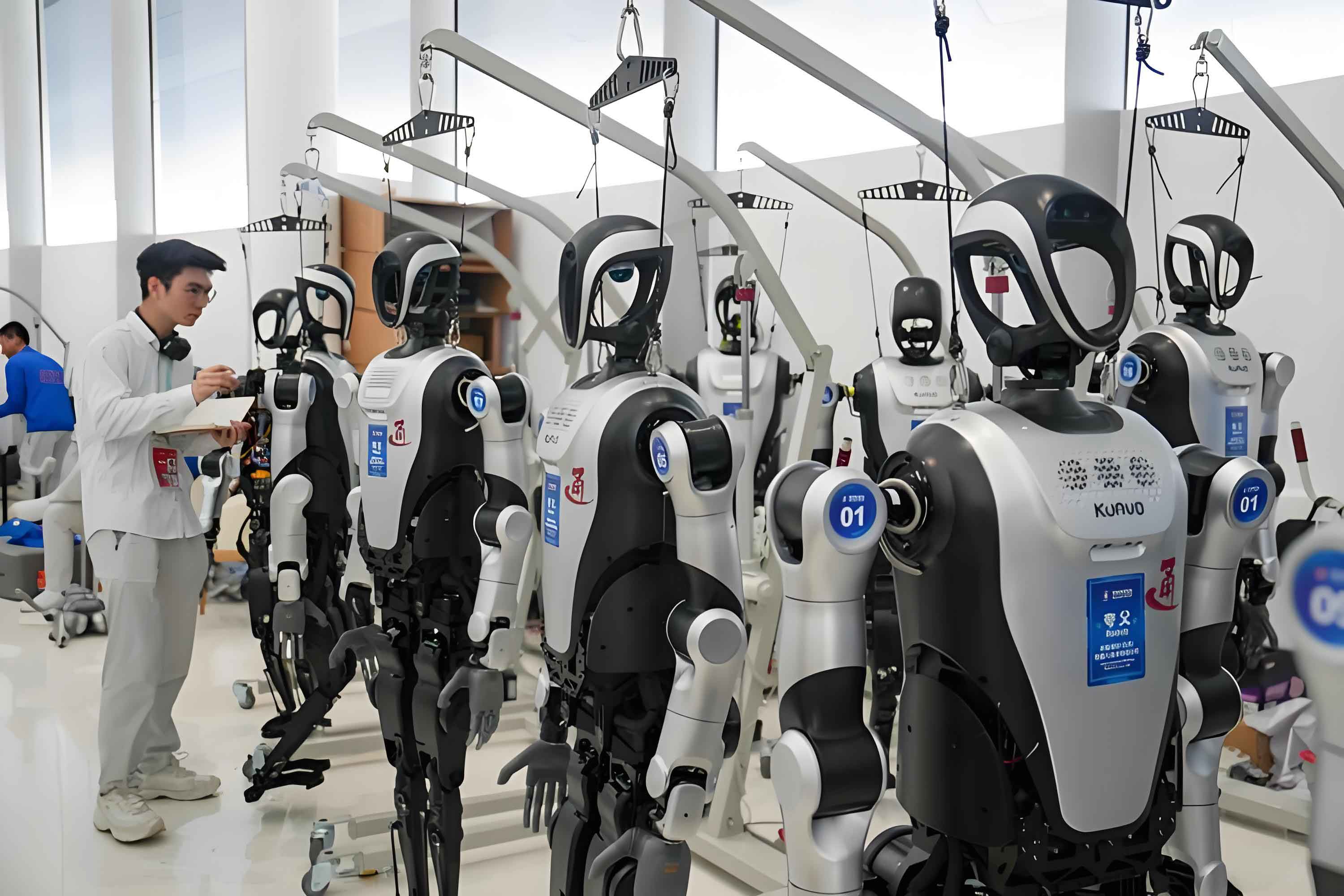
These humanoid robots perform millimeter-precision inspections of automotive components like logos and headlights, achieving over 99% accuracy through integrated visual systems and deep learning algorithms. According to Tao Qing, Director of the Operation Monitoring and Coordination Bureau at the Ministry of Industry and Information Technology, specialized robots are expanding across critical sectors: “Explosion-proof industrial robots have obtained domestic and international certifications, enabling large-scale applications in rail transportation equipment and automobile production.”
Industrial data reveals substantial growth, with first-quarter production reaching 149,000 industrial robots and 2.604 million service robots—year-over-year increases of 26% and 20% respectively. Despite this momentum, experts emphasize that humanoid robot applications remain exploratory. Lu Hanchen, Director of the Gaogong Robotics Industry Research Institute, notes: “Long-term potential exists across manufacturing and service sectors, but near-term adoption faces technical immaturity and divergent development approaches among manufacturers.”
Policy Frameworks and Financial Commitments
National and municipal governments are implementing comprehensive strategies to cultivate humanoid robotics ecosystems. China’s Government Work Report established mechanisms for future industry investment, explicitly naming embodied intelligence—the foundational technology for humanoid robots—as a priority sector. This commitment manifests locally through ambitious municipal plans:
- Beijing’s Embodied Intelligent Technology Innovation and Industry Cultivation Action Plan (2025-2027) targets breakthroughs in over 100 core technologies, deployment of 10,000 embodied robots, and creation of a 100-billion-yuan industrial cluster within three years.
- Wuxi’s Implementation Plan for Embodied Intelligent Robot Industry Development (2025-2027) aims for 30 billion yuan in industry scale, 200 cluster enterprises, and 300 application scenarios by 2027.
Over ten municipal governments including Shanghai, Shenzhen, and Chongqing have established or are preparing specialized industrial funds. Research from the Linde Institute indicates concentrated development hubs, with Shenzhen (12 companies), Beijing (11), and Shanghai (8) accounting for 74% of recently funded humanoid robotics enterprises among 42 financing recipients nationwide.
Urban Transformation Through Humanoid Robotics
Cities actively pursuing humanoid robot development anticipate multifaceted benefits. Song Xiangqing, Vice President of the China Society of Commercial Economy, outlines the transformative potential: “As a high-value emerging industry, humanoid robots can drive industrial chain development while promoting economic intelligence transformation. They generate R&D, production, and service employment while attracting specialized talent and accelerating university-industry collaboration.”
Beyond economic impacts, humanoid robotics initiatives enhance urban branding. Beijing exemplifies this strategy through high-profile events like the recent marathon and the upcoming World Humanoid Robot Games in August, featuring nearly twenty athletic categories including track, soccer, and gymnastics. Lu Hanchen observes: “Cities leverage industrial foundations to host competitions and exhibitions, simultaneously elevating technological profiles and stimulating tourism economies.”
Strategic Considerations for Sustainable Development
Experts caution against fragmented approaches in this capital-intensive sector. Song Xiangqing highlights implementation challenges: “Humanoid robot development requires interdisciplinary collaboration across AI and mechanical engineering domains, with high-precision hardware and sophisticated software demanding extended R&D cycles and significant investment. The entire industrial chain—from core components to system integration and application development—requires coordinated advancement for successful commercialization.”
Industry analyses identify critical considerations for municipal planners:
- Avoid homogeneous competition by differentiating industrial positioning according to existing urban strengths
- Balance immediate product deployment with long-term foundational technology investment
- Prevent redundant infrastructure and subsidy dependency that could attract low-end capacity
The Linde Institute’s 2025 Humanoid Robots and Embodied Intelligence Industry Report specifically advises governments to “guide capital toward technology R&D and scenario validation instead of indiscriminate investment,” warning against “excessive pursuit of short-term concepts, blind expansion, homogeneous competition, and valuation bubbles.” Song Xiangqing further emphasizes governance safeguards: “Policies must prevent administrative overreach, inadequate post-investment management, and risk control gaps while establishing rigorous project evaluation frameworks.”
As cities position themselves within this emerging landscape, industry observers stress that cultivating humanoid robot ecosystems resembles marathon running rather than sprinting—requiring sustained commitment, strategic resource allocation, and patient development of specialized capabilities rather than reactive imitation of competitor initiatives.