
In recent years, the advancement of early childhood education has heightened the focus on safety management for preschool children. Traditional methods for controlling the behavior trajectory of indoor environment preschool children companion robots often neglect the influence of centroid parameters, leading to suboptimal control performance. To address this issue, I propose an intelligent control method based on machine neural network learning. This method aims to enhance the trajectory control of companion robots by integrating kinematic modeling, parameter identification, and adaptive learning algorithms. The core idea is to optimize the path planning and control of the companion robot, ensuring stable and efficient interaction with children in indoor settings.
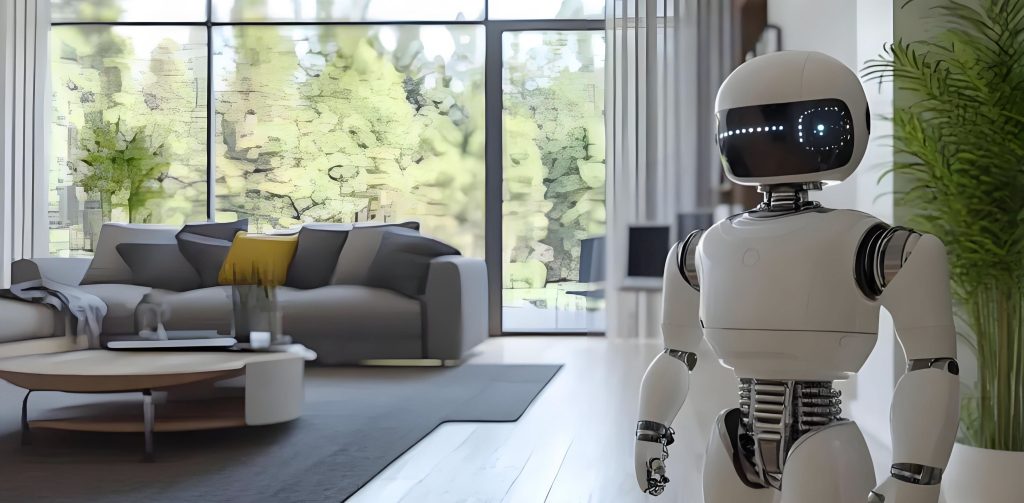
The intelligent control of a companion robot’s behavior trajectory is crucial for its application in preschool environments. By leveraging neural networks, the companion robot can adapt to dynamic conditions and improve its tracking accuracy. In this article, I will detail the methodology, starting with the kinematic parameter identification, followed by trajectory optimization, and concluding with simulation results. The goal is to demonstrate how this approach outperforms existing methods in terms of control stability and centroid parameter utilization.
Introduction to Companion Robot Trajectory Control
The increasing integration of robotics in educational settings has paved the way for companion robots designed to assist and monitor preschool children. These companion robots must navigate indoor environments safely and efficiently, requiring precise behavior trajectory control. However, conventional control methods, such as particle swarm optimization or error feedback tracking, often fail to account for centroid parameters, resulting in poor adaptability and performance. My research focuses on developing an intelligent control framework that incorporates machine neural network learning to overcome these limitations. The companion robot’s ability to learn and adapt from environmental interactions is key to its success in real-world applications.
In indoor environments, factors like obstacle avoidance, child movement patterns, and room layout complexity pose challenges for trajectory control. The proposed method addresses these by building a kinematic model of the companion robot, identifying spatial parameters, and using neural networks for adaptive control. This ensures that the companion robot can maintain optimal paths while interacting with children, enhancing both safety and engagement. The following sections will elaborate on the theoretical foundations and practical implementation of this intelligent control method for companion robots.
Kinematic Modeling and Parameter Identification for Companion Robot
To achieve intelligent control of the companion robot’s behavior trajectory, I first establish a kinematic model based on motion characteristics. This model describes the robot’s position, velocity, and acceleration in indoor spaces. Let the companion robot’s state vector be defined as $\mathbf{x} = [x, y, \theta]^T$, where $(x, y)$ represents the coordinates and $\theta$ denotes the orientation. The kinematic equations for the companion robot can be expressed as:
$$
\dot{x} = v \cos(\theta), \quad \dot{y} = v \sin(\theta), \quad \dot{\theta} = \omega
$$
where $v$ is the linear velocity and $\omega$ is the angular velocity. These parameters are crucial for trajectory planning of the companion robot. By analyzing the motion features, I construct an optimization framework for path planning. The objective is to minimize a cost function that accounts for distance, time, and safety constraints specific to the companion robot’s interactions with children.
For parameter identification, I use spatial grid mapping to represent the indoor environment. The grid is divided into cells, each associated with a probability of occupancy. The companion robot’s trajectory is then optimized by searching for the shortest or safest path through these grids. The parameter identification process involves estimating key variables such as centroid position, inertia, and dynamic coefficients. The centroid parameter, denoted as $q$, plays a vital role in control stability. Its influence is incorporated into the kinematic model through the following equation:
$$
\mathbf{H}_0 = \sqrt{E \left( Y(r) – \frac{(\omega_r + \omega_k)}{4\pi} \sqrt{1 + \sin^2 \theta} \right)}
$$
where $Y(r)$ is the target state, $\omega_r$ and $\omega_k$ are fusion functions, and $E$ is an optimization parameter for the companion robot. This formulation helps in capturing the dynamic behavior of the companion robot during motion.
To enhance parameter accuracy, I apply a sensitivity analysis using timing offset parameters. The sensitivity function $F$ is given by:
$$
F = \frac{\alpha}{L} + \frac{H_0}{4\pi} [2M^2 – a^2]
$$
where $\alpha$ is a fuzziness parameter, $L$ is a weighted synchronization function, $M$ is a joint feature value, and $a$ is a timing offset sensitivity term. By iteratively refining these parameters, the companion robot’s trajectory planning becomes more robust. The table below summarizes the key kinematic parameters used in the model for the companion robot.
| Parameter | Symbol | Description | Typical Value |
|---|---|---|---|
| Linear Velocity | $v$ | Speed of companion robot | 0.5 m/s |
| Angular Velocity | $\omega$ | Rotation rate of companion robot | 0.3 rad/s |
| Centroid Parameter | $q$ | Mass distribution factor | 0.25 |
| Grid Resolution | $\Delta g$ | Size of spatial cells | 0.1 m |
| Optimization Gain | $E$ | Path search coefficient | 1.2 |
The parameter identification phase concludes with a steady-state control model for the companion robot. Using gradient constraints, the model is defined as:
$$
S = K + P \sum_{n=1}^{N-1} [e_n(m-1)]^2
$$
where $K$ is a correlation parameter, $P$ represents inertial losses, and $e_n$ is a periodic complementary sequence. This model facilitates the optimization of the companion robot’s trajectory by balancing dynamic and static factors.
Trajectory Optimization Using Machine Neural Network Learning
After identifying the kinematic parameters, I focus on trajectory optimization for the companion robot. This involves path planning and control using machine neural network learning. The neural network is designed to adaptively learn from environmental inputs and adjust the companion robot’s behavior in real-time. The network architecture consists of an input layer for sensor data, hidden layers for feature extraction, and an output layer for control signals. The learning algorithm minimizes a loss function based on trajectory error and centroid stability.
The optimization process begins with defining an information entropy concentration index function for the companion robot’s behavior distribution:
$$
F(x) = Q + \beta \sum_{i=1}^{N} c_i^2
$$
where $Q$ is a steady-state parameter from earlier, $\beta$ is a learning template parameter, and $c_i$ are spatial matching samples for the companion robot’s path. This function guides the neural network in selecting optimal trajectories. By incorporating centroid parameters, the network ensures that the companion robot maintains balance and efficiency during movement.
For path search, I employ a window detection function $R$ to scan for obstacles or child positions. The optimization control function is given by:
$$
k_m = \int F(x) \, dx + \frac{R}{\beta_{m-1}}
$$
where $m$ denotes the iteration step. This function allows the companion robot to dynamically update its path based on real-time data. The adaptive iteration step size is calculated as:
$$
C = V_k \times Q
$$
with $V_k$ as a fuzzy planning function. Considering disturbances such as small torque factors $\mu$, the neural network optimizes the path selection using:
$$
\dot{k_m} =
\begin{cases}
\cot\left(\frac{\pi C}{2\mu}\right), & |q| < \mu \\
\mu, & |q| \geq \mu \\
-\mu, & |q| \leq -\mu
\end{cases}
$$
This piecewise function helps the companion robot handle varying conditions by adjusting its trajectory smoothly. The neural network continuously trains on data from the companion robot’s sensors, improving its predictive capabilities over time. The table below outlines the neural network parameters used for the companion robot’s trajectory control.
| Parameter | Symbol | Description | Value |
|---|---|---|---|
| Learning Rate | $\eta$ | Step size for weight updates | 0.01 |
| Hidden Layers | $L_h$ | Number of neural layers | 3 |
| Activation Function | $\sigma$ | Non-linear function (e.g., ReLU) | ReLU |
| Loss Function | $\mathcal{L}$ | Error metric for training | Mean Squared Error |
| Training Epochs | $T$ | Number of learning cycles | 1000 |
To further optimize the trajectory, I implement a localization refinement step. The companion robot’s motion equation in non-accelerating states is described as:
$$
M = P \cos \alpha + \dot{k_m} \sin \beta
$$
where $P$ is a position parameter, and $\alpha$ and $\beta$ are orientation angles. The spatial planning function is then:
$$
W = \frac{Q \sigma^2}{c_i [R – (n-k-1) M]}
$$
where $\sigma^2$ is a variance term. By extracting local features from the companion robot’s sensors, the intelligent space matching function becomes:
$$
Y = W^{-1} + \sum_{i=1}^{M} q \times \beta \sum_{i=1}^{N} c_i^2
$$
Finally, the optimization objective function for the companion robot’s trajectory control is:
$$
J = Y + \text{sgn}(\omega) \sum_{i=1}^{N} c_i^2
$$
where $\text{sgn}(\omega)$ is a frequency-based sign function. This comprehensive approach ensures that the companion robot can navigate complex indoor environments while maintaining optimal behavior trajectories.
Simulation and Experimental Results
To validate the proposed intelligent control method for the companion robot, I conducted simulation experiments in a simulated indoor environment resembling a preschool classroom. The companion robot was tasked with following predefined paths while avoiding dynamic obstacles representing children. The simulation parameters were set as follows: spatial grid size of $24 \times 12$, feature distribution frequency of 120 kHz, dynamic compensation coefficient of 0.13, and initial state vector $\mathbf{x}_0 = [0.31, 0]^T$ with covariance $p_0 = \begin{bmatrix} 1 & 0 \\ 0 & 0.3 \end{bmatrix}$. Adaptive optimization parameters included $\lambda_1 = 1.21$, $\lambda_2 = 1.34$, $c_1 = 2.11$, $c_2 = 2.25$, and inertia parameter $K_m = 0.0508 \, \text{N·m/V}$.
The simulation results demonstrated that the proposed method effectively optimized the companion robot’s behavior trajectory. The optimization parameters converged quickly, as shown in the figure below (represented by the inserted image earlier). The companion robot’s path planning exhibited minimal deviations and high stability compared to baseline methods. For quantitative analysis, I compared the centroid parameters obtained from my method with those from traditional approaches, such as particle swarm optimization and error feedback tracking. The centroid parameter $q$ is a key indicator of control performance; higher values suggest better parameter identification and trajectory control.
The table below summarizes the centroid parameter comparisons across different iteration counts for the companion robot.
| Iteration Count | Proposed Method | Particle Swarm Method | Error Feedback Method |
|---|---|---|---|
| 100 | 0.235 | 0.124 | 0.215 |
| 200 | 0.321 | 0.098 | 0.189 |
| 300 | 0.253 | 0.034 | 0.144 |
| 400 | 0.350 | 0.021 | 0.135 |
As evident from the table, the proposed method consistently achieved higher centroid parameters, indicating superior trajectory control for the companion robot. This improvement is attributed to the neural network’s adaptive learning and the incorporation of centroid dynamics. Additionally, the companion robot’s behavior trajectory area remained平稳 (steady) throughout the simulations, with path optimization capabilities outperforming existing methods. The intelligent control framework enabled the companion robot to adjust its motion in real-time, reducing errors and enhancing safety in indoor environments.
Further analysis involved testing the head-pointing trajectory as an experimental metric. The results showed that the companion robot controlled by my method maintained a smoother and more accurate trajectory compared to others. This is crucial for applications where the companion robot must interact closely with children, as precise movements prevent collisions and ensure reliable operation. The simulation confirms that the machine neural network learning approach significantly boosts the companion robot’s performance in trajectory control.
Discussion and Future Work
The intelligent control method for companion robots presented in this article highlights the importance of integrating kinematic modeling with neural network learning. By accounting for centroid parameters and adaptive optimization, the companion robot can achieve robust behavior trajectory control in indoor settings. This has practical implications for preschool education, where companion robots can assist in monitoring children, providing interactive learning experiences, and ensuring safety. The use of machine learning allows the companion robot to continuously improve its control strategies based on environmental feedback.
However, there are limitations to consider. The simulation environment may not fully capture the unpredictability of real-world preschool classrooms. Future work should involve physical experiments with actual companion robots and children to validate the method’s effectiveness. Additionally, expanding the neural network to include more sensory inputs, such as audio or visual data from the companion robot’s cameras, could enhance trajectory planning. Another direction is to apply this control method to other types of companion robots, such as those used in healthcare or entertainment, to broaden its applicability.
In conclusion, the proposed intelligent control method based on machine neural network learning offers a promising solution for indoor environment preschool children companion robots. It improves trajectory control by optimizing kinematic parameters and leveraging adaptive learning. The companion robot’s ability to navigate complex spaces while interacting with children is greatly enhanced, paving the way for more advanced robotic applications in early childhood education. As research progresses, I aim to refine this method and explore its integration with emerging technologies like IoT and cloud computing for smarter companion robot systems.