
The reliable operation of power transmission and transformation infrastructure is a cornerstone of modern society. Traditional inspection methodologies, predominantly reliant on manual patrols by human technicians, are increasingly challenged by the scale, complexity, and inherent risks associated with high-voltage electrical environments. These methods are often characterized by low efficiency, high operational costs, susceptibility to human error, and significant safety hazards for personnel. The advent of Industry 4.0 technologies, particularly in artificial intelligence (AI) and robotics, presents a transformative solution. This article provides an in-depth exploration of the design, key technologies, and empirical validation of an AI-powered intelligent robot inspection system tailored for power grid assets.
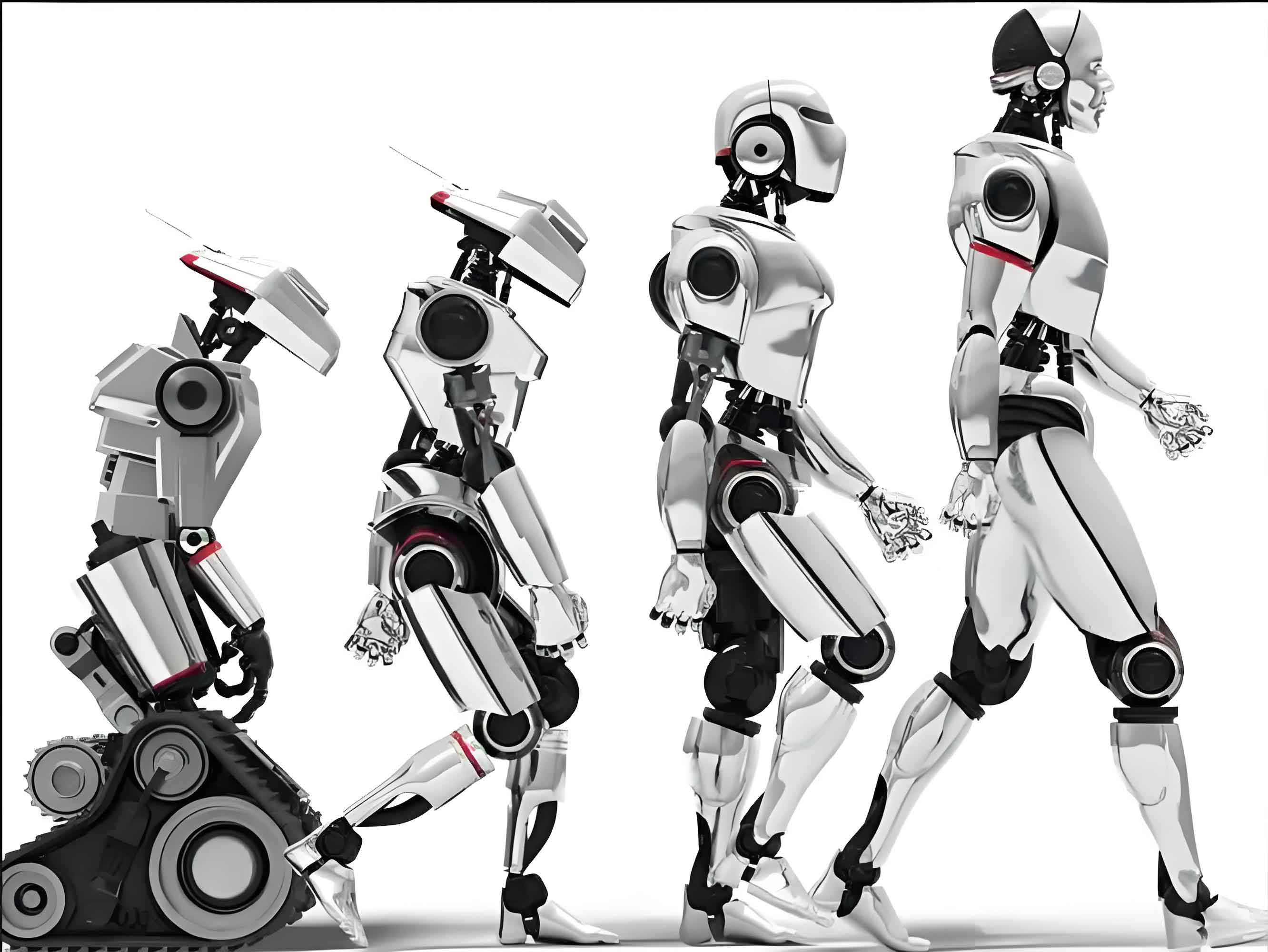
The proposed intelligent robot inspection system is engineered to automate the surveillance and diagnostic routines for critical components such as transmission lines, substation equipment, and associated structures. By integrating advanced sensing, machine vision, and autonomous navigation, the system aims to achieve continuous, precise, and safe monitoring, thereby enhancing grid resilience and reducing dependency on human intervention in hazardous conditions.
System Architecture and Overall Design
The architecture of the intelligent robot inspection system follows a distributed, modular paradigm to ensure scalability, robustness, and ease of maintenance. The entire framework can be decomposed into three primary interacting subsystems: the Base Station Subsystem, the Communication Subsystem, and the Terminal Devices (the mobile robots). A centralized control and management platform acts as the system’s brain, orchestrating all operations.
The core of the system resides in the autonomous intelligent robot. As illustrated in the structural diagram, the robot is equipped with a sophisticated suite of sensors and modules that enable its core functionalities. The hardware and software integration within the intelligent robot allows it to function as a mobile data acquisition and processing unit.
| Subsystem | Key Components | Primary Function |
|---|---|---|
| Base Station Subsystem | Central Server, Database, Video Recorder (DVR/NVR), Monitoring Client Software | Data storage, analysis, task scheduling, historical trend analysis, and human-machine interface (HMI) for operators. |
| Communication Subsystem | Industrial-grade Wireless Access Points (e.g., 4G/5G, Wi-Fi Mesh), Network Switches, Redundant Links | Provides high-bandwidth, low-latency, and secure bidirectional data transmission between robots and the base station for real-time video, telemetry, and control commands. |
| Terminal Device (Robot) | AI Processing Unit, Navigation Module (LiDAR/IMU/Magnetic), Multi-sensor Payload, Chassis & Power System, Charging Dock | Autonomous navigation, real-time data capture (visual, thermal, acoustic), on-edge AI processing for anomaly detection, and self-recharging capability. |
Navigation and precise positioning are critical for the intelligent robot to follow predefined patrol paths and stop accurately at inspection points. The system employs a hybrid approach. For reliable and repeatable path following, magnetic guidance is often utilized. A magnetic tape is installed along the patrol route, and sensors on the robot chassis detect the magnetic field, enabling it to track the path with high immunity to environmental interference like lighting or weather conditions. For global localization and obstacle avoidance, the intelligent robot is typically equipped with LiDAR (Light Detection and Ranging) and simultaneous localization and mapping (SLAM) algorithms. This allows the robot to build a map of its environment and locate itself within it, facilitating flexible navigation in dynamic or unstructured areas. The positioning error can be controlled within precise tolerances, as demonstrated in later tests.
Key Technologies for the Intelligent Inspection Robot
The operational efficacy of the intelligent robot hinges on several advanced technologies that enable it to perceive, analyze, and interpret the state of electrical equipment. These technologies move beyond simple video capture to provide actionable diagnostics.
1. Visual Inspection and Texture Feature Extraction
The intelligent robot is outfitted with high-definition (e.g., 1080p or 4K) pan-tilt-zoom (PTZ) cameras, often supplemented with infrared thermal imaging cameras. The visual data forms the basis for detecting physical anomalies such as corrosion, cracks, oil leaks, loose components, and foreign objects. To automate this analysis, sophisticated image processing and computer vision algorithms are employed.
A critical step involves extracting discriminative texture features from equipment surfaces. Gray-Level Co-occurrence Matrices (GLCM) are a powerful method for characterizing texture. From the GLCM \(C(i, j)\), which represents the probability of a pixel with intensity \(i\) being adjacent to a pixel with intensity \(j\), several statistical features can be computed:
Energy (or Angular Second Moment), representing uniformity:
$$ Energy = \sum_{i} \sum_{j} C(i, j)^2 $$
Contrast, measuring local intensity variations:
$$ Contrast = \sum_{i} \sum_{j} (i – j)^2 C(i, j) $$
Homogeneity, assessing the closeness of the distribution to the GLCM diagonal:
$$ Homogeneity = \sum_{i} \sum_{j} \frac{C(i, j)}{1 + |i – j|} $$
Entropy, indicating the randomness of the texture:
$$ Entropy = – \sum_{i} \sum_{j} C(i, j) \log C(i, j) $$
These features, calculated for regions of interest (e.g., insulator strings, transformer bushings), form a feature vector. Machine learning models (e.g., Support Vector Machines, Convolutional Neural Networks) trained on historical data of both normal and defective states can then classify the current condition, allowing the intelligent robot to flag potential issues.
2. Specific Target Recognition and Image-Based Localization
Beyond texture, the intelligent robot must recognize and precisely locate specific components, such as meter dials, pressure gauges, or disconnect switch positions. This is often achieved using template matching or more robust deep learning-based object detection models like YOLO (You Only Look Once) or Faster R-CNN.
Once a target is detected in the image frame, its precise pixel coordinates are determined. For tasks like reading analog gauges, the centroid of the detected dial or pointer is calculated using image moments. The \((p+q)\)th order image moment \(m_{pq}\) for a binary image \(I(x,y)\) of the target region is defined as:
$$ m_{pq} = \sum_{x} \sum_{y} x^p y^q I(x, y) $$
The centroid coordinates \((x_c, y_c)\) are then given by the zero-th and first-order moments:
$$ x_c = \frac{m_{10}}{m_{00}}, \quad y_c = \frac{m_{01}}{m_{00}} $$
This sub-pixel accurate localization enables subsequent algorithms, like pointer angle detection, to function with high precision, allowing the intelligent robot to digitize analog readings automatically.
3. Acoustic Anomaly Detection for Partial Discharge
Partial discharge (PD) is a key early warning indicator of insulation degradation in high-voltage equipment. PD activity often produces distinct acoustic emissions (ultrasonic and audible). The intelligent robot is equipped with directional ultrasonic microphones and acoustic sensors to capture these signals.
The processing pipeline involves several steps. First, background noise is filtered out using spectral subtraction or adaptive filtering techniques. The cleaned acoustic signal is then analyzed. A common method involves extracting Mel-Frequency Cepstral Coefficients (MFCCs), which are representative features of the sound’s short-term power spectrum. For recognition, a codebook-based approach like Vector Quantization (VQ) can be used. During a training phase, MFCC feature vectors from known PD sounds and normal operational sounds are clustered to create separate codebooks (\(C_{PD}\) and \(C_{Normal}\)). During inspection, the feature vectors \(X = \{x_1, x_2, …, x_M\}\) from a new audio sample are compared against each codebook. The average quantization error \(D_i\) for codebook \(i\) is calculated as:
$$ D_i = \frac{1}{M} \sum_{n=1}^{M} \min_{1 \le l \le L} [d(x_n, c_i^l)] $$
where \(c_i^l\) is the \(l\)-th codeword in codebook \(i\), \(L\) is the codebook size, and \(d(\cdot)\) is a distance metric (e.g., Euclidean distance). The sample is classified as PD if \(D_{PD}\) is significantly lower than \(D_{Normal}\), enabling the intelligent robot to localize and report active insulation faults.
Experimental Validation and Performance Analysis
To validate the performance and practicality of the proposed intelligent robot inspection system, comprehensive field tests were conducted within operational power transmission and substation environments.
System Application Test: Multi-Modal Anomaly Detection
A test was designed to evaluate the system’s ability to detect a simulated compound fault involving visible smoke (from an overheated component) and abnormal acoustic signatures. The intelligent robot was deployed on a standard patrol route. As shown in the results, the system’s vision algorithms successfully segmented and identified the anomalous smoke plume against complex backgrounds, including distant detection and scenarios with visual interference from similar-colored structures. Concurrently, the acoustic analysis module identified the characteristic sound pattern associated with the fault condition. The integrated system generated an alert within seconds of detection, demonstrating a high level of situational awareness and rapid response capability inherent to the intelligent robot platform.
Comparative Performance Testing
Quantitative comparisons were made between the intelligent robot inspection system and traditional manual inspection methods across several key performance indicators (KPIs).
| Inspection Sample Set Size (Number of Assets) | Manual Inspection Operational Cost (Indexed Units) | Intelligent Robot Inspection Operational Cost (Indexed Units) | Manual Inspection Efficiency (%) | Intelligent Robot Inspection Efficiency (%) |
|---|---|---|---|---|
| 50 | 100 | 35 | 90 | 99 |
| 100 | 195 | 65 | 88 | 100 |
| 200 | 380 | 125 | 85 | 100 |
| 400 | 745 | 240 | 82 | 99 |
The data clearly indicates that while costs for both methods scale with the number of assets, the intelligent robot system maintains a significantly lower cost profile due to reduced labor and the ability to inspect more assets per unit time. Furthermore, the operational efficiency, defined as the percentage of planned inspection tasks completed accurately and on schedule, is consistently higher for the robotic system.
Fault Recognition Accuracy Test
The core diagnostic capability of the intelligent robot was tested by evaluating its fault recognition rate across a large sample of known defect cases (e.g., corroded connectors, overheated connections from thermal analysis, simulated PD sources).
| Sample Batch | Number of Defect Cases | Manual Inspection First-Pass Recognition Rate (%) | Intelligent Robot First-Pass Recognition Rate (%) |
|---|---|---|---|
| 1 | 50 | 85 | 98 |
| 2 | 100 | 83 | 99 |
| 3 | 200 | 85 | 100 |
| 4 | 400 | 84 | 99 |
| Average | – | 84.25 | 99.0 |
The intelligent robot system demonstrated a superior and more consistent first-pass recognition rate, averaging 99.0% compared to 84.25% for manual inspection. This improvement is attributed to the robot’s consistent sensor calibration, lack of fatigue, and application of rigorous algorithmic detection thresholds, minimizing oversights.
Positioning Accuracy and System Control
Technical specifications were verified through controlled measurements. The autonomous navigation system of the intelligent robot demonstrated high precision in reaching predefined inspection points:
$$ \text{Horizontal Positioning Error} \leq 5 \text{ mm} $$
$$ \text{Vertical Positioning Error} \leq 3 \text{ mm} $$
This level of accuracy is crucial for tasks such as aligning cameras with small targets or ensuring ultrasonic sensors are properly oriented. Furthermore, the integrated monitoring platform software, accessible via desktop or mobile clients, provided robust functionality for real-time remote teleoperation of the intelligent robot, dynamic task (re)configuration, and seamless access to all historical inspection data and reports.
Discussion and Future Perspectives
The integration of an intelligent robot inspection system into power transmission and substation asset management protocols represents a significant leap forward. The empirical results confirm substantial advantages in terms of operational safety, inspection consistency, diagnostic accuracy, and long-term cost-effectiveness. By automating routine patrols, human engineers are freed to focus on higher-level analysis, maintenance planning, and responding to critical anomalies flagged by the system.
However, the evolution of the intelligent robot for power grid applications continues. Future research and development trajectories include:
- Enhanced Autonomy and AI: Implementing more advanced deep learning architectures for few-shot or self-supervised learning to adapt to novel, unseen fault types without extensive retraining.
- Multi-Robot Collaboration: Developing swarms or fleets of heterogeneous intelligent robots (aerial, ground, climbing) that can cooperate to inspect large-scale transmission corridors or complex substations simultaneously, coordinated by a central AI planner.
- Advanced Sensor Fusion: Integrating data from a wider array of sensors (e.g., hyperspectral imaging, LiDAR-based gas detection for SF6 leaks, electromagnetic field sensing) into a unified digital twin model of the asset for holistic health assessment.
- Edge Computing and 5G: Leveraging edge AI processors on the robot for real-time, low-latency decision-making, coupled with high-speed, low-latency 5G networks for massive data transfer and cloud-based analytics synergy.
- Predictive Analytics Integration: Feeding the high-frequency, high-quality data collected by the intelligent robot into predictive maintenance models to forecast equipment failures before they occur, shifting from schedule-based to condition-based maintenance paradigms.
In conclusion, the intelligent robot inspection system is not merely a tool for automating existing tasks but a foundational platform for building a smarter, more resilient, and self-aware electrical grid. The continued refinement and deployment of these systems will play a pivotal role in ensuring the reliability and efficiency of global power infrastructure in the decades to come.