
The construction industry stands at a critical juncture. While demand for complex and sustainable infrastructure grows, traditional construction methodologies are increasingly strained by systemic challenges. Reliance on manual labor introduces significant bottlenecks in productivity, exposes workers to hazardous environments, and results in inconsistent quality due to human error and fatigue. Furthermore, a shrinking and aging workforce exacerbates labor shortages, threatening project timelines and economic viability. In this context, the integration of intelligent robot technology emerges not merely as an incremental improvement, but as a foundational shift towards automation, precision, and enhanced safety. Intelligent robots, synthesizing advancements in artificial intelligence (AI), machine vision, sensor fusion, and automated control, are poised to redefine how we build. This article explores the architectural principles of these systems, quantifies their multifaceted advantages, and delves into specific innovations that are automating core construction processes, ultimately charting a course for a more efficient, safe, and intelligent built environment.
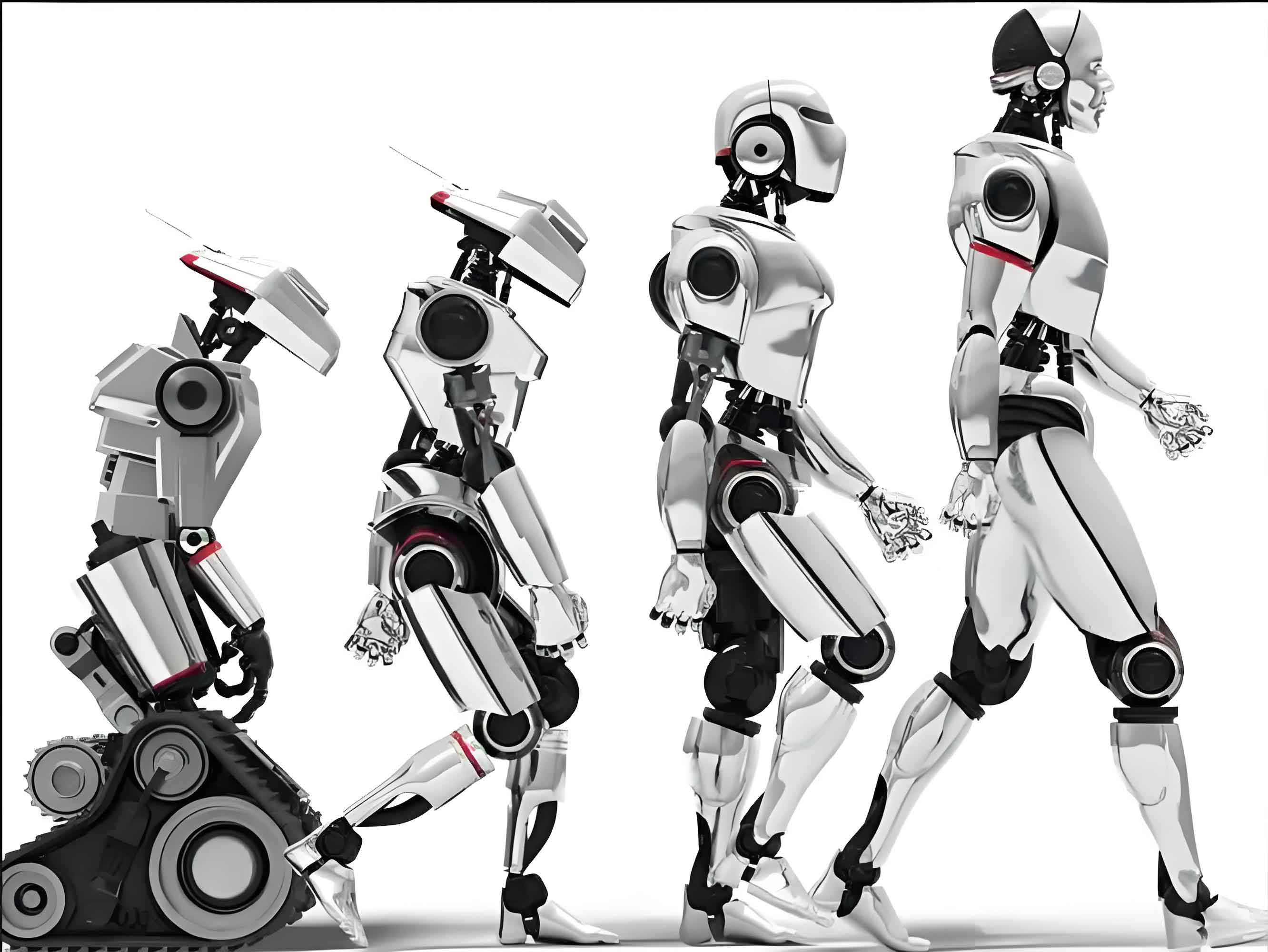
The core of an intelligent robot system lies in its integrated cyber-physical architecture, enabling autonomous perception, decision-making, and execution. Unlike simple automated machines, these systems adapt to dynamic and unstructured site conditions. A generalized structural framework comprises several synergistic modules, as summarized in Table 1.
| Module | Primary Function | Key Technologies |
|---|---|---|
| Main Controller | The central processing unit coordinating all modules, executing core AI algorithms for task planning and real-time decision-making. | High-performance CPUs/GPUs, Real-time Operating Systems (RTOS), AI inference engines. |
| Environmental Monitoring | Perceives the dynamic site environment through a suite of sensors. | LiDAR, ultrasonic sensors, thermal cameras, gas sensors, inertial measurement units (IMUs). |
| Robot Localization & Navigation | Determines the robot’s precise position and plans collision-free paths. | Simultaneous Localization and Mapping (SLAM), GPS-RTK, UWB beacons, odometry. |
| Vision Module | Provides high-level scene understanding, object recognition, and quality inspection. | Stereo cameras, RGB-D sensors, Convolutional Neural Networks (CNNs) for image processing. |
| Human-Machine Interface (HMI) | Facilitates communication between human operators and the robot. | Touchscreen panels, voice command systems, augmented reality (AR) interfaces. |
| Data Storage & Analytics | Logs all operational and sensor data for process optimization, predictive maintenance, and digital twin synchronization. | Edge computing units, cloud storage, time-series databases. |
| Power Module | Provides stable and sufficient energy for all systems, often designed for longevity or automatic recharge. | High-density lithium batteries, wireless charging pads, fuel cell systems. |
The operational efficacy of an intelligent robot can be partially modeled by its ability to execute precise movements. A fundamental kinematic equation for a robotic arm end-effector position in 3D space, considering multiple joints, can be represented using the Denavit-Hartenberg (D-H) parameters convention. The homogeneous transformation matrix between consecutive links \(i-1\) and \(i\) is given by:
$$
^{i-1}T_i = \begin{bmatrix}
\cos\theta_i & -\sin\theta_i \cos\alpha_i & \sin\theta_i \sin\alpha_i & a_i \cos\theta_i \\
\sin\theta_i & \cos\theta_i \cos\alpha_i & -\cos\theta_i \sin\alpha_i & a_i \sin\theta_i \\
0 & \sin\alpha_i & \cos\alpha_i & d_i \\
0 & 0 & 0 & 1
\end{bmatrix}
$$
Where \(\theta_i\) is the joint angle, \(d_i\) is the link offset, \(a_i\) is the link length, and \(\alpha_i\) is the link twist. The precise control enabled by such models is what allows the intelligent robot to perform tasks like accurate brick laying or welding with sub-millimeter precision, a feat unattainable through sustained human labor.
Quantifiable Advantages of Intelligent Robots in Construction
The deployment of intelligent robot systems translates into tangible, measurable benefits across three primary dimensions: efficiency, quality, and safety. The contrast with conventional methods is stark, as illustrated in Table 2.
| Performance Metric | Traditional Manual Construction | Construction with Intelligent Robots | Quantifiable Improvement |
|---|---|---|---|
| Task Execution Speed | Subject to worker fatigue, breaks, and variable pace. Limited to ~8-10 effective hours/day. | Continuous, consistent operation 24/7. Speed governed by optimized mechanical and control systems. | Up to 60-70% reduction in time for repetitive tasks (e.g., bricklaying, painting). |
| Operational Precision & Tolerance | Highly dependent on skill and focus. Typical tolerances in the range of ±5-10 mm for many tasks. | Programmed and sensor-corrected. Achieves consistent sub-millimeter (±0.5-2 mm) tolerances. | Precision improvement of over 80%, drastically reducing rework. |
| Material Utilization & Waste | High variability leading to over-ordering and significant waste (e.g., up to 25% waste in concrete formwork). | Precise application and cutting (e.g., via robotic saws) minimizes overuse. Real-time monitoring prevents errors. | Material waste reduction of 15-30%, contributing to cost savings and sustainability. |
| Worker Safety Incident Rate | High exposure to falls, strikes, and hazardous environments. Construction remains one of the most dangerous industries. | Removes human workers from the most dangerous tasks (high-elevation, confined spaces, toxic fumes). | Potential to reduce serious injuries in automated tasks by over 90%. |
| Process Consistency & Quality Defect Rate | Inherent inconsistency leads to defects requiring correction, impacting schedules and costs. | Repeatable, algorithm-driven processes ensure every iteration meets the exact same standard. | Defect rates can drop by an estimated 40-60% for automated processes. |
The efficiency gain, \(\eta\), from deploying an intelligent robot for a specific task can be conceptualized as a function of uptime, speed, and error rate relative to human labor:
$$
\eta = \frac{(U_r \cdot S_r \cdot (1 – E_r))}{(U_h \cdot S_h \cdot (1 – E_h))}
$$
Where \(U\) represents operational uptime, \(S\) represents execution speed, and \(E\) represents the error/fault rate. Subscripts \(r\) and \(h\) denote robot and human, respectively. Given that \(U_r > U_h\), \(S_r\) is often higher and constant, and \(E_r \ll E_h\), the value of \(\eta\) typically exceeds 1.5, confirming a substantial productivity multiplier.
Automation Innovations in Building Construction
The transformative potential of intelligent robot technology is realized through its application in automating discrete yet critical construction workflows. The following sections detail key innovations.
1. Automated Structural Assembly and Erection
This innovation leverages high-precision robotic arms mounted on agile mobile platforms to assemble prefabricated components like steel columns, beams, and volumetric modules. The process is governed by a closed-loop control system: the intelligent robot first scans the assembly site and target component using its vision module, creating a precise point cloud. It then calculates the optimal trajectory for picking, moving, and placing the component, compensating in real-time for factors like wind load or slight positional drift. Force-torque sensors on the end-effector allow for compliant mating of components, ensuring bolts align perfectly before automated fastening. This system is not merely about brute force; it’s about delicate, informed manipulation. On a high-rise project, such a system can install major structural elements at a rate that accelerates the structural frame completion by an estimated 30-40%, while ensuring perfect alignment that simplifies subsequent trades like façade installation.
2. Intelligent Robotic Surveying and Layout
The intelligent robot for surveying transcends traditional total stations. These autonomous mobile units, equipped with high-grade laser scanners and panoramic cameras, perform rapid, as-built data capture. They autonomously navigate the site according to a pre-defined mission, capturing millions of data points per second to generate a precise, millimeter-accurate 3D point cloud. This digital twin of the construction site is continuously updated. The robot’s software automatically compares the as-built point cloud against the Building Information Model (BIM), instantly identifying any deviations (clash detection) and generating variance reports. For layout tasks, the robot can project points, lines, or complex shapes directly onto floors or walls with laser precision, eliminating the need for manual tape measures and chalk lines. This application fundamentally shifts quality control from a periodic, sample-based inspection to a continuous, full-coverage verification process.
3. Autonomous Robotic Spraying and Surface Finishing
Robotic spraying systems bring unprecedented consistency and efficiency to tasks like applying fireproofing, plaster, paint, or concrete to surfaces. An intelligent robot for spraying integrates a multi-axis arm with a spraying end-effector, a material supply system, and a perception suite. Using depth cameras, the robot first maps the target surface’s geometry. Its path-planning algorithm then calculates the optimal nozzle trajectory, ensuring uniform distance and overlap for consistent coating thickness. The system dynamically adjusts flow rate and pressure based on the arm’s speed and the surface profile. For painting, integrated spectrophotometers can even monitor color consistency in real-time. This automation yields a flawless finish without streaks or drips, reduces overspray and material consumption by up to 25%, and completely removes human operators from exposure to volatile organic compounds (VOCs) and hazardous airborne particles.
4. Intelligent On-Site Logistics and Material Handling
Chaotic material movement is a major source of inefficiency and safety hazards. Intelligent robot carriers, ranging from autonomous guided vehicles (AGVs) to more robust unmanned ground vehicles (UGVs), bring order to this chaos. These robots are tasked with the continuous movement of materials—pallets of bricks, bundles of rebar, drywall sheets, or custom components—from the laydown yard to specific workstations or installation points. Equipped with SLAM navigation, they dynamically replan paths to avoid obstacles, including other robots, machinery, and workers. They can be integrated with site management software, receiving dispatch orders automatically and providing real-time location and status updates. This creates a just-in-time delivery system on-site, reducing clutter at the workface, minimizing double-handling, and allowing skilled workers to focus on installation rather than fetching materials. The efficiency gains in reducing non-value-added walking and waiting time for crews can be profound.
| Application | Typical Precision/Tolerance | Key Performance Metric | Primary Safety Impact |
|---|---|---|---|
| Automated Assembly | ± 1.0 – 2.0 mm | Cycle time per major component: 5-15 min. | Eliminates workers from high steel/fall risks. |
| Robotic Surveying | ± 1.0 – 3.0 mm (point cloud accuracy) | Area capture rate: 2,000 – 5,000 m²/hour. | Reduces time surveyors spend in hazardous unfinished areas. |
| Robotic Spraying | Coating thickness variance < ±10% | Coverage rate: 1,000 – 2,000 m²/hour (painting). | Removes workers from toxic fumes and confined space hazards. |
| Material Handling | Delivery point accuracy: ± 50 mm | Payload capacity: 500 kg – 2,000 kg; Continuous operation. | Reduces struck-by and musculoskeletal injury risks from manual handling. |
Conclusion and Forward Trajectory
The integration of intelligent robot technology into building construction is not a futuristic concept but an ongoing industrial evolution. As demonstrated, the advantages are multidimensional, directly addressing the industry’s most pressing challenges of productivity, quality, safety, and labor sustainability. From the meticulous assembly of structural skeletons to the precise application of final finishes, the intelligent robot acts as a reliable, precise, and indefatigable agent of the digital construction model. The innovations in automated assembly, surveying, finishing, and logistics represent the foundational pillars of a new, more automated construction paradigm.
The future trajectory points towards even greater integration and sophistication. We can anticipate the emergence of swarms of collaborative intelligent robot systems working in concert, guided by a centralized “site brain” AI that optimizes the entire construction process in real-time. Advances in tactile sensing and machine learning will enable robots to perform more dexterous tasks like electrical wiring or plumbing. Furthermore, the convergence of intelligent robot data with BIM and Digital Twin platforms will create fully cyber-physical construction environments, enabling predictive analytics, proactive maintenance, and unparalleled project control. In conclusion, the adoption of intelligent robot technology is the critical pathway for the construction industry to achieve a step-change in performance, transitioning into an era of true automation, enhanced safety, and data-driven excellence.