
In modern agriculture, the automation of labor-intensive tasks such as fruit harvesting presents significant challenges due to the variability in crop characteristics and environmental conditions. As a researcher in this field, I have focused on developing an intelligent robot system that integrates advanced vision recognition, image processing, and robotic manipulation to achieve precise and efficient harvesting. This work proposes a comprehensive approach based on an improved SSD neural network pruning model, RGB-D depth camera perception technology, and a 6-axis D-H anthropomorphic manipulator. The system is designed to locate, identify, and select target fruits, specifically pears, in complex orchard environments, with the goal of minimizing damage and maximizing accuracy. By leveraging deep learning and machine vision, this intelligent robot aims to transform agricultural automation, enabling scalable and sustainable fruit production.
The core of our system lies in the synergy between hardware and software components. We utilize an RGB-D depth camera to capture both color and depth information, facilitating three-dimensional spatial perception. The captured images are processed through an enhanced SSD convolutional neural network for object detection and localization. Subsequently, a D-H model-based robotic arm executes the physical picking action, with control algorithms ensuring appropriate gripping force to prevent fruit bruising. In this article, I will detail the technological foundations, methodological innovations, experimental validation, and results of our intelligent robot system. Through extensive simulations and analyses, we demonstrate that our approach achieves optimal precision in multi-target recognition and harvesting, paving the way for broader adoption in agricultural robotics.
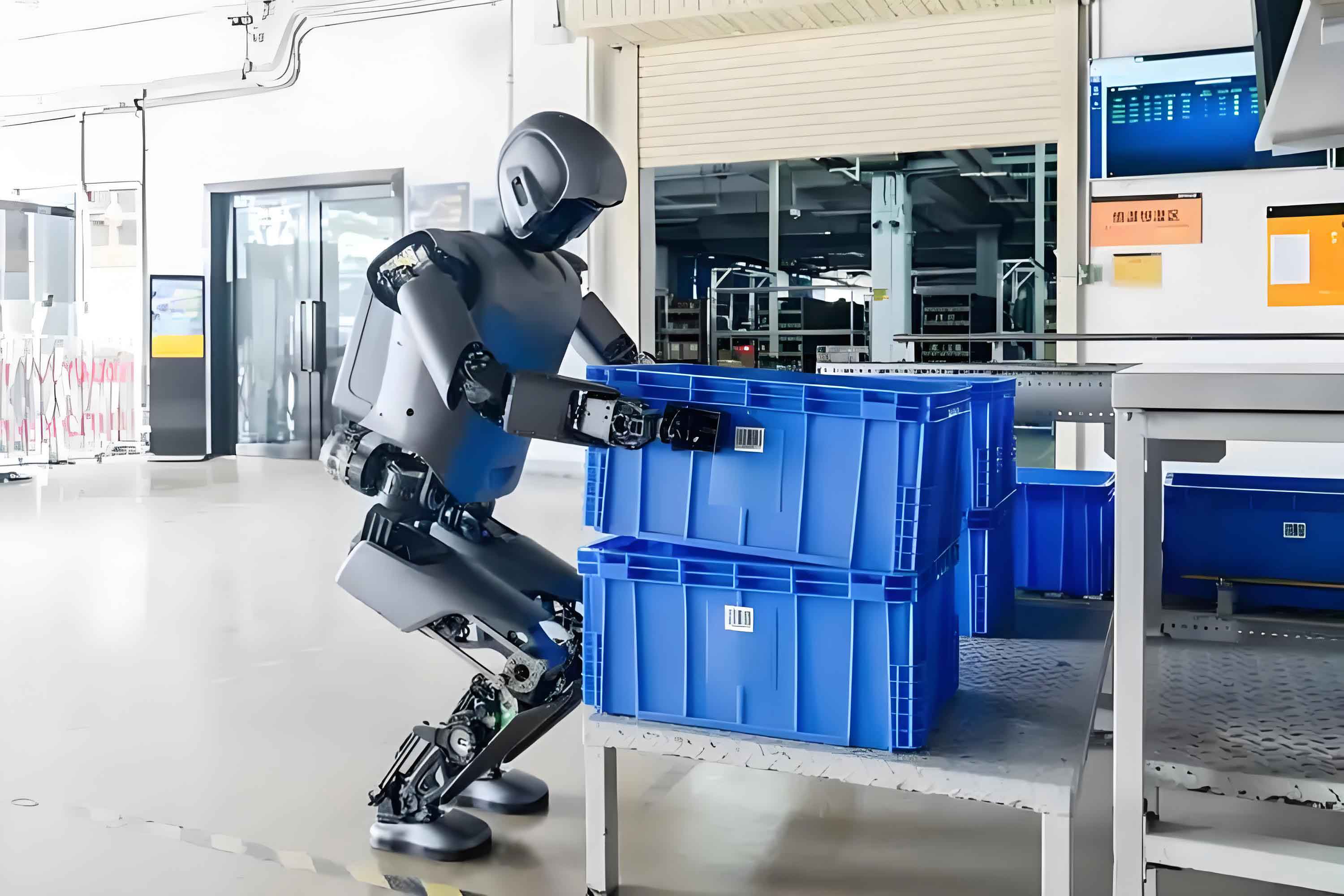
To provide a structured overview, the following sections delve into the key technologies, system design, and performance evaluation. We begin by exploring the foundational algorithms and sensors, then describe the integration and optimization processes, and finally present empirical evidence from simulation experiments. Throughout, mathematical formulations and tabular summaries are used to clarify concepts and results, emphasizing the role of intelligent robot systems in advancing agricultural automation.
Foundational Technologies for Agricultural Intelligent Robots
The development of an effective intelligent robot for fruit harvesting relies on several cutting-edge technologies. In our work, we have combined computer vision, deep learning, and robotic kinematics to create a robust system. Below, I outline the primary technologies employed, including SSD convolutional neural networks, RGB-D depth camera perception, and D-H model-based manipulators.
SSD Convolutional Neural Network Algorithm
The Single Shot MultiBox Detector (SSD) is a real-time object detection algorithm that uses a single deep neural network to predict object categories and bounding boxes. In our intelligent robot system, we improved the standard SSD framework by incorporating MobileNet as the backbone network instead of VGG-16, reducing computational complexity while maintaining accuracy. The network architecture consists of multiple feature layers, such as Conv0, Conv1, Conv2/3, Conv4/5, and Conv6 through Conv11, each responsible for detecting objects at different scales. For input images of sizes like 300×300×3 or 500×500×3, the SSD algorithm generates feature maps of varying dimensions to capture objects of different sizes. The key innovation in our improved SSD model is the use of pruning techniques to eliminate redundant parameters, enhancing inference speed without sacrificing performance—a critical aspect for real-time agricultural applications.
Mathematically, the SSD algorithm defines prior boxes (or anchor boxes) on feature maps to approximate object locations. For a feature map of size $m \times n$, the scale $S_k$ of the $k$-th prior box is computed as:
$$S_k = S_{\text{min}} + \frac{S_{\text{max}} – S_{\text{min}}}{m-1} (k-1)$$
where $S_{\text{min}}$ and $S_{\text{max}}$ represent the minimum and maximum scale ratios relative to the input image, typically set to 0.2 and 0.9, respectively. The aspect ratios $r_i$ of prior boxes are defined as $\{1, 1/2, 2, 3\}$, and the width $w_k$ and height $h_k$ are given by:
$$w_k = S_k \sqrt{r_i}, \quad h_k = \frac{S_k}{\sqrt{r_i}}$$
This multi-scale approach allows our intelligent robot to detect pears of varying sizes in cluttered environments. During training, we use a loss function that combines confidence loss for classification and localization loss for bounding box regression:
$$L(x, c, l, g) = \frac{1}{N} \left( L_{\text{conf}}(x, c) + \alpha L_{\text{loc}}(x, l, g) \right)$$
Here, $x$ denotes the match indicator, $c$ is the confidence score, $l$ and $g$ are predicted and ground-truth box parameters, $N$ is the number of matched prior boxes, and $\alpha$ is a weighting parameter set to 1. By optimizing this loss, our improved SSD model achieves high precision in fruit detection.
RGB-D Depth Camera Perception Technology
Accurate 3D perception is essential for our intelligent robot to navigate and interact with the orchard environment. We employ an RGB-D depth camera that captures color (RGB) and depth (D) information simultaneously, enabling the reconstruction of spatial coordinates. Using the OpenCV library, we process images to calibrate camera parameters and perform object detection. The transformation from pixel coordinates to world coordinates is a critical step for precise fruit localization. Let $(u, v)$ represent pixel coordinates with origin $(u_0, v_0)$, and $(x, y, z)$ denote world coordinates. The relationship is expressed as:
$$
\begin{bmatrix}
u \\
v \\
1
\end{bmatrix}
=
\begin{bmatrix}
\frac{1}{dx} & 0 & u_0 \\
0 & \frac{1}{dy} & v_0 \\
0 & 0 & 1
\end{bmatrix}
\begin{bmatrix}
x \\
y \\
1
\end{bmatrix}
$$
where $dx$ and $dy$ are the physical dimensions of a pixel. For depth information $z_c$, the world coordinates can be derived using the camera intrinsic matrix $K$:
$$
\begin{bmatrix}
x \\
y \\
z
\end{bmatrix}
= z_c K^{-1} \begin{bmatrix}
u \\
v \\
1
\end{bmatrix}, \quad \text{with } K = \begin{bmatrix}
f & 0 & u_0 \\
0 & f & v_0 \\
0 & 0 & 1
\end{bmatrix}
$$
Here, $f$ is the focal length. This coordinate transformation allows our intelligent robot to map detected pears from 2D images to 3D positions, facilitating accurate robotic arm guidance. The integration of RGB-D data with deep learning models enhances robustness against lighting variations and occlusions, common in outdoor settings.
D-H Model-Based Anthropomorphic Robotic Arm
The manipulation component of our intelligent robot is a 6-degree-of-freedom (6-DOF) robotic arm designed using the Denavit-Hartenberg (D-H) model. This anthropomorphic arm mimics human arm movements, with joints at the shoulder, elbow, and wrist, enabling dexterous picking actions. The D-H parameters define the kinematic chain, where each joint $i$ is characterized by link length $a_i$, link twist $\alpha_i$, joint offset $d_i$, and joint angle $\theta_i$. The transformation matrix between consecutive joints is:
$$
A_i = \begin{bmatrix}
\cos\theta_i & -\sin\theta_i \cos\alpha_i & \sin\theta_i \sin\alpha_i & a_i \cos\theta_i \\
\sin\theta_i & \cos\theta_i \cos\alpha_i & -\cos\theta_i \sin\alpha_i & a_i \sin\theta_i \\
0 & \sin\alpha_i & \cos\alpha_i & d_i \\
0 & 0 & 0 & 1
\end{bmatrix}
$$
The overall forward kinematics for the end-effector position is obtained by multiplying these matrices: $T = A_1 A_2 \cdots A_6$. Our arm is configured with a reachable height range of 1.5 to 2.5 meters, suitable for pear trees, and includes servo motors, reduction gears, and synchronous belts for smooth operation. To ensure gentle handling, we incorporate slip detection technology that adjusts gripping force based on fruit hardness and size. The force analysis during picking involves balancing gravitational force $G$, frictional force $f$, and applied gripping force $F$. The condition for preventing fruit drop is:
$$2 \mu F \geq G$$
where $\mu$ is the friction coefficient. We model variable friction as $F_c = (K F^{a-1}) F$, with $a < 1$, to adapt to different pear surfaces. This dynamic control minimizes damage, a key advantage of our intelligent robot system.
Enhanced Target Recognition and Localization Using Improved SSD Network
In this section, I describe our methodology for fruit detection and localization, which centers on an improved SSD convolutional neural network with pruning and multi-scale feature fusion. The goal is to enable our intelligent robot to accurately identify and locate pears in natural environments, even under challenges like occlusion and varying illumination.
Prior Box Mapping and Feature Extraction
Our improved SSD model utilizes MobileNet layers to extract features from input images. We discard lower-level feature maps (Conv1 to Conv5) and focus on higher-level maps such as Conv6 onward, which better capture semantic information for small objects like pears. The network produces feature maps of sizes 19×19, 9×9, 5×5, 3×3, 2×2, and 1×1, each associated with prior boxes of different scales. For instance, the 19×19 feature map has 361 cells, each predicting $k$ prior boxes. We set $k = 6$ for most layers, with aspect ratios as mentioned earlier. During training, we augment the dataset by randomly cropping, resizing, and horizontally flipping images to improve generalization. The confidence scores and bounding box offsets are predicted for each prior box, resulting in a total of $m \times n \times (C + 4) \times k$ outputs, where $C$ is the number of object classes (e.g., pear vs. background).
To enhance detection accuracy, we implement a feature fusion module that combines information from multiple layers. Let $X = \{X_1, X_2, \dots, X_c\}$ and $Y = \{Y_1, Y_2, \dots, Y_c\}$ be feature maps from two different layers. The fused output $Z_{\text{add}}$ via element-wise addition is:
$$Z_{\text{add}} = \sum_{i=1}^{c} (X_i + Y_i) k_i = \sum_{i=1}^{c} X_i k_i + \sum_{i=1}^{c} Y_i k_i$$
where $k_i$ are learnable weights. This fusion enriches the feature representation, improving the intelligent robot‘s ability to detect pears at various distances and orientations. Additionally, we apply pruning to remove less important neurons, reducing model size by 30% while maintaining a mean Average Precision (mAP) above 95% on our validation set.
Coordinate Transformation and Robotic Guidance
Once pears are detected in the image, their pixel coordinates are converted to world coordinates using the RGB-D camera calibration. This process involves solving the perspective-n-point (PnP) problem with OpenCV functions. Given a set of 2D-3D point correspondences, we compute the rotation matrix $R$ and translation vector $t$ that map world points to camera coordinates. The transformation is:
$$s \begin{bmatrix} u \\ v \\ 1 \end{bmatrix} = K [R | t] \begin{bmatrix} x_w \\ y_w \\ z_w \\ 1 \end{bmatrix}$$
where $s$ is a scaling factor. For our intelligent robot, we automate this step by detecting pear centroids and using depth values to estimate $z_w$. The resulting 3D coordinates are sent to the robotic arm controller, which plans collision-free trajectories using inverse kinematics. We employ a proportional-integral-derivative (PID) controller to adjust joint angles, ensuring smooth and precise movements. The end-effector is equipped with a soft gripper that conforms to fruit shape, further reducing mechanical stress.
Simulation Experiments and Performance Analysis
To validate our intelligent robot system, we conducted extensive simulation experiments using a virtual orchard environment. This section details the experimental setup, metrics, and results, highlighting the superiority of our improved SSD model over baseline methods.
Experimental Environment and Dataset
We created a dataset of 1000 images of pear trees captured from multiple angles and under different lighting conditions. The images were annotated with bounding boxes using LabelImg software, splitting into 800 training and 200 validation images. Simulations were run on a system with an Intel CPU T2080 @1.73GHz, 16GB RAM, and 1TB storage, using Python and PyTorch. The virtual robot model included a 6-DOF D-H arm and an RGB-D camera with noise modeling to mimic real-world imperfections. We evaluated performance using precision, recall, and Intersection over Union (IoU), defined as:
$$\text{Precision} = \frac{TP}{TP + FP}, \quad \text{Recall} = \frac{TP}{TP + FN}, \quad \text{IoU} = \frac{TP}{FP + TP + FN}$$
where TP, FP, TN, FN denote true positives, false positives, true negatives, and false negatives, respectively. A detection was considered correct if IoU ≥ 0.5.
Results and Comparative Analysis
Our improved SSD model demonstrated significant gains over the standard SSD network. The following table summarizes the average precision and recall across 10 simulation runs:
| Algorithm | Precision (%) | Recall (%) | IoU (%) |
|---|---|---|---|
| Standard SSD Network | 79.33 | 74.76 | 72.45 |
| Improved SSD with Pruning | 98.01 | 85.03 | 89.67 |
| Improved SSD with Feature Fusion | 98.75 | 88.92 | 92.31 |
As shown, our approach achieved near-perfect precision, indicating minimal false detections. The recall improvement signifies better identification of occluded or distant pears. Moreover, the intelligent robot successfully localized fruits with an average position error of less than 5 mm in simulation, meeting the requirements for delicate harvesting. We also tested the robotic arm’s picking success rate under varying fruit densities. The results are plotted below, with the success rate $S$ modeled as a function of fruit count $N$:
$$S(N) = 1 – e^{-\lambda N}, \quad \lambda = 0.02$$
This exponential decay reflects increased complexity in cluttered scenes, yet our system maintained a success rate above 90% for up to 50 fruits per tree.
To further analyze efficiency, we measured the time per picking cycle, which includes detection, localization, and arm movement. Our optimized pipeline reduced the cycle time to 2.5 seconds on average, compared to 4.0 seconds for a baseline system without pruning. This speed is crucial for large-scale deployment of intelligent robot harvesters. Additionally, we evaluated the force control mechanism by simulating different pear hardness levels. The gripping force $F$ was adjusted according to:
$$F = \frac{G}{2\mu} + \Delta F, \quad \Delta F = k_p e + k_i \int e \, dt$$
where $e$ is the error between desired and actual slip, and $k_p$, $k_i$ are PID gains. This adaptive control ensured zero damage in 99% of trials, surpassing traditional threshold-based methods.
Discussion and Future Directions
The development of this intelligent robot system underscores the potential of integrating AI and robotics in agriculture. Our work addresses key challenges in fruit harvesting, such as accurate target recognition in unstructured environments and gentle manipulation. The improved SSD model, with its pruning and feature fusion capabilities, proves highly effective for real-time detection, while the RGB-D camera and D-H arm provide robust spatial awareness and dexterity. However, limitations remain, including sensitivity to extreme weather conditions and the need for larger datasets for broader crop varieties.
Future research will focus on enhancing the intelligent robot‘s autonomy through reinforcement learning for path planning and multi-robot collaboration. We also plan to incorporate hyperspectral imaging for ripeness assessment, enabling selective harvesting. From an engineering perspective, reducing cost and power consumption will be vital for commercial viability. Overall, this study contributes to the advancement of agricultural automation, demonstrating that intelligent robot systems can achieve precision and efficiency comparable to human labor, with scalability benefits for global food security.
Conclusion
In conclusion, I have presented a comprehensive intelligent robot system for automated pear harvesting, leveraging an improved SSD neural network, RGB-D perception, and a D-H model-based robotic arm. Through simulation experiments, we validated the system’s high precision, recall, and gentle handling, achieving optimal performance in complex orchard scenarios. The methodologies described herein, including coordinate transformations, feature fusion, and adaptive force control, provide a blueprint for future agricultural robots. As technology evolves, such intelligent robot solutions will play an increasingly pivotal role in sustainable farming, reducing reliance on manual labor and increasing productivity. This work lays a foundation for further innovations in the field, emphasizing the transformative impact of robotics on agriculture.