
The cultivation and consumption of tea hold profound cultural and economic significance globally. As the world’s largest producer and consumer, the advancement of tea harvesting technology is of paramount importance. While mechanical harvesting has become standard for bulk tea, the selective plucking of premium, high-value tea shoots—often comprising a single bud or a bud with one or two tender leaves—remains a formidable challenge. Manual harvesting, though ensuring quality, is labor-intensive, inefficient, and increasingly unsustainable due to rising labor costs and shortages. This pressing need has catalyzed the development of intelligent tea harvesting robots, within which the end effector plays a critically decisive role. The performance of the end effector directly governs the efficiency of the harvest and, more crucially, the integrity and quality of the delicate tea shoots. This article, from my perspective as a researcher in the field, analyzes the current landscape, core challenges, and future trajectories of end effector technology for premium tea harvesting.
The fundamental challenge lies in the biological and physical characteristics of the tea shoot. Targets are small, exhibit shape variance, and are often densely clustered and occluded within the complex foliage of the tea bush. Their stems are flexible yet require a clean separation, and the buds themselves are highly susceptible to bruising or damage. A traditional “one-size-fits-all” cutting mechanism is entirely inadequate, as it lacks selectivity and causes unacceptable levels of damage, waste, and inclusion of mature leaves. Therefore, the design of a specialized end effector must reconcile several competing demands: precision, selectivity, gentleness, speed, and reliability.
Before delving into tea-specific designs, it is instructive to survey the broader field of agricultural robotic harvesting. Numerous solutions have been explored for fruits and other crops, providing valuable design paradigms. The dominant methodology involves a combination of grasping and cutting.
A generalized model for the picking action can be described as a sequence of force applications. Let $F_g$ represent the grasping or stabilizing force applied by the end effector, and $F_c$ represent the cutting, twisting, or pulling force used to sever the peduncle or stem. For a successful and undamaged harvest, these forces must operate within a bounded domain defined by the mechanical properties of the crop.
$$ F_{g}^{min} < F_g < F_{g}^{max} $$
$$ F_{c}^{min} < F_c < F_{c}^{max} $$
Here, $F_{g}^{min}$ is the minimum force required to secure the object without dropping it, and $F_{g}^{max}$ is the maximum force before surface damage occurs. Similarly, $F_{c}^{min}$ is the force needed to cleanly sever the stem, and $F_{c}^{max}$ is the force that would cause crushing or tearing above the cut point. The narrow window for tender tea shoots, especially for $F_{g}^{max}$, is a central constraint. Researchers have developed various mechanisms: strawberry harvesters that combine gripping with blade cutting, kiwi harvesters that use a twist-and-pull motion, and delicate grippers for lychee that mimic human fingers. A notable trend is the exploration of soft robotics, using compliant materials to increase contact area and distribute force, thereby reducing $F_g$ pressure and the risk of exceeding $F_{g}^{max}$. These principles are directly transferable to the design of a tea harvesting end effector.
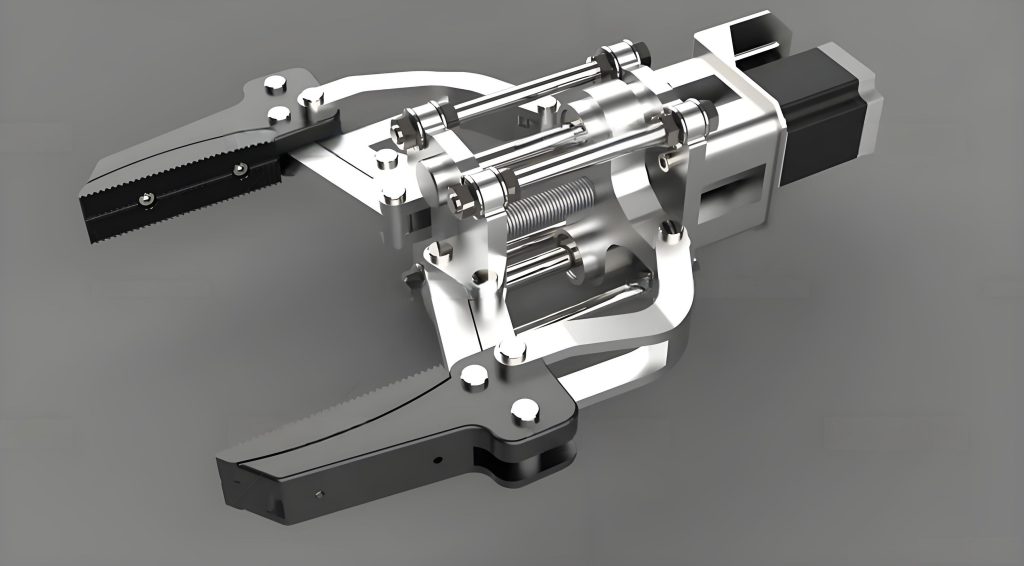
Focusing specifically on premium tea, research into dedicated harvesting robots and their end effectors is still in a nascent but active stage. Existing prototypes and concepts can be broadly categorized into four archetypes based on their primary detachment and handling method. The following table provides a comparative summary:
| End Effector Type | Operational Mechanism | Key Advantages | Primary Challenges | Typical Harvesting Sequence |
|---|---|---|---|---|
| Grasping-Type | Uses fingers or clamps to grip the shoot, followed by a pull, twist, or snap to detach it. | Mimics human action; can be selective. | Extremely high sensitivity required in force control ($F_g$); risk of crushing or slipping. | Approach -> Grip -> Detach (via motion) -> Retract to deposit. |
| Cutting-Type | Employs blades, shears, or saws to mechanically sever the stem. | Simple, reliable, and strong detachment action; clear separation point. | Requires precise alignment; potential for collateral damage to adjacent buds; needs a collection method post-cut. | Approach -> Position blade -> Cut -> Collect fallen shoot. |
| Suction-Type | Uses aerodynamic principles (vacuum) to aspirate the shoot after or during cutting. | Integrates harvesting and collection into one fluid action; minimal physical contact. | High energy consumption; requires precise vacuum tuning to hold shoot without damage; performance varies with shoot size/shape. | Approach -> Cut (optional) -> Activate suction -> Convey to collection bin. |
| Biomimetic-Type | Imitates biological structures or human hand movements for a more natural, integrated harvest. | Potentially high dexterity and adaptability; can combine gripping and cutting softly. | Complex design and control; often involves sophisticated mechanisms like tendon drives or soft actuators. | Varies (e.g., pinch-and-roll, envelop-and-snap). |
The force dynamics for a cutting-type end effector can be modeled around the blade mechanics. The cutting force $F_c$ must overcome the shear strength $\tau_s$ of the stem material over the effective cutting cross-sectional area $A_c$.
$$ F_c \geq \tau_s \cdot A_c $$
However, to prevent damage, the clamping or guiding force $F_g$ applied to stabilize the stem during cutting must be insufficient to cause plastic deformation or cell rupture. This highlights the intricate interplay between components even in a seemingly simple cutter design.
For a suction-type end effector, the key is the pressure differential. The lifting force $F_{lift}$ generated by vacuum must exceed the weight $W$ of the shoot and the resistance from its attachment, but remain low enough to avoid compressing the tender tissues. This can be expressed as:
$$ F_{lift} = \Delta P \cdot A_{nozzle} > W + F_{stem} $$
where $\Delta P$ is the pressure difference, $A_{nozzle}$ is the effective intake area, and $F_{stem}$ is the strength of the stem’s attachment. Tuning $\Delta P$ dynamically for different shoot sizes is a significant control challenge.
Despite promising research, several persistent technical hurdles impede the commercialization of a viable premium tea harvesting robot, with the end effector at the heart of many issues.
1. Unacceptably Low Operational Efficiency: The current harvest cycle time for a robotic system is orders of magnitude slower than a skilled human picker. This cycle, $T_{total}$, can be broken down as:
$$ T_{total} = T_{perception} + T_{planning} + T_{maneuver} + T_{execution} + T_{recovery} $$
where $T_{execution}$ is the time taken by the end effector itself to perform the pick. While perception and planning times are substantial, the end effector action sequence—precise alignment, grip/cut, transfer to collection—is often sequential and slow. A human seamlessly integrates perception and action, while a robot’s end effector must wait for full positional confirmation and then execute a multi-step mechanical routine. The reset and travel time for the manipulator to deposit a single shoot into a central collection bin is a major bottleneck.
2. Inconsistent Integrity Assurance: The majority of existing end effector designs are fundamentally rigid. While effective for detachment, they struggle to operate within the strict $F_{g}^{max}$ limit required for tea buds. Slight misalignments, variations in stem thickness, or irregular shapes can lead to excessive point loads, causing bruising, breaking of the bud, or tearing of leaves. This directly diminishes the economic value of the harvest. A truly “gentle” end effector requires compliance, either through passive mechanisms, soft materials, or highly adaptive active force feedback control—all adding to complexity.
3. Lack of Robustness in Unstructured Environments: Tea bushes are not laboratory settings. The end effector must contend with humidity, dust, sap, varying light, wind-induced plant movement, and dense, obstructive foliage. A blade may gum up, a suction inlet may get clogged with a leaf, and a gripper may fail to isolate the target stem from its neighbors. Reliability under these real-world conditions is rarely tested thoroughly in early-stage prototypes.
4. The Harvest-and-Collection Dilemma: Perhaps the most critical systems-level issue is the separation of the harvesting action from the collection process. Most designs treat the end effector as a pure picking tool that must then relinquish the shoot to a separate subsystem (e.g., a central bin via a conveyor or a second manipulator). This handoff step is a prime source of delay ($T_{recovery}$) and risk (dropping or damaging the shoot during transfer).
Analyzing these problems points toward a convergent set of future development trends for the next generation of tea harvesting end effectors.
Trend 1: Integrated Harvest-Collection End Effectors. The most promising avenue is to radically rethink the end effector not just as a picker, but as a self-contained picking and temporary storage unit. Imagine an end effector that, upon cutting or detaching a shoot, immediately encapsulates it within a small, integrated compartment. After several picks (e.g., 5-10), the entire end effector or a sub-component rotates or translates to empty its cache into a larger collection bin located on the mobile platform or manipulator arm. This drastically reduces $T_{recovery}$ by batching the deposit action. The motion can be a simple, fast rotation, modeled as minimizing the angular displacement $\theta$ and time $t_{dump}$:
$$ \text{Minimize: } t_{dump} = f(\theta, \alpha) $$
where $\alpha$ is the angular acceleration of the dumping mechanism. This “harvest-on-the-go, deposit-in-batches” philosophy could significantly enhance overall system throughput.
Trend 2: Pervasive Integration of Soft Robotics and Compliance. To solve the damage problem, future end effectors will increasingly incorporate soft, variable stiffness, or passively compliant elements. A soft gripper can conform to the shoot’s shape, distributing $F_g$ over a larger area and staying below the damage threshold. Materials with tunable stiffness could be rigid for precise positioning but soften upon contact. A simple model for contact pressure $P$ highlights the benefit:
$$ P = \frac{F_g}{A_{contact}} $$
By using compliant materials that increase the effective contact area $A_{contact}$ upon grasping, the pressure $P$ is reduced for the same stabilizing force $F_g$, thereby protecting the shoot.
Trend 3: Simplified Manipulation for Speed. Coupled with a smarter end effector, there is a trend toward using simpler, lower-degree-of-freedom (DoF) manipulators. A complex 6-DoF arm offers dexterity but has longer settling times and more complex inverse kinematics. A simpler, faster 3- or 4-DoF arm (e.g., SCARA or selectively constrained parallel manipulator) with a highly adaptive end effector can potentially reach target positions more quickly, reducing $T_{maneuver}$. The system intelligence shifts from the arm’s dexterity to the end effector‘s ability to compensate for minor positional errors and handle the final delicate operation.
Trend 4: Adaptive, Sensor-Driven Control. The future end effector will be a sensor-rich entity. Tactile sensors, force/torque sensors, and even miniature embedded vision will provide real-time feedback. This enables closed-loop control where the grasping force $F_g$ is dynamically adjusted based on actual contact conditions. An adaptive control law could be:
$$ F_g(t) = K_p \cdot e(t) + K_i \int e(t)dt $$
where $e(t)$ is the error between the desired and measured contact pressure or position, and $K_p$, $K_i$ are control gains. This allows the end effector to handle variability in stem size and rigidity autonomously.
Trend 5: Standardization and Modularity. As the field matures, we may see the development of standardized interfaces for mounting end effectors to manipulator arms. This would allow researchers and companies to focus on optimizing the end effector module itself—the gripper, cutter, suction head, or integrated unit—knowing it can be deployed on various robotic platforms. Modular designs would also allow quick swapping of end effector types for different tea cultivars or harvest seasons.
In conclusion, the advancement of robotic premium tea harvesting is inextricably linked to the innovation of its most critical physical interface: the end effector. Moving beyond rigid, single-function designs toward intelligent, integrated, and compliant systems is essential. The ideal future end effector will be a self-contained unit that gently harvests, temporarily stores, and efficiently batches its yield, all while adapting in real-time to the unpredictable tea bush environment. By focusing on these integrated mechatronic solutions, we can bridge the gap between promising prototypes and commercially viable robots, ultimately ensuring the sustainability and quality of the global tea industry.