
In the rapidly evolving landscape of artificial intelligence, the question of whether AI human robots should be granted legal subjecthood has become a pivotal issue. As an observer of this technological revolution, I argue that the debate must be grounded in a thorough analysis of legal theory, ethical considerations, and societal needs. The integration of AI human robots into daily life—from healthcare to disaster response—demands a reevaluation of traditional legal frameworks. This essay explores the feasibility of conferring limited legal subjecthood on AI human robots, drawing on external factors like ethics and interests, internal legal structures, and the imperative of human-centric values. Through this examination, I aim to demonstrate that while AI human robots lack full autonomy, they can serve as responsible entities in specific contexts, balancing innovation with safety.
The concept of legal subjecthood has historically expanded to include entities beyond natural persons, such as corporations, based on evolving societal norms. For AI human robots, this expansion requires assessing key elements: consciousness, rationality, and societal benefits. From my perspective, the external factors driving legal subjecthood can be categorized into ethical and interest-based dimensions. Ethically, the presence of consciousness and rationality in an entity often justifies its recognition as a legal subject. For instance, consciousness implies self-awareness and the capacity for independent existence, while rationality encompasses decision-making abilities that align with human-like reasoning, including emotional intelligence. However, current AI human robots exhibit only simulated rationality, not genuine autonomy. As I delve into this, let me present a table summarizing the core external factors influencing legal subjecthood for AI human robots:
| Factor Type | Key Elements | Application to AI Human Robots |
|---|---|---|
| Ethical External Factors | Consciousness, Rationality | AI human robots lack true consciousness; rationality is algorithm-based, not self-derived. |
| Interest-Based External Factors | Societal Needs, Economic Benefits | AI human robots address gaps in labor, healthcare, and safety, justifying legal consideration. |
From this table, it is clear that AI human robots do not meet the ethical criteria for full legal subjecthood, as they operate without intrinsic consciousness. The rational behavior observed in AI human robots is governed by pre-programmed algorithms, which I describe using a basic formula for decision-making: $$ D = f(A, E) $$ where \( D \) represents the decision output, \( A \) is the algorithmic input, and \( E \) denotes environmental data. This formula highlights that AI human robot decisions are deterministic, lacking the spontaneous reasoning characteristic of human rationality. Consequently, from an ethical standpoint, I conclude that AI human robots cannot be equated with human subjects, as their actions are not born of free will or self-reflection.
Turning to interest-based external factors, I believe that societal needs play a crucial role in shaping legal recognition. The proliferation of AI human robots in industries like elderly care and emergency services creates a pressing demand for regulatory frameworks that mitigate risks while fostering innovation. For example, autonomous AI human robots can perform tasks in unstructured environments, but their unpredictable actions may lead to harm. In such cases, assigning liability becomes complex. From my analysis, the internal legal factors—rights, obligations, and liability—must be adaptable to accommodate AI human robots. A limited legal subjecthood model, focusing on liability rather than full rights, emerges as a pragmatic solution. This approach aligns with historical precedents, such as the legal personhood of corporations, which was established to facilitate economic activities without granting all human privileges.
To illustrate the internal legal adaptability, consider the following formula representing the liability framework for AI human robots: $$ L = P + I + R $$ where \( L \) is total liability, \( P \) denotes proportional responsibility shared with humans, \( I \) represents insurance coverage, and \( R \) stands for regulatory sanctions like data modification. This formula underscores that AI human robots can be integrated into legal systems through mechanisms like compulsory insurance, ensuring compensation for damages without stifling technological progress. As I reflect on this, the human-centric principle remains paramount; granting limited subjecthood to AI human robots serves human interests by enhancing safety and efficiency, rather than undermining human dignity.
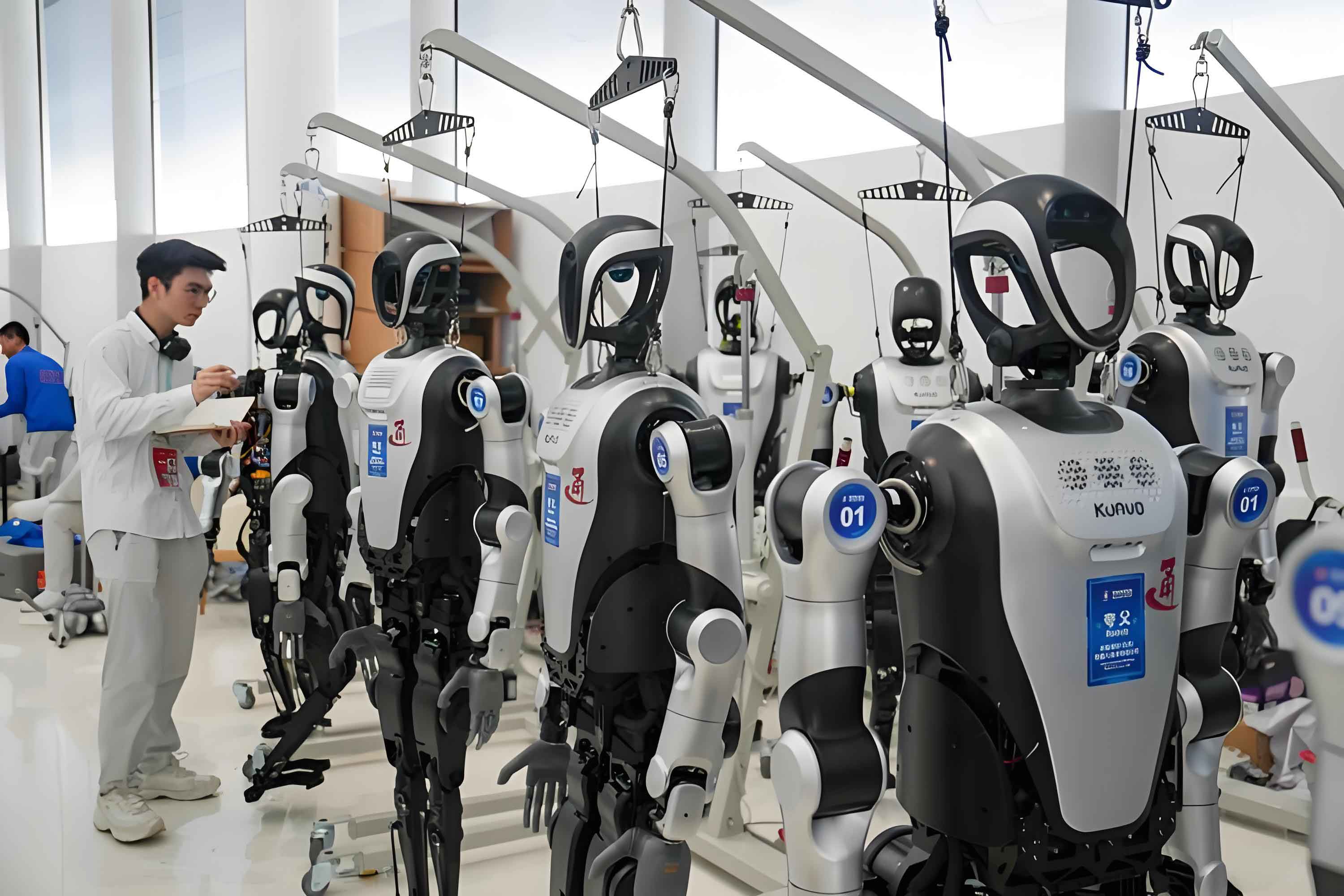
The physical embodiment of AI human robots, as depicted in the image, accentuates their role in human-like interactions, fostering emotional connections that necessitate legal oversight. In my view, this anthropomorphic design increases the urgency for defining their legal status, as it blurs the line between tool and entity. However, I maintain that AI human robots should not be granted rights akin to humans, such as marriage or inheritance, due to their lack of authentic consciousness. Instead, a focused liability model, as outlined in the formula above, can address incidents where AI human robots cause harm independently. For instance, in scenarios involving property damage or personal injury, a combination of robot-specific funds and human co-responsibility ensures accountability. This perspective is reinforced by the following table, which compares different legal subjecthood models for AI human robots:
| Legal Subjecthood Type | Rights Granted | Obligations Imposed | Liability Mechanisms |
|---|---|---|---|
| Full Subjecthood | Broad rights (e.g., property, life) | Comprehensive duties | Personal responsibility; impractical for AI human robots |
| Limited Subjecthood | Minimal rights (e.g., compensation claims) | Specific obligations (e.g., safety standards) | Insurance, reserve funds, and human co-liability |
| No Subjecthood | None | None | Full human responsibility; hinders AI human robot innovation |
From this comparison, I advocate for the limited subjecthood model, as it pragmatically addresses the unique challenges posed by AI human robots. In practice, this means that when an AI human robot causes damage, its independent liability is triggered through pre-established funds, while humans involved in its design or use bear partial responsibility. This dual approach mitigates the risks of uncontrolled AI human robot behavior without imposing undue burdens on developers or users. Moreover, it upholds the human-centric ethos by ensuring that AI human robots remain tools for human benefit, not competitors for moral standing.
In conclusion, the journey toward defining legal subjecthood for AI human robots is ongoing, and I believe that a balanced, limited approach is essential. As AI human robot technology advances, societal transformations will necessitate continuous legal adaptation. By embracing this evolution, we can harness the potential of AI human robots to improve human welfare while safeguarding ethical principles. The debate over AI human robot legal status is not just an academic exercise but a critical step in shaping a future where technology and humanity coexist harmoniously.