
The rapid ascent of the low-altitude economy, propelled by the proliferation of unmanned aerial vehicles (UAVs) and advanced air mobility, necessitates a robust and intelligent communication infrastructure. This infrastructure, the Low-altitude Intelligent Network (LAIN), faces a formidable bottleneck: the scarcity and escalating contention for electromagnetic spectrum resources. Traditional, static spectrum management paradigms are ill-equipped to handle the three-dimensional, dynamic, and security-sensitive nature of low-altitude operations. Consequently, intelligent and autonomous Spectrum Management and Control (SMC) has emerged as a critical enabler for safe and efficient LAIN operations. This article explores the transformative potential of Embodied Artificial Intelligence (EAI), realized through embodied AI robots, as the foundational technology for next-generation low-altitude SMC. We argue that the innate capabilities of embodied AI robots—physical interaction, multi-modal perception, autonomous decision-making, and experiential learning—directly address the core challenges of LAIN SMC, paving the way for a closed-loop “perception-inference-decision-action-feedback” system that is dynamic, resilient, and efficient.
The low-altitude electromagnetic environment is uniquely challenging. Unlike terrestrial networks, it is characterized by its volumetric geometry, where signals propagate and interfere in a three-dimensional space. The number of aerial nodes (UAVs, air taxis, monitoring platforms) and their associated data traffic is growing exponentially, leading to intense competition for bandwidth. Furthermore, flight missions are inherently dynamic; trajectories, network topologies, and communication demands change rapidly, demanding equally agile spectrum allocation. Security threats, including intentional jamming, spoofing, and unauthorized spectrum use, pose significant risks to flight safety and network integrity. Legacy infrastructure, often designed for ground-based services, provides uneven and inadequate coverage for low-altitude domains, especially over complex terrains. The limitations of current approaches are summarized below.
| Challenge | Description | Limitation of Traditional SMC |
|---|---|---|
| 3D Volumetric Environment | Spectrum radiation and interference occur in a 3D space, not a 2D plane. | Ground-fixed sensors provide a limited, planar view. 3D spectrum mapping is coarse and infrequent. |
| Dynamic & Unpredictable Demand | UAV swarm missions, changing flight paths, and bursty data create highly variable, real-time spectrum needs. | Static pre-allocation and slow centralized re-allocation lead to low spectrum utilization and high latency in serving new requests. |
| Severe Security Threats | Open radio space is vulnerable to jamming, illegal transmissions, and spoofing attacks that can cause system failures. | Reactive, manual localization and mitigation of threats is too slow. Lack of real-time, autonomous threat response. |
| Inadequate Infrastructure | Existing ground stations offer poor coverage for low-altitude routes, especially in remote or geographically challenging areas. | Creates “spectrum blind spots,” leading to poor situational awareness and potential loss of control links. |
The fundamental shift offered by embodied AI robots lies in their integrated “body” and “mind.” An embodied AI robot is not merely a software algorithm but a physical entity (a UAV, ground robot, or surface vessel) endowed with sensors, actuators, and a brain-like intelligence that allows it to perceive its environment, reason about it, make decisions, take physical action, and learn from the consequences. This creates a perfect synergy with the SMC control loop. The core advantages of an embodied AI robot for SMC are threefold: 1) Multi-modal Fusion for Granular Perception: It can fuse RF sensing with visual, LiDAR, and positional data to build a rich, multi-dimensional understanding of the spectrum environment and its physical context. 2) Physical Agency for Active Intervention: It can move to optimal sensing locations, deploy countermeasures, or physically reconfigure network elements. 3) Intelligent Growth through Continual Interaction: Through continual interaction with the environment (trial, error, and success), the embodied AI robot can learn and evolve its SMC strategies, adapting to novel threats and scenarios.
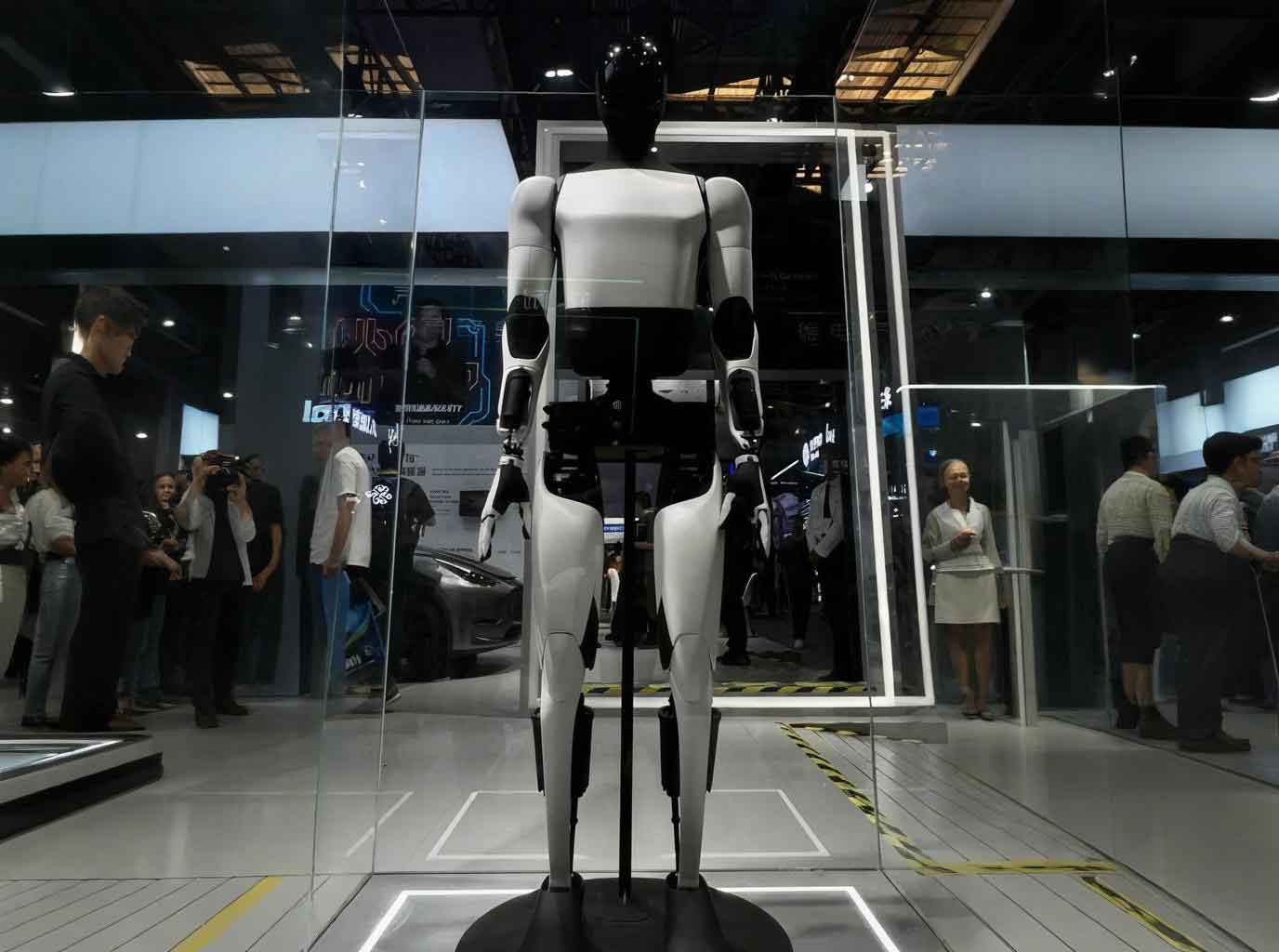
The physical morphology of an embodied AI robot is tailored to its mission. For pervasive low-altitude SMC, the primary form factor is the UAV-based embodied AI robot, offering unmatched mobility in the 3D airspace. This is complemented by ground embodied AI robots (wheeled or legged) for terrain-specific deployments and marine embodied AI robots for operations over water bodies. This heterogeneous team of embodied AI robots forms a dynamic, mobile sensor and actuator network that is the physical substrate for intelligent SMC.
Foundational Enablers for Embodied AI Robots in SMC
The realization of effective embodied AI robot-enabled SMC relies on several converging technological pillars. First, advanced multi-modal sensor fusion is critical. An embodied AI robot must correlate RF power measurements, signal waveforms, and direction-of-arrival data with camera images, point clouds, and its own precise GNSS/INS coordinates. World models and foundation models trained on vast, diverse datasets provide the necessary generalization for this fusion, allowing the robot to understand that a specific visual object (e.g., a suspicious ground vehicle) is likely the source of a detected anomalous RF emission.
Second, the computational architecture must support distributed, edge-centric intelligence. The core AI model—a large language model (LLM) or a vision-language-action model fine-tuned for spectrum tasks—can reside in a cloud or powerful edge server. However, each embodied AI robot must host a lightweight “embodiment” module that handles real-time control, local sensor processing, and execution of high-level commands from the central intelligence. This cloud-edge-robot continuum ensures scalability and low-latency response. The decision-making process can be modeled as a Partially Observable Markov Decision Process (POMDP), where the embodied AI robot must choose actions based on incomplete and noisy observations to maximize a long-term reward (e.g., aggregate network throughput, minimized interference). The value function $V(s)$ for a state $s$ under an optimal policy $\pi^*$ can be expressed via the Bellman optimality equation:
$$
V^{*}(s) = \max_{a} \left[ R(s, a) + \gamma \sum_{s’} P(s’ | s, a) V^{*}(s’) \right]
$$
where $R(s,a)$ is the immediate reward for taking action $a$ in state $s$, $\gamma$ is the discount factor, and $P(s’|s,a)$ is the state transition probability.
Third, sophisticated learning frameworks are required. While reinforcement learning (RL) provides a natural framework for sequential decision-making, training in the real radio frequency environment is costly and risky. Therefore, a digital twin of the low-altitude spectrum environment is essential. This high-fidelity simulator allows thousands of embodied AI robots to train and evolve their SMC policies safely. Techniques like Proximal Policy Optimization (PPO) or Multi-Agent Deep Deterministic Policy Gradient (MADDPG) can be used to train cooperative behaviors. The learning objective for a multi-agent system of embodied AI robots can be to maximize the global discounted reward:
$$
J(\boldsymbol{\theta}) = \mathbb{E}_{\tau \sim p_{\boldsymbol{\theta}}(\tau)} \left[ \sum_{t=0}^{T} \gamma^t R^g_t(\mathbf{s}_t, \mathbf{a}_t) \right]
$$
where $\boldsymbol{\theta}$ represents the parameters of all agents’ policies, $\tau$ is a trajectory, and $R^g_t$ is the global reward at time $t$.
| Enabling Technology | Role in Embodied AI SMC | Key Algorithms/Models |
|---|---|---|
| Multi-modal Fusion & World Models | Creats a unified, contextual understanding of the physical-RF environment. | Vision-Language-Action Models, Neural Radiance Fields (NeRF) for scene reconstruction, Transformer-based fusion networks. |
| Distributed AI Architecture | Enables low-latency, scalable decision-making across a fleet of robots. | Cloud-Edge-Robot continuum, Federated Learning, Lightweight model distillation (e.g., from LLM to small policy network). |
| Advanced Learning in Simulation | Safe and efficient training of complex cooperative SMC policies. | Deep Reinforcement Learning (PPO, MADDPG), Imitation Learning from expert demonstrations, Evolution Strategies. |
| Digital Twin of the RF Environment | Provides a high-fidelity, synthetic training and testing ground. | Ray-tracing based propagation modeling, Agent-based simulation frameworks, Hardware-in-the-loop (HITL) testing. |
Core Technological Framework for Embodied AI Robot SMC
Building upon these enablers, we propose a concrete technological framework for embodied AI robot-enabled SMC, structured around the perception-inference-decision-action-feedback loop.
1. Embodied Spectrum Sensing: Active 3D Spectrum Cartography
The first step is for a team of embodied AI robots to actively construct a high-resolution, four-dimensional (space and time) map of the spectrum environment. Unlike static sensors, an embodied AI robot can intelligently plan its sensing trajectory. It formulates a path optimization problem to maximize the information gain about the spectrum field $P(f, x, y, z, t)$ (power at frequency $f$, location $(x,y,z)$, time $t$) while respecting energy and communication constraints. This can be framed as an informative path planning problem. For a team of $N$ robots, the objective is to find paths $\{\xi_i\}$ that minimize the posterior uncertainty (e.g., trace of the covariance matrix $\Sigma$) of a Gaussian Process model of the spectrum field:
$$
\min_{\{\xi_i\}} \text{Tr}(\Sigma_{\text{post}}(\{\xi_i\}, \mathcal{D}))
$$
$$
\text{s.t. } \quad \text{Length}(\xi_i) \leq B, \quad \|\mathbf{p}_i(t) – \mathbf{p}_j(t)\| \geq d_{\text{safe}}
$$
where $\mathcal{D}$ is the collected data, $B$ is a budget, $\mathbf{p}_i(t)$ is the position of robot $i$, and $d_{\text{safe}}$ is a safety distance.
The sensing performance itself is enhanced by the mobility of the embodied AI robot. Consider the classic binary hypothesis testing problem for signal detection. The probability of detection $P_d$ for an energy detector at a specific location depends on the channel gain $|H|^2$. By moving, the embodied AI robot can find locations with more favorable channel conditions, effectively increasing $|H|^2$ and thus $P_d$ for a target signal. The detected energy $Y$ is compared to a threshold $\lambda$:
$$
\begin{align}
\mathcal{H}_0: & \quad Y = \sum_{n=1}^{M} |w[n]|^2 \\
\mathcal{H}_1: & \quad Y = \sum_{n=1}^{M} |H \cdot s[n] + w[n]|^2
\end{align}
$$
where $w[n] \sim \mathcal{CN}(0, \sigma^2)$ is complex Gaussian noise, $s[n]$ is the signal, and $M$ is the number of samples. The embodied AI robot can actively control its position to influence $H$, thereby optimizing detection performance.
2. Embodied Spectrum Inference & Decision: Predictive & Collaborative Allocation
With a rich spectrum map, the core intelligence of an embodied AI robot or the central orchestrator engages in predictive reasoning. Using sequence models (e.g., Transformers, LSTMs) or spatio-temporal graph neural networks, it forecasts future spectrum occupancy and interference hotspots based on historical data, known flight plans, and observed patterns. This predictive capability is crucial for proactive spectrum management.
Decision-making is a hierarchical, collaborative process. For global, network-wide optimization (e.g., assigning primary spectrum blocks to different regions or mission groups), a central entity may use the predictions to solve a constrained optimization problem maximizing total spectral efficiency. For local, rapid decisions (e.g., a UAV swarm needing to react to sudden jamming), a distributed consensus algorithm runs among the embodied AI robots in the affected area. They can use distributed constraint optimization or auction-based mechanisms to re-allocate channels on the fly. The utility for robot $i$ using channel $c$ can be modeled as:
$$
U_i(c) = \log_2\left(1 + \frac{P_i |H_{i,i}(c)|^2}{N_0 + \sum_{j \neq i} P_j |H_{j,i}(c)|^2}\right) – \mu I(c \in \mathcal{C}_{\text{jammed}})
$$
where $P_i$ is transmit power, $H_{j,i}$ is the channel from transmitter $j$ to receiver $i$, $N_0$ is noise power, and the penalty term $\mu$ discourages selection of jammed channels $\mathcal{C}_{\text{jammed}}$. The collective goal is to find an assignment that maximizes the sum or minimum of utilities across all robots.
3. Embodied Spectrum Action & Feedback: Autonomous Enforcement and Continual Learning
This is where the physical embodiment of the embodied AI robot becomes paramount. Decisions are not just messages sent to users; they are executed physically.
- Spectrum Sharing Action: An embodied AI robot acting as a mobile base station can physically reposition itself to establish better links for disadvantaged users, effectively shaping the interference landscape. It can also broadcast dynamic frequency selection commands to compliant UAVs.
- Security Enforcement Action: Upon identifying a malicious jammer or illegal transmitter, a team of embodied AI robots can autonomously execute a counter-operation. They use cooperative direction-finding and triangulation to pinpoint the source. One subset may physically approach the location for confirmation (visual ID), while another subset executes a countermeasure, such as deploying a focused, spatially-precise “null” in its beam pattern to cancel the jamming signal at protected receivers. The beamforming weights $\mathbf{w}$ for an $N$-antenna array on an embodied AI robot can be designed to maximize signal-to-interference-plus-noise ratio (SINR):
$$
\max_{\mathbf{w}} \frac{\mathbf{w}^H \mathbf{R}_s \mathbf{w}}{\mathbf{w}^H \mathbf{R}_j \mathbf{w} + \sigma^2 \mathbf{w}^H \mathbf{w}} \quad \text{s.t.} \quad \|\mathbf{w}\|^2 \leq P_{\text{max}}
$$
where $\mathbf{R}_s$ and $\mathbf{R}_j$ are the spatial covariance matrices of the desired signal and jammer, respectively.
The feedback loop is closed by monitoring the outcomes of these actions. Did the new spectrum allocation reduce interference? Was the jammer successfully neutralized? This performance data is fed back as new experiential knowledge. Using online learning techniques, the policies and models within the embodied AI robots are updated. For instance, the reward function in the RL framework is directly shaped by this feedback, allowing the system to learn that certain actions in specific contexts lead to better long-term spectrum health. This creates a virtuous cycle of continual improvement and adaptation.
| SMC Function | Traditional Approach | Embodied AI Robot Approach | Key Advantage |
|---|---|---|---|
| Spectrum Sensing | Static, ground-based sensors with fixed perspectives. | Mobile robots performing active, informative path planning for 3D sensing. | Higher resolution, adaptive coverage, ability to sense in blind spots. |
| Interference Mitigation | Frequency re-assignment via central controller; slow response. | Distributed collaborative decision-making among robot swarms; physical beam-nulling by mobile arrays. | Ultra-fast local reaction, physical-layer countermeasures, spatial suppression. |
| Resource Allocation | Pre-computed, fixed schedules or slow optimization cycles. | Predictive + reactive real-time optimization; physical repositioning of network nodes. | Dramatically improved utilization, adaptability to mission dynamics. |
| Security Response | Manual investigation and deactivation of threats. | Autonomous threat hunting, localization, and physical/electronic neutralization by robot teams. | 24/7 operation, rapid threat suppression, reduced human risk. |
Conclusion and Future Trajectory
The integration of embodied AI robots into the fabric of low-altitude spectrum management represents a paradigm shift from passive management to active, intelligent, and physical control. By closing the loop between perception, intelligent decision-making, and physical action in the real world, systems built around embodied AI robots offer a compelling solution to the pressing challenges of density, dynamics, and security in the LAIN. The path forward involves significant research and development in robust multi-robot collaboration under communication constraints, the creation of ultra-high-fidelity RF digital twins, and the design of verifiably safe and ethical autonomous actions in the shared airspace. Nevertheless, the trajectory is clear: the future of efficient and secure low-altitude communications will be actively shaped and guarded by intelligent, physically-embodied agents—the embodied AI robots of the electromagnetic domain.