
AVIC Jonhon Optronic Technology Co., Ltd. has reached a new milestone in wireless power transfer with its WLH-type 900W wireless charging component, which has passed testing by the National Mine Explosion-Proof Safety Product Quality Inspection and Testing Center and obtained an explosion-proof certificate. The development is significant for the company’s position in embodied intelligence and for the wider humanoid robot supply chain, because it combines contactless energy delivery with explosion-proof safety design for equipment that must operate in hazardous environments.
The certification gives AVIC Jonhon a product and qualification foundation for deeper participation in the energy-supply segment of embodied intelligence equipment. As robots move from laboratories into mines, chemical plants, and other front-line production environments, energy replenishment is becoming a critical link for unmanned equipment. The new wireless charging component is designed to address that link with a safety-oriented architecture that removes the spark risk associated with conventional plug-in charging.
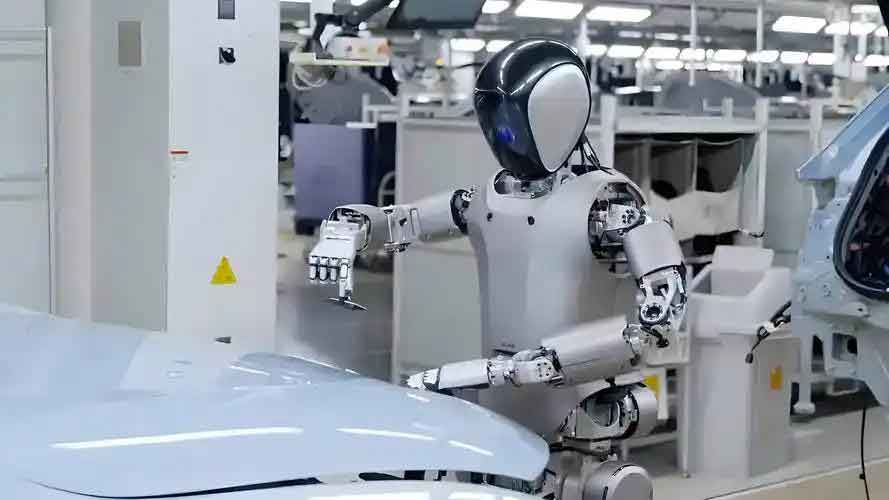
The announcement positions the certified product as the company’s first equipment-level product to receive explosion-proof certification. That detail matters for humanoid robot and embodied intelligence deployment because equipment-level qualification is often a prerequisite for entering operational environments where safety approvals are mandatory. The component is not presented as a laboratory prototype but as a product backed by a formal certification process, which can support further integration into robotic platforms and energy-supply systems.
1. Certification milestone links wireless charging to hazardous-environment robotics
The WLH-type 900W wireless charging component was developed for embodied intelligence application scenarios, and its certification follows testing by a national-level inspection and testing authority. The company said the product’s extreme-environment safety protection capability has reached an advanced industry level, marking a key technical breakthrough in wireless power transfer. For the humanoid robot ecosystem, the significance lies in the broader principle: robotic systems that operate outside controlled spaces need energy architectures that are safe, automated, and compatible with harsh conditions.
Traditional charging methods rely on physical contact between a plug and a socket. In flammable and explosive environments, repeated insertion and removal can create electrical sparks, which is a serious safety concern. The certified wireless charging component uses contactless power transfer and an integrated explosion-proof safety design to deliver electricity through the air. By removing the physical connection during charging, the design addresses the root cause of spark hazards associated with plug-in charging.
The product is aimed at explosion-proof inspection robots, explosion-proof wheeled AGVs, and similar equipment. These platforms are increasingly used for autonomous inspection, automatic replenishment, and logistics transfer in special environments. The certification therefore supports a practical deployment path for humanoid robot-related technologies and for embodied intelligence systems that must work where human intervention is limited and safety margins are narrow.
- The component is identified as a WLH-type 900W wireless charging component.
- It has passed testing by the National Mine Explosion-Proof Safety Product Quality Inspection and Testing Center.
- It has obtained an explosion-proof certificate.
- It is described as the company’s first equipment-level product to receive explosion-proof certification.
- It uses contactless power transfer and explosion-proof safety integration.
- It is designed for explosion-proof inspection robots and explosion-proof wheeled AGVs.
| Product attribute | Details from the announcement | Relevance to humanoid robot and embodied intelligence deployment |
|---|---|---|
| Product designation | WLH-type 900W wireless charging component | Provides a certified energy-supply building block for robotic systems that require automated charging in challenging environments. |
| Certification | Passed testing by the National Mine Explosion-Proof Safety Product Quality Inspection and Testing Center and obtained an explosion-proof certificate | Supports safety qualification expectations for humanoid robot and embodied intelligence equipment entering hazardous workplaces. |
| Safety architecture | Contactless power transfer combined with explosion-proof safety design | Reduces reliance on manual plug-in charging and removes the spark risk associated with physical connectors. |
| Intelligent functions | Data interaction, foreign object detection, and fault diagnosis | Improves monitoring and control during charging, which is important for autonomous humanoid robot and robotic equipment operations. |
| Target applications | Explosion-proof inspection robots and explosion-proof wheeled AGVs | Demonstrates a pathway for automated replenishment and logistics transfer in special environments. |
2. Contactless power transfer addresses the root cause of spark hazards
The core safety logic of the product is straightforward but important. In conventional charging, the electrical connection is made and broken by physical contact. In explosive atmospheres, even a small spark can create risk. The wireless charging component delivers power without contact, so the charging process does not depend on exposed connectors being inserted into a socket. This design choice is central to the product’s suitability for mines, chemical facilities, and other environments where safety certification is required.
For humanoid robot development, the same logic has broader implications. A humanoid robot that works alongside people or operates in sensitive industrial areas may need to recharge autonomously. If charging requires a person to handle a cable or connector, the robot’s autonomy is limited, and safety exposure increases. A contactless charging component can support a more automated energy cycle, allowing the robot to approach a charging zone and receive power without manual intervention. The certified component is not described as a humanoid robot charger, but its design principles are directly relevant to the humanoid robot energy-supply challenge.
The announcement also emphasizes that the product can deliver electricity “through the air,” which is a concise way of describing wireless power transfer. The integration of explosion-proof safety measures means the wireless function is not treated as an add-on. Instead, safety is built into the product architecture. That approach is important for humanoid robot platforms because energy systems are not isolated components; they interact with mobility, sensing, task execution, and operational planning.
3. Intelligent monitoring extends the product beyond power delivery
The wireless charging component integrates data interaction, foreign object detection, and fault diagnosis. These functions allow the system to identify metal foreign objects in the charging area, monitor the charging process in real time, and provide early warnings. The result is a charging process that is intended to be safe and controllable from start to finish. For humanoid robot and embodied intelligence applications, this kind of intelligence is valuable because autonomous equipment must be able to detect abnormal conditions and respond without waiting for human inspection.
Foreign object detection is particularly relevant in industrial settings. A metal object near a wireless charging zone can affect power transfer and may create safety concerns. The product’s ability to detect such objects supports preventive action. Fault diagnosis adds another layer by helping identify abnormal conditions during operation. Data interaction allows the charging component to exchange information with the broader system, which can support coordination between the robot, the charging station, and supervisory software.
These functions do not replace the need for robust system design, but they strengthen the product’s role as an intelligent energy node. In a humanoid robot ecosystem, an energy node may need to communicate status, confirm safe conditions, and support fault handling. The certified component’s combination of wireless power transfer and intelligent monitoring makes it a more complete building block for embodied intelligence equipment.
- Data interaction supports information exchange between the charging component and the surrounding system.
- Foreign object detection helps identify metal objects in the charging area.
- Fault diagnosis supports monitoring and early warning during charging.
- Real-time monitoring is intended to keep the charging process safe and controllable.
- Intelligent functions can reduce the need for manual intervention in routine charging.
4. Target applications show a practical route for autonomous replenishment
The product is positioned for explosion-proof inspection robots and explosion-proof wheeled AGVs. In these applications, the value proposition is clear. An inspection robot can operate autonomously in a dangerous area and then replenish its energy without a person handling a cable. A wheeled AGV can complete logistics transfer tasks in special environments and return to a charging position when needed. The wireless charging component supports these workflows by making the charging step contactless and automation-friendly.
The announcement describes the product as enabling explosion-proof inspection robots to conduct autonomous inspection and automatic replenishment in hazardous areas. It also describes explosion-proof wheeled AGVs completing logistics transfer in special environments. These use cases illustrate how energy supply becomes part of the operational loop rather than a separate manual task. The same operational logic is relevant to humanoid robot deployment, where continuous task execution depends on predictable and safe energy replenishment.
Humanoid robot systems often combine mobility, manipulation, and perception. Their energy needs may differ from those of wheeled AGVs or inspection robots, but the system-level requirement is similar: charging must be safe, repeatable, and compatible with autonomous operation. The certified wireless charging component provides a reference point for how explosion-proof safety and contactless power transfer can be combined in a product-level solution. That reference point can inform future humanoid robot charging architectures and broader embodied intelligence energy strategies.
| Application area | Operational need | How the certified component supports the need | Humanoid robot relevance |
|---|---|---|---|
| Explosion-proof inspection robot | Autonomous inspection and automatic replenishment in hazardous areas | Contactless charging reduces manual intervention and spark risk during energy replenishment | Demonstrates an autonomous energy cycle that can inform humanoid robot deployment in hazardous areas |
| Explosion-proof wheeled AGV | Logistics transfer in special environments | Wireless charging supports repeatable charging without physical connector handling | Provides a model for humanoid robot material-handling and logistics support tasks |
| Hazardous production environments | Safe operation where flammable or explosive conditions may exist | Explosion-proof certification and integrated safety design address extreme-environment requirements | Highlights the safety qualification path for humanoid robot equipment entering such environments |
5. Humanoid robot supply chain gains a certified energy-supply building block
AVIC Jonhon is described as a core supporting enterprise in the humanoid robot and embodied intelligence industrial chain. The company has long focused on high-end interconnection and has continued to develop core technologies and iterate products for embodied intelligence applications. It has formed mature interconnect solutions that can adapt to full-scenario humanoid robot applications, including limbs, end effectors, and perception systems. The wireless charging certification adds an energy-supply qualification to that broader portfolio.
The humanoid robot supply chain is not limited to actuators, sensors, and structural parts. It also includes the connections that carry power, signals, and data throughout the robot. Interconnect solutions for humanoid robot limbs must support movement and reliability. End effector connections must support precise operation. Perception system connections must support stable data flow. Energy supply is another critical layer, especially when a humanoid robot is expected to operate for extended periods without manual charging.
The certified wireless charging component expands the company’s relevance in the humanoid robot ecosystem by addressing safety and automation in energy replenishment. Although the product’s stated target applications are explosion-proof inspection robots and explosion-proof wheeled AGVs, its certification demonstrates capabilities that can support the wider humanoid robot market. The announcement connects the product to the company’s broader humanoid robot interconnect solutions, creating a more complete picture of how power, data, and safety can be integrated.
- The company is positioned as a core supporting enterprise in the humanoid robot and embodied intelligence industrial chain.
- Its high-end interconnection work covers humanoid robot limbs, end effectors, and perception systems.
- The certified wireless charging component adds an energy-supply qualification to the portfolio.
- The product supports safety-oriented charging in hazardous environments.
- The combination of interconnection and wireless charging can support more complete humanoid robot system architectures.
6. Interconnect portfolio covers humanoid robot limbs, end effectors, and perception
Mature interconnect solutions for humanoid robot limbs require attention to movement, durability, and signal integrity. A humanoid robot’s limbs contain joints, actuators, sensors, and power lines. The connections must survive repeated motion while maintaining reliable performance. The company’s experience in high-end interconnection provides a foundation for these requirements. The announcement states that the company has formed mature interconnect solutions adaptable to full-scenario humanoid robot applications, which indicates a portfolio approach rather than a single component.
End effectors present a different set of requirements. They may need compact connections, precise signal transmission, and reliable power delivery in a small space. Perception systems add another layer, with sensors and data links that must operate consistently as the humanoid robot moves and interacts with its environment. The certified wireless charging component is separate from these interconnect functions, but it shares the same system-level goal: reliable operation in demanding conditions.
In a humanoid robot, power and data are distributed across many subsystems. A certified wireless charging component can serve as an energy interface, while interconnect solutions serve as internal pathways for power and signals. The combination is relevant to humanoid robot designers who need to balance safety, autonomy, and maintainability. The company’s participation in humanoid robot standardization work further reinforces its role in the ecosystem.
| Humanoid robot subsystem | Interconnect or energy requirement | Announced capability | Humanoid robot ecosystem value |
|---|---|---|---|
| Limbs | Power and signal connections that support movement | Mature interconnect solutions for humanoid robot limbs | Supports reliable humanoid robot motion and subsystem integration |
| End effectors | Compact and reliable connections for manipulation | Mature interconnect solutions for humanoid robot end effectors | Supports precise humanoid robot task execution |
| Perception systems | Stable data and power links for sensors | Mature interconnect solutions for humanoid robot perception systems | Supports humanoid robot awareness and interaction |
| Energy replenishment | Safe and automated charging in challenging environments | WLH-type 900W wireless charging component with explosion-proof certification | Adds a certified energy-supply option to the humanoid robot supply chain |
7. Standardization participation supports humanoid robot ecosystem development
In July, the company entered the Ministry of Industry and Information Technology’s humanoid robot and embodied intelligence standardization working group. This participation means the company is deeply involved in the development of the domestic standardization system for humanoid robots and embodied intelligence. Standardization work is important because humanoid robot systems involve many interfaces, safety requirements, and performance expectations. Companies that participate in standards development can contribute technical experience and gain insight into emerging requirements.
The wireless charging certification and the standardization role reinforce each other. Certification demonstrates product-level compliance and safety capability. Standardization participation demonstrates engagement with the broader rules and frameworks that will shape humanoid robot deployment. For the humanoid robot supply chain, this combination can support trust among integrators, end users, and regulators. It also positions the company to align its interconnect and energy-supply products with evolving humanoid robot standards.
The announcement does not provide specific standards details, but it clearly frames the company’s standardization work as part of its long-term commitment to the humanoid robot and embodied intelligence field. The company’s product iteration and core technology research are described as ongoing. That continuity is important because humanoid robot applications are diverse and demanding, and component suppliers must adapt as robot designs mature.
8. Safety certification as a gateway for humanoid robot deployment
Explosion-proof certification is a specialized qualification, but its significance extends beyond one product category. It shows that a component has been evaluated against safety requirements for demanding environments. For humanoid robot developers, safety qualification is often a gateway to real-world deployment. A humanoid robot that works in a mine, chemical plant, or other hazardous area must be designed with safety at the system and component levels. Certified components can reduce integration uncertainty and support approval processes.
The wireless charging component’s certification also highlights the importance of eliminating spark risks at the energy interface. If a humanoid robot is intended to operate in an environment where flammable gases or dust may be present, conventional connectors may not be acceptable. A contactless charging approach can reduce risk by removing the physical insertion step. The component’s integrated explosion-proof design and intelligent monitoring functions further support safe operation.
At the same time, certification is not a substitute for system-level safety engineering. A certified charging component must be integrated correctly, and the humanoid robot’s overall design must account for thermal behavior, foreign objects, fault handling, and operational procedures. The announcement’s emphasis on data interaction, foreign object detection, and fault diagnosis shows that the product is intended to support safe integration rather than simply deliver power.
- Explosion-proof certification supports entry into hazardous operational environments.
- Contactless charging removes the physical insertion step that can create sparks.
- Integrated intelligent functions support monitoring and fault handling.
- Certified components can reduce uncertainty for humanoid robot integrators.
- System-level safety engineering remains essential for humanoid robot deployment.
9. Energy autonomy is central to humanoid robot continuous operation
Humanoid robot development is often discussed in terms of mobility, manipulation, and intelligence. Energy autonomy is equally important. A humanoid robot that can walk, grasp, and perceive but cannot replenish energy safely and autonomously will face limits in continuous operation. The certified wireless charging component addresses this challenge in the context of explosion-proof equipment, and its design principles are relevant to humanoid robot energy strategies.
The announcement notes that wireless charging products require no manual intervention, can avoid spark risks, and provide important supporting infrastructure for long-term continuous operation of unmanned equipment in special environments. This statement captures the operational value of wireless charging. For humanoid robot systems, reducing manual intervention in charging can improve uptime and reduce human exposure to hazardous conditions. It can also simplify fleet management when multiple robots operate in the same environment.
The product’s target use cases involve autonomous inspection and automatic replenishment. These are not just convenience features; they are operational requirements. A robot that must inspect a dangerous area needs a reliable way to return to service after charging. A wheeled AGV that moves materials in a special environment needs a charging process that fits its logistics cycle. The certified component supports these requirements through contactless power transfer and intelligent monitoring. The same logic can guide humanoid robot charging station design and energy management.
10. From component innovation to system-level collaboration
The certification of a single component can have system-level effects. A wireless charging component must interact with the robot’s battery management system, charging station, safety controls, and supervisory software. Data interaction is therefore an important feature. It allows the component to participate in a broader control architecture rather than acting as a passive power source. For humanoid robot systems, this kind of interaction is essential because energy management is tied to task planning and safety monitoring.
AVIC Jonhon’s background in high-end interconnection supports this system-level view. Interconnect solutions are inherently about making subsystems work together. The company’s humanoid robot portfolio covers limbs, end effectors, and perception systems, which means it has experience with the diverse connection needs of humanoid robot platforms. The wireless charging component adds another node to that network of connections, linking the robot to its energy supply infrastructure.
The announcement describes the company’s plan to continue deep cultivation of the charging connection field, persist in technology research and product innovation, and provide more professional and reliable core component interconnect solutions. It also states that the company aims to support intelligent manufacturing and energy replenishment for embodied intelligence equipment in special environments. This plan connects component innovation with broader industrial applications and humanoid robot development.
| System layer | Required interaction | Certified component contribution | Humanoid robot implication |
|---|---|---|---|
| Power transfer | Safe delivery of energy without physical contact | Contactless wireless charging with explosion-proof safety design | Supports automated humanoid robot energy replenishment concepts |
| Data exchange | Communication between charger and equipment | Integrated data interaction function | Can support coordination between humanoid robot and charging infrastructure |
| Safety monitoring | Detection of abnormal conditions and foreign objects | Foreign object detection and fault diagnosis | Supports safe humanoid robot operation in shared or hazardous spaces |
| Operational control | Real-time monitoring and early warning | Continuous monitoring of the charging process | Helps humanoid robot systems maintain safe and predictable charging cycles |
11. Quality and testing logic behind the certification
The certification was issued after testing by the National Mine Explosion-Proof Safety Product Quality Inspection and Testing Center. This detail indicates that the product was evaluated by a specialized authority in explosion-proof safety. The company describes the certification as evidence that its extreme-environment safety protection capability has reached an advanced industry level. For customers and integrators, the certificate provides a formal signal that the product has met relevant safety requirements.
The announcement also describes the product as the company’s first equipment-level product to obtain explosion-proof certification. That statement suggests a step forward in the company’s product qualification path. Equipment-level certification can be more demanding than component-level evaluation because it considers the product as a functional unit. For humanoid robot applications, this kind of qualification is valuable because robots are integrated systems, and their components must work together safely.
The product’s intelligent functions add to the quality story. Foreign object detection, fault diagnosis, and real-time monitoring are not merely features; they are mechanisms for managing risk during operation. A certified charging component that can detect abnormal conditions and provide early warnings is better equipped to support continuous operation than a simple power-transfer device. This is relevant to humanoid robot deployments where unattended or semi-attended charging may become common.
12. Outlook points to deeper charging and connection work for embodied intelligence
According to the plan described in the announcement, AVIC Jonhon will continue to deepen its work in the charging connection field. The company intends to maintain technology research and product innovation and to provide more professional and reliable core component interconnect solutions. It also aims to support energy replenishment for intelligent manufacturing and embodied intelligence equipment in special environments, contributing to the high-quality development of the embodied intelligence industry.
For the humanoid robot sector, this outlook is relevant because humanoid robot commercialization depends on a mature supply chain. That supply chain must include safe energy storage, reliable interconnection, intelligent charging, and standardized interfaces. The certified wireless charging component adds one more qualified element to that chain. The company’s humanoid robot interconnect solutions for limbs, end effectors, and perception systems address other elements. Together, these capabilities support a more integrated approach to humanoid robot development.
The announcement does not claim that the certified component alone solves every humanoid robot energy challenge. Instead, it presents a product-level advance in wireless charging for hazardous environments and connects that advance to the company’s broader humanoid robot and embodied intelligence work. That connection is important. It shows how safety certification, contactless power transfer, intelligent monitoring, and high-end interconnection can converge in the humanoid robot ecosystem.
- Continue technology research and product innovation in charging connection.
- Provide professional and reliable core component interconnect solutions.
- Support intelligent manufacturing and energy replenishment for embodied intelligence equipment.
- Contribute to the development of the humanoid robot and embodied intelligence industry.
- Maintain participation in humanoid robot standardization work.
13. Certification strengthens the case for humanoid robot-ready infrastructure
The phrase “humanoid robot-ready infrastructure” is useful for understanding the certification’s broader meaning. A humanoid robot does not operate in isolation. It needs connections, charging, data exchange, and safety systems that are compatible with its design. The certified wireless charging component demonstrates that explosion-proof safety and contactless power transfer can be combined in a product that is intended for real equipment. That demonstration can inform the design of humanoid robot charging infrastructure, even when the specific target applications are inspection robots and wheeled AGVs.
The humanoid robot market is often described in terms of form factor and intelligence, but infrastructure readiness will determine how quickly humanoid robots can be deployed in factories, warehouses, plants, and other environments. Energy replenishment is a core part of that infrastructure. A humanoid robot that must be manually charged may still be useful, but its autonomy is constrained. A humanoid robot that can use safe, automated charging can operate more continuously and more predictably.
The certified component’s features align with this infrastructure view. Contactless power transfer reduces manual handling. Explosion-proof design supports hazardous environments. Data interaction supports system coordination. Foreign object detection and fault diagnosis support safety monitoring. These features are not specific to humanoid robot platforms, but they are relevant to the infrastructure that humanoid robot platforms will rely on. The announcement’s connection between the certified product and the company’s humanoid robot portfolio makes this relevance explicit.
14. A supply-chain signal for humanoid robot and embodied intelligence development
The certification is also a supply-chain signal. It shows that a core supporting enterprise in the humanoid robot and embodied intelligence industrial chain is investing in safety-qualified energy components. For humanoid robot integrators, supplier maturity matters. Integrators need components that are reliable, documented, and qualified for their intended environments. The explosion-proof certificate provides an additional level of assurance for applications where safety is critical.
The company’s participation in the humanoid robot and embodied intelligence standardization working group adds another signal. Standardization work requires technical understanding and long-term commitment. By participating, the company is engaging with the rules that will shape humanoid robot development. This engagement can help align its interconnect and charging products with future humanoid robot requirements. It can also support the development of a more coherent supply chain for humanoid robot manufacturers.
The announcement describes the company as having formed mature interconnect solutions adaptable to full-scenario humanoid robot applications. That statement covers limbs, end effectors, and perception systems. The wireless charging component extends the company’s relevance to energy supply. Together, these capabilities position the company as a broader solution provider for humanoid robot and embodied intelligence equipment rather than a single-product supplier.
| Supply-chain dimension | Announced position | Humanoid robot relevance | Embodied intelligence relevance |
|---|---|---|---|
| Interconnection | Mature solutions for humanoid robot limbs, end effectors, and perception systems | Supports humanoid robot subsystem integration | Provides reliable power and data pathways for embodied systems |
| Energy supply | WLH-type 900W wireless charging component with explosion-proof certification | Adds a certified charging option relevant to humanoid robot infrastructure | Supports autonomous energy replenishment in special environments |
| Standardization | Participation in the humanoid robot and embodied intelligence standardization working group | Supports humanoid robot standards development | Aligns component development with emerging ecosystem requirements |
| Product qualification | First equipment-level product to obtain explosion-proof certification | Demonstrates safety qualification capability relevant to humanoid robot deployments | Strengthens confidence for hazardous-environment embodied intelligence applications |
15. Conclusion: a certified step toward safer, more autonomous robot energy systems
The WLH-type 900W wireless charging component’s explosion-proof certification is a concrete development in wireless power transfer for hazardous environments. It combines contactless energy delivery, explosion-proof safety design, data interaction, foreign object detection, and fault diagnosis in a product intended for explosion-proof inspection robots and explosion-proof wheeled AGVs. The certification provides a product and qualification foundation for AVIC Jonhon’s further work in the energy-supply segment of embodied intelligence equipment.
For the humanoid robot ecosystem, the significance is not that the certified component directly charges every humanoid robot. The significance is that the product demonstrates a safety-qualified, contactless, intelligent energy interface for equipment operating in demanding conditions. Humanoid robot development will require similar capabilities as robots move into mines, chemical plants, and other front-line environments. The company’s mature interconnect solutions for humanoid robot limbs, end effectors, and perception systems, together with its participation in humanoid robot standardization work, show a broader commitment to the humanoid robot and embodied intelligence supply chain.
The announcement’s outlook points to continued work in charging connection, technology research, product innovation, and core component interconnect solutions. That work is expected to support intelligent manufacturing and energy replenishment for embodied intelligence equipment in special environments. As the humanoid robot industry advances, certified components and mature interconnection solutions will remain essential to safe, reliable, and continuous operation. The certification of the WLH-type 900W wireless charging component is a step in that direction, linking wireless charging innovation to the practical needs of humanoid robot and embodied intelligence deployment.