
In recent years, the rapid advancement of technology has led to the widespread integration of medical robots into healthcare systems globally. As a researcher focusing on legal issues in emerging technologies, I have observed that these innovations, while promising enhanced precision and efficiency in medical procedures, also introduce complex challenges in civil liability when harms occur. The core problem revolves around determining who should be held accountable when a medical robot causes injury during treatment—be it due to design flaws, operational errors, or autonomous decision-making. This article delves into the intricacies of medical robot civil侵权问题, exploring conceptual ambiguities, liability attribution, and evidentiary hurdles, with the aim of proposing frameworks to address these issues. Throughout this discussion, I will emphasize the term “medical robot” to underscore its centrality in modern healthcare and legal discourse.
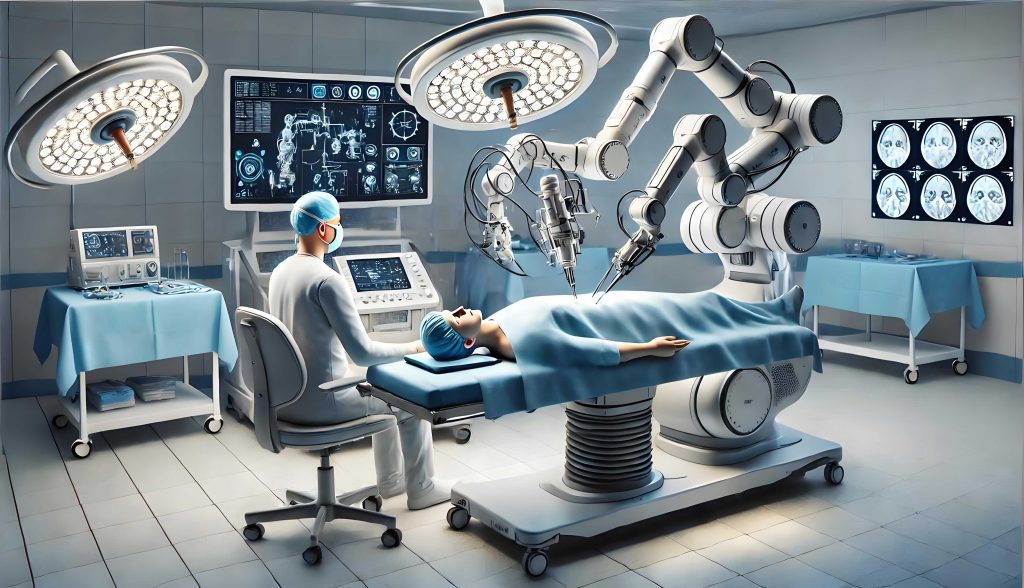
The concept of a medical robot remains模糊 in legal and regulatory contexts, complicating liability assessments. From my perspective, a medical robot can be broadly defined as an automated or AI-driven device used in healthcare settings for tasks such as surgery, rehabilitation, diagnostics, or patient assistance. However, the lack of precise definitions in laws like the Medical Device Regulations creates uncertainty. For instance, while some medical robots are classified as医疗器械 under risk-based categories, others, like service-oriented robots, may fall into gray areas. To clarify, I propose categorizing medical robots based on function and risk, which can be summarized in the following table.
| Category | Examples | Risk Level | Regulatory Focus |
|---|---|---|---|
| Surgical Robots | Da Vinci Surgical System | High | Strict approval, maintenance protocols |
| Rehabilitation Robots | Exoskeletons for mobility aid | Medium | Data security, personalized care standards |
| Service Robots | Hospital delivery or home care robots | Low | Basic quality, hygiene controls |
This classification aids in tailoring liability rules, as high-risk medical robots, like those used in surgery, demand rigorous oversight due to their direct impact on patient health. The risk can be modeled using a formula: $$ R = \int_{0}^{T} (H \times F) \, dt $$ where \( R \) represents the cumulative risk over time \( T \), \( H \) denotes the harm potential, and \( F \) is the failure probability of the medical robot. Such量化 approaches help in standardizing safety assessments for medical robots across categories.
Turning to liability主体, the scenario becomes混杂 when a medical robot causes harm. In traditional医疗纠纷, the医疗机构 is typically held liable under过错推定 principles if negligence is proven. However, with medical robots, multiple parties may be involved—including the manufacturer, seller, designer, and even the robot itself if AI autonomy is considered. From my analysis, the current legal framework, such as product liability laws, focuses on defects in the medical robot as a product. Under this regime, liability attaches to producers and sellers if the medical robot has an “unreasonable danger” or defect. Defects can arise from design, manufacturing, or marketing phases, which I express as: $$ D_{\text{total}} = D_{\text{design}} + D_{\text{manufacture}} + D_{\text{sales}} $$ Here, \( D_{\text{total}} \) is the total defect contributing to liability, with each component representing flaws in respective stages. Yet, this model overlooks the role of designers, who are crucial for AI-driven medical robots. I argue that designers should bear responsibility for inherent risks in algorithms, especially as medical robots become more autonomous.
The debate over granting legal personality to medical robots adds another layer. Some scholars propose that highly autonomous AI medical robots could be accorded有限人格 or电子人格 to hold them directly liable. However, from my viewpoint, this is premature for current medical robots, which largely operate under human supervision. Assigning人格 to a medical robot would require it to possess independent assets for compensation—a feature absent in today’s systems. Instead, I recommend a hybrid liability model where humans (e.g., manufacturers, healthcare providers) remain primarily accountable, with provisions for tracing errors back to the medical robot’s AI components. The liability allocation can be represented in a table for clarity.
| Liability Scenario | Potential Parties | Basis for Liability | Challenges |
|---|---|---|---|
| Human error in operation | Healthcare institution | Negligence under medical malpractice | Proving fault in complex procedures |
| Product defect | Producer, seller | Product liability laws | Identifying defect type in AI systems |
| Design flaw | Designer, developer | Extended duty of care | Lack of explicit legal standards |
| Autonomous action | Robot itself (theoretical) | Legal personality assignment | Practical feasibility and fairness |
In this context, the keyword “medical robot” repeatedly surfaces, highlighting its pivotal role in shaping liability paradigms. For instance, when a medical robot malfunctions during surgery, disentangling whether it was due to a软件 bug or human misoperation requires nuanced analysis. I suggest that future regulations for medical robots incorporate strict liability for designers, akin to that for producers, to ensure accountability across the development chain. This can be formalized as: $$ L_{\text{designer}} = k \cdot \sum_{i=1}^{n} E_i $$ where \( L_{\text{designer}} \) is the designer’s liability, \( k \) is a proportionality constant based on risk, and \( E_i \) represents errors traceable to the medical robot’s design.
Evidentiary difficulties pose significant barriers for victims seeking redress in medical robot侵权 cases. Under current laws, patients must often prove that a医疗损害 resulted from a defect or error, but with medical robots, obtaining relevant data is challenging. For example, the原始数据 from a medical robot’s decision-making process—such as sensor inputs or algorithmic outputs—may not be included in standard病历材料, hindering proof of fault. From my experience, this gap necessitates expanding legal definitions to encompass all data generated by medical robots during treatment. A formula for evidence sufficiency could be: $$ P_{\text{proof}} = \frac{D_{\text{available}}}{D_{\text{total}}} \times C_{\text{credibility}} $$ where \( P_{\text{proof}} \) is the probability of successful proof, \( D_{\text{available}} \) is the accessible data from the medical robot, \( D_{\text{total}} \) is the total data generated, and \( C_{\text{credibility}} \) factors in the reliability of that data. Enhancing access to such data can empower victims in lawsuits involving medical robots.
Moreover,鉴定 issues arise due to the interdisciplinary nature of medical robots, blending medicine, engineering, and computer science. Existing medical鉴定 systems may lack experts in AI or robotics, making it hard to assess whether a medical robot’s actions met standards. I propose reforming鉴定 frameworks to include specialists from these fields, as summarized below.
| Aspect of Medical Robot鉴定 | Current Shortcoming | Proposed Improvement |
|---|---|---|
| Expertise coverage | Limited to medical, legal fields | Include AI, robotics, data science experts |
| Standards for evaluation | Absence of AI-specific protocols | Develop benchmarks for medical robot performance |
| Data analysis methods | Reliance on traditional records | Integrate algorithmic audit trails |
This aligns with the need for robust oversight as medical robots proliferate. For instance, in cases where a medical robot provides erroneous诊断, a multidisciplinary panel could dissect the AI’s learning process using formulas like: $$ A_{\text{accuracy}} = \frac{TP + TN}{TP + TN + FP + FN} $$ where \( A_{\text{accuracy}} \) measures the medical robot’s diagnostic accuracy based on true positives (TP), true negatives (TN), false positives (FP), and false negatives (FN). Such metrics aid in determining if the medical robot deviated from acceptable norms.
To address these challenges holistically, I advocate for a comprehensive approach. First, clarify the scope of medical robots through legislative updates that define them based on functionality and risk. This will streamline liability assessments for diverse medical robots, from surgical assistants to home care devices. Second, establish clear liability chains that hold all human actors—manufacturers, sellers, designers, and healthcare providers—accountable for defects or negligence related to medical robots. This can be modeled as a network: $$ \nabla L = \frac{\partial L}{\partial M} + \frac{\partial L}{\partial S} + \frac{\partial L}{\partial D} + \frac{\partial L}{\partial H} $$ where \( \nabla L \) represents the gradient of liability distributed among manufacturer (M), seller (S), designer (D), and healthcare provider (H) for a given medical robot incident. Third, enhance evidentiary protocols by mandating that medical robots log all operational data, accessible in disputes. This reinforces the centrality of the medical robot in legal proceedings.
In conclusion, the integration of medical robots into healthcare necessitates evolving legal frameworks to manage civil侵权 risks. As I have explored, ambiguities in defining medical robots, complexities in liability attribution, and proof obstacles require targeted solutions. By refining classifications, expanding liability to designers, and improving鉴定 systems, we can foster a safer environment for medical robot deployment. Throughout this discussion, the term “medical robot” has been emphasized to reflect its growing significance—not just as a technological tool, but as a focal point for legal innovation. Future research should continue to monitor how medical robots evolve, particularly with AI advances, to ensure that liability mechanisms remain fair and effective in protecting patients while encouraging innovation in medical robotics.