
As a researcher in thoracic surgery and medical robotics, I have witnessed the rapid evolution of minimally invasive techniques for managing pulmonary nodules. The advent of medical robots has revolutionized diagnostic and therapeutic approaches, offering unprecedented precision and control. In this article, I will explore the current landscape and future prospects of medical robots, focusing on their application in small pulmonary nodule management. The term “medical robot” will be frequently emphasized, as these systems are at the forefront of technological advancement in healthcare.
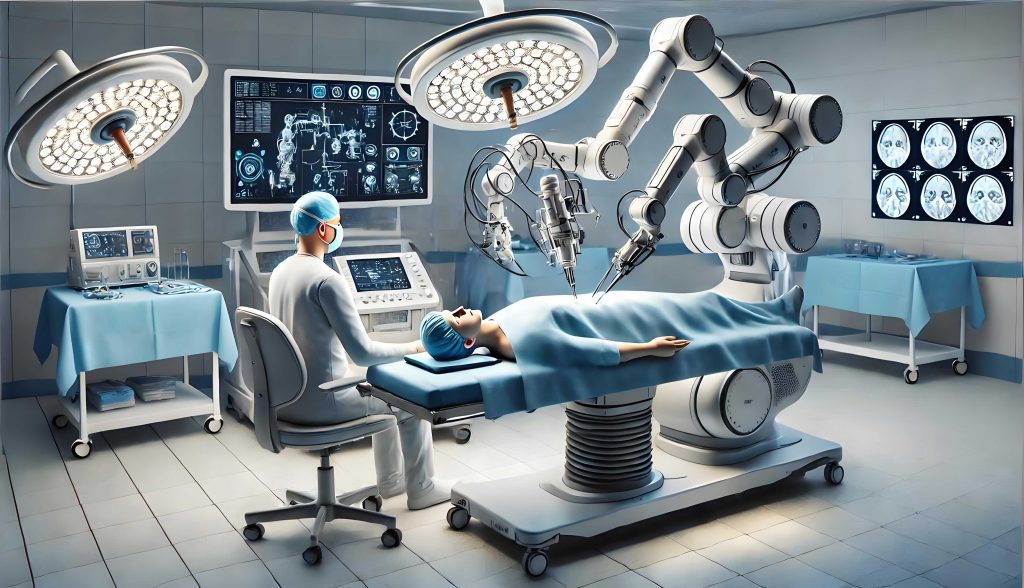
The rising incidence of lung cancer, coupled with widespread low-dose CT screening, has led to an increased detection of small pulmonary nodules. These nodules, often benign, pose diagnostic challenges due to their size and location. Traditional methods like flexible bronchoscopy have limitations in accessing peripheral airways, prompting the development of advanced medical robot systems. In this context, medical robots, including robotic bronchoscopes and surgical robots, have emerged as game-changers, enhancing biopsy accuracy and enabling minimally invasive resections.
Medical robots encompass a range of systems designed to assist in diagnostic and surgical procedures. For pulmonary nodules, two primary categories exist: robotic bronchoscopes for intervention and surgical robots for resection. These medical robots leverage technologies such as electromagnetic navigation, shape sensing, and robotic arms to improve outcomes. The integration of medical robots into clinical practice has shown promising results, but widespread adoption remains limited, particularly for domestic systems. This article delves into the technical aspects, clinical evidence, and future directions of medical robots in this field.
Robotic Bronchoscopy Systems
Robotic bronchoscopy represents a significant leap forward in diagnostic interventional pulmonology. These medical robots are designed to navigate deep into the bronchial tree, reaching sub-segmental airways that are inaccessible with conventional tools. The core advantage of these medical robots lies in their enhanced maneuverability, stability, and precision, which facilitate accurate sampling of peripheral lung lesions.
The bronchial tree typically branches up to 24 generations, with distal airways lacking cartilaginous support and having diameters under 1 mm. Traditional bronchoscopes, even ultra-thin versions, struggle with navigation and visualization in these regions. Medical robots address these issues through robotic control and advanced imaging. Currently, two robotic bronchoscopy systems are FDA-approved: the MonarchTM platform and the IonTM system. Both are exemplary medical robots that have transformed diagnostic workflows.
The MonarchTM platform, approved in 2018, utilizes an electromagnetic field generator and reference sensors for navigation. It consists of a bronchoscope system, two robotic arms, a handheld controller, and a workstation with displays for electromagnetic navigation and real-time video. This medical robot allows 180° tip deflection in any direction, with a sheath outer diameter of 6.0 mm and a working channel of 2.1 mm. Its design enables access to airways beyond the 8th generation, outperforming traditional bronchoscopes. Clinical studies have demonstrated its high biopsy success rates and safety profile.
In contrast, the IonTM system, approved in 2019, employs shape-sensing technology instead of electromagnetic navigation. This medical robot features a flexible robotic catheter with shape-sensing fibers, a removable scope for visualization, a planning station, and a control console. With an outer diameter of 3.5 mm and a working channel of 2.0 mm, it offers similar maneuverability but requires scope removal during sampling. Despite this limitation, it has shown excellent performance in accessing peripheral nodules.
Comparative studies between these medical robots and traditional techniques reveal superior outcomes. For instance, robotic bronchoscopy achieves higher diagnostic yields and lower complication rates. The table below summarizes key features of these medical robots:
| Medical Robot System | Approval Year | Navigation Technology | Outer Diameter (mm) | Working Channel (mm) | Key Advantages |
|---|---|---|---|---|---|
| MonarchTM Platform | 2018 | Electromagnetic | 6.0 | 2.1 | Real-time visualization, stable control |
| IonTM System | 2019 | Shape Sensing | 3.5 | 2.0 | Thinner profile, deep access |
These medical robots, however, face challenges such as lack of tactile feedback and dependence on pre-operative planning. Intra-operative atelectasis can alter anatomy, complicating navigation. Nonetheless, ongoing improvements aim to enhance their capabilities.
Domestic Developments in Robotic Bronchoscopy
While international medical robots dominate the market, domestic innovations are gaining traction. In China, several companies and research institutions are developing robotic bronchoscopy systems. For example, the UnicornTM system by Langhe Medical has undergone animal trials, showing feasibility and safety. Other semi-intelligent navigation systems, such as the Lung Pro® platform, incorporate domestic intellectual property. These efforts highlight the growing interest in本土 medical robots to reduce reliance on imported technology.
The development of domestic medical robots focuses on addressing local clinical needs, such as cost-effectiveness and adaptability to regional healthcare infrastructures. Collaborations between engineering and medical teams are crucial for advancing these medical robots. For instance, our center is involved in developing a next-generation natural orifice interventional medical robot platform for precise localization and sampling of pulmonary nodules. This medical robot aims to integrate “accurate perception, conformal delivery, and in-situ detection” to improve diagnostic accuracy.
Surgical Robot Systems
Beyond diagnostics, medical robots play a pivotal role in therapeutic interventions. Surgical robots, exemplified by the Da Vinci system, have become staples in thoracic surgery for lung resections. These medical robots offer 3D visualization, tremor filtration, and enhanced dexterity, facilitating complex procedures like lobectomies and segmentectomies.
The Da Vinci surgical robot, first used in cardiothoracic surgery in 1999, has evolved through iterations like the Da Vinci Xi system. This medical robot comprises a surgeon console, patient-side robotic arms, and an imaging system. It translates the surgeon’s hand movements into precise instrument motions, with articulating tools that mimic human wrist movements. The high-definition 3D view provides superior anatomical detail, aiding in delicate dissections.
In thoracic surgery, medical robots like Da Vinci are employed for lung cancer resections, esophagectomies, and mediastinal tumor removals. Comparative studies show that robotic-assisted lung resections have lower complication rates and comparable oncological outcomes to video-assisted thoracic surgery (VATS) and open thoracotomy. For early-stage lung cancer, medical robots enable thorough lymph node dissection, potentially improving staging accuracy. The formula for surgical success can be expressed as:
$$ \text{Surgical Success Rate} = \frac{\text{Number of Successful Resections}}{\text{Total Number of Procedures}} \times 100\% $$
where success may be defined by complete resection margins and minimal morbidity.
Other non-domestic surgical robots, such as the Senhance and Revo-i systems, are emerging but are primarily used in abdominal or pelvic surgeries, with limited thoracic applications. These medical robots often incorporate haptic feedback, a feature lacking in Da Vinci, which could enhance surgeon awareness of tissue forces.
Domestic Surgical Robots
The rise of domestic surgical robots is a notable trend. In 2022, the Toumai® robotic system by Shanghai MicroPort MedBot received regulatory approval in China, marking a milestone for domestic medical robots. This system, a four-arm laparoscopic medical robot, has undergone clinical trials in thoracic surgery, including lung and mediastinal procedures. Another example is the “Miaoshou” system, developed by Chinese universities, though its clinical validation remains limited.
Domestic medical robots face the challenge of specialization. While general-purpose systems like Toumai® are versatile, thoracic surgery demands unique adaptations due to confined spaces and complex anatomy. The evolution towards single-port or reduced-port surgery underscores the need for compact and agile medical robots. Future domestic medical robots may incorporate features tailored to thoracic procedures, such as integrated intra-operative localization aids.
The table below compares key surgical robot systems, highlighting their status as medical robots:
| Medical Robot System | Origin | Key Features | Thoracic Applications |
|---|---|---|---|
| Da Vinci Xi | International | 3D vision, articulated instruments | Widely used for lung, esophageal surgery |
| Toumai® | Domestic (China) | Four arms, laparoscopic design | Under clinical trials for thoracic surgery |
| Miaoshou | Domestic (China) | Haptic feedback, early-stage development | Limited to abdominal surgery so far |
Clinical Applications and Benefits of Medical Robots
The integration of medical robots into pulmonary nodule management offers numerous clinical benefits. For diagnosis, robotic bronchoscopy improves the yield of peripheral nodule biopsies. Studies indicate that medical robots can achieve diagnostic rates exceeding 80% for nodules less than 2 cm, compared to 70% or lower for conventional bronchoscopy. The enhanced accuracy of these medical robots reduces the need for repeat procedures and accelerates treatment planning.
For treatment, surgical robots enable minimally invasive resections with precision. In lung segmentectomies, medical robots facilitate identification of intersegmental planes, potentially through intra-operative imaging or dye injection via robotic bronchoscopy. This synergy between diagnostic and therapeutic medical robots could streamline care pathways. Moreover, medical robots may aid in local ablative therapies, such as radiofrequency or microwave ablation, delivered transbronchially under robotic guidance.
The mathematical modeling of diagnostic performance can be illustrated using sensitivity and specificity formulas:
$$ \text{Sensitivity} = \frac{TP}{TP + FN} $$
$$ \text{Specificity} = \frac{TN}{TN + FP} $$
where TP is true positives, FN false negatives, TN true negatives, and FP false positives. Medical robots often enhance these metrics by reducing sampling errors.
Future Prospects of Medical Robots
The future of medical robots in pulmonary nodule care is expansive. Several directions hold promise for further integration and innovation. First, the combination of robotic bronchoscopy and surgical robots could enable same-anesthesia diagnostic-therapeutic procedures. For instance, a medical robot bronchoscope might localize a nodule and inject indocyanine green for fluorescence imaging, followed by robotic resection guided by this markup.
Second, medical robots may incorporate artificial intelligence (AI) for real-time decision support. AI algorithms could analyze intra-operative images from medical robots to identify nodule margins or predict malignancy, enhancing diagnostic accuracy. Such smart medical robots would learn from vast datasets to improve performance over time.
Third, the development of haptic feedback in medical robots is a critical area. Current medical robots like Da Vinci lack tactile sensation, which can lead to excessive tissue force. Incorporating force sensors into medical robots could provide surgeons with realistic feedback, reducing complications like airway injury during bronchoscopy or vessel damage during surgery.
Fourth, miniaturization of medical robots is ongoing. Future medical robots might feature microbots or capsule-sized devices that can navigate airways autonomously, sampling nodules with minimal invasiveness. These advancements would further lower patient trauma and recovery times.
Fifth, domestic medical robots are poised for growth. With increased investment and cross-disciplinary collaboration, Chinese medical robots could become competitive globally. Emphasis on cost reduction and customization for local healthcare settings will drive adoption. The formula for innovation in medical robots can be expressed as:
$$ \text{Innovation Index} = \alpha \cdot \text{Technical Advancement} + \beta \cdot \text{Clinical Need} + \gamma \cdot \text{Market Demand} $$
where $\alpha$, $\beta$, and $\gamma$ are weighting factors reflecting the ecosystem.
Challenges and Limitations
Despite their potential, medical robots face several hurdles. High costs are a significant barrier, limiting access in resource-constrained settings. The Da Vinci system, for example, requires substantial capital investment and maintenance, which may not be feasible for all hospitals. Domestic medical robots aim to address this by offering affordable alternatives, but quality assurance remains a concern.
Technical limitations include the learning curve associated with medical robots. Surgeons and pulmonologists need specialized training to operate these systems effectively. Additionally, medical robots rely on pre-operative imaging; discrepancies due to respiratory motion or atelectasis can compromise accuracy. Improving real-time imaging integration, such as with cone-beam CT or intra-operative ultrasound, could mitigate this issue.
Regulatory pathways for medical robots vary by region, slowing global deployment. Domestic medical robots must navigate stringent approvals, which can delay clinical adoption. Furthermore, interoperability between different medical robots and hospital systems is often lacking, hindering seamless workflow integration.
Ethical considerations also arise with medical robots, such as data privacy and accountability in autonomous actions. Ensuring that medical robots adhere to ethical guidelines is crucial for patient trust.
Conclusion
In summary, medical robots have transformative impact on the diagnosis and treatment of small pulmonary nodules. From robotic bronchoscopes like MonarchTM and IonTM to surgical robots like Da Vinci, these systems enhance precision, reduce invasiveness, and improve patient outcomes. The repeated emphasis on medical robots throughout this article underscores their centrality in modern thoracic care.
Domestic developments in medical robots are encouraging, with systems like Toumai® entering the market. However, challenges related to cost, training, and technology integration persist. Future directions for medical robots include AI augmentation, haptic feedback, and miniaturization, which will further refine their capabilities.
As a researcher, I believe that continued innovation in medical robots will drive personalized and minimally invasive management of pulmonary nodules. Collaboration between engineers, clinicians, and policymakers is essential to harness the full potential of medical robots. By addressing current limitations and exploring new applications, medical robots will undoubtedly play an increasingly vital role in thoracic oncology and beyond.
The evolution of medical robots can be modeled as an exponential growth curve, where advancements compound over time:
$$ \text{Adoption Rate}(t) = A \cdot e^{kt} $$
where $A$ is the initial adoption level, $k$ is the growth constant influenced by technological breakthroughs, and $t$ is time. With sustained effort, medical robots will become ubiquitous in healthcare, benefiting countless patients worldwide.