
In the realm of modern robotics, the integration of traditional robotic systems with multi-sensor arrays and information fusion technologies has given rise to what we now call the intelligent robot. From my perspective as a researcher in this field, the operational paradigm of an intelligent robot mirrors human sensory processing: just as humans rely on五官 systems to perceive the world, intelligent robots utilize sensor networks to react dynamically to environmental changes. This capability to respond adaptively defines the essence of an intelligent robot. To achieve sophisticated behaviors, we must synthesize data from various sensors, enabling comprehensive decision-making that truly embodies robotic intelligence. The deployment of multi-sensor information fusion addresses the limitations of single-sensor setups, providing a more robust and detailed representation of the system, which is crucial for advancing the capabilities of intelligent robots.
The sensory foundation of an intelligent robot encompasses systems such as stereo vision, tactile sensing, auditory perception, ranging sensors, and force-torque sensors. Equipping an intelligent robot with these diverse sensors allows it to mimic human cognitive processes—estimating surroundings and events through integrated data. Multi-sensor information fusion operates similarly to the human brain, aggregating inputs from multiple sources, whether homogeneous or heterogeneous, to perform complex tasks. When sensors process information in isolation, it often leads to data loss or erroneous decisions, hindering the performance of intelligent robots. By leveraging fusion technologies, we can combine data from sensors operating in the same environment through computational analysis, yielding more accurate interpretations and enhancing the overall functionality of intelligent robots.
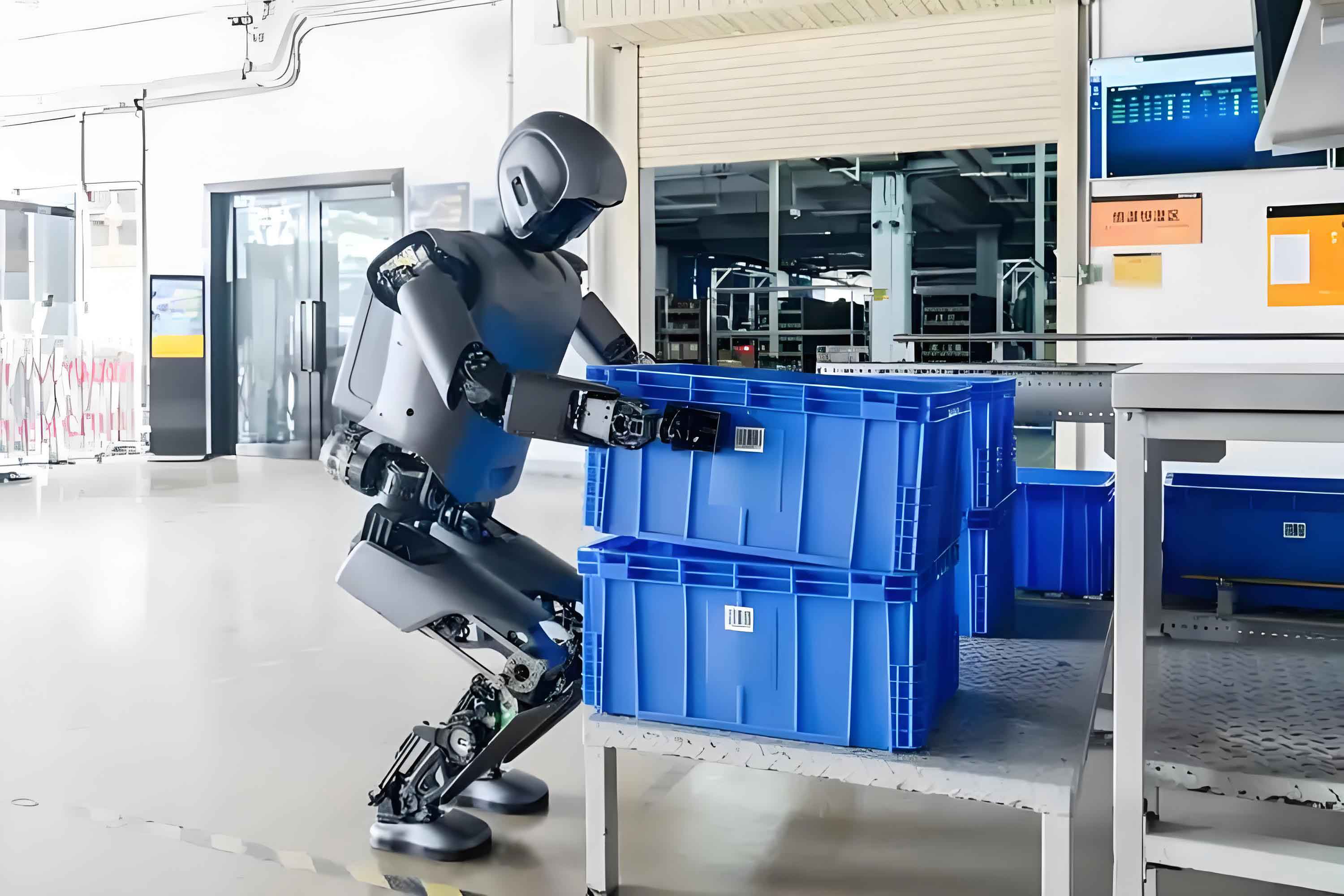
Delving into the fundamentals, sensor technology emerged in the mid-1950s, but its development lagged behind computing and digital control initially, with many advancements confined to laboratories. The evolution of sensors has progressed through three stages: structural sensors, material-based sensors, and smart sensors. For multi-sensor fusion in intelligent robots, the architectural frameworks can be categorized into distributed, centralized, and hybrid models, each with distinct characteristics. Below, I present an expanded comparison to elucidate these structures further.
| Architecture | Distributed | Centralized | Hybrid |
|---|---|---|---|
| Information Loss | High | Low | Medium |
| Precision | Low | High | Medium |
| Communication Bandwidth | Small | Large | Medium |
| Fusion Processing | Easy | Complex | Moderate |
| Fusion Control | Complex | Easy | Moderate |
| Scalability | Good | Poor | Average |
| Computational Speed | Fast | Slow | Medium |
| Reliability | High | Low | High |
| Cost Efficiency | High | Low | Medium |
Structural sensors rely on physical changes in their design to detect variations in force fields, translating these into measurable outputs. Material-based sensors exploit properties of constituent materials to convert signals into electrical forms. In daily life, humans integrate sensory inputs from organs to analyze and respond to environments. Similarly, multi-sensor fusion in intelligent robots combines observations from multiple sources, leveraging spatial and temporal redundancy and complementarity. The core objective is to optimize data combination, producing more authoritative and reliable information. By harnessing the collective strengths of sensors, we significantly enhance the robustness of the entire system in intelligent robots.
To better understand information fusion in intelligent robots, we must examine several research areas: fusion structures, fusion algorithms, sensor ranging, target recognition, autonomous navigation, localization, and path planning. These components are integral to the advancement of intelligent robots.
Fusion Structures
In my analysis, fusion structures for intelligent robots are primarily divided into three types. Centralized fusion involves sending raw data from all sensors to a single fusion center for processing. Distributed fusion allows each sensor to preprocess data locally before forwarding it to the fusion center. Hybrid fusion combines elements of both, enabling multiple uses of sensor data. Each approach has implications for the efficiency and accuracy of intelligent robots. Below, I summarize these structures in a broader context.
| Fusion Type | Data Flow | Advantages | Disadvantages | Suitability for Intelligent Robots |
|---|---|---|---|---|
| Centralized | Direct to center | High accuracy, unified processing | High bandwidth, single point of failure | Small-scale systems with reliable networks |
| Distributed | Local preprocessing | Low bandwidth, fault tolerance | Potential information loss | Large-scale, distributed intelligent robots |
| Hybrid | Combined flow | Balanced performance, flexibility | Increased complexity | Complex environments requiring adaptability |
Fusion Methods
Various fusion methods are employed in intelligent robots, each with mathematical underpinnings. Key techniques include weighted averaging, Kalman filtering, extended Kalman filtering, Bayesian estimation, evidence reasoning, fuzzy logic, neural networks, behavior-based approaches, and rule-based methods. To illustrate, I present formulas for some of these methods, which are critical for enhancing the cognitive abilities of intelligent robots.
First, the weighted average method combines sensor readings with weights reflecting reliability:
$$ \hat{x} = \sum_{i=1}^{n} w_i x_i, \quad \text{where} \quad \sum_{i=1}^{n} w_i = 1 $$
Here, $x_i$ represents data from sensor $i$, and $w_i$ is its weight, often determined based on noise variance or confidence levels in intelligent robots.
Kalman filtering is widely used for state estimation in dynamic systems. The standard Kalman filter equations for a linear discrete-time system are:
$$ \begin{aligned} \text{Prediction step:} \quad & \hat{x}_{k|k-1} = F_k \hat{x}_{k-1|k-1} + B_k u_k, \\ & P_{k|k-1} = F_k P_{k-1|k-1} F_k^T + Q_k. \\ \text{Update step:} \quad & K_k = P_{k|k-1} H_k^T (H_k P_{k|k-1} H_k^T + R_k)^{-1}, \\ & \hat{x}_{k|k} = \hat{x}_{k|k-1} + K_k (z_k – H_k \hat{x}_{k|k-1}), \\ & P_{k|k} = (I – K_k H_k) P_{k|k-1}. \end{aligned} $$
In intelligent robots, $F_k$ is the state transition matrix, $H_k$ the observation matrix, $Q_k$ process noise, $R_k$ measurement noise, and $z_k$ sensor measurements.
Bayesian estimation integrates prior knowledge with sensor data. For multiple sensors, the posterior probability is:
$$ P(x|z_1, z_2, \dots, z_n) = \frac{P(z_1, z_2, \dots, z_n|x) P(x)}{P(z_1, z_2, \dots, z_n)}, $$
where $x$ is the state and $z_i$ are observations from sensors. This framework supports probabilistic reasoning in intelligent robots.
Fuzzy logic handles uncertainty through membership functions. A simple rule-based fusion might be:
$$ \mu_{\text{fused}}(x) = \max(\mu_1(x), \mu_2(x), \dots, \mu_n(x)), $$
with $\mu_i(x)$ denoting membership degrees from sensor $i$, enabling approximate reasoning in intelligent robots.
Neural networks, particularly deep learning models, learn fusion mappings from data. A basic feedforward network for fusion can be represented as:
$$ y = f\left(\sum_{i=1}^{n} W_i x_i + b\right), $$
where $f$ is an activation function, $W_i$ weights, and $b$ bias, optimizing performance for intelligent robots.
Sensor Ranging
Distance perception is vital for intelligent robots to interact with their environment. Ranging sensors, such as lidar or ultrasonic devices, provide critical spatial data. The accuracy of these sensors directly impacts tasks like navigation and obstacle avoidance in intelligent robots. I formulate the ranging problem as estimating distance $d$ from sensor readings, often involving time-of-flight calculations:
$$ d = \frac{c \cdot \Delta t}{2}, $$
where $c$ is the speed of signal propagation and $\Delta t$ is the time delay. Noise models, such as Gaussian noise, can be incorporated to improve robustness in intelligent robots:
$$ d_{\text{measured}} = d_{\text{true}} + \epsilon, \quad \epsilon \sim \mathcal{N}(0, \sigma^2). $$
Target Recognition
Target recognition in intelligent robots involves extracting features like shape, size, orientation, position, and color from sensor data. This process enhances the ability of intelligent robots to identify objects. A common approach uses feature vectors $\mathbf{f}$ from multiple sensors, fused for classification. For instance, if vision and lidar sensors provide features $\mathbf{f}_v$ and $\mathbf{f}_l$, the fused feature might be:
$$ \mathbf{f}_{\text{fused}} = \alpha \mathbf{f}_v + (1-\alpha) \mathbf{f}_l, $$
with $\alpha$ tuned based on sensor reliability. Pattern recognition algorithms, such as support vector machines, then classify targets, crucial for applications like industrial sorting or surveillance with intelligent robots.
Autonomous Navigation
Autonomous navigation is a core challenge for intelligent robots, encompassing localization, path planning, and tracking. I break this down into key subproblems, as highlighted by D. White, and expand on them with mathematical formulations.
Localization
Localization involves determining the pose (position and orientation) of an intelligent robot using internal and external sensors. Bayesian filters, like the Kalman filter above, are commonly used. For nonlinear systems, the extended Kalman filter linearizes models. Alternatively, particle filters approximate posterior distributions:
$$ p(x_t | z_{1:t}) \approx \sum_{i=1}^{N} w_t^i \delta(x_t – x_t^i), $$
where $x_t^i$ are particles and $w_t^i$ weights, updated with sensor data $z_t$. This enables precise positioning for intelligent robots in dynamic environments.
Path Planning
Path planning ensures collision-free motion from start to goal. In intelligent robots, this often involves constructing a configuration space. Let $\mathcal{C}$ be the free space, with obstacles $\mathcal{O}$. The planning problem is to find a path $\tau: [0,1] \rightarrow \mathcal{C}$ such that $\tau(0) = s$ (start), $\tau(1) = g$ (goal), and $\tau(t) \cap \mathcal{O} = \emptyset$ for all $t$. Algorithms like A* search minimize a cost function $f(n) = g(n) + h(n)$, where $g(n)$ is path cost and $h(n)$ a heuristic. For example, in grid-based maps, $h(n)$ might be the Euclidean distance:
$$ h(n) = \sqrt{(x_n – x_g)^2 + (y_n – y_g)^2}. $$
Free space methods, as mentioned, use polygonal representations. Suppose the environment is modeled with polygons; the robot, treated as a point, navigates via vertex connections. This approach is fundamental for intelligent robots operating in structured settings.
To illustrate fusion methods visually, consider the following conceptual diagram that integrates various algorithms used in intelligent robots.
Key Challenges in Information Fusion
In my research, I have identified several critical issues that arise when implementing multi-sensor fusion in intelligent robots. Addressing these is essential for reliable performance.
Data Alignment
Data alignment, or spatiotemporal registration, ensures sensor observations are in a common reference frame. Misalignment due to timing or coordinate differences can introduce errors. For intelligent robots, we often use transformation matrices. If sensor $i$ provides data in frame $A$, and we need frame $B$, the transformation is:
$$ \mathbf{p}_B = T_{A \rightarrow B} \mathbf{p}_A, $$
where $T$ includes rotation and translation. Neglecting this leads to fusion inaccuracies in intelligent robots.
Homogeneous vs. Heterogeneous Data
Sensors may produce homogeneous data (e.g., all distance measurements) or heterogeneous data (e.g., images and sounds). Fusion in intelligent robots must handle differing dimensionalities and semantics. For heterogeneous data, we might use feature-level fusion, extracting common attributes. A table comparing data types aids understanding.
| Data Type | Examples | Fusion Challenges | Techniques for Intelligent Robots |
|---|---|---|---|
| Homogeneous | Multiple lidar scans | Temporal synchronization, noise correlation | Weighted averaging, Kalman filtering |
| Heterogeneous | Camera images and microphone audio | Feature extraction, semantic alignment | Neural networks, middleware integration |
Uncertainty in Sensor Data
Sensor measurements often contain noise and uncertainties, modeled probabilistically. In intelligent robots, we account for this by fusing data with confidence measures. For Gaussian noise, the fused estimate from $n$ sensors is:
$$ \hat{x} = \left( \sum_{i=1}^{n} \frac{1}{\sigma_i^2} \right)^{-1} \sum_{i=1}^{n} \frac{x_i}{\sigma_i^2}, $$
where $\sigma_i^2$ is the variance of sensor $i$, minimizing overall uncertainty.
Incomplete, Inconsistent, and False Data
Real-world environments may yield missing or contradictory sensor readings. Intelligent robots must detect and compensate for such issues. Techniques like consensus algorithms or outlier rejection are employed. For example, if measurements $x_i$ deviate significantly from the median, they might be discarded:
$$ \text{if } |x_i – \text{median}(\mathbf{x})| > k \cdot \text{MAD}, \quad \text{reject } x_i, $$
where MAD is the median absolute deviation and $k$ a threshold.
Data Association
Data association matches observations to specific targets or sources. In intelligent robots, this involves temporal and spatial correlations. For multiple targets, algorithms like the Hungarian method solve assignment problems. The cost matrix $C$ for associating observations $z_j$ to tracks $t_i$ might use Mahalanobis distance:
$$ C_{ij} = (z_j – H \hat{t}_i)^T S^{-1} (z_j – H \hat{t}_i), $$
with $S$ as innovation covariance, ensuring accurate tracking in intelligent robots.
Conclusion
Reflecting on this exploration, the intelligence of robots is profoundly enhanced by multi-sensor information fusion. Through my analysis, I have detailed the structures, methods, and challenges involved, emphasizing the pivotal role of fusion technologies in advancing intelligent robots. From weighted averaging to Bayesian inference, each technique contributes to more autonomous and adaptable systems. The integration of diverse sensors—whether for ranging, recognition, or navigation—enables intelligent robots to operate effectively in complex environments. However, hurdles like data alignment and uncertainty persist, urging continued innovation. As we refine these fusion strategies, intelligent robots will undoubtedly become more capable, driving progress across industries from manufacturing to healthcare. Ultimately, the synergy of sensors and fusion algorithms is what transforms a mere machine into a truly intelligent robot, poised to reshape our world.