
As I observe the rapid integration of artificial intelligence and robotics into healthcare, the figure of the medical robot transitions from science fiction to clinical reality. This evolution compels me, and indeed all of us involved in or affected by healthcare, to confront a complex web of ethical questions. The traditional dyadic “doctor-patient” relationship is being fundamentally reconfigured into a triadic “doctor-patient-robot” dynamic. This new framework is not merely an addition of a tool; it represents a profound shift in agency, responsibility, and trust. In this essay, I will explore the current state of medical robot technology, systematically analyze the ethical risks that emerge within this triadic framework, and propose a governance structure aimed at ensuring these technologies develop and are deployed in an ethically sound manner.
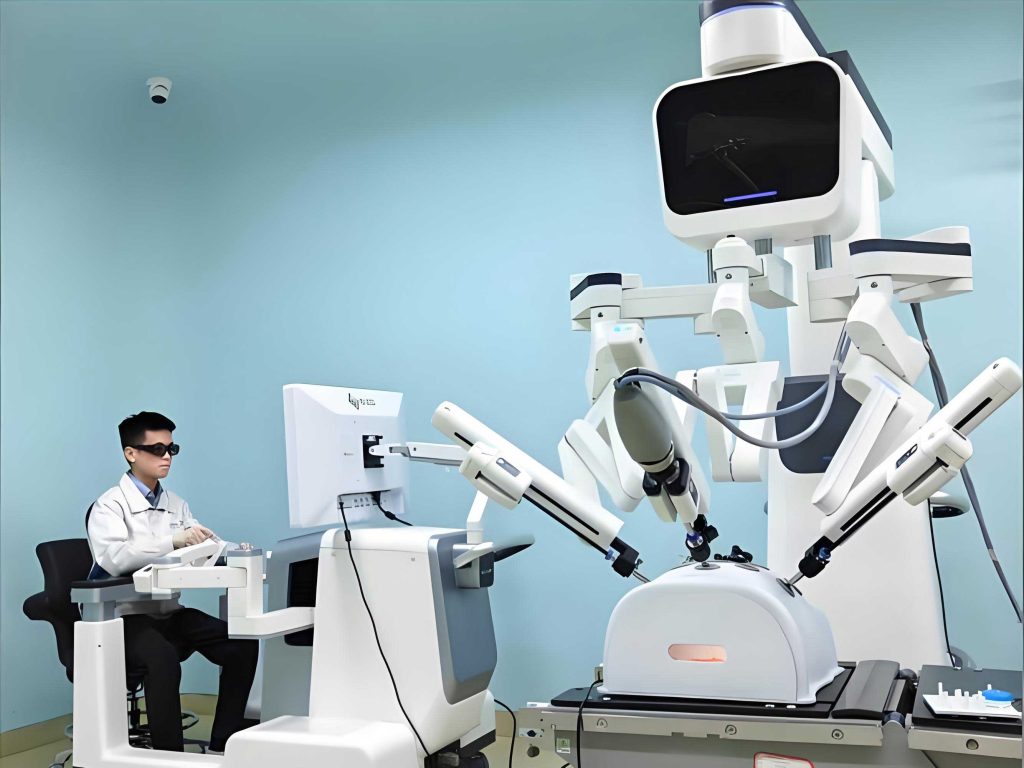
The landscape of medical robot applications is vast and continually expanding. These systems are not monolithic; they are specialized devices programmed for specific clinical tasks. To understand their scope, we can categorize them as follows:
| Category | Primary Function | Examples |
|---|---|---|
| Surgical Robots | Assist in performing precise, minimally invasive procedures. | Da Vinci systems, orthopedic navigation robots, microsurgical systems. |
| Rehabilitation Robots | Aid in the recovery of motor and cognitive functions. | Exoskeletons for gait training, robotic prosthetics, therapeutic robotic pets. |
| Non-Surgical Diagnostic & Therapeutic Robots | Support imaging, radiotherapy, and non-invasive diagnostics. | Robotic CT/MRI positioning systems, robotic radiosurgery (CyberKnife), capsule endoscopy robots. |
| Service & Logistics Robots | Handle auxiliary tasks like delivery, disinfection, and patient support. | Autonomous medication carts, UV disinfection robots, telepresence robots for patient interaction. |
This technological prowess is built upon a convergence of core and applied technologies. While foundational robotics—kinematics, dynamics, actuation, and control—provides the “body,” it is the specialized healthcare-oriented technologies that provide the “mind” and “senses” of a medical robot.
| Key Enabling Technology | Role in Medical Robotics |
|---|---|
| Human-Robot Interaction (HRI) | Creates intuitive interfaces (haptic feedback, voice control) for seamless collaboration between surgeon and machine. |
| Teleoperation & Telesurgery | Enables remote procedure guidance and execution, bridging geographical gaps in specialist care. |
| Surgical Navigation | Fuses pre-operative scans with real-time positional data to provide a GPS-like guidance system for instruments. |
| AI & Machine Learning (ML) | Provides capabilities for image analysis (tumor detection), predictive analytics (patient deterioration), and adaptive surgical planning. |
| Computer Vision & Augmented Reality (AR) | Overlays critical anatomical information (vessels, nerves) directly onto the surgeon’s field of view. |
The potential benefits are immense: superhuman precision, extended operational reach, 24/7 patient monitoring, and data-driven insights. However, this very sophistication is the source of significant ethical turbulence. To navigate it, I find the “Doctor-Patient-Robot” framework indispensable. It moves beyond abstract philosophy to ground the analysis in the practical interactions and shifted responsibilities between these three core entities.
The Triadic Ethical Risk Landscape
When I consider a medical robot not as a mere tool but as an active participant in care, several categories of ethical risk come sharply into focus.
1. The Quandary of Responsibility and Agency
This is perhaps the most fundamental challenge. As autonomy increases, the lines of moral and legal agency blur. A medical robot executing a pre-programmed suture is clearly a tool; its actions are directly attributable to the surgeon. But what about an AI-driven diagnostic medical robot that recommends a treatment plan by analyzing millions of data points in a way no human can replicate? Or a robotic system that makes a real-time, unforeseen adjustment during surgery based on learned protocols?
The core risk is the responsibility gap. If an error occurs, who is accountable? The surgeon? The hospital that purchased and credentialed the system? The software engineers? The algorithm itself? Current legal frameworks are ill-equipped for this. We lack clear definitions for the “subjecthood” of a medical robot. Is it property, a safe product, or could it ever be considered an agent with limited liability? This ambiguity threatens the very principle of accountability that underpins medical ethics and law.
2. The Reconfiguration of Care Relationships
The introduction of the medical robot fundamentally alters the therapeutic alliance. The traditional physician-patient relationship, already asymmetric, now includes a third, highly influential non-human actor. This can lead to several distortions:
- Erosion of Human Connection: Over-reliance on robotic interfaces can diminish the crucial human elements of care: empathy, touch, and the nuanced communication that builds trust. A patient may feel they are being treated by a machine, not a caregiver.
- Shifting Authority and Trust: When a medical robot presents data or a recommendation with perceived objectivity, it can unconsciously override a clinician’s intuition or a patient’s preference, a phenomenon sometimes called “automation bias.” Whom does the patient trust more—the doctor’s experience or the algorithm’s calculation?
- Informed Consent Complexity: Explaining a procedure performed with a medical robot is more complex. How does one adequately inform a patient about the roles, failure modes, and limitations of an autonomous or semi-autonomous system? The “black box” nature of some AI compounds this problem.
3. The Pervasive Risks of Data and Algorithms
Every intelligent medical robot is, at its core, a data-processing entity. This creates a dual risk layer.
Data Ethics Risks: The performance of a medical robot is directly tied to the quality and quantity of its training data. Biased, incomplete, or non-representative data leads to a flawed system. Furthermore, these systems require constant access to sensitive patient data, creating massive privacy and security vulnerabilities. A breach in a surgical medical robot‘s system could have catastrophic consequences beyond data theft.
Algorithmic Ethics Risks: This concerns the logic of the medical robot‘s “mind.” Key risks include:
- Bias and Fairness: Algorithms can perpetuate and amplify societal biases present in their training data. For instance, a diagnostic medical robot trained predominantly on data from one demographic group may be less accurate for others. We can model the potential for bias mathematically. If a model’s prediction $\hat{y}$ for a patient from group $A$ or $B$ is influenced by a sensitive attribute $S$, the disparity can be expressed as:
$$ P(\hat{y}=1 | S=A) \neq P(\hat{y}=1 | S=B) $$
where a positive outcome $\hat{y}=1$ (e.g., “recommend procedure”) is unfairly distributed. - Safety and Robustness: Are the algorithms safe under all edge cases? Can they be fooled by adversarial attacks (e.g., subtle perturbations to medical images that cause misdiagnosis)?
- Explainability and Transparency: Many advanced AI models are inscrutable “black boxes.” When a medical robot makes a critical suggestion, the inability to explain “why” undermines clinical justification and patient trust. The lack of interpretability, $I$, for a model $M$ making decision $D$ given input $X$ is a fundamental constraint:
$$ I(M, D, X) \rightarrow \text{Low} $$
This low interpretability is a key ethical and clinical barrier.
The overall algorithmic risk $R_a$ for a medical robot can be conceptualized as a function of its bias $B$, lack of safety $S_u$, and opacity $O$:
$$ R_a = f(B, S_u, O) $$
Where minimizing $R_a$ is a primary goal of ethical design.
4. The Challenge of Justice and Access
The development and deployment of advanced medical robot systems are extraordinarily expensive. This creates an immediate risk of exacerbating health inequities. Will these technologies become the standard of care only for wealthy individuals in well-funded institutions, creating a “robotic divide”? The principle of distributive justice demands that we consider how the benefits of medical robot technology can be allocated fairly. This is not just about purchasing the hardware; it includes the costs of maintenance, training, and infrastructure, potentially diverting resources from basic care in underserved communities.
We can summarize this triadic risk framework visually, mapping the primary risks that flow between and are inherent to each agent in the system:
| Ethical Risk Domain | Manifestation in the “Doctor-Patient-Robot” Triad |
|---|---|
| Agency & Responsibility | Blurred lines of accountability between doctor, hospital, manufacturer, and the robot’s autonomy. Moral and legal subjecthood of the robot is undefined. |
| Relational & Trust | Erosion of humanistic care; shifting of trust from doctor to machine; complexity in obtaining meaningful informed consent. |
| Data & Privacy | Dependence on massive, sensitive datasets; risks of biased training data; vulnerabilities to privacy breaches and cyber-attacks. |
| Algorithmic Integrity | Risks from “black box” decision-making; embedded bias leading to unfair outcomes; safety failures from unanticipated logic. |
| Justice & Access | High costs creating a “robotic divide”; potential misallocation of healthcare resources; geographic and socioeconomic disparities in access. |
Towards a Principled Governance Framework
Confronting these risks requires more than caution; it demands a proactive, structured, and multi-faceted approach to the ethical governance of medical robot technology. From my perspective, this governance must be anchored in principles, enacted through inclusive structures, and implemented via a smart mix of tools.
Foundational Ethical Principles
The governance of medical robots must be rooted in a hybrid ethical foundation. First, the core principles of medical ethics—Beneficence (do good), Non-maleficence (do no harm), Autonomy (respect patient choice), and Justice (fair distribution)—are non-negotiable. A medical robot must be designed and used to promote patient well-being, minimize harm, support—not undermine—patient self-determination, and be deployed equitably.
Second, we must adopt principles from robotics and AI ethics. A widely supported set includes:
- Human-Centeredness & Human Oversight: The medical robot must augment, not replace, human judgment. A human must always be “in the loop” or “on the loop” for critical decisions.
- Transparency & Explainability: The processes and decisions of a medical robot should be as understandable as possible to developers, clinicians, and patients.
- Responsibility & Accountability: Clear chains of accountability must be established by design, ensuring that a responsible human or organization is always answerable for the system’s outcomes.
- Robustness, Safety, & Security: Medical robots must be technically reliable, clinically safe, and secure from manipulation or attack.
- Fairness & Bias Mitigation: Proactive steps must be taken to identify and eliminate discriminatory biases in data and algorithms.
Structures for Inclusive Governance
Implementing these principles cannot be the job of engineers or doctors alone. It requires an inclusive governance ecosystem:
- Multi-Stakeholder Committees: Hospital ethics committees must evolve to include not just clinicians and ethicists, but also data scientists, engineers, patient advocates, and legal experts to review the deployment of medical robot systems.
- Regulatory Agility: Government agencies (like the FDA in the US or EMA in Europe) need adaptive pathways to evaluate the safety and efficacy of learning, adaptive systems, not just static devices.
- Interdisciplinary Research & Standards Bodies: Collaboration between ethicists, computer scientists, clinicians, and social scientists is crucial to develop technical standards for auditability, bias detection, and fail-safe mechanisms in medical robots.
- Public Engagement & Deliberation: The societal implications of medical robots warrant broad public dialogue to shape norms, expectations, and acceptance.
A Portfolio of Governance Tools
Effective governance employs a spectrum of tools, from soft to hard regulation. The following table outlines a complementary toolkit:
| Governance Tool Type | Mechanisms for Medical Robots | Purpose |
|---|---|---|
| Voluntary & Normative | Professional ethical guidelines; manufacturer codes of conduct; ethics-by-design frameworks; transparency reports. | To foster a culture of responsibility and proactive ethical innovation from within the field. |
| Regulatory & Co-Regulatory | Adaptive pre-market review; post-market surveillance protocols; mandatory bias audits; certification for explainable AI (XAI) components. | To set and enforce minimum safety, efficacy, and fairness standards, adapting to technological change. |
| Legal & Liability | Clarification of liability law (product liability, professional negligence); potential creation of a specific legal status for advanced autonomous systems; data protection laws (like GDPR). | To provide legal certainty, ensure redress for harms, and protect fundamental rights like privacy. |
The journey of the medical robot from laboratory to bedside is one of the most promising yet ethically fraught developments in modern medicine. By consciously employing the “Doctor-Patient-Robot” framework, we can move beyond vague apprehension to a precise diagnosis of the ethical risks involved—risks to accountability, to human relationships, to privacy and fairness, and to justice. The remedy lies not in halting progress, but in steering it wisely. This requires a committed, collaborative effort to build a robust governance ecosystem grounded in enduring ethical principles, inclusive deliberation, and a smart mix of guiding tools. Only then can we ensure that the medical robot, this powerful new agent in the care triad, truly serves the goal of humane and equitable healing for all.