
As artificial intelligence technology continues to evolve, the China robot industry is ushering in a historic development opportunity. This article analyzes the current development status of the China robot industry, including the continuous growth of market size, optimization of the policy environment, continuous breakthroughs in technological innovation, and the gradual formation of industrial cluster effects. Based on this, it delves into the opportunities and challenges facing industrial development. The integration of robots with large model technology, the new era of human-robot collaboration, and the continuous expansion of application scenarios will enable robots to achieve deep integration with human life, driving a leap in social productivity. However, the foundation of China’s robot industry remains weak, with insufficient high-end supply, difficulties in application and promotion, talent shortages, and data security challenges remaining urgent problems to be solved. This article emphasizes that the government, enterprises, and all sectors of society need to work together, continuously strengthen technological research and development and innovation investment, enhance the core competitiveness of China’s robot industry, leverage the positive role of the robot industry in economic growth, and achieve high-quality development of China’s economy.
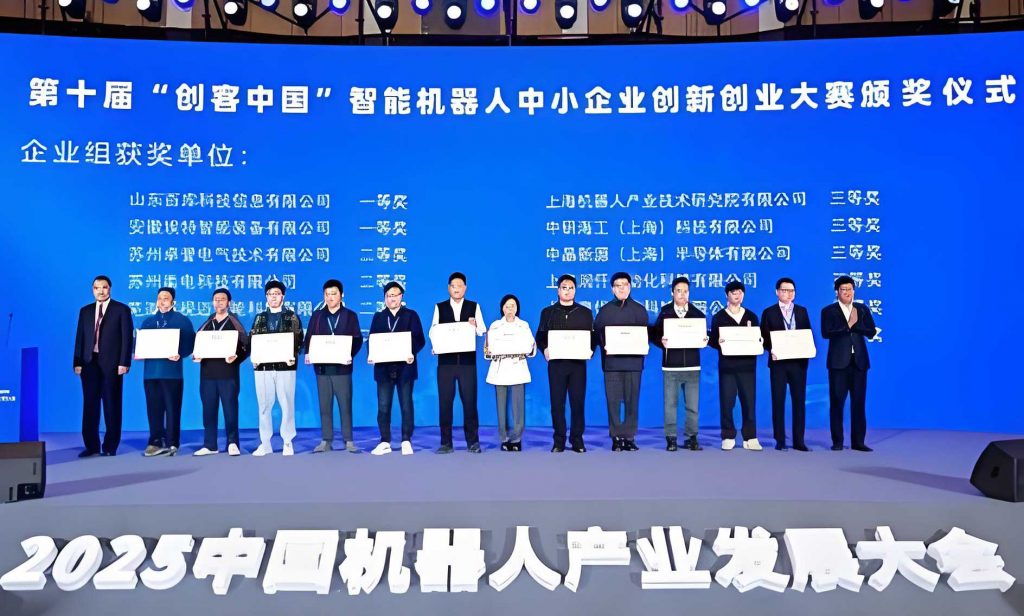
At the beginning of 2024, the stunning performance of Stanford University’s robot Mobile ALOHA quickly sparked widespread attention on social media, with many predicting that “2024 will become the first year of the robot industry.” In the tide of rapid growth of the global robot industry, Chinese entrepreneurs need to understand the development status of the China robot industry, while actively examining the development opportunities and challenges of the China robot industry, striving to achieve industrial leaps in this global competition.
1. Current Development Status of China’s Robot Industry
The China robot industry has experienced rapid development driven by proactive policies and strong market demand. Since 2017, the industry has maintained an average annual growth rate of 22%, significantly higher than the global average. In 2022, the market size of robots in China was approximately $17.4 billion, accounting for about 34% of the global share, with the industrial robot market occupying 45% of the global share. This data not only reflects China’s significant progress in the robot industry but also indicates China’s important position in the global smart manufacturing field. The expansion of the China robot sector is a testament to the nation’s commitment to technological advancement and industrial modernization.
1.1 Continuous Growth in Industry Scale
Under the active promotion of policies and the strong drive of market demand, the China robot industry has welcomed rapid development. Since 2017, the industry’s average annual growth rate has remained at 22%, a growth rate significantly higher than the global average. In 2022, the China robot market size was about $17.4 billion, accounting for about 34% of the global share, with the industrial robot market occupying 45% of the global share. This data not only reflects the significant progress of the China robot industry but also foreshadows China’s important position in the global smart manufacturing field. The growth trajectory of the China robot market is expected to continue, driven by increasing automation demands across sectors. The following table summarizes key market data for the China robot industry:
| Metric | Value | Global Share |
|---|---|---|
| Average Annual Growth Rate (since 2017) | 22% | Higher than global average |
| Total Robot Market Size (2022) | $17.4 billion | 34% |
| Industrial Robot Market Share (2022) | 45% of global industrial robot market | 45% |
The robust expansion of the China robot industry is fueled by domestic demand and export potential. As the China robot ecosystem matures, it attracts more investments and partnerships, further solidifying its global stance. The China robot market’s scale is a critical factor in shaping worldwide robotics trends, with innovations often stemming from Chinese enterprises. This growth is not merely quantitative but qualitative, as the China robot sector pushes boundaries in affordability and functionality.
1.2 Continuous Improvement in Policy Environment
The Chinese government’s emphasis on the robot industry has continuously deepened, with a series of policy measures introduced to promote its rapid development. The “Robot Industry Development Plan (2016–2020)” clarified the industry’s development goals and key tasks, providing policy guidance for the healthy growth of the robot industry. Entering the “14th Five-Year Plan” period, the Ministry of Industry and Information Technology, jointly with multiple departments, released new development plans, further refining the development path of the robot industry. In January 2023, the Ministry of Industry and Information Technology, together with 17 departments, issued the “”Robot +” Application Action Implementation Plan,” providing specific action guidelines for the deep application and innovation of the industry. The government not only provides support at the policy level but also increases funding, providing solid financial support for robot technology research and development and industrialization through channels such as national science and technology plans and strategic emerging industry special funds. Simultaneously, local governments actively respond, introducing local policies to inject vitality into the development of the robot industry. In terms of intellectual property protection, China has also strengthened the review and protection of robot technology patents, ensuring the legitimate rights and interests of industrial innovation, creating a favorable environment for the sustainable development of the robot industry.
These policies have created a conducive ecosystem for the China robot industry to thrive. The focus on the China robot sector in national strategies underscores its strategic importance. By aligning with broader goals like “Made in China 2025,” the China robot industry benefits from coordinated efforts across ministries and regions. This policy support is crucial for the China robot market to overcome initial barriers and achieve scale. Moreover, the China robot industry’s integration into global supply chains is facilitated by these frameworks, enhancing its competitiveness. The continuous policy evolution ensures that the China robot industry remains agile and responsive to technological shifts.
1.3 Continuous Breakthroughs in Technological Innovation
In the ongoing wave of robot technology innovation, Chinese enterprises have achieved significant breakthroughs in multiple fields, enhancing the international competitiveness of intelligent robot products. Especially in the field of collaborative robots, intelligent robots developed in China have reached international advanced levels. For example, the application of deep learning technology enables industrial robots to make more precise decisions in unknown environments, while the safety technology of collaborative robots is continuously upgraded, such as the development of safety skin technology, which ensures the safety of human-robot collaboration and improves operational efficiency. Additionally, significant progress has been made in the collaborative control technology of compound mobile robots, achieving high-degree-of-freedom mobile operations, which is of great significance for the construction of smart factories. At the 2023 Beijing World Robot Conference, the appearance of domestic humanoid robots demonstrated complex functions such as walking and coffee latte art, showcasing China’s innovation strength in the field of robot technology. These technological breakthroughs not only enhance robot performance but also lay a solid foundation for future applications in broader fields.
The China robot industry’s innovation drive is centered on key technologies like AI, sensors, and actuators. By investing in R&D, the China robot sector is reducing dependency on foreign components. For instance, advancements in servo motors and controllers within the China robot landscape are gradually addressing core短板. The integration of 5G and IoT with robots in China enables real-time data exchange and remote operations, opening new possibilities. The China robot industry’s focus on humanoid robots and service robots reflects a strategic push towards versatile automation. These efforts position the China robot market as a hub for cutting-edge robotics research and development.
1.4 Continuous Expansion of Application Fields
With the increasing maturity of large model robot technology and the diversification of market demand, the application fields of robots in China are undergoing unprecedented expansion. Currently, robots in China not only play a core role in the manufacturing sector but also extend their application scope to logistics, services, and multiple other industries. Manufacturing, as the main battlefield for robot applications, covers multiple细分 markets such as automobile manufacturing, electronic assembly, and metal processing. Additionally, robot applications in the logistics and service industries are showing rapid growth trends, providing strong momentum for the transformation and upgrading of these industries.
The China robot industry’s penetration into new sectors is accelerating. In healthcare, China robots assist in surgeries and patient care, improving precision and efficiency. In agriculture, robots in China are used for planting, harvesting, and monitoring crops, enhancing productivity. The entertainment and education sectors also leverage China robots for interactive experiences and learning tools. This diversification reduces reliance on any single industry, making the China robot market more resilient. As application scenarios broaden, the China robot industry gains valuable data to refine technologies and create more adaptive solutions. The expansion underscores the versatility of China robots in addressing complex real-world challenges.
1.5 Formation of Industrial Cluster Effects
In China, the cluster effect of the robot industry is gradually emerging, with multiple provinces and cities clearly proposing goals for developing the industrial robot industry in their “14th Five-Year Plan.” At the government level, actively responding to the central call for deepening the integration of industrialization and informatization, based on their respective development characteristics, focusing on advantageous industries, accelerating the promotion of smart manufacturing transformation. Regions represented by Beijing, Shanghai, Guangdong, and Chongqing are cultivating robot industry-centric industrial clusters through policy support and resource integration. These clusters not only promote the完善 of the industrial chain but also attract domestic and foreign investments, forming a good industrial ecology. Through the leading role of龙头 enterprises and breakthroughs in key components and core technologies, these industrial clusters are expected to become an important force in promoting continuous innovation and enhancing international competitiveness in China’s robot industry.
The clustering of the China robot industry fosters collaboration and knowledge sharing. In hubs like the Yangtze River Delta and Pearl River Delta, China robot companies benefit from proximity to suppliers and research institutions. This geographical concentration reduces costs and speeds up innovation cycles for the China robot sector. The cluster effect also attracts talent to the China robot industry, creating a virtuous cycle of growth. By specializing in niches like robotic arms or AI software, different clusters within the China robot landscape contribute to a comprehensive ecosystem. This approach strengthens the overall competitiveness of the China robot market on the global stage.
Summary
The core competitiveness of the China robot industry lies in its vast domestic market, strong policy support, and the continuous technological innovation and application expansion brought by industrial cluster effects. These advantages will jointly promote the China robot industry to occupy a more important position on the global stage, contributing to the achievement of high-quality economic development. The China robot industry is poised to lead in areas like collaborative robots and AI integration, leveraging its unique strengths. As the China robot market evolves, it will likely set standards and trends for robotics worldwide, underscoring its pivotal role in the fourth industrial revolution.
2. Development Opportunities for China’s Robot Industry
The China robot industry is standing at a new historical development opportunity period. The rapid development of artificial intelligence technology, especially the evolution of multimodal large models, is driving the evolution of robots. They will be able to build a deep understanding of more complex environments through self-learning, endowing them with human-like perception and reasoning decision-making abilities. With the rise of domestic labor costs and the intensification of aging problems, the trend of intelligent robots promoting industrial upgrading and renewal becomes increasingly apparent. It is expected that in the coming years, robot technology will achieve more innovations and changes, promoting qualitative leaps in the industry.
2.1 Integration of Robots and Large Model Technology
Similar to the mobile phone industry under the widespread application of 4G and 5G communication technologies, artificial intelligence large model technology is becoming an important driving force for the development of the robot industry. Deep learning and neural network technologies endow robots with higher-level perception, learning, and adaptation abilities, enabling them to perform diverse tasks in complex environments. For example, China’s UBTECH Robotics推出的 Walker robot integrates advanced visual recognition and speech interaction technologies, capable of providing辅助 services in home environments.
Besides using existing visual and language foundation models for the robot field, future technology may also achieve the development of专属基础专家 models for robot tasks, such as action manipulation models or motion planning models for navigation. These robot foundation models demonstrate strong generalization capabilities, able to adapt to different tasks and even specific solutions, further reflecting the possibility of integrating different robot modules into a unified model. This integration is a key opportunity for the China robot industry to leapfrog competitors. By harnessing large models, China robots can achieve unprecedented autonomy and flexibility. The China robot sector’s investment in AI research positions it well to capitalize on this trend, potentially leading to breakthroughs that redefine robotics. As large models become more accessible, the China robot market can democratize advanced capabilities, enabling SMEs to adopt sophisticated robots.
2.2 New Era of Human-Robot Collaboration
In the context of “Industry 4.0” and smart factories, the application of collaborative robots in manufacturing is gradually becoming widespread. Human-robot collaboration technology will become an important development direction, with collaborative robots becoming an indispensable part of efficient production and life. Robots and humans will jointly perform tasks in production environments, medical fields, and service industries, fully leveraging their respective advantages. This collaborative labor is expected to improve efficiency, reduce costs, and create safer working environments. Currently, humanoid robots in China are at the same level as Tesla in terms of degrees of freedom and weight, with some manufacturers achieving better performance than Tesla Optimus in these two aspects.
In the future, the continuous evolution of large model technology may enable robots to train in virtual environments and then more efficiently match the real world, or directly use 2D data to train 3D robots, such as showing robots videos of humans moving things to teach them how to move things. This advancement will enhance the synergy in the China robot industry, making robots more intuitive partners. The China robot market can lead in developing standards for safe and effective collaboration, fostering adoption across sectors. As human-robot teams become commonplace, the China robot industry will drive productivity gains and innovation in work processes. This era of collaboration underscores the transformative potential of China robots in reshaping labor and industry dynamics.
2.3 Gradual Extension of Application Scenarios
With the continuous advancement of technology, the application scenarios of large model robots will continuously expand in fields such as smart manufacturing, services, medical health, family life, special environment operations, education and training, entertainment and leisure, and urban management. They will achieve deep integration with human life, driving leaps in social productivity.
According to the unique needs of various industries, enterprises will deploy customized artificial intelligence robots on a large scale to solve specific problems in various business areas and processes. These intelligent robots will deeply integrate into business systems, based on data owned by the company, making more accurate and wise responses in a secure environment, assisting people in completing various services. This extension represents a vast opportunity for the China robot industry to penetrate everyday life. From domestic helpers to urban management assistants, China robots can address societal challenges like aging populations and infrastructure maintenance. The China robot market’s adaptability to diverse scenarios will fuel sustained growth. By tailoring solutions to local needs, the China robot sector can export its expertise globally, showcasing the versatility of China robot innovations.
3. Challenges Facing the Development of China’s Robot Industry
Although the China robot industry has huge development potential and market space, it also faces challenges in multiple aspects, requiring joint efforts from the government, enterprises, and all sectors of society to actively应对.
3.1 Weak Industrial Foundation, Insufficient Technological Accumulation
Although China has achieved certain accomplishments in the development of the robot industry, compared to developed countries, technological accumulation is still insufficient. Robots are the product of multidisciplinary, high-tech交叉融合, and China’s industrial foundation is relatively weak. Especially in some key technologies and core components, such as controllers and servo motors, there is still a large dependence on imports.
In this regard, besides continuously improving their own product quality to achieve import substitution, enterprises in China’s robot industry should also use innovative thinking for breakthroughs and product二次创新, thinking and attempting from the perspectives of defining product-solving problems, solution paths, and underlying technology choices. China has strong development potential in the large model field, not only conducting independent research and development in algorithms, architecture, corpus construction, etc., but also making progress in root technological innovation of AI. For example, Huawei’s Pangu large model and Tencent’s Hunyuan large model are accelerating to catch up with international advanced levels. In the future, China can build a large model industrial ecosystem, forming professional enterprises and organizational ecology in professional fields such as smart manufacturing, fintech, biomedicine, scientific research, and cultural entertainment. Empowered by artificial intelligence, the innovation methodologies and tools of enterprises in the China robot industry chain may be greatly enriched, and永不停止的 “innovation” may be the only way for future enterprises to build moats.
3.2 Lack of High-End Supply
The supply capacity of China’s robot industry in the fields of high-end industrial robots and service robots is still insufficient. This shortcoming not only restricts the overall development of the industry but also affects the technological upgrading and transformation of downstream industries. The shortage of high-end supply not only weakens the global competitiveness of the industry but may also inhibit innovation momentum, limiting China’s leading position in the global robot market.
To solve this problem, the following measures are recommended: First, increase research and development investment, especially in key core technologies, to achieve technological breakthroughs and independent innovation. Second, encourage industry-university-research cooperation, promote the转化 of scientific research成果, and accelerate the industrialization process of high-end robot technology. The China robot industry must prioritize moving up the value chain to sustain growth. By focusing on high-margin segments, the China robot market can reduce vulnerability to price competition. Collaboration with global leaders can help the China robot sector acquire advanced know-how, but domestic innovation is crucial for long-term success. The China robot industry’s journey towards high-end supply is essential for achieving self-reliance and global leadership.
3.3 Difficulty in Application Landing, Market Promotion Hindered
The autonomous learning ability of large model robots relies on powerful backend computing resources, which brings challenges in cloud and terminal deployment, especially in terms of signal delay and security. Additionally, due to security considerations, the collection of training data becomes complex, limiting breakthroughs in diversified application scenarios for robots. In terms of market promotion, the China robot industry faces problems such as “difficulty in sales,” “high costs,” and “difficulty for users to operate.” These issues not only hinder enterprises from moving towards the high-end market but also affect the transformation of中小 enterprises towards smart manufacturing. The consumer market is extremely price-sensitive, and high costs make service robots difficult to popularize in the mass consumption领域.
To应对 these challenges, it is recommended that professional companies build customized vertical large models based on specific application scenarios and deeply integrate them with robot technology. By implementing the “robot +” strategy, leveraging industry accumulation, promote the application of robot technology in specific fields. For example, lessons can be learned from China’s successful experience in the drone and smart car fields, combining AI technology with robots to achieve more intelligent interaction. From the initial drone follow-up shooting to the interaction of autonomous driving vehicles with the environment, to the direct contact of mechanical arms with the physical world, each step is a reflection of technological progress. Through such development paths, costs can be gradually reduced, the ease of use of robots improved, thereby promoting their application in broader fields, ultimately achieving the popularization and intelligence of robot technology. The China robot industry must address these barriers to unlock its full potential. By fostering user-friendly designs and cost-effective solutions, the China robot market can accelerate adoption. Pilot projects and示范 zones can showcase the value of China robots, building confidence among potential users.
3.4 Severe Shortage of Talent
The rapid development of the China robot industry has brought an urgent demand for professionals, but currently, talent shortage has become a key bottleneck restricting industrial development. The robot industry involves multidisciplinary交叉, requiring extremely high comprehensive abilities from talents, including robot engineers, machine learning experts, control system engineers, etc. These positions not only require deep professional knowledge but also good innovation capabilities and跨学科 collaboration abilities.
Recommendations for应对 measures: The government and enterprises should adopt a multi-pronged strategy to alleviate the talent shortage problem. First, strengthen the对接 between the education system and industrial needs, through school-enterprise cooperation, offer related majors such as robot engineering and artificial intelligence, cultivating high-quality talents that meet market demands. Second, implement talent introduction plans, attract top domestic and foreign experts and teams, through project cooperation, talent exchange, etc.,提升 the technical level of domestic talents. Simultaneously, increase training efforts for在职 personnel, through continuing education and skill enhancement courses, help existing engineers update their knowledge structures, adapt to the development of new technologies. Additionally, establish incentive mechanisms, provide policy support such as research funding and tax incentives for innovative talents in the robot field,激发 the innovation vitality of talents. The China robot industry’s growth hinges on a skilled workforce. By investing in education and training, the China robot sector can build a sustainable talent pipeline. International collaborations can also enrich the China robot market with diverse perspectives, driving innovation.
3.5 Challenges of Data Security
With the widespread application of robot technology, data security has become a key challenge for industrial development. Sensitive information processed by robot systems, such as design drawings, process parameters, and production plans, must be strictly protected to prevent data leaks and misuse. Manufacturers and users need to take comprehensive measures in hardware, software, communication, and user privacy, formulate strict security strategies, ensure the security of robot systems at all levels. Additionally, artificial intelligence technology, especially large model technology, is leading the transformation of the robot industry, posing new requirements for legislation. Countries, including China, the European Union, the United States, and India, are actively building artificial intelligence policy frameworks, aiming to promote technological progress, attract investment, while ensuring that technological development does not harm public interests. Ethical issues occupy a core position in robot research and development, and the international community urgently needs to reach consensus on ethical standards and industry norms for artificial intelligence to应对 global challenges. In this regard, it is recommended to strengthen international cooperation, promote the formulation of unified industry standards, ensure the development of the robot industry in a safe and compliant environment. Simultaneously, encourage enterprises to establish internal data security management systems, use encryption technology to protect data transmission, and implement regular security audits to improve the data security level of the entire industry. The China robot industry must navigate these complexities to build trust. By adhering to high standards, the China robot market can become a leader in secure robotics. Proactive engagement with global norms will benefit the China robot sector’s international expansion and reputation.
4. Conclusion
In summary, the China robot industry is standing at a historical crossroads, facing unprecedented development opportunities. The integration of robots and large model technology, the new era of human-robot collaboration, and the continuous expansion of application scenarios will enable robots to achieve deep integration with human life, driving leaps in social productivity. However, the foundation of China’s robot industry remains weak, with insufficient high-end supply, difficulties in application and promotion, talent shortages, and data security challenges remaining urgent problems to be solved. Facing these challenges, the government, enterprises, and all sectors of society need to join hands and advance together, jointly strengthen technological research and development, increase innovation investment, and enhance core competitiveness. Only in this way can we ensure that the China robot industry occupies a place on the global stage, contribute to achieving high-quality economic development, and jointly welcome an intelligent,高效能, safe, and controllable future. The journey ahead for the China robot industry is filled with both promise and peril, but with concerted effort, the China robot market can emerge as a global beacon of innovation and progress.